
He sang about a quarter that vanished
His best-known song is about his Rotterdam district; the city was erased in 1940.
user:Quistnix — CC BY 1.0 · Quistnix — CC BY 1.0 · Sandra Fauconnier — CC BY 4.0 · Wvdp — CC0
A memorial in Rotterdam to Louis Davids, the Dutch comic actor and singer born in the city in 1883, who became the most famous variety performer in the Netherlands in the first half of the twentieth century. Davids came from a poor Jewish family in Rotterdam's Jewish quarter and began singing in cafés as a child. He worked in light theatre, cabaret and film, and wrote and performed songs that entered Dutch popular memory, the best known of them about his own quarter in Rotterdam. Under the Nazi occupation he would have been barred from performing because of his Jewish origin. He died in 1939, before the occupation, but much of his family and of the Jewish theatrical world he worked in was murdered. His songs went on being sung, and his name became attached to the Rotterdam that existed before its destruction. That is what gives the monument more weight than a statue of an entertainer: the city he sang about was erased in the bombing of 1940, and the world he came from was destroyed shortly after. Practical points: always open and free, with a visit of minutes.
His best-known song is about his Rotterdam district; the city was erased in 1940.
He began singing in cafés as a child and ended the country's best-known performer.
Most of the Jewish theatre world he worked in was murdered under occupation.
Central Rotterdam
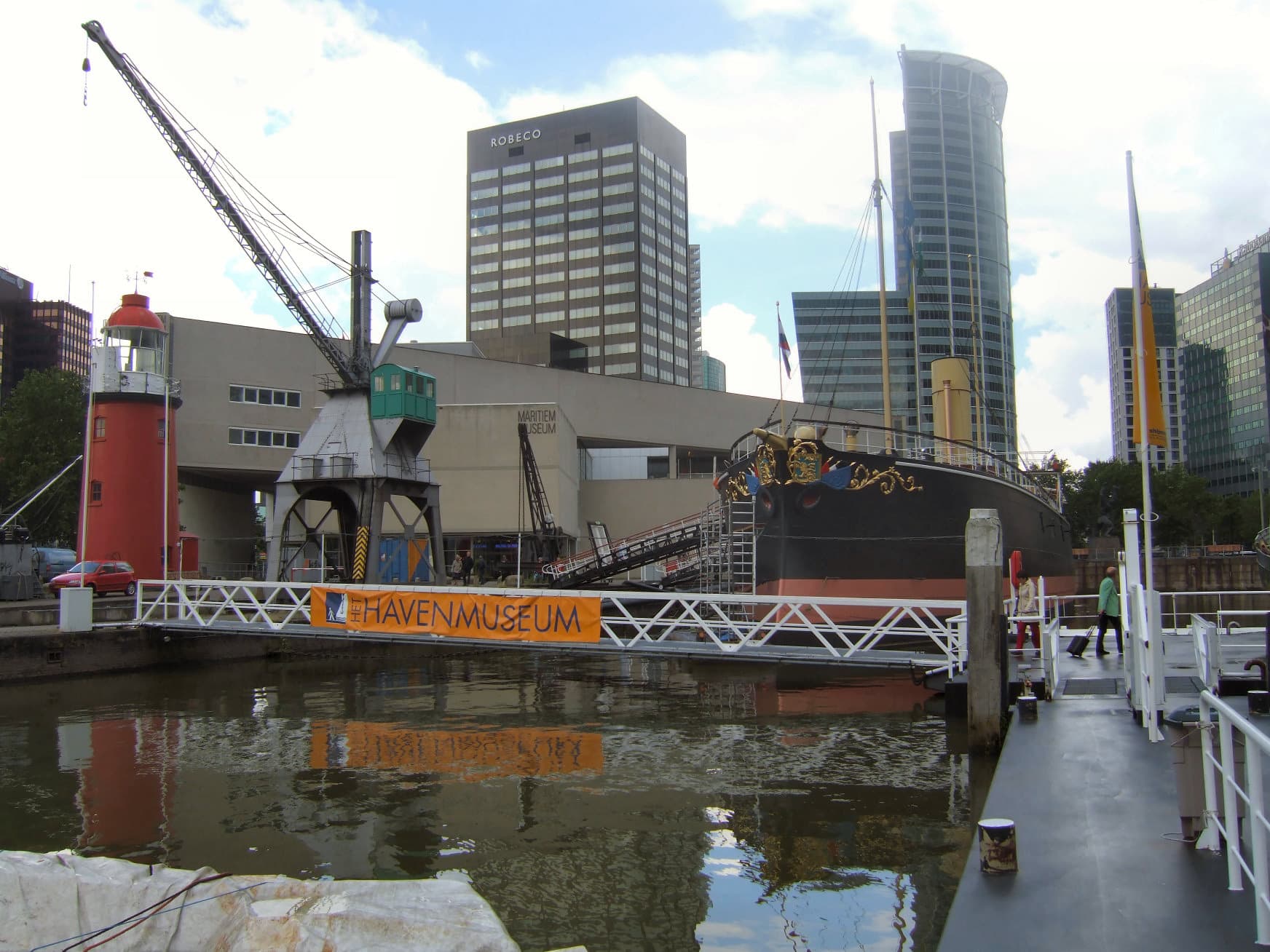 Maritime Museum RotterdamIn the city of Europe's mightiest port the sea deserves two museums in one: mode8 minutes walk4.2
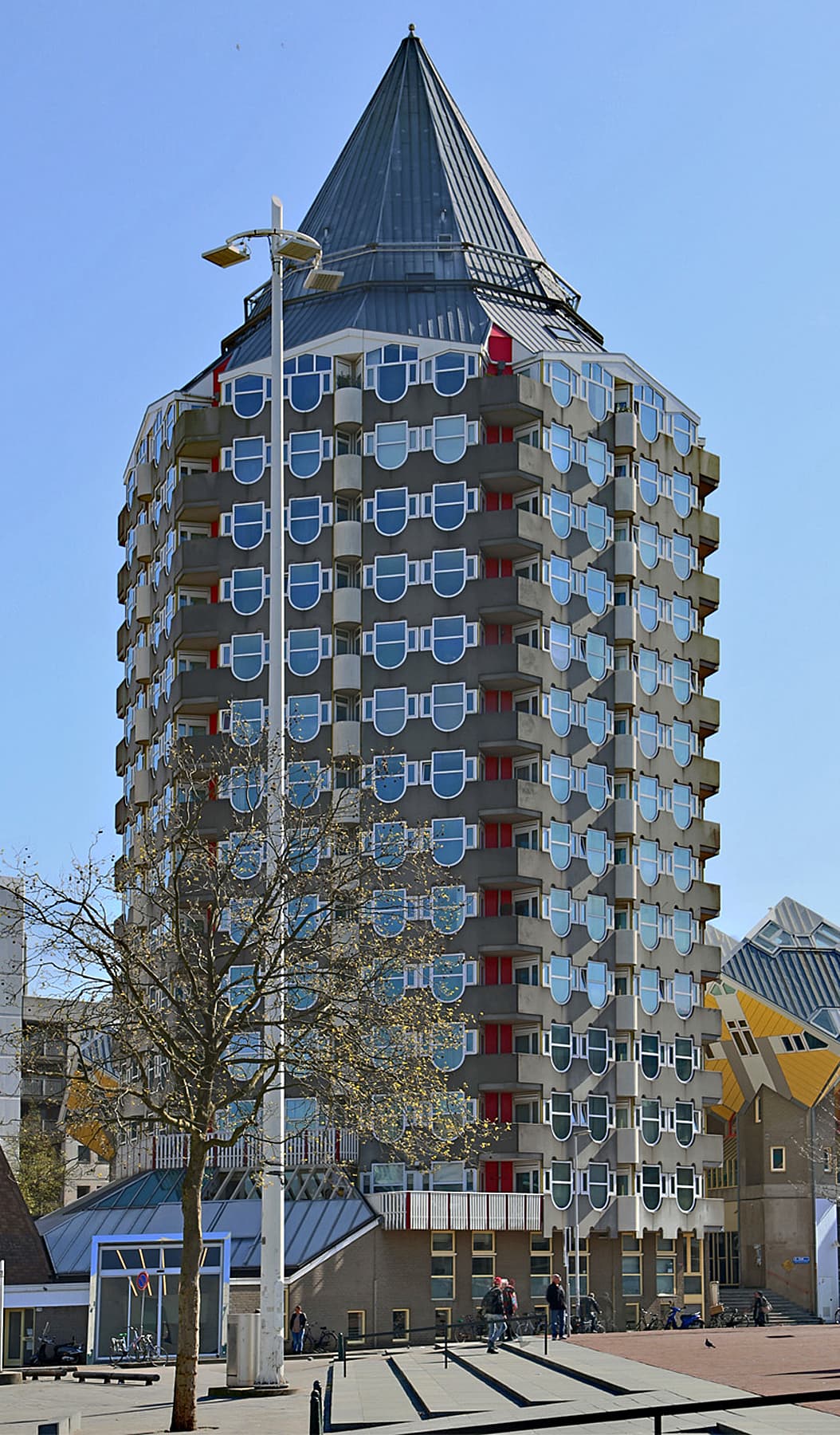 The Blaaktoren, the PencilThe Blaaktoren is a residential tower standing between the Cube Houses and the M8 minutes walk4.6
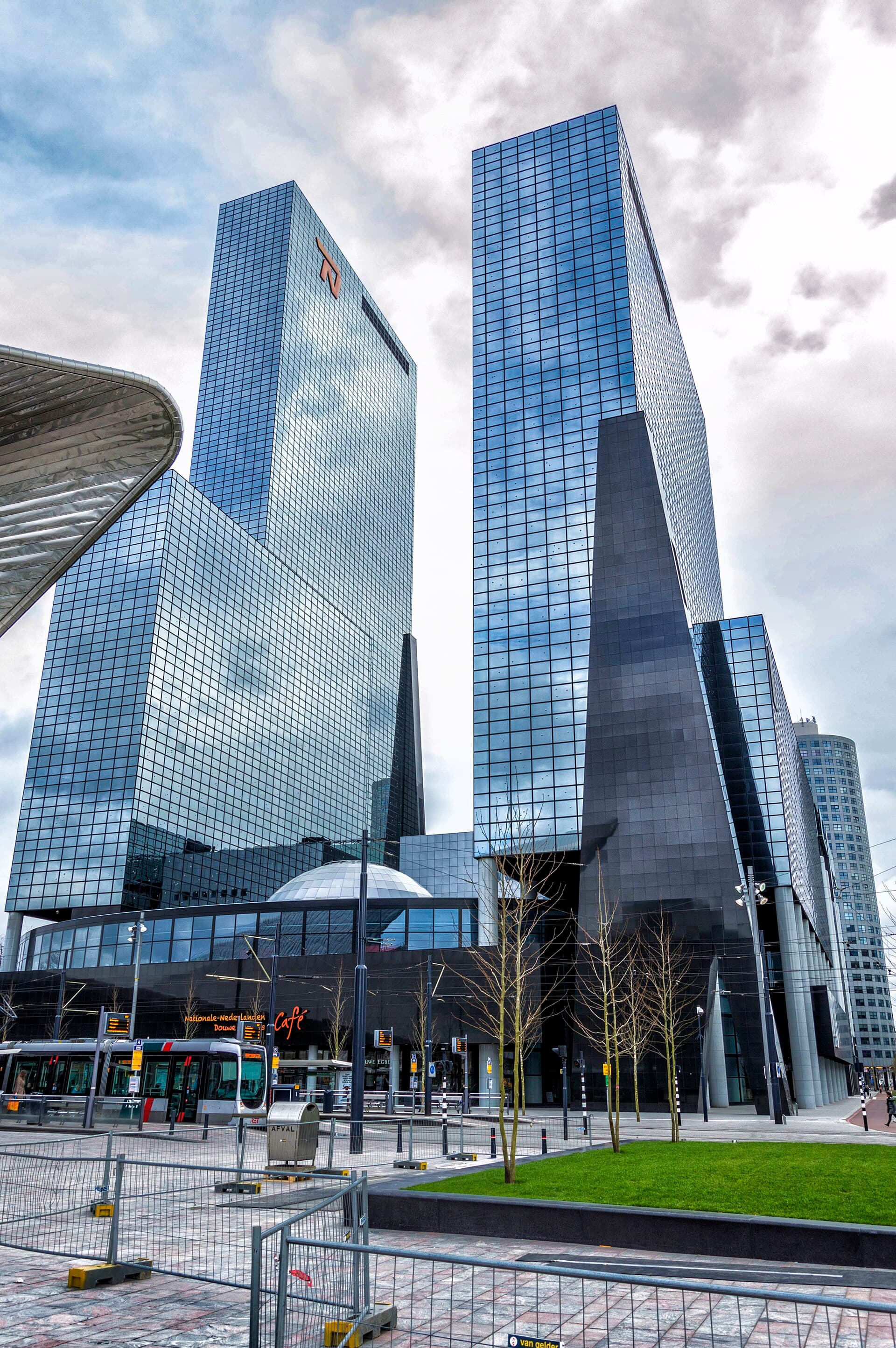 The Delftse Poort TowerAn office skyscraper beside Rotterdam Centraal station, completed in 1991, and f8 minutes walk4.3
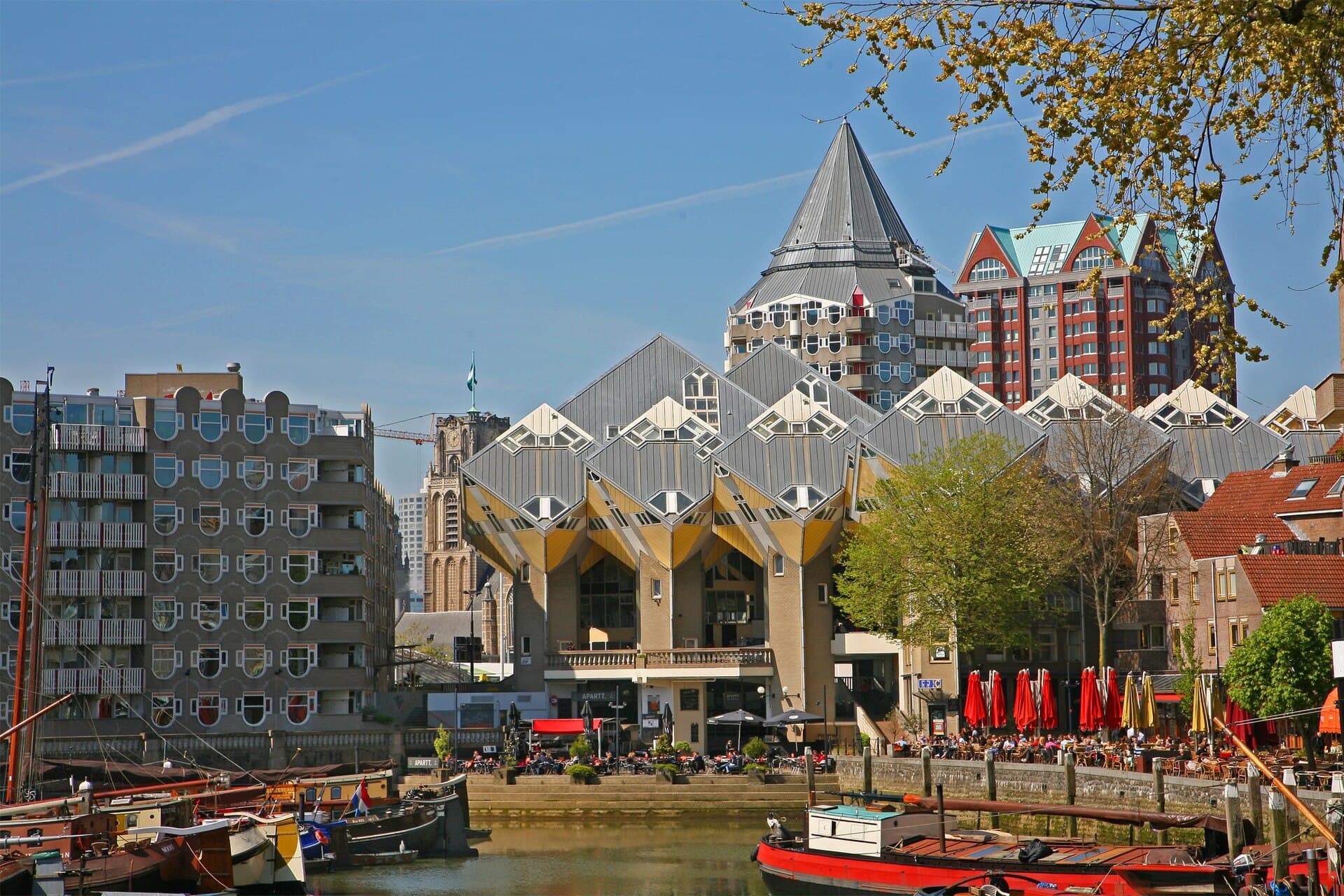 The Cube HousesThe Cube Houses are Rotterdam's most famous and strangest architectural landmark9 minutes walk4.3
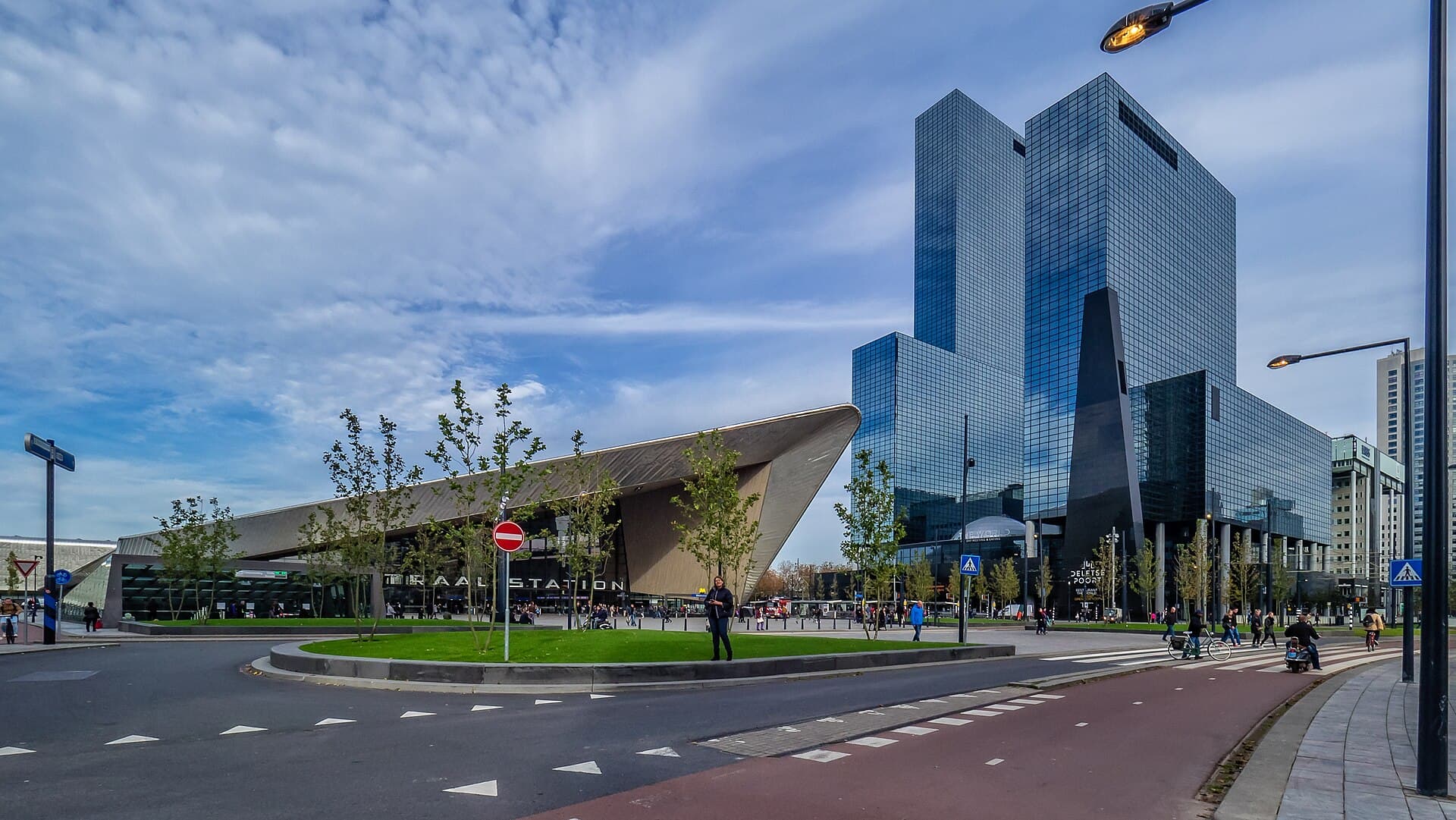 Stationsplein, RotterdamThe square in front of Rotterdam Centraal, the first thing an arriving visitor s10 minutes walk4.5
Because its centre was destroyed in a German bombing in May 1940 that lasted about fifteen minutes and erased some twenty-five thousand buildings. The city was rebuilt after the war on a deliberate decision not to reproduce what had stood but to build a modern city — which is why Rotterdam became the laboratory of contemporary Dutch architecture. Comparing it with undamaged Amsterdam explains the difference between the two cities entirely.
The Delfshaven district in the west survived the bombing and is the only part that gives a sense of the old city: canals, seventeenth-century houses and mills. And Museum Rotterdam shows the city before and after. Both are needed to understand what was lost.