
The single frame
Cubes, Pencil, White House and Markthal together.
W. Bulach — CC BY-SA 4.0 · GraphyArchy — CC BY-SA 4.0 · GraphyArchy — CC BY-SA 4.0 · GraphyArchy — CC BY-SA 4.0
The Blaaktoren is a residential tower standing between the Cube Houses and the Markthal, and Rotterdammers call it the Pencil — the reason is obvious from a hundred metres away: a cylindrical shaft and a sharply conical upper sixth ending in a point, so that it reads as a sharpened pencil driven into the ground. The architect Piet Blom designed it in the 1980s together with the Cube Houses as a single group, and the idea was a village inside the city: the cubes are the treehouses, and the tower is the village church or its central tower. The shape is not a joke but part of a complete architectural metaphor. The tower is entirely residential and cannot be entered, but its importance for a visitor is visual: it stands at the best point from which Rotterdam's contradictory architecture gathers into one frame — the yellow cubes, the Pencil, the White House of 1898, the arched Markthal and the bridges beyond. The best-known camera angle is from the footbridge in front of Blaak station.
Cubes, Pencil, White House and Markthal together.
A village tower among the treehouses.
Blaak, 3011 Rotterdam
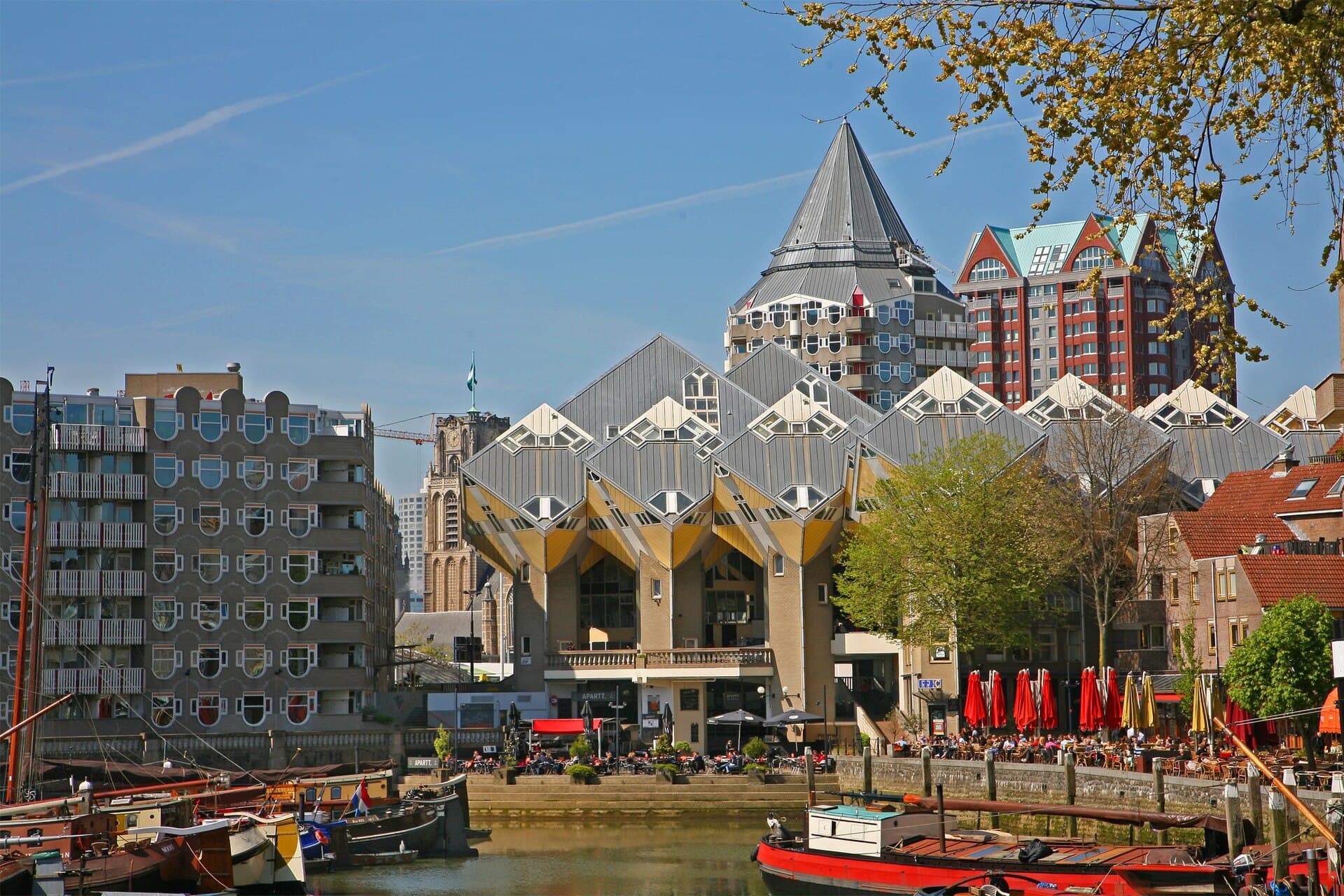 The Cube HousesThe Cube Houses are Rotterdam's most famous and strangest architectural landmark1 minute walk4.3
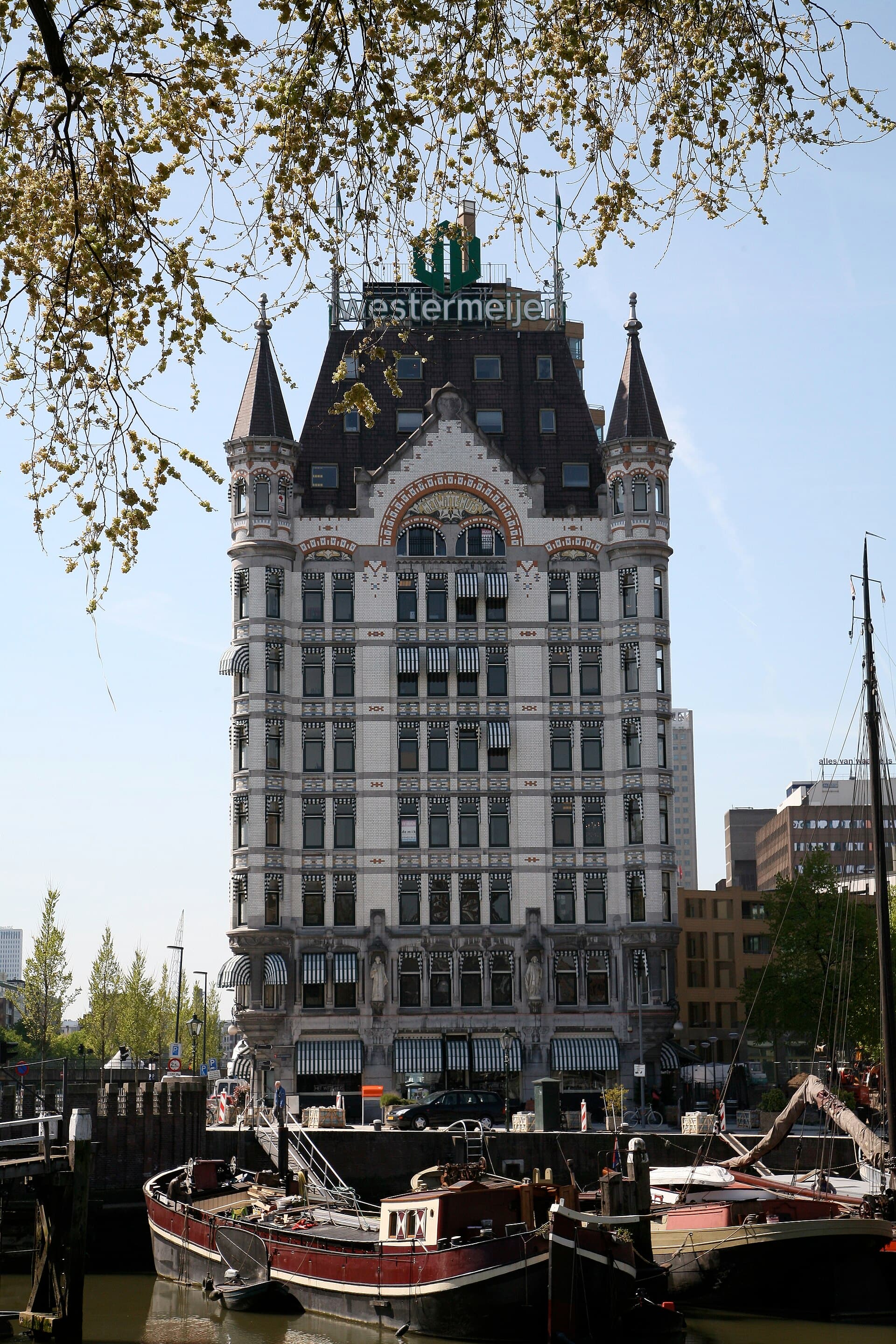 The White HouseThe Witte Huis is an office building of 1898, eleven storeys and about forty-thr3 minutes walk4.6
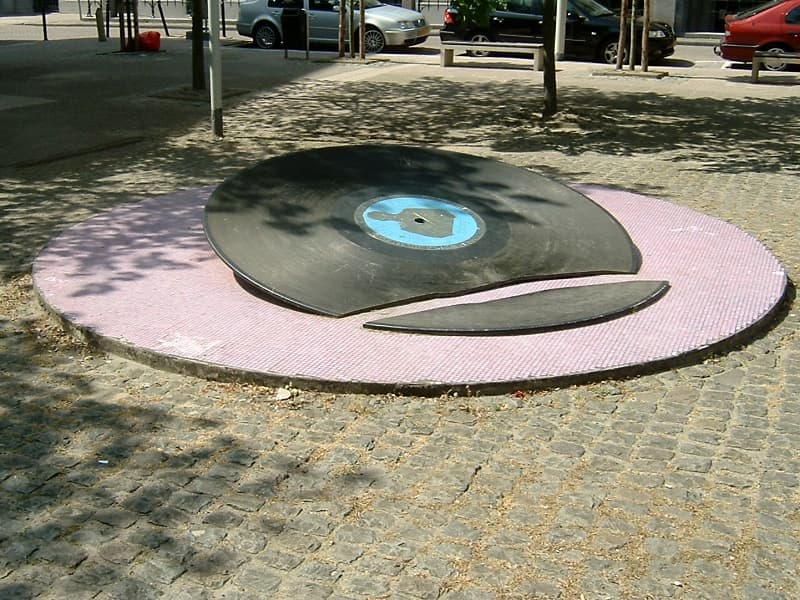 The Louis Davids MonumentA memorial in Rotterdam to Louis Davids, the Dutch comic actor and singer born i8 minutes walk4.5
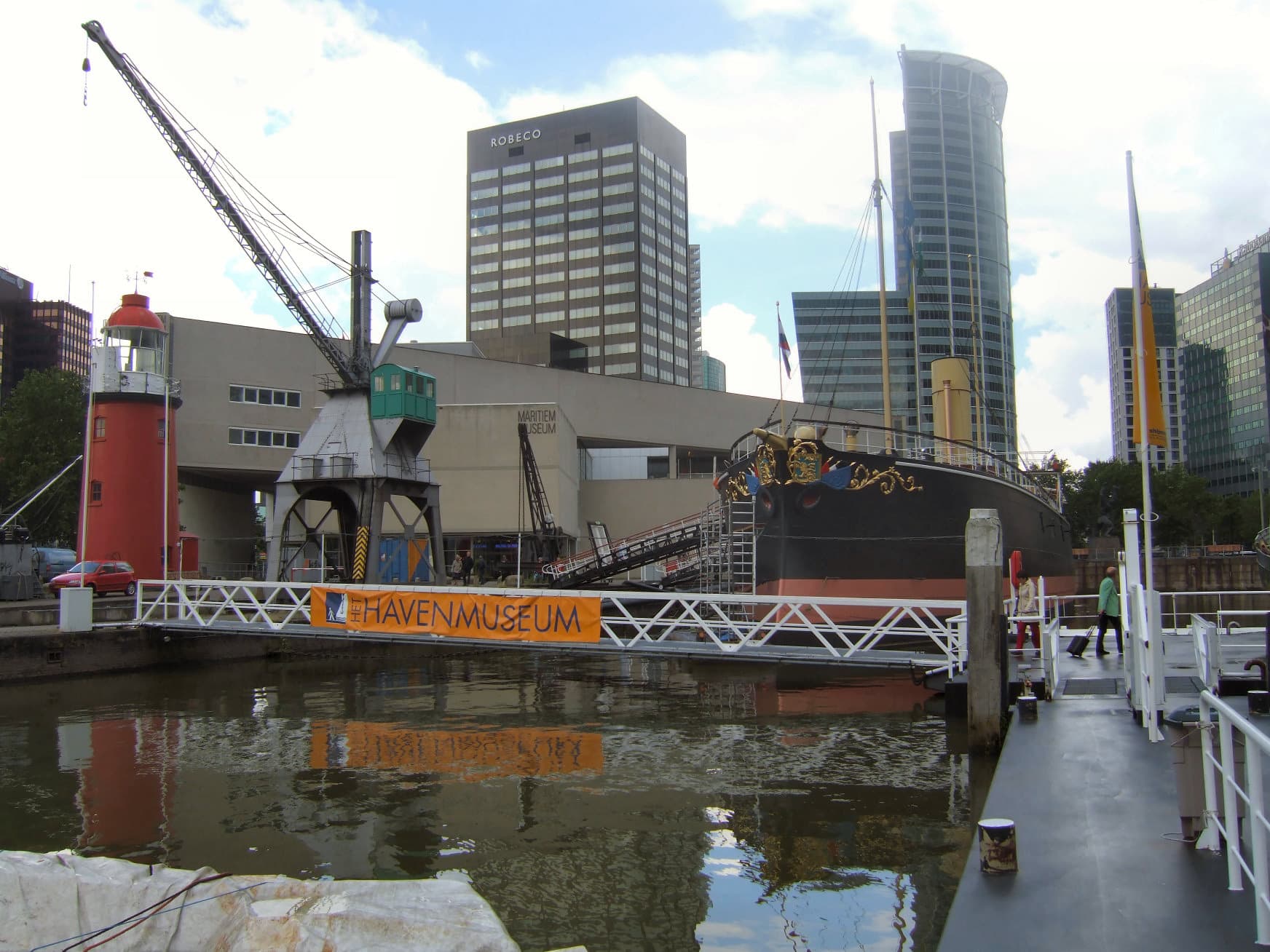 Maritime Museum RotterdamIn the city of Europe's mightiest port the sea deserves two museums in one: mode8 minutes walk4.2
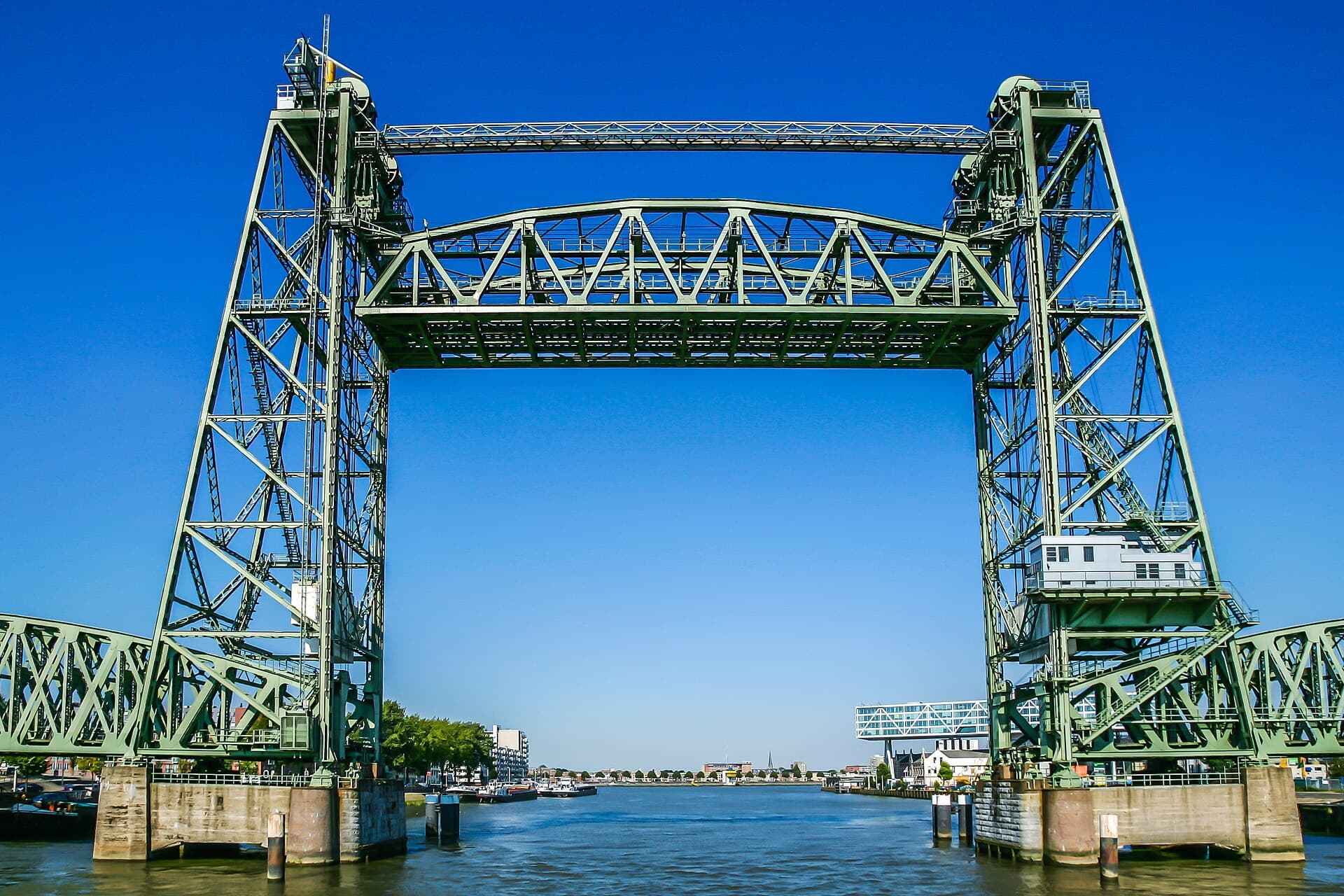 De Hef Lift BridgeDe Hef is a railway lift bridge over the Koningshaven built in 1927, and its mec13 minutes walk4.7
Yes, one of them is open as a small museum called the Kijk-Kubus on a cheap ticket: a fully furnished house you walk through to see how people live inside a cube tilted forty-five degrees — the walls lean, the windows look at the ground or the sky, and the furniture is purpose-made. The rest are private homes, and one is a youth hostel. The visit is short but answers the question everyone passing has.