
The double loggia
Two storeys of columns and arches on the front.
Kent Wang from Barcelona, Spain — CC BY-SA 2.0 · Tilman2007 — CC BY-SA 4.0 · Tilman2007 — CC BY-SA 4.0 · Suzanne — CC BY 2.0
A Renaissance house built in **1608** in old Colmar, with one of the strangest fronts in the city: a **two-storey loggia of columns and arches** in the Italian manner, an element you do not find in local Alsatian architecture, which is built on timber and stone rather than arcades. The reason for the exception is that the house was the **seat of the Knights of Saint John** — the Hospitallers, the military order founded in the Crusades that later settled in Rhodes and then Malta. They had been present in Colmar since the Middle Ages, and when they rebuilt their house in the early seventeenth century they brought an architectural taste from outside the region. The front also carries a **spiral staircase in a turret**, carved detail and dates. It is a **very short** sight — you stand in front of it for five minutes and look — but one of those landmarks that reveals another layer of Colmar's history: a trading city at a crossroads of Europe rather than an isolated Alsatian village.
Two storeys of columns and arches on the front.
A spiral staircase in a tower attached to the front.
A crusading order's presence in an Alsatian trading city.
Grand'Rue, 68000 Colmar
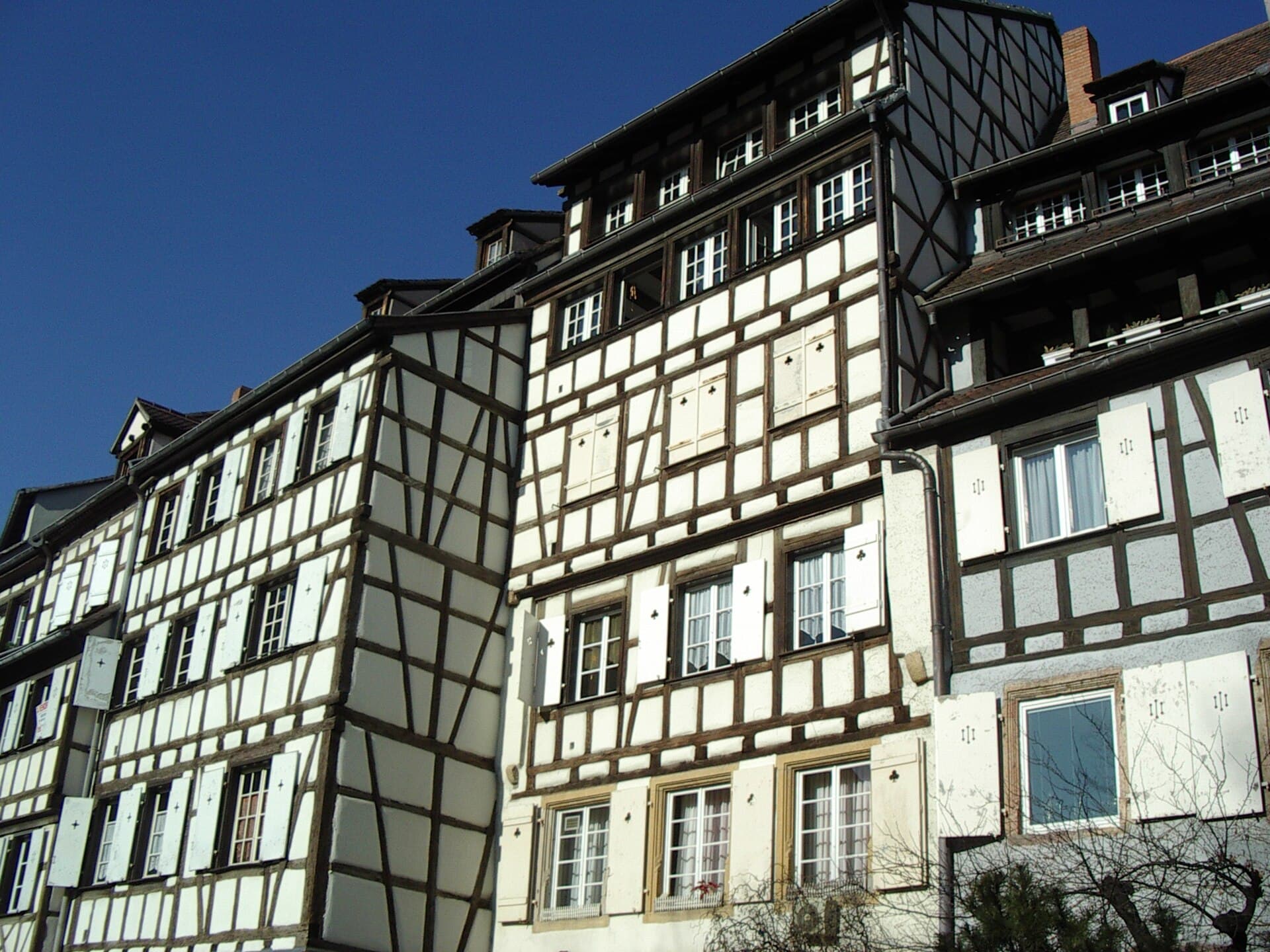 The Tanners' QuarterA street of timber houses that are **strikingly tall, narrow and long** in the m2 minutes walk4.9
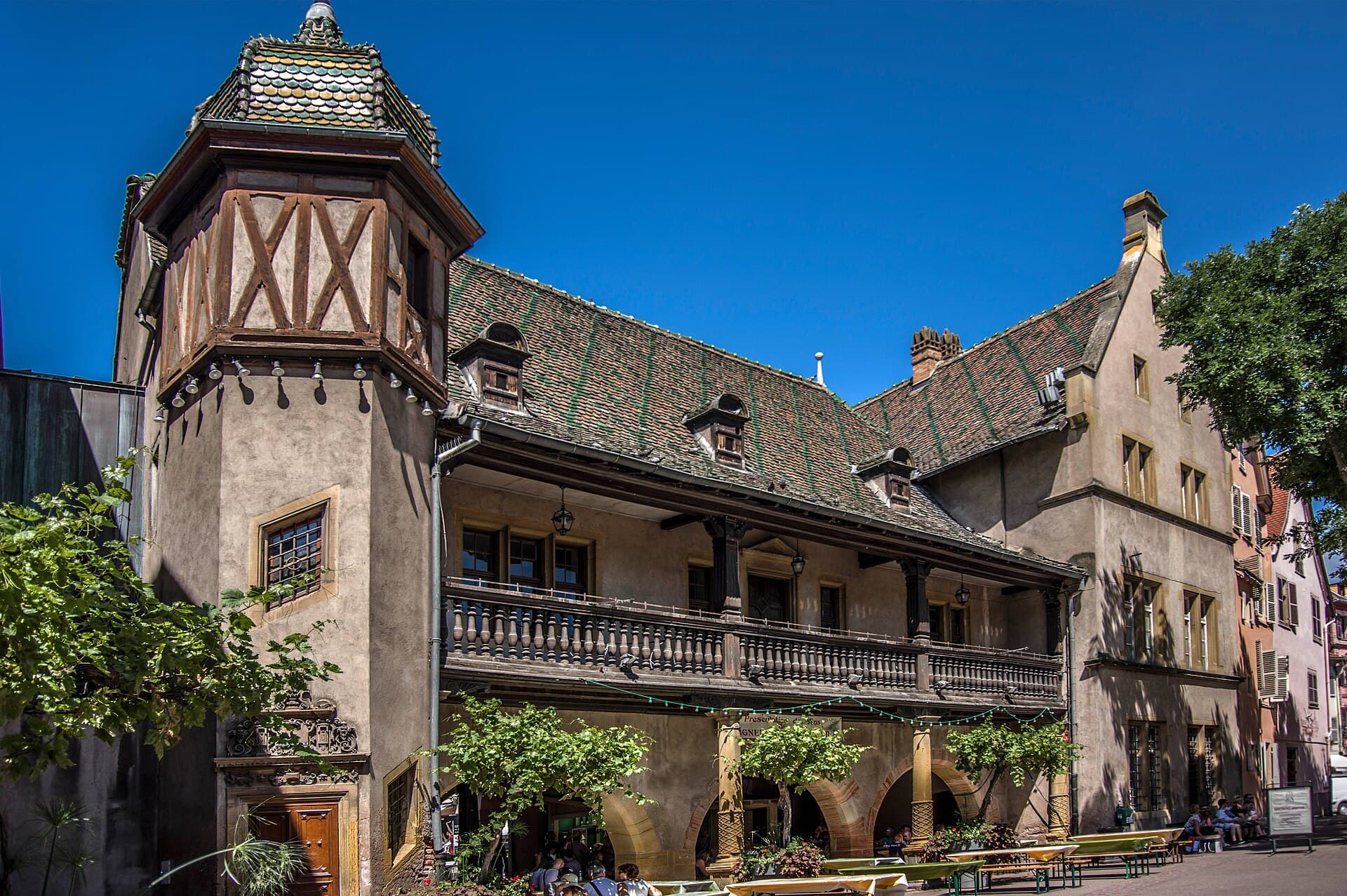 The Koïfhus (Old Customs House)The Koïfhus is Colmar's oldest public building (1480) and its old economic heart2 minutes walk4.8
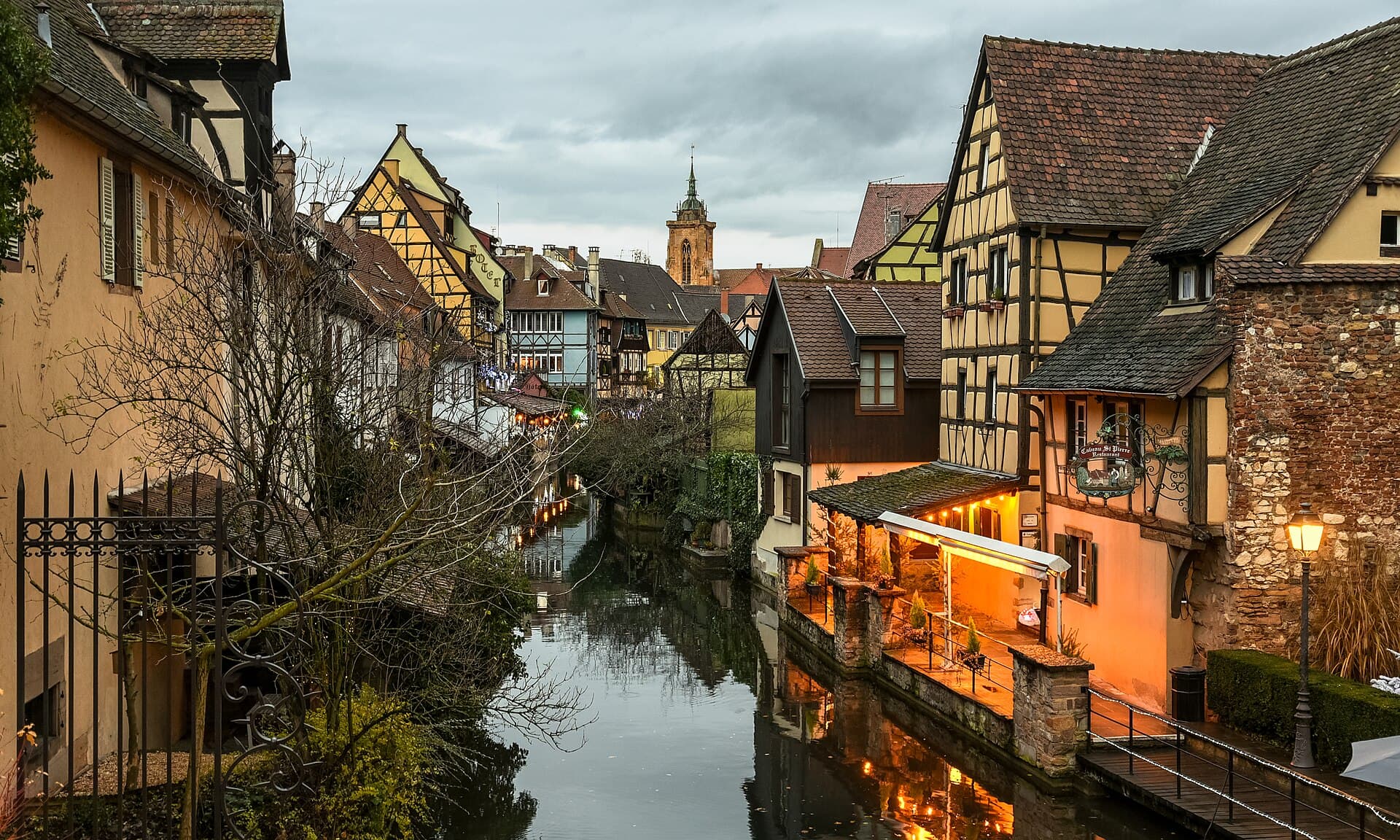 La Petite Venise, ColmarLittle Venice is Colmar's jewel: half-timbered Alsatian houses in candy colours 2 minutes walk4.6
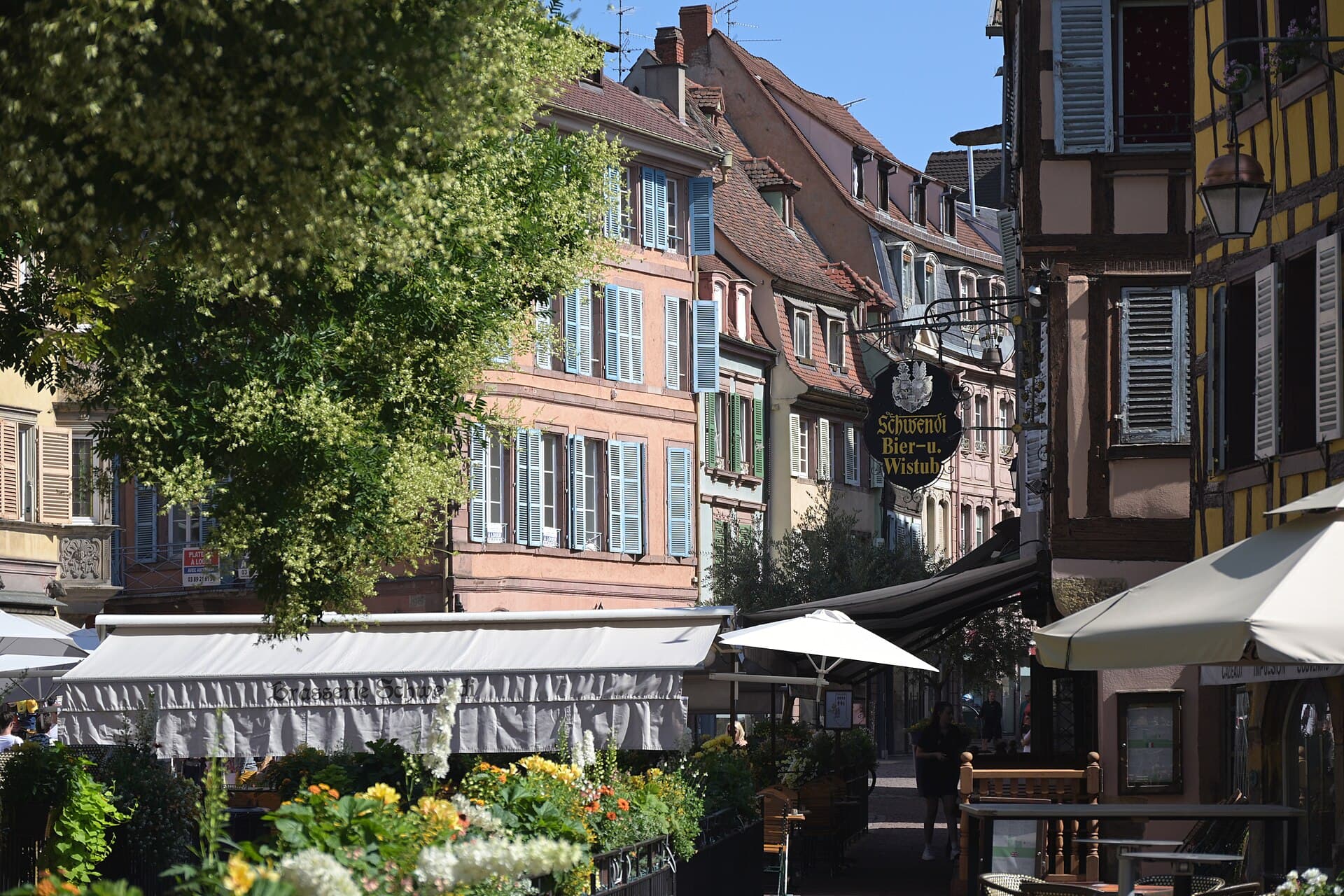 Place de l'Ancienne DouaneThe central square of old Colmar, turning on the **Koïfhus** — the old customs h2 minutes walk4.9
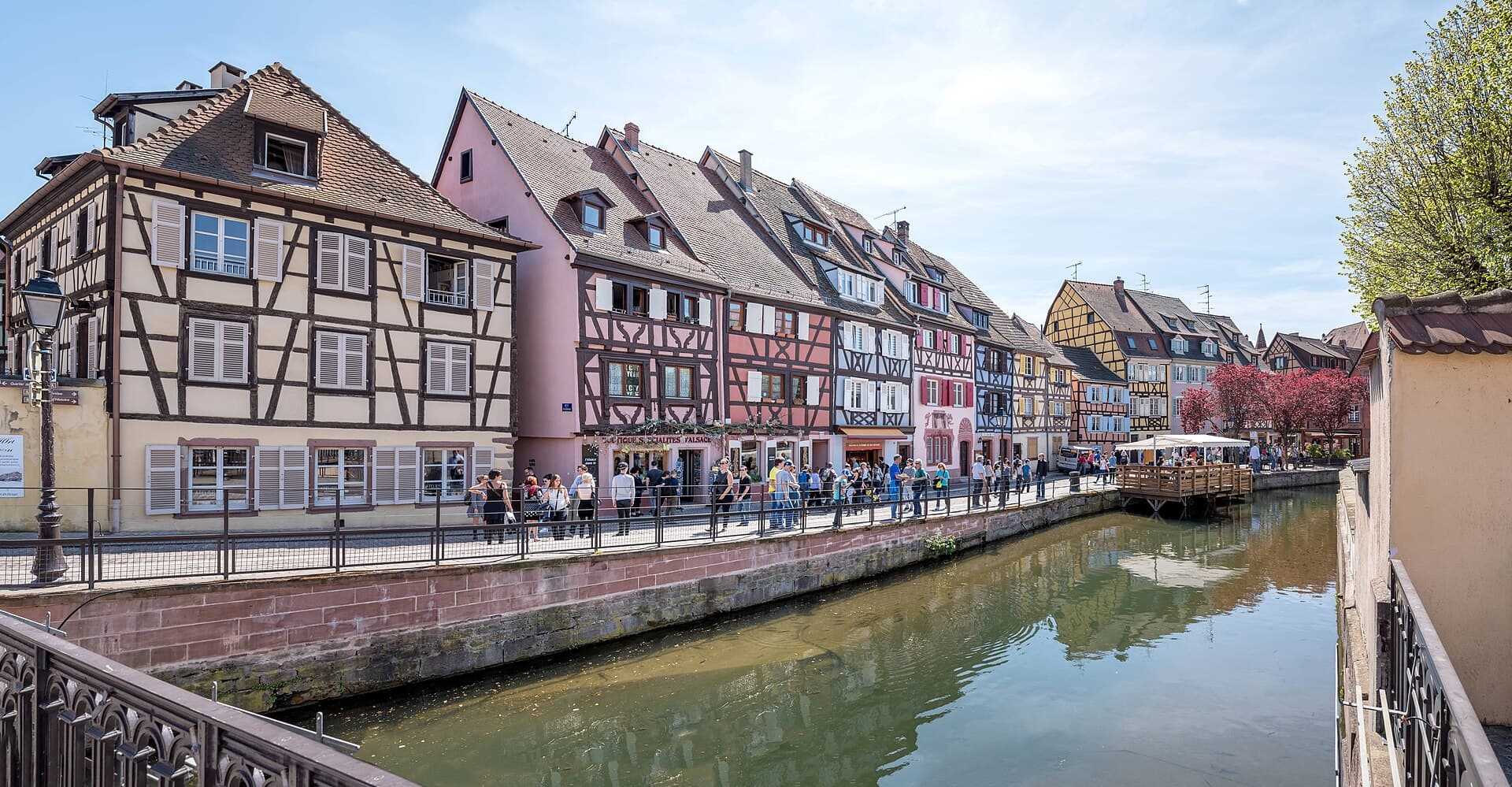 Quai de la Poissonnerie (Fishmongers' Quarter)A quay of timber houses in **vivid colours** — yellow, red, blue and pink — lini2 minutes walk4.9
Not usually — it is a **private building**, and the normal visit is to stand in the street and look at the front, which takes five to ten minutes and costs nothing. It may open exceptionally for the **European Heritage Days** in September or for an announced event, so if your trip falls then, ask the Colmar tourist office. In any case the value here is the façade rather than the interior: the double loggia is what distinguishes it and it is entirely visible from the street.
The Grand'Rue and the streets around it are the heart of old Colmar and hold most of what you see on foot in half a day: the Gothic **Saint-Martin church** and its square, the **Maison des Têtes** with its front carved with dozens of faces, the well-known **Maison Pfister** with its murals, the **Place de l'Ancienne Douane** with the Koïfhus, and then **Little Venice**, the Tanners' Quarter and the fishmongers' quay along the river. Old Colmar is very small — twenty minutes end to end on foot — so rather than planning each sight separately, simply walk it.