
The tall houses
Storey on storey opened to the air for drying skins.
Florival fr — CC BY-SA 3.0 · Kent Wang from Barcelona, Spain — CC BY-SA 2.0 · Zairon — CC BY-SA 4.0 · fotogoocom — CC BY 3.0
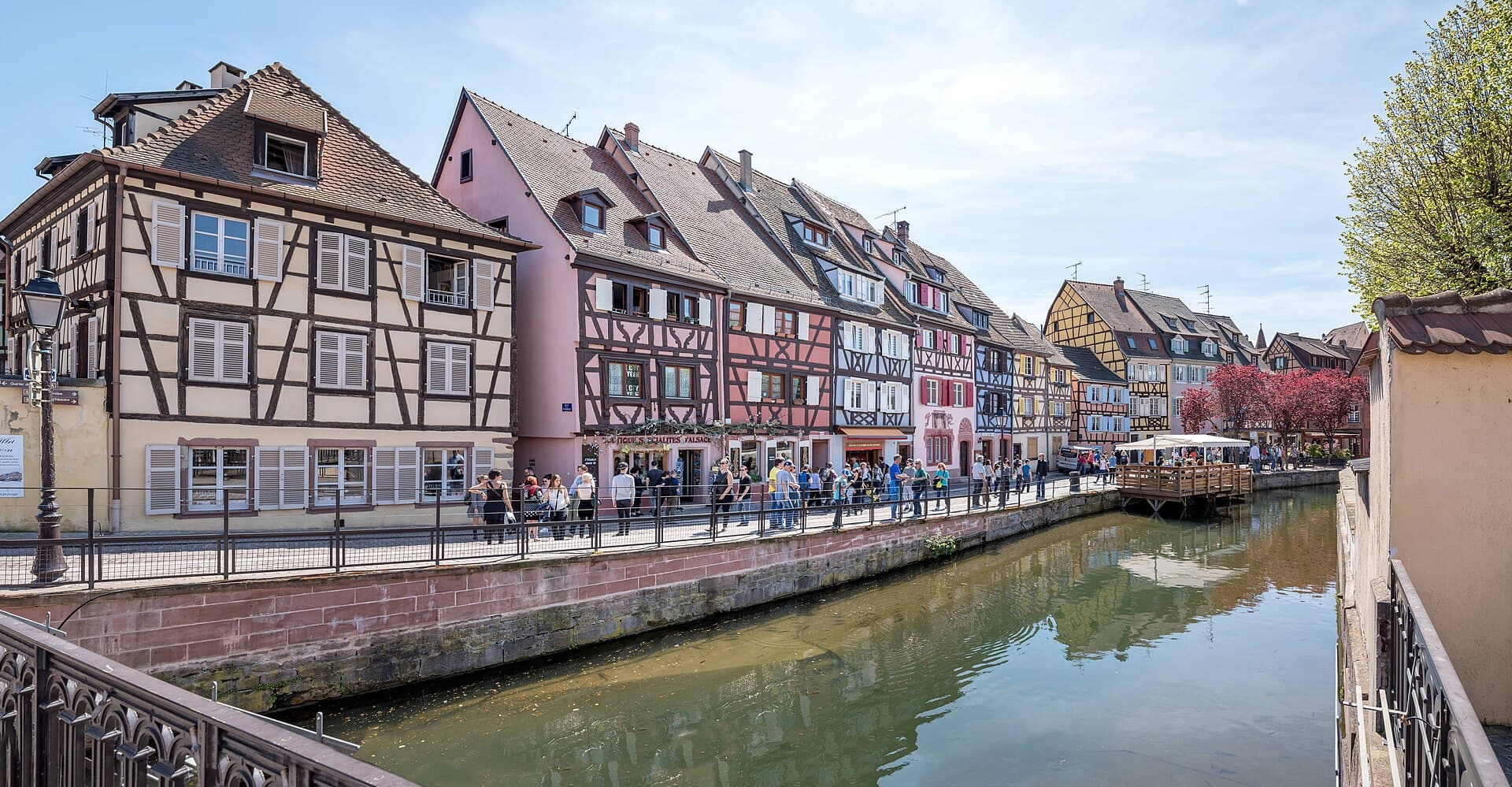
A street of timber houses that are **strikingly tall, narrow and long** in the middle of old Colmar, and their odd shape has a purely practical cause: the **tanners** lived here, and their trade required drying hides, so they built their houses high, storey upon storey, opening the upper floors to the air so that skins could hang and dry. The house was workshop and dwelling at once. The trade itself stank, so the quarter was placed beside a **water channel** running along it to carry the tanning water away — and that channel is now the prettiest thing about it. The quarter declined through the twentieth century until it was close to demolition, then underwent a major restoration in the 1970s that returned the timber frontages and exposed beams to their original state. So what you walk through today is restored, but original in structure. It stands steps from **Little Venice** and the old customs square, part of the same route — and usually quieter than either.
Storey on storey opened to the air for drying skins.
The watercourse that carried the tanning water away.
Usually calmer than neighbouring Little Venice.
Rue des Tanneurs, 68000 Colmar
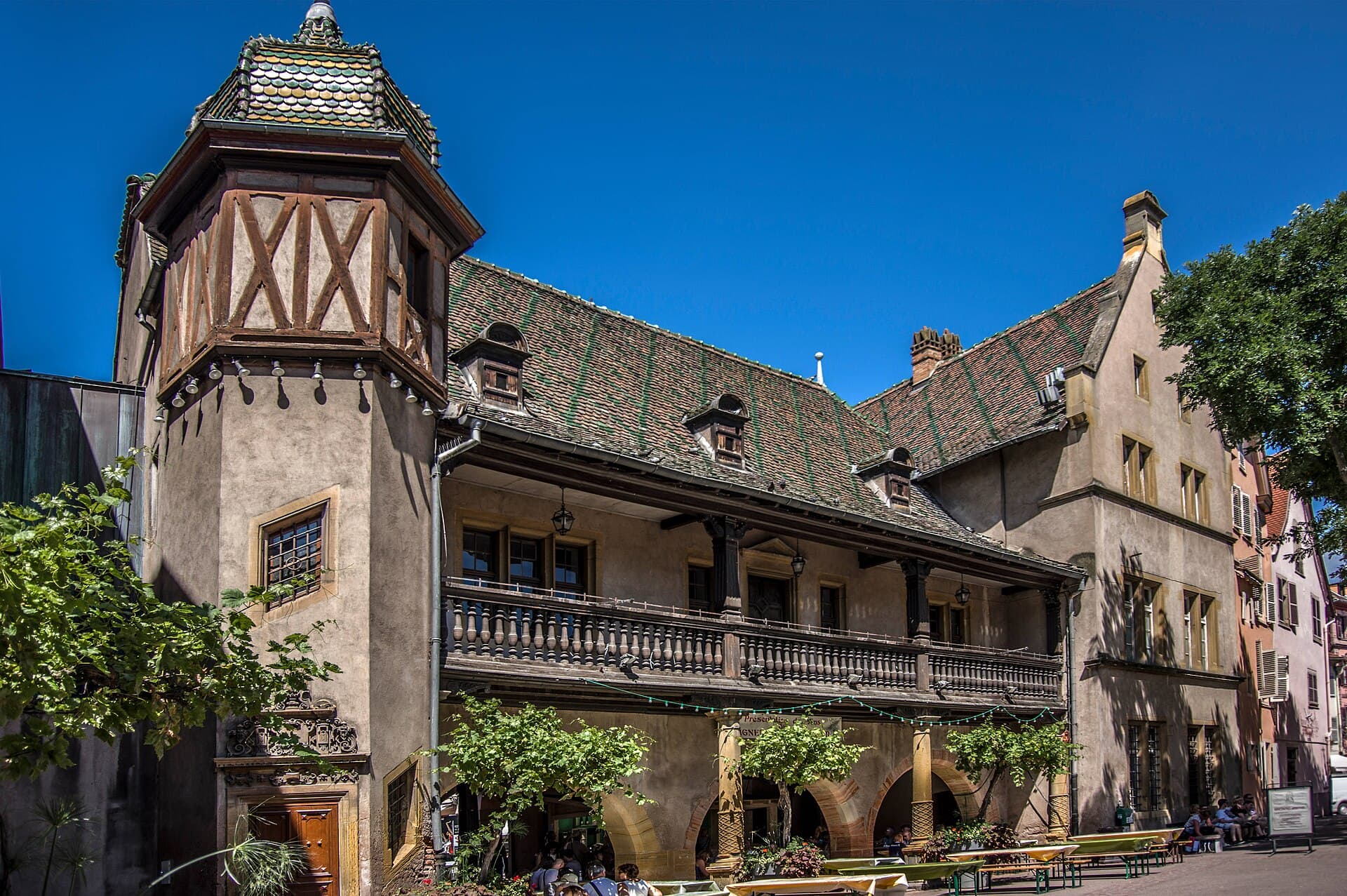 The Koïfhus (Old Customs House)The Koïfhus is Colmar's oldest public building (1480) and its old economic heart1 minute walk4.8
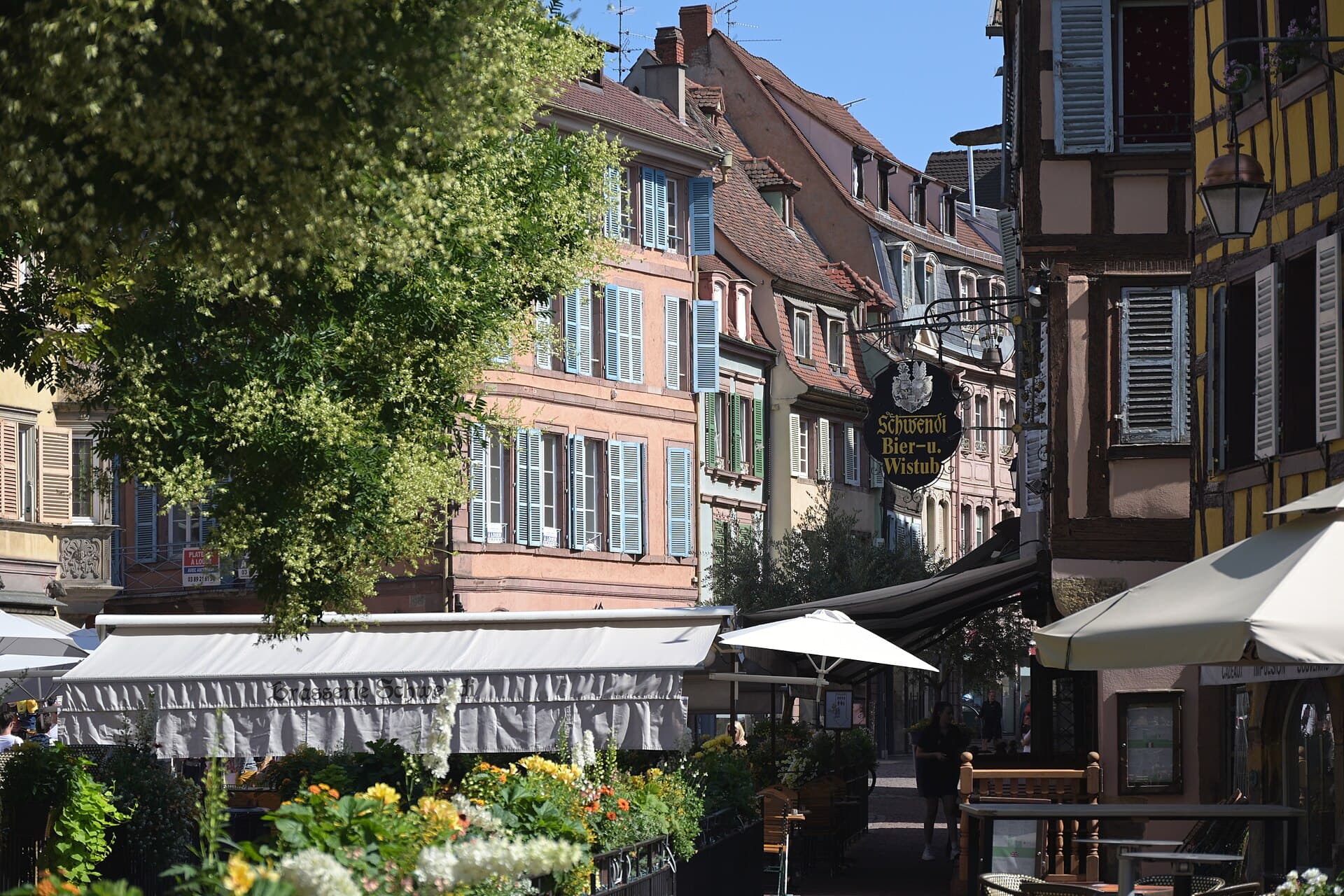 Place de l'Ancienne DouaneThe central square of old Colmar, turning on the **Koïfhus** — the old customs h1 minute walk4.9
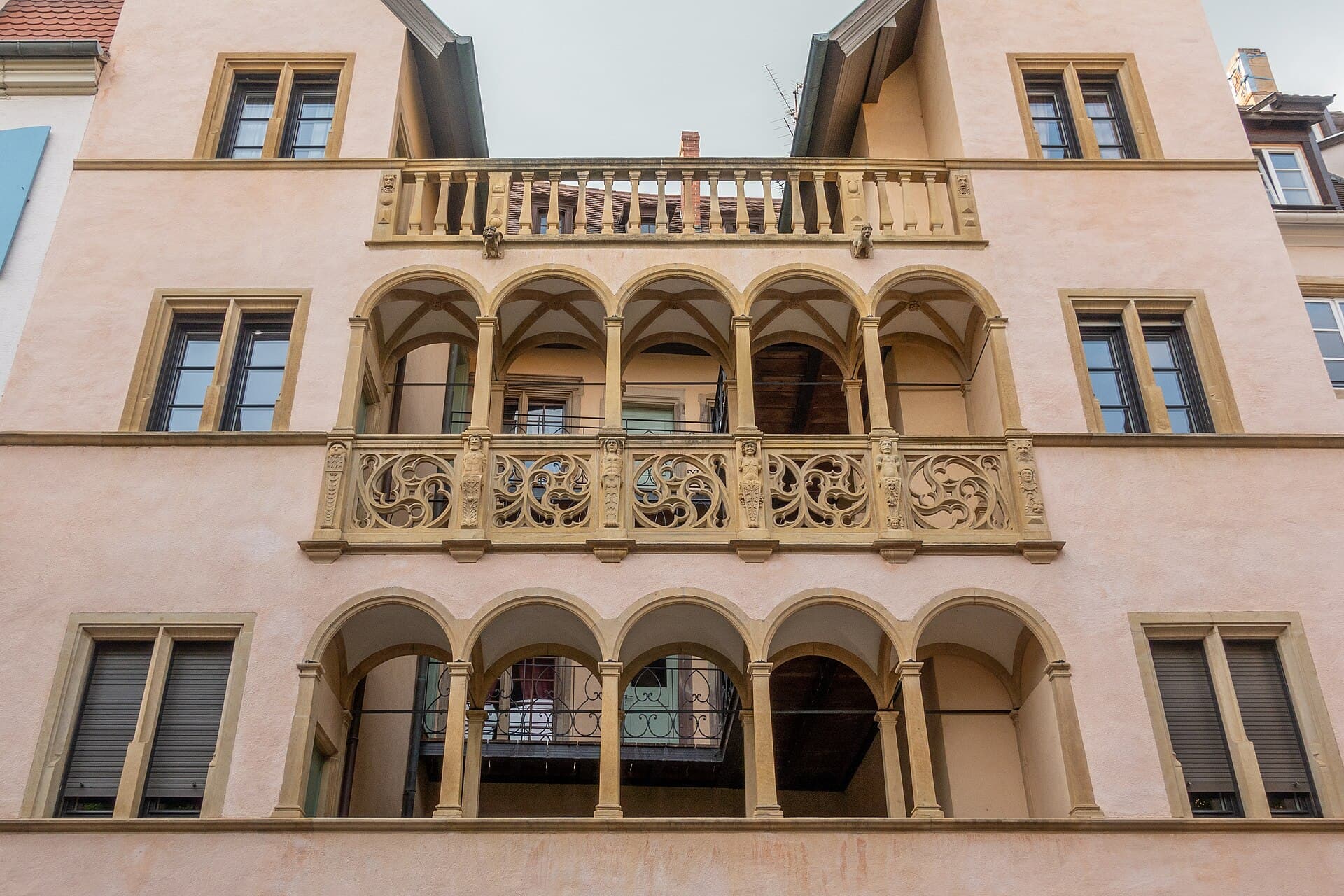 House of the Knights of Saint JohnA Renaissance house built in **1608** in old Colmar, with one of the strangest f2 minutes walk4.2
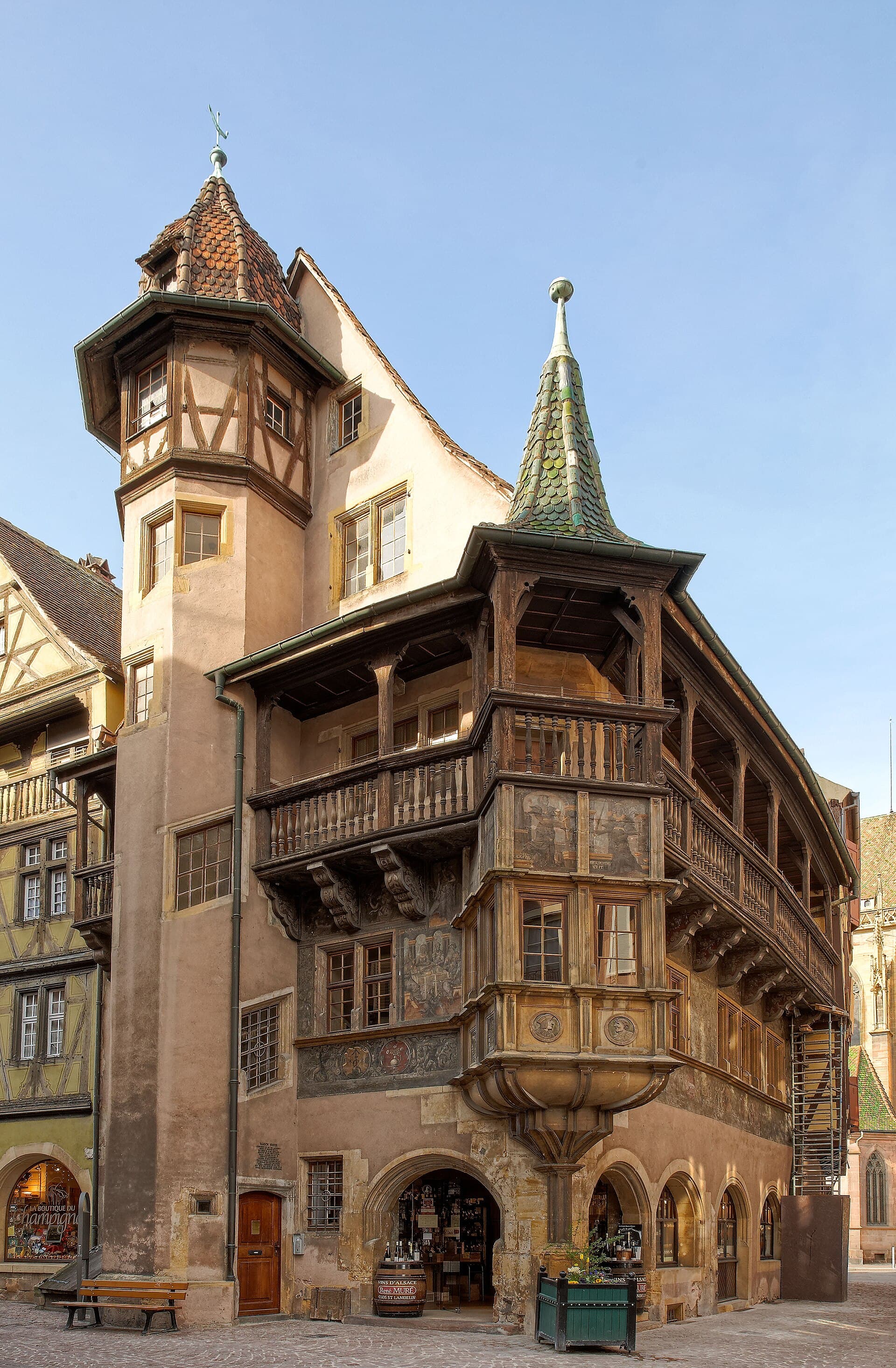 Maison PfisterThe Pfister house is Alsace's most famous house outright: built by a rich hatter2 minutes walk4.8
 Quai de la Poissonnerie (Fishmongers' Quarter)A quay of timber houses in **vivid colours** — yellow, red, blue and pink — lini2 minutes walk4.9
They are neighbours and are often confused. **Little Venice** is the course of the river Lauch and its banks with coloured houses and flat-bottomed boats, and the scene there is **watery**: you photograph from the bridge down to the water. The **Tanners' Quarter** is a street of tall timber houses on a smaller channel, and the scene is **architectural**: you look up at the beams and the storeys. They are minutes apart and are seen together in half an hour, and the tanners' street is usually quieter — so start there if you arrive at a busy hour.
**Early morning**, before about nine: the street is empty of people, the low light brings out the texture and colour of the timber, and the channel is still enough to reflect. Midday is the worst — the street is narrow so shadows fall hard, and visitors are many. Evening after dark is handsome too with the lighting, but needs a steady hand. In December the quarter is decorated for the Christmas markets, which changes the picture entirely and makes it far busier. And remember the houses are lived in: don't photograph into windows.