
The octagonal oriel
1537 timber hung on the corner — Colmar's architectural signature.
Eric Gaba (Sting - fr:Sting) — CC BY-SA 3.0 · FrDr — CC BY-SA 4.0 · FrDr — CC BY-SA 4.0 · FrDr — CC BY-SA 4.0
The Pfister house is Alsace's most famous house outright: built by a rich hatter-silversmith in 1537, gathering on one façade all the Rhine Renaissance could do — an octagonal timber oriel on the corner, a spiral stair turret, a two-storey wooden gallery, painted biblical and imperial murals across the plaster. It was Colmar's first 'modern' house — full Renaissance in a Gothic town — and became its visual signature: in every Alsace book, drawn by Hokusai among European views, and sworn by Ghibli lovers to have inspired Miyazaki's moving castle. The house is private, seen from outside only — and standing at the Rue des Marchands corner to frame oriel and murals is an obligatory ten-minute Colmar rite, its neighbours (the Schongauer house, the Bartholdi museum) turning the corner into an open street museum.
1537 timber hung on the corner — Colmar's architectural signature.
Emperors and evangelists in sixteenth-century colour on plaster.
Fans call it Howl's castle's grandfather — and the likeness smiles.
11 Rue des Marchands, 68000 Colmar
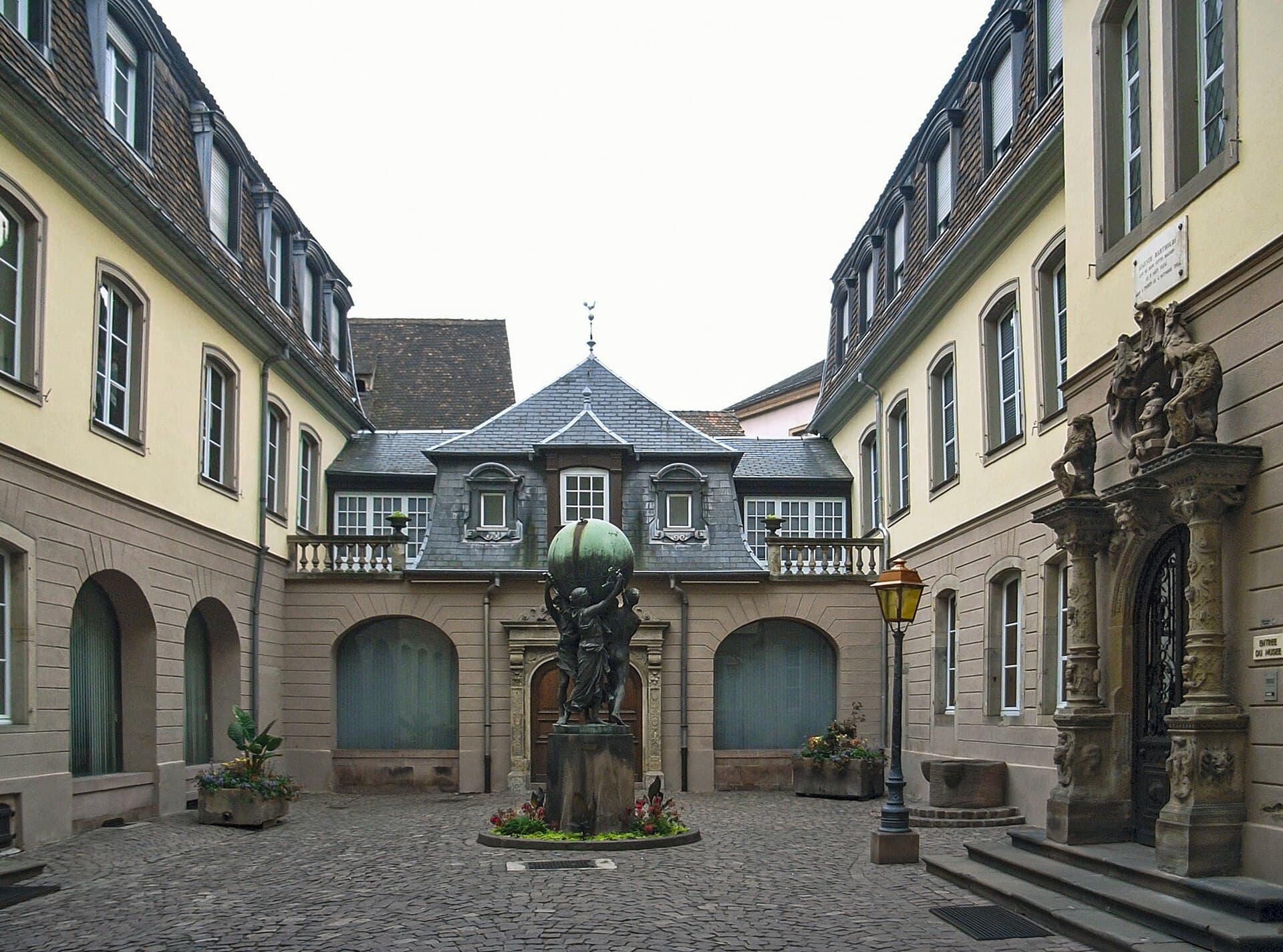 Bartholdi MuseumIn an old family house on the merchants' street, Frédéric Auguste Bartholdi was 1 minute walk4.5
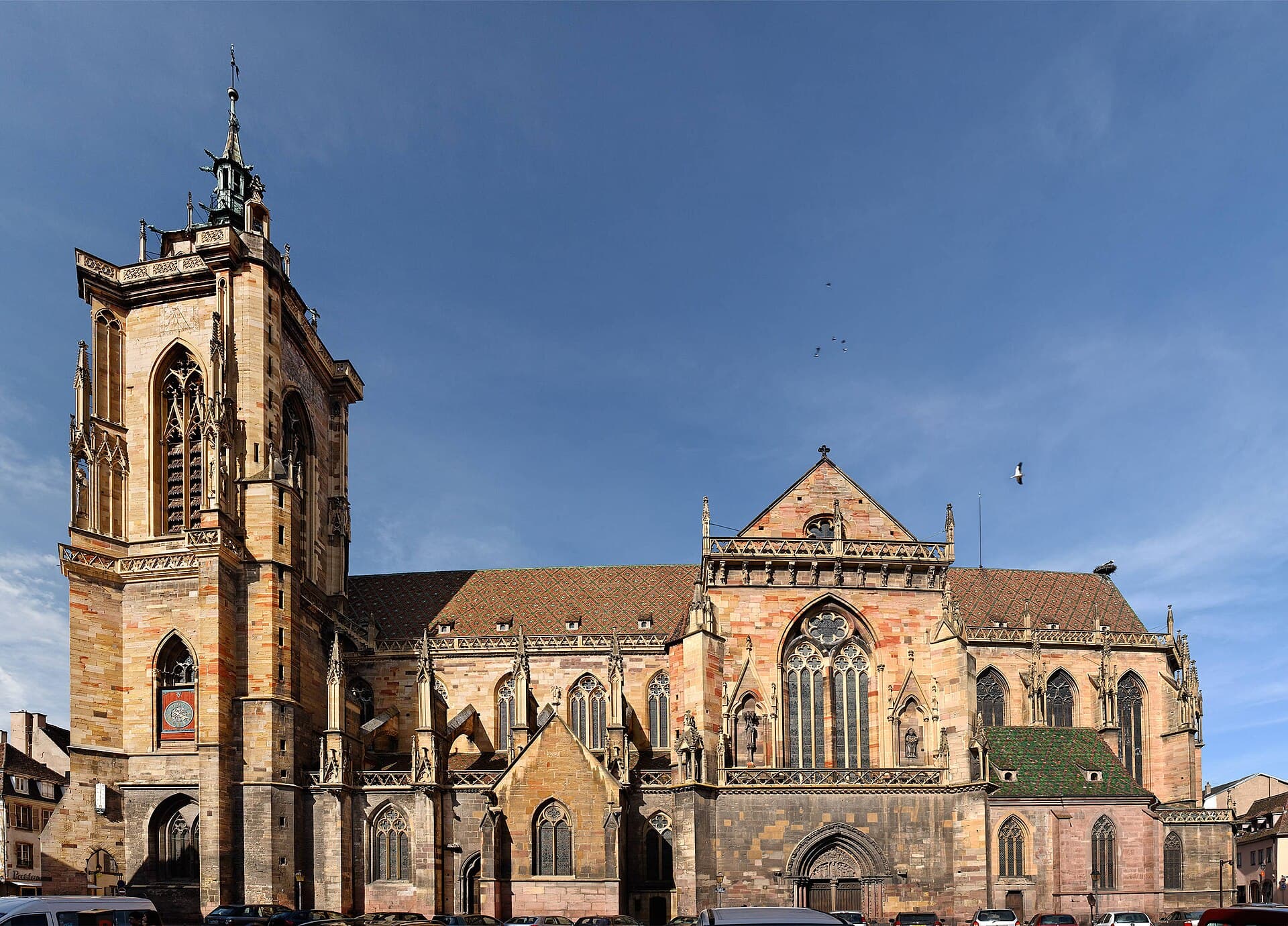 Collégiale Saint-MartinSaint-Martin is Colmar's great church — locals call it 'the cathedral' though it1 minute walk4.6
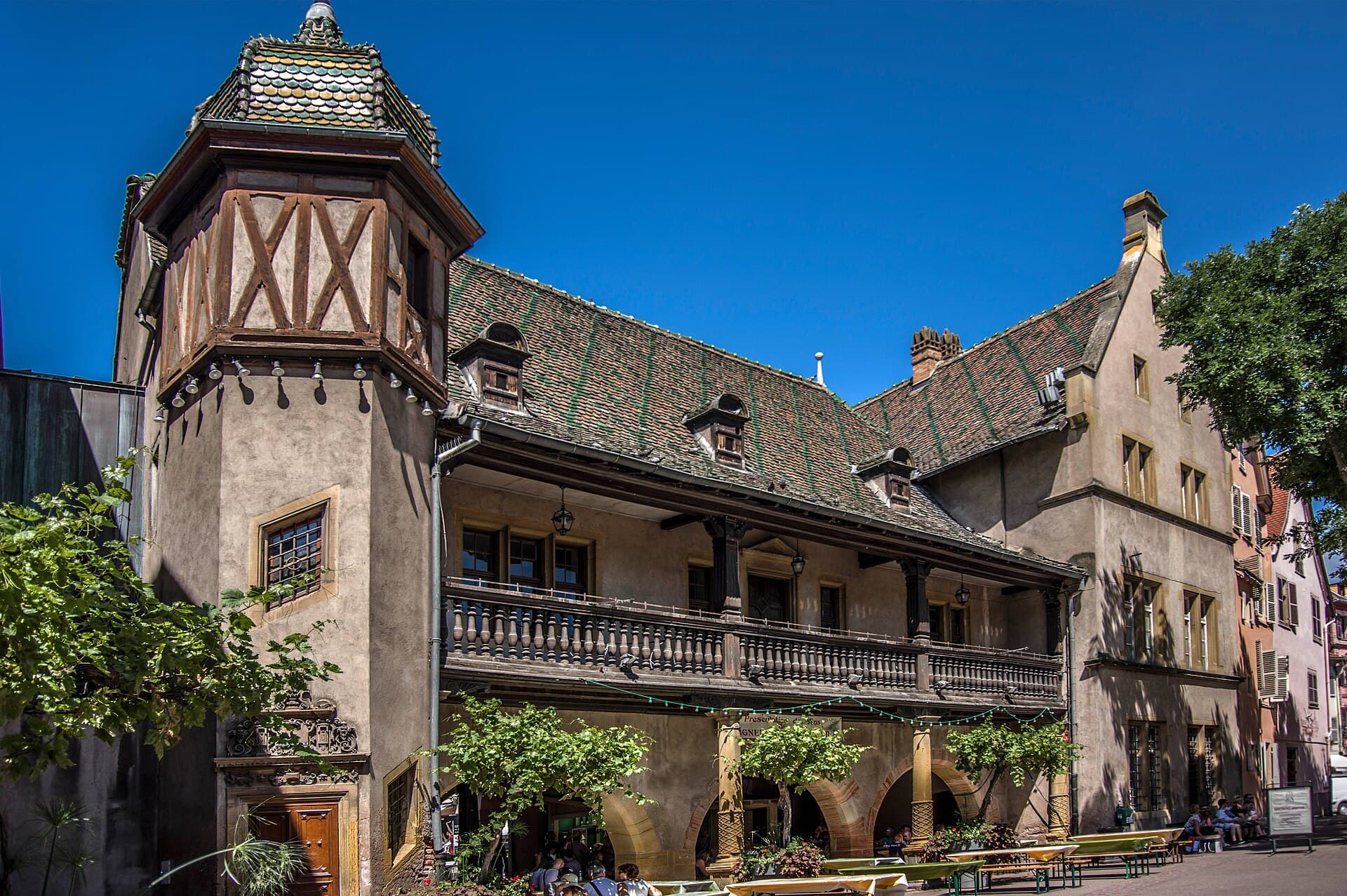 The Koïfhus (Old Customs House)The Koïfhus is Colmar's oldest public building (1480) and its old economic heart1 minute walk4.8
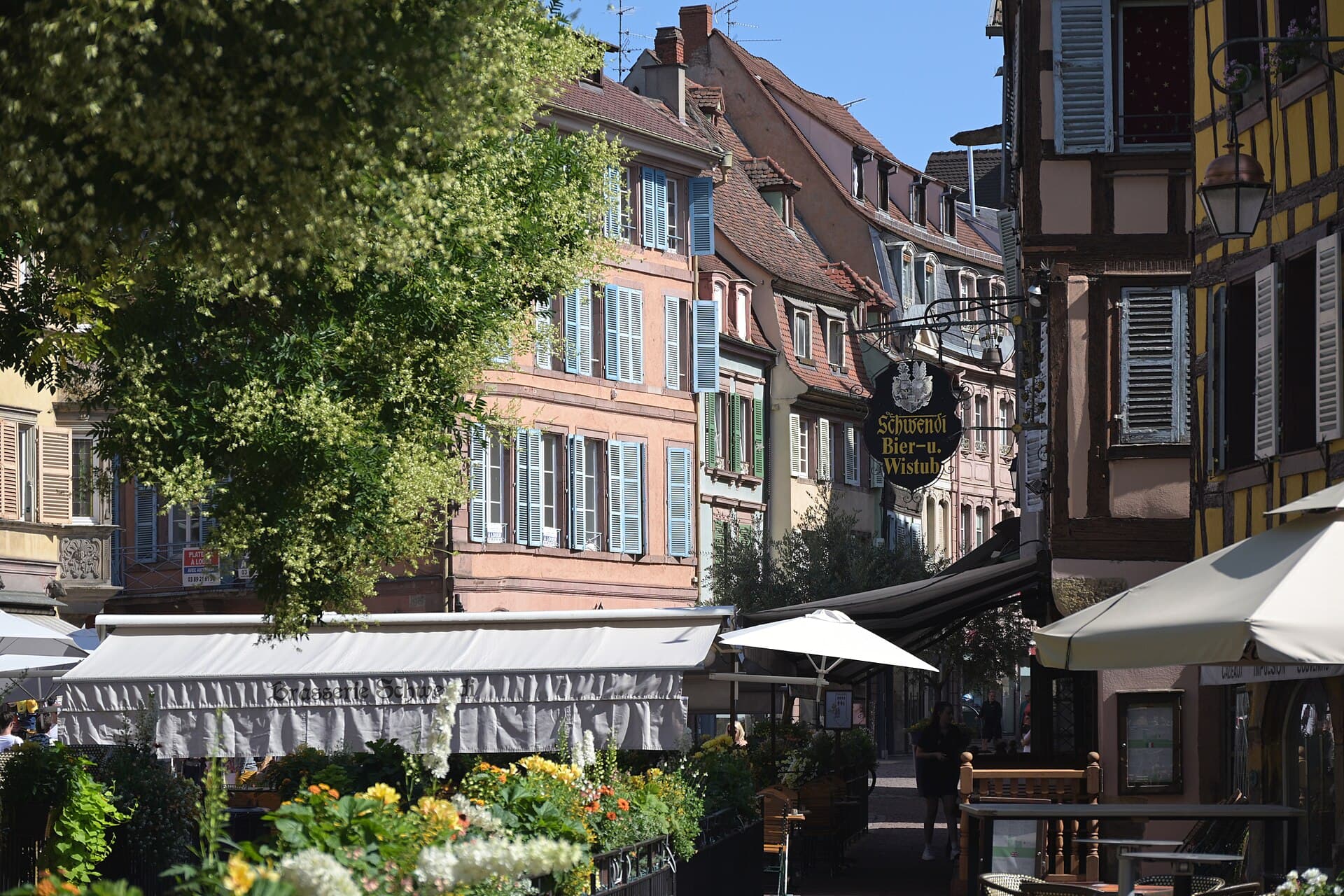 Place de l'Ancienne DouaneThe central square of old Colmar, turning on the **Koïfhus** — the old customs h2 minutes walk4.9
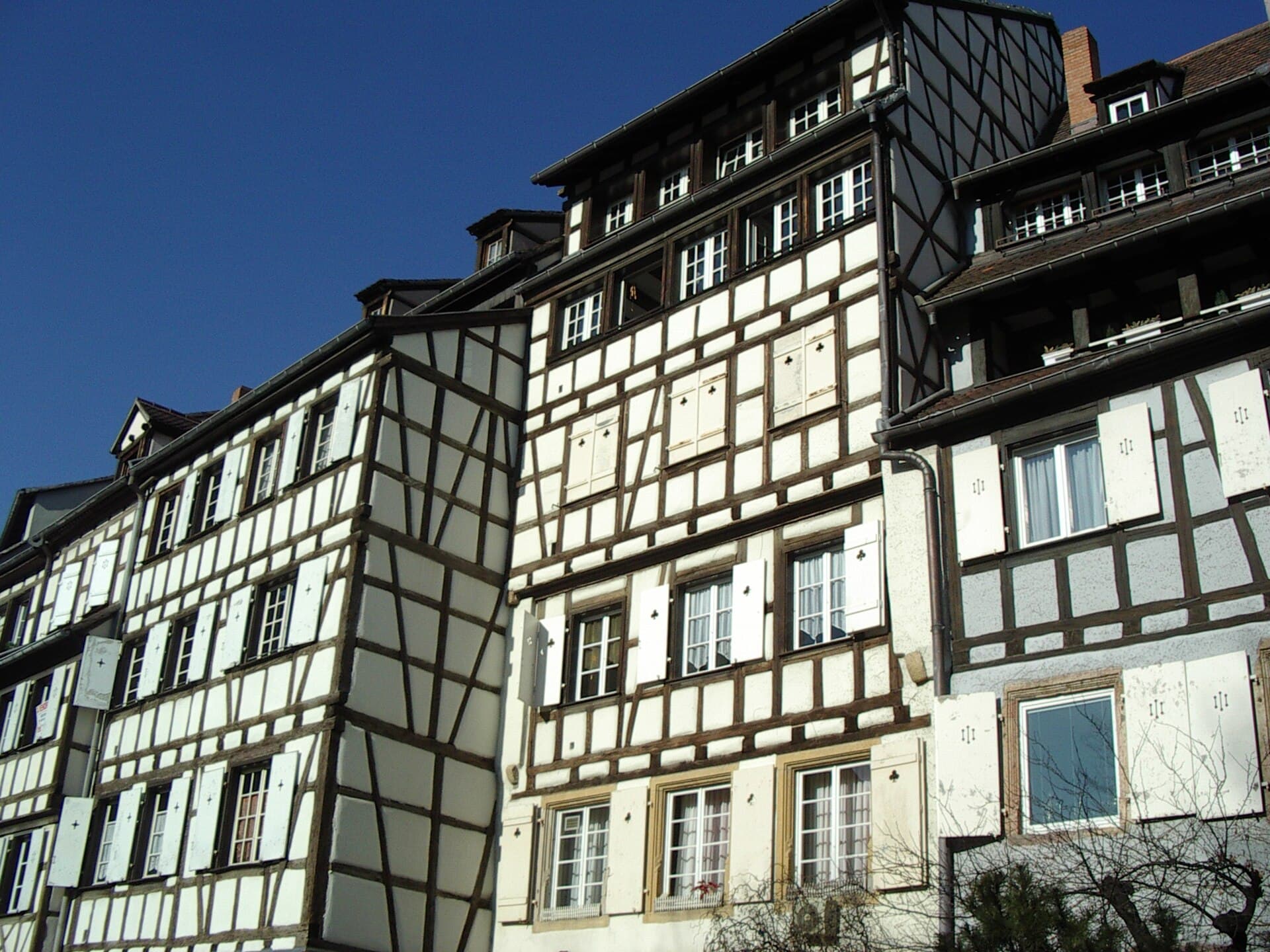 The Tanners' QuarterA street of timber houses that are **strikingly tall, narrow and long** in the m2 minutes walk4.9
Because it documents a turning moment: the first full Renaissance façade in a Gothic trading town — new burgher wealth declaring itself as street art. Scale, colour and perfect preservation did the rest through five centuries of painters and photographers.
In Europe-Japan's mutual craze, Hokusai's school drew imagined European views from imported prints — the Pfister house and oriel among them. Colmar tells it proudly in its museums; the nicer lesson: the house went viral two centuries before the word.
The adjoining Schongauer house (home of Colmar's earliest painter), the Bartholdi museum steps on, the collegiate church behind — this Rue des Marchands being every Colmar walk's spine anyway.