
Art of two nationalities
German and French together — the city changed between them four times.
Photo Claude TRUONG-NGOC — CC BY-SA 3.0 · Photo Claude TRUONG-NGOC — CC BY-SA 3.0 · Photo Claude TRUONG-NGOC — CC BY-SA 3.0 · Photo Claude TRUONG-NGOC — CC BY-SA 3.0
A large museum of modern and contemporary art in a glass building on the bank of the Ill, opened in 1998, covering art from the end of the nineteenth century to the present. The collection is particularly strong in Impressionism and after, and in German and French modernism — which makes sense in a city that changed nationality four times between 1870 and 1945. The museum shows the art of both traditions together rather than choosing one narrative. Its outstanding holding is a room devoted to Jean Arp, the Strasbourg-born artist and co-founder of Dada, with a large body of his work and that of his wife Sophie Taeuber-Arp. The two designed, with Theo van Doesburg, the interior of the Aubette café in central Strasbourg, among the most important works of European modernism. Practical points: the museum is large — allow ninety minutes to two and a half hours. It has a café with a terrace looking over the river and the old town. It usually closes one day a week and sometimes offers free days each month.
German and French together — the city changed between them four times.
The Dada pair, and authors of the Aubette interior in the centre.
A view over the river and old town — worth the stop on its own.
Bank of the Ill, west of the old town, Strasbourg
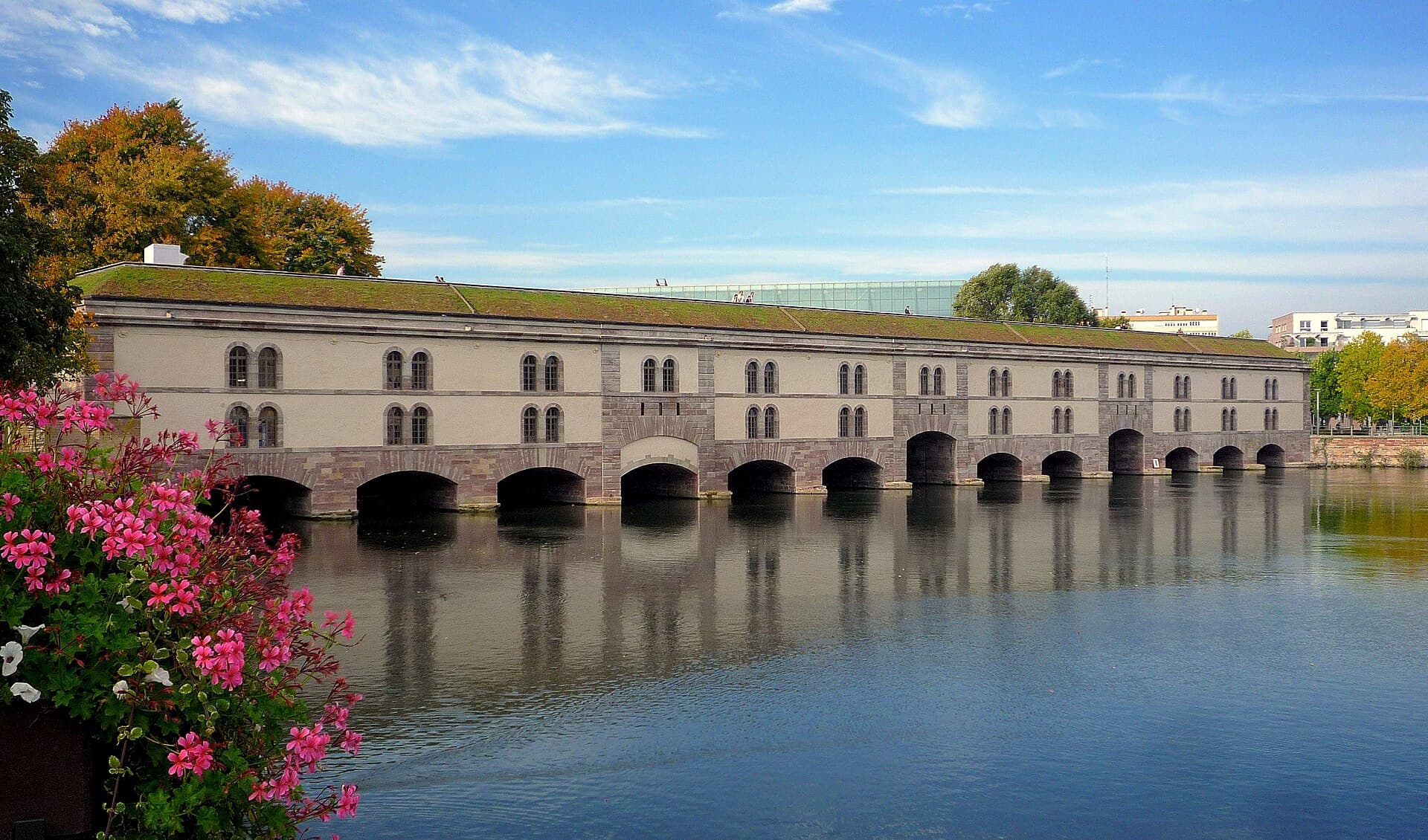 Barrage VaubanThe Barrage Vauban is a stone bridge-dam built by Louis XIV's famous military en2 minutes walk4.7
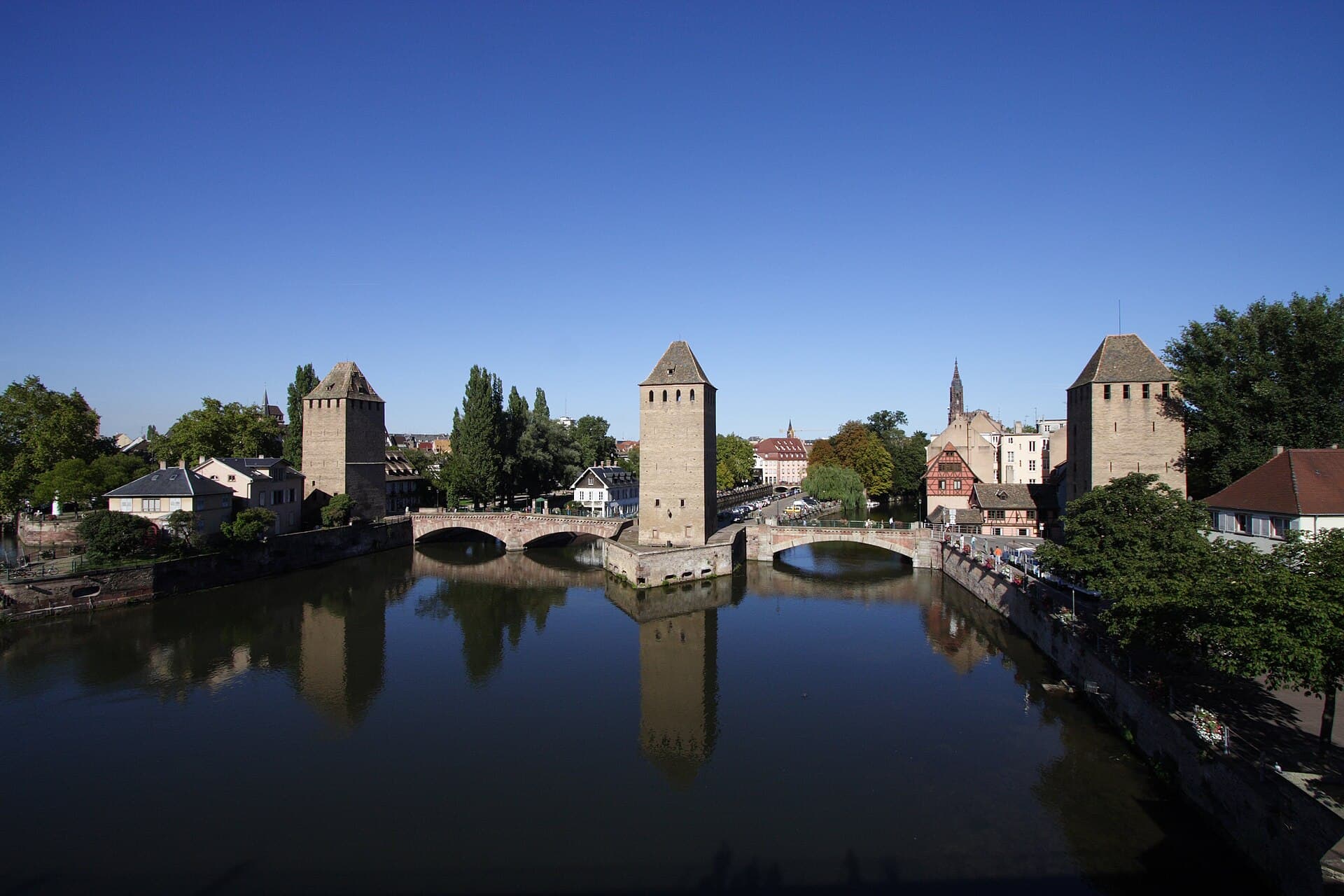 Ponts CouvertsThe Ponts Couverts are three bridges crossing the Ill's four arms at the entranc3 minutes walk4.8
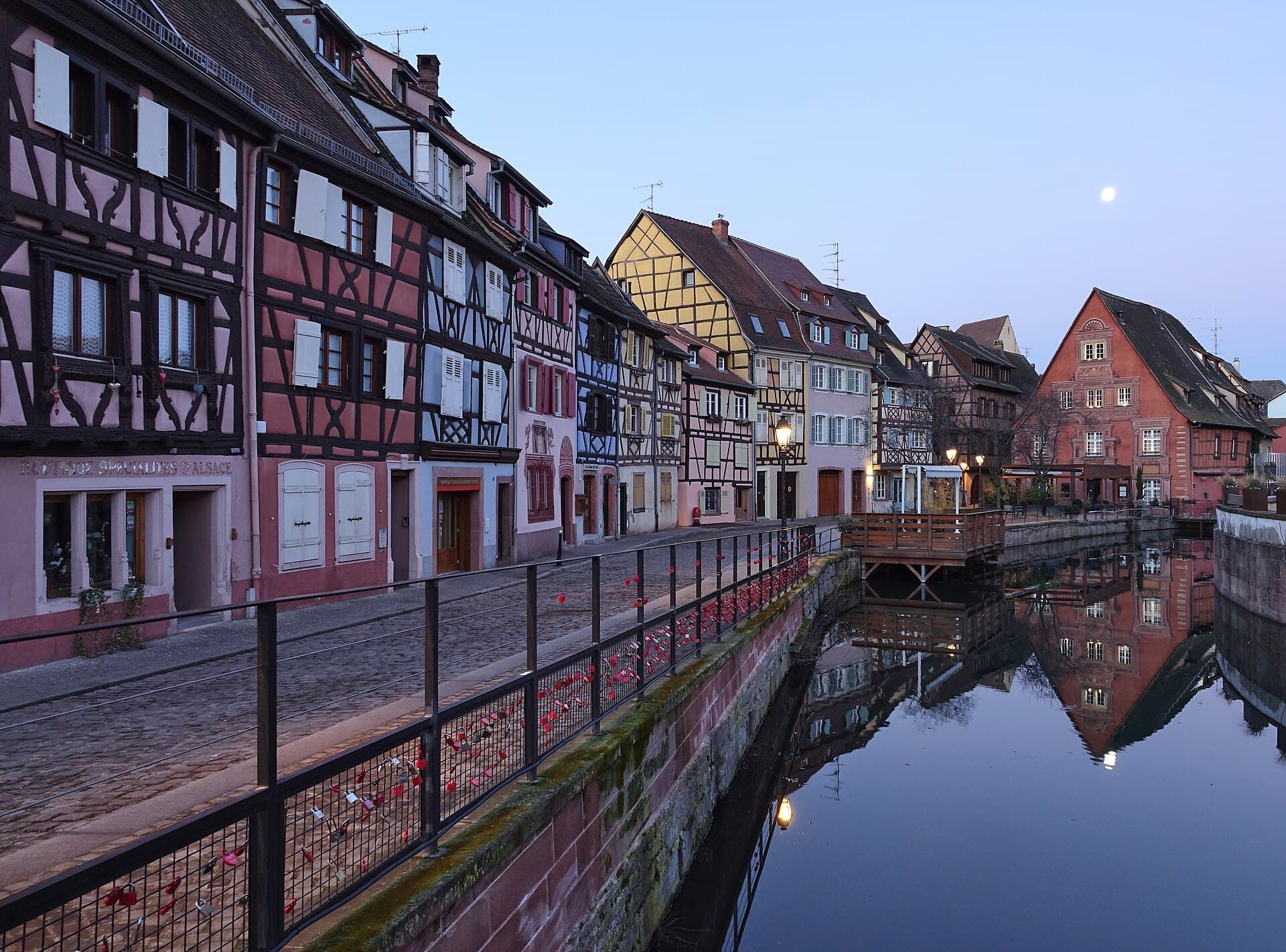 La Petite France'Little France' is the quarter Strasbourg gets photographed from: sixteenth- and4 minutes walk4.7
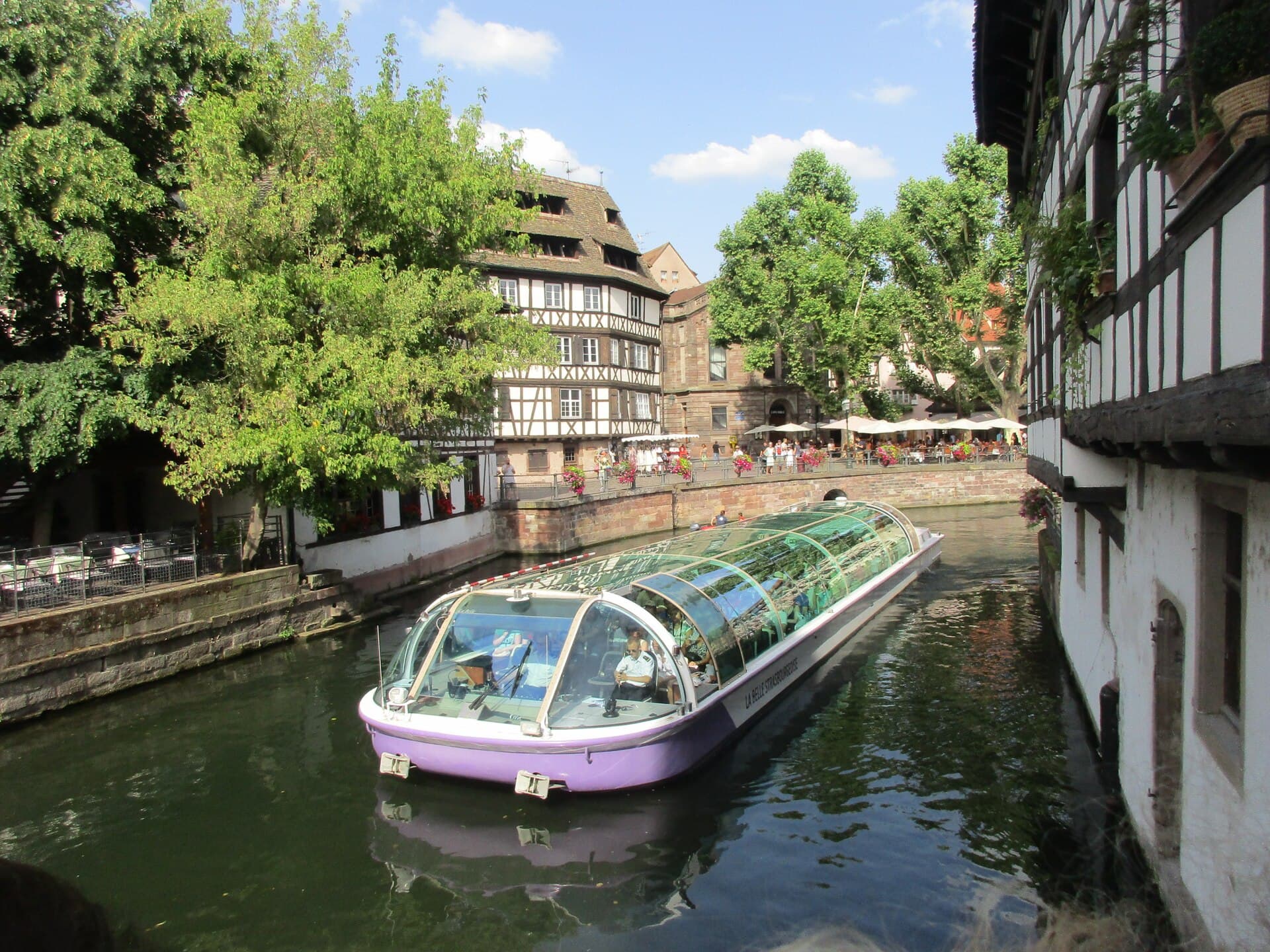 Place Benjamin-ZixA small square in the heart of the Petite France, ringed by Alsatian houses with6 minutes walk4.6
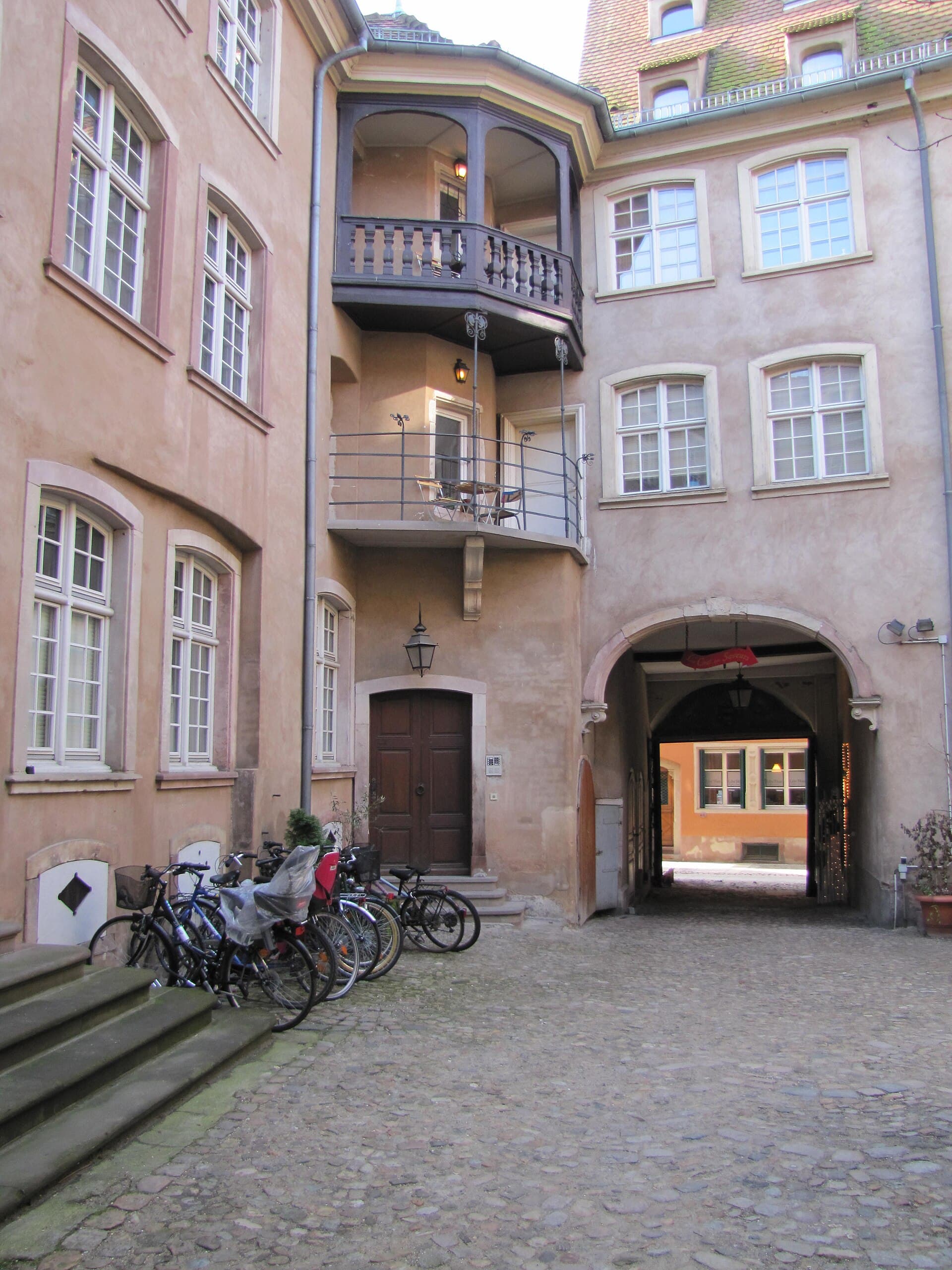 Hôtel de RathsamhausenA historic town mansion near the Petite France, built for the noble Alsatian fam7 minutes walk4.4
A building on Place Kléber in central Strasbourg whose interior Arp, Taeuber-Arp and van Doesburg designed in 1928 as a leisure complex. The work is regarded as among Europe's most important modernist interiors, but it was partly destroyed and sections were later restored; those rooms open to visitors at limited times. Ask at the museum about the hours.
The city was German-speaking within the Holy Roman Empire, was annexed by France in 1681, taken by Germany after the war of 1870, returned to France in 1918, annexed again in 1940, and returned definitively in 1945. That back and forth left its mark on the architecture, the language, the food, and on the art collections too.