
The Maximilian style
An architectural manner deliberately designed to be new, applied to the whole street.
Flocci Nivis — CC BY 4.0 · trolvag — CC BY-SA 3.0 · Foto Fitti — CC BY-SA 3.0 · Foto Fitti — CC BY-SA 3.0
A bronze monument in the middle of Munich's Maximilianstraße, raised between 1856 and 1875 to King Maximilian II of Bavaria. The figure stands on a high plinth ringed by four statues representing the virtues, with four bronze children carrying the arms of Bavaria's regions. The street matters more than the monument: Maximilianstraße was laid out in the 1850s on the king's orders as a ceremonial avenue running east from the royal Residenz and across the river, and the king wanted for it a new architectural manner imitating neither the classical nor the Gothic — later called the Maximilian style. The result is a street of matching arcaded facades closed at its far end by the Bavarian parliament building. Today it is Munich's most expensive shopping street: international fashion houses, the opera house and luxury hotels. The monument stands in the middle of the street between the carriageways and is seen from the pavement. A stop of minutes as you walk from the opera towards the river.
An architectural manner deliberately designed to be new, applied to the whole street.
The avenue and its arcaded facades matter visually more than the monument.
The Bavarian State Opera stands at the street's western end.
Maximilianstraße, the Lehel district
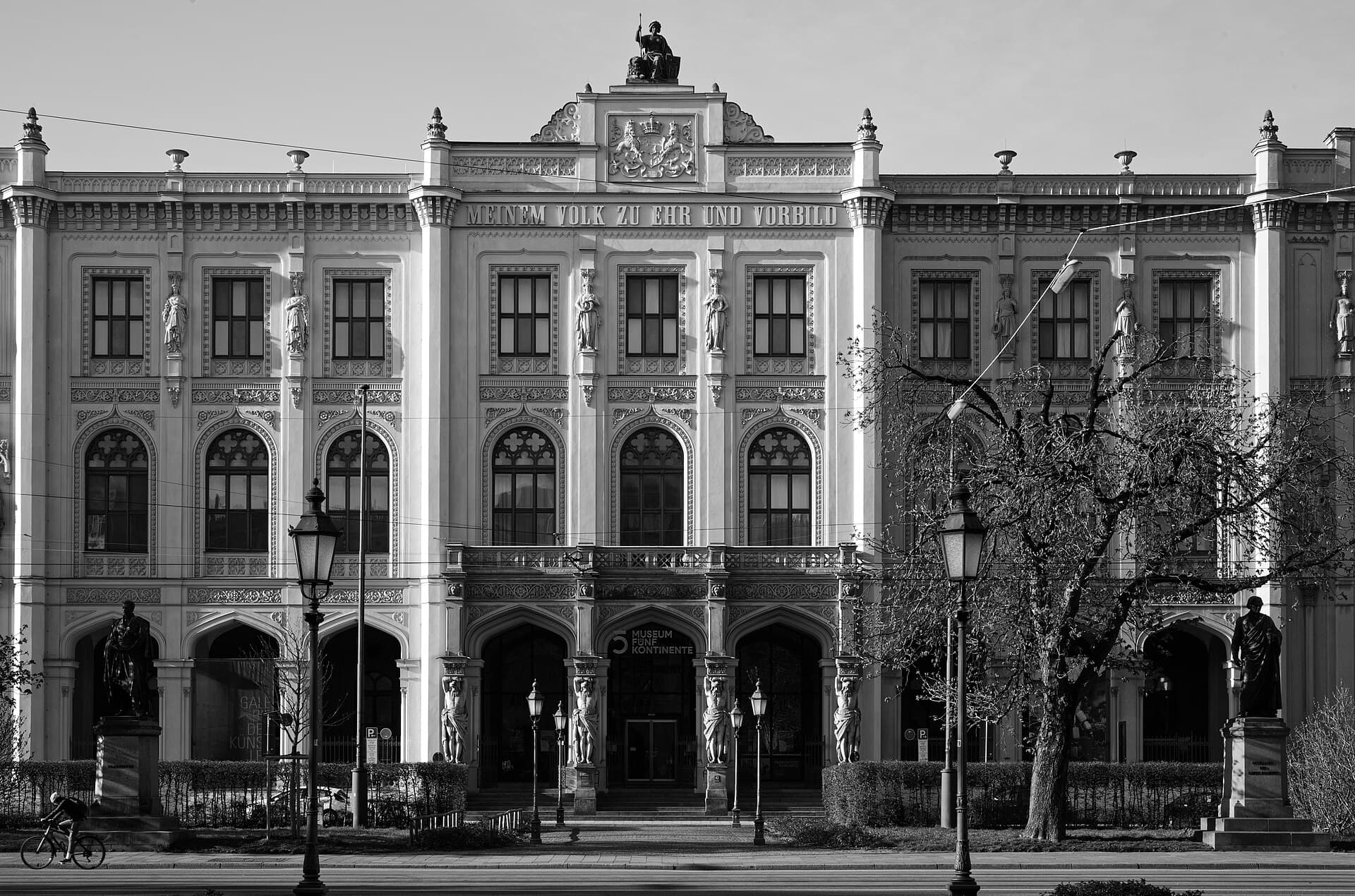 Museum Five ContinentsThe Museum Five Continents is Munich's museum of the world's cultures beyond Eur2 minutes walk4.5
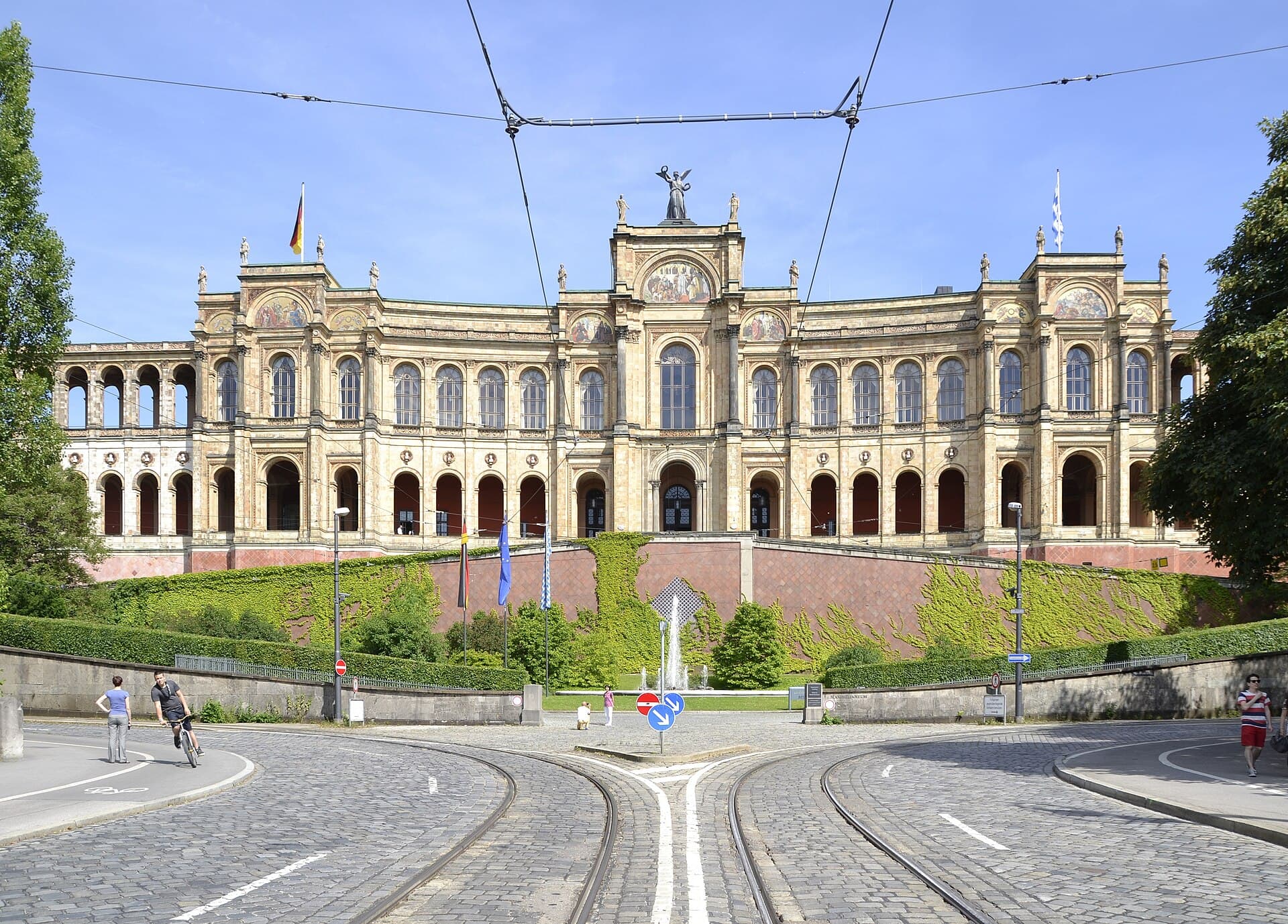 MaximilianeumThe Maximilianeum is a large building standing on a rise on the east bank of the4 minutes walk4.6
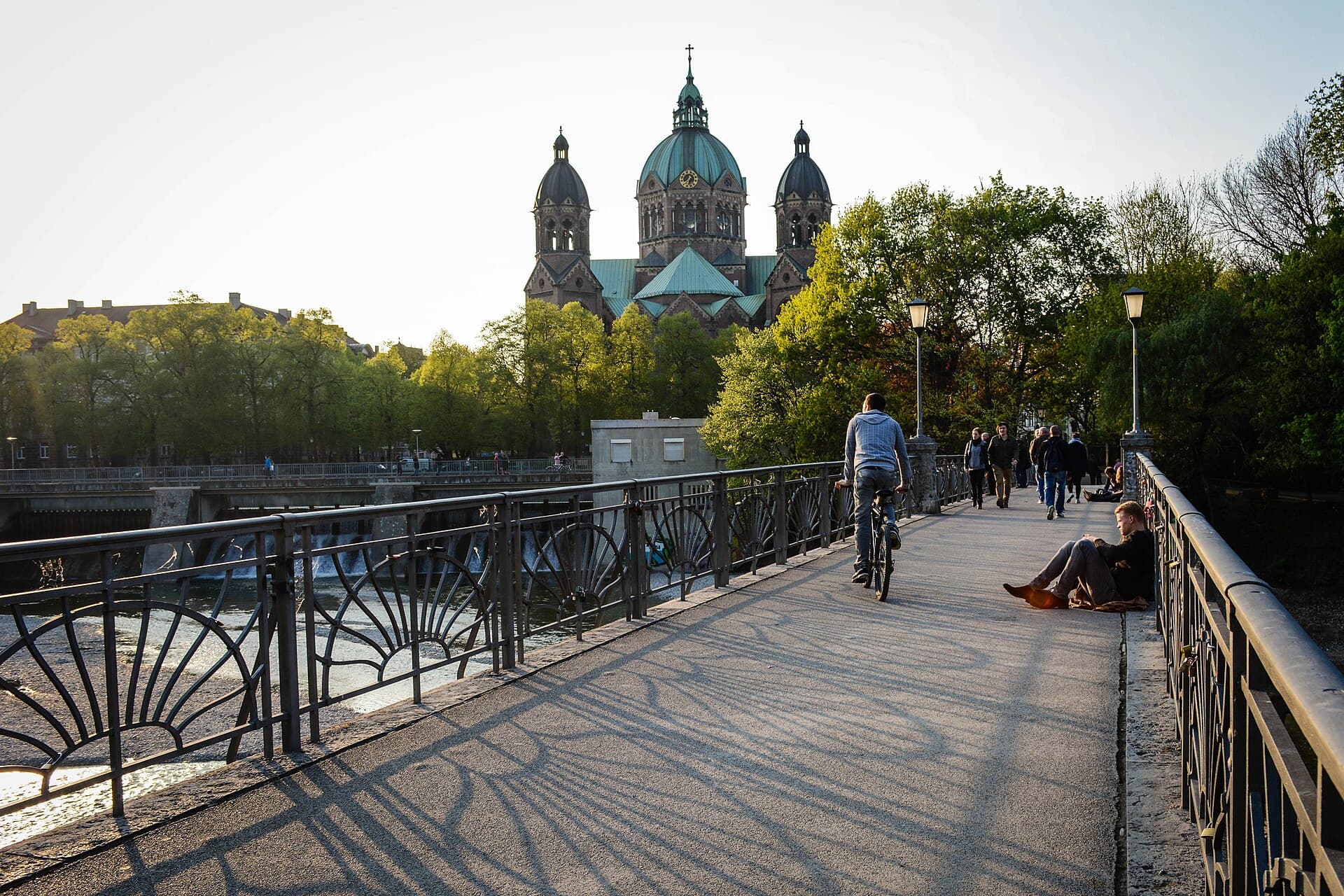 The KabelstegA pedestrian bridge over the Isar in Munich, linking the Lehel bank to the Museu4 minutes walk4.8
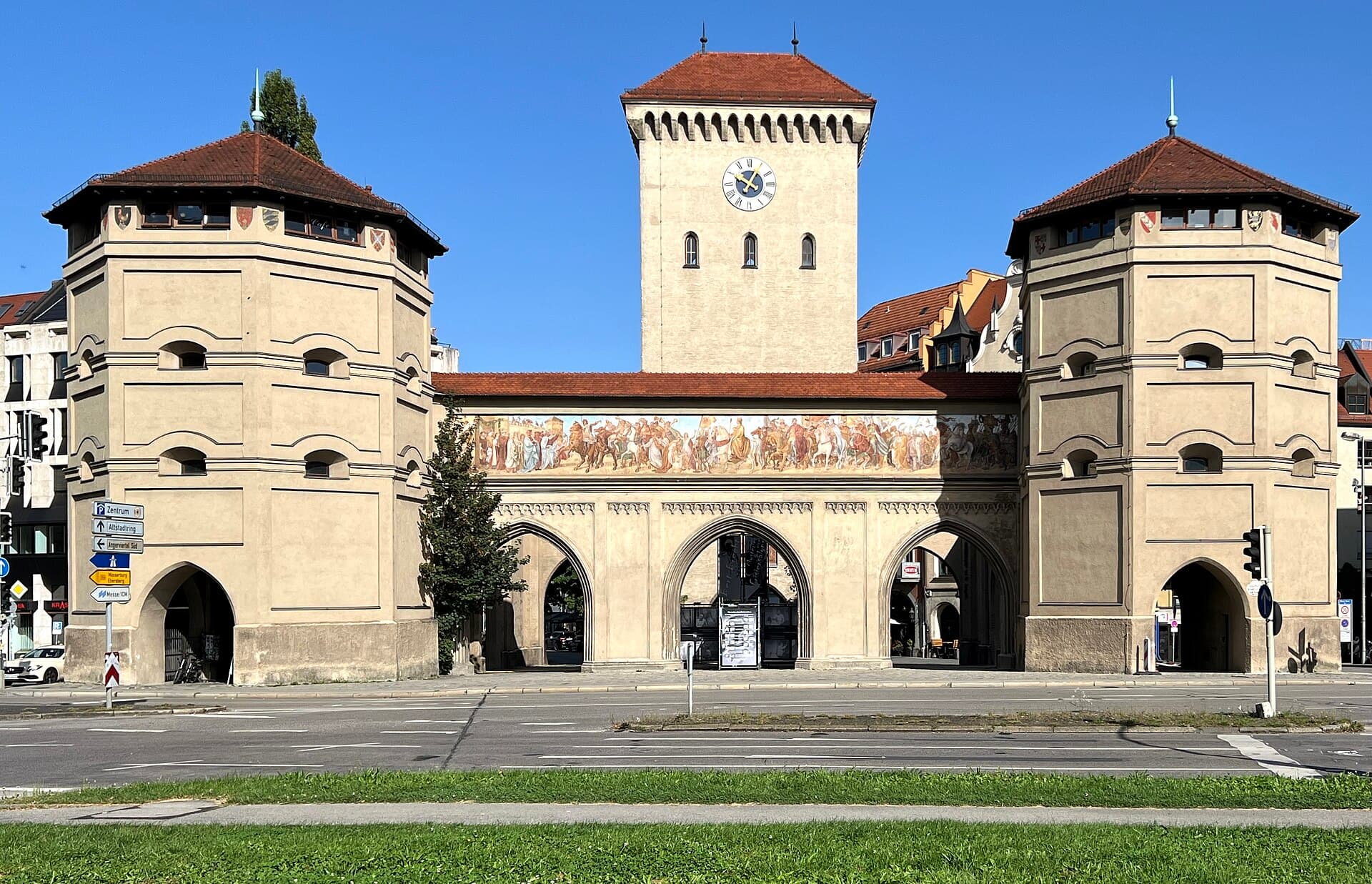 IsartorThe Isartor is the eastern gate of Munich's medieval wall, built in 1337 and the7 minutes walk4.6
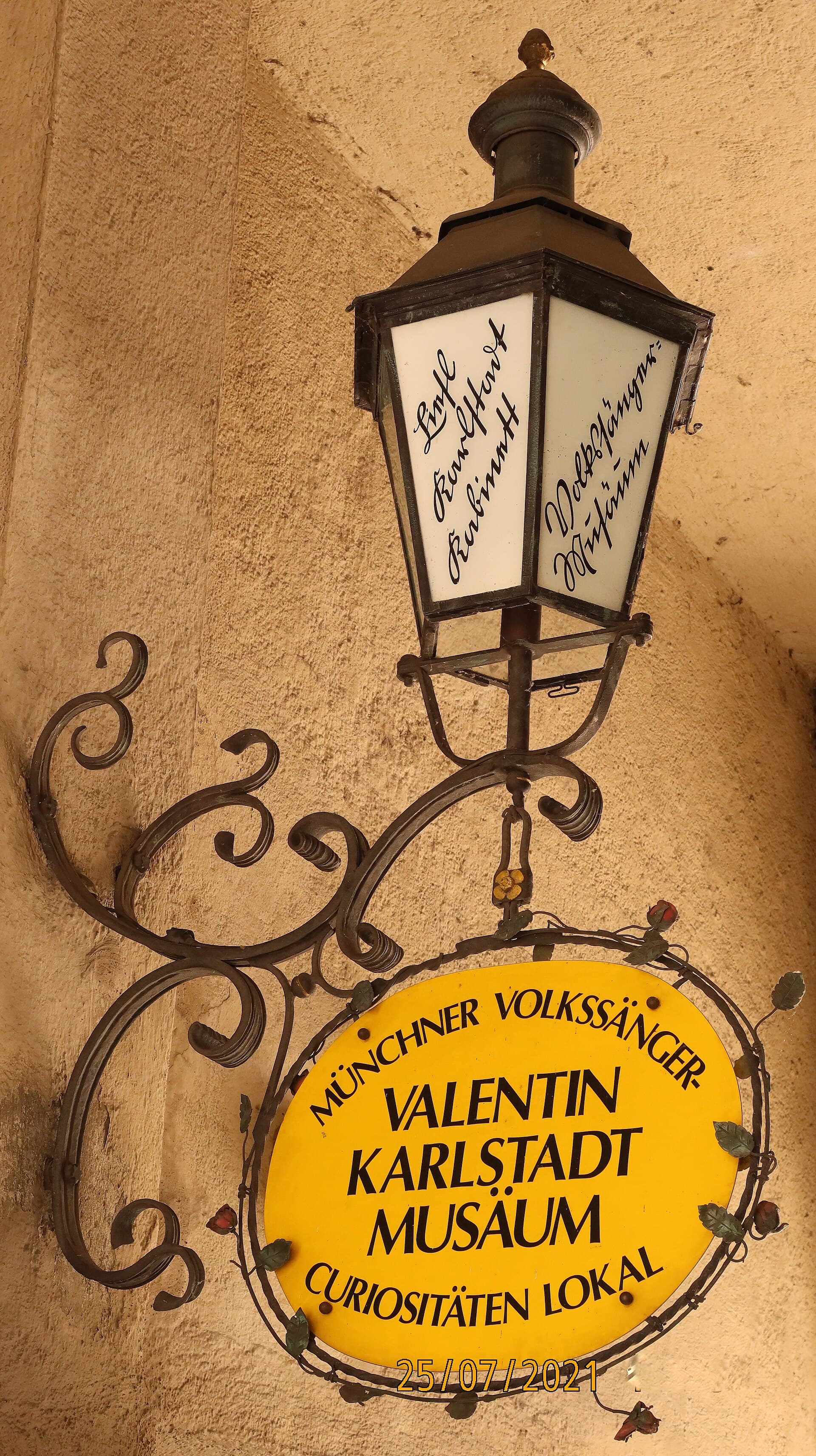 The Valentin-Karlstadt MusaeumThis museum sits inside the Isartor — one of the surviving gates of Munich's med7 minutes walk4.7
The Bavarian State Opera, among the world's most important opera houses, running a dense season and an annual summer festival. The building is early nineteenth-century classical, destroyed in the war and rebuilt. Several of Wagner's operas were premiered here under the patronage of King Ludwig II, whose lavish funding of him caused political controversy.
Yes as part of a route rather than a destination. Walk east from the opera house along Maximilianstraße, look at the matching facades, stop at the monument, then cross the river to the Bavarian government building at the street's end. Twenty minutes gives you a sense of royal nineteenth-century Munich.