
The print rooms
Among the best surviving examples of a short-lived fashion.
Ľuboš Repta — CC BY 4.0 · Radler59 (talk) — CC BY-SA 4.0 · Peter Zelizňák — Public domain · Lure — CC BY-SA 3.0
A pink rococo palace on Franciscan Square, built by a wealthy brewer in 1770 to display his money — and the building is the most important thing shown in it. The ground and first floors hold the Bratislava City Gallery, but the two rooms people come for are upstairs: **the print rooms**. An eighteenth-century owner bought a collection of printed **English and French engravings**, and rather than hang them in frames he **cut them out and pasted them directly onto the walls**, surrounding each with a carved gilt moulding set into the plaster. The result is two rooms whose walls are covered entirely in hundreds of small framed images reading as one continuous surface. This manner — the **print room** — was a short-lived European fashion of the eighteenth century, and only a handful of examples survive anywhere. These two are among the best preserved. The rest of the palace holds baroque and Gothic paintings from the city collection, and the spiral stair and decorated ceilings are worth the climb on their own.
Among the best surviving examples of a short-lived fashion.
Rococo on Franciscan Square, one of the city's finest fronts.
Stone and decorated ceilings worth the climb alone.
Františkánske námestie 11, Bratislava
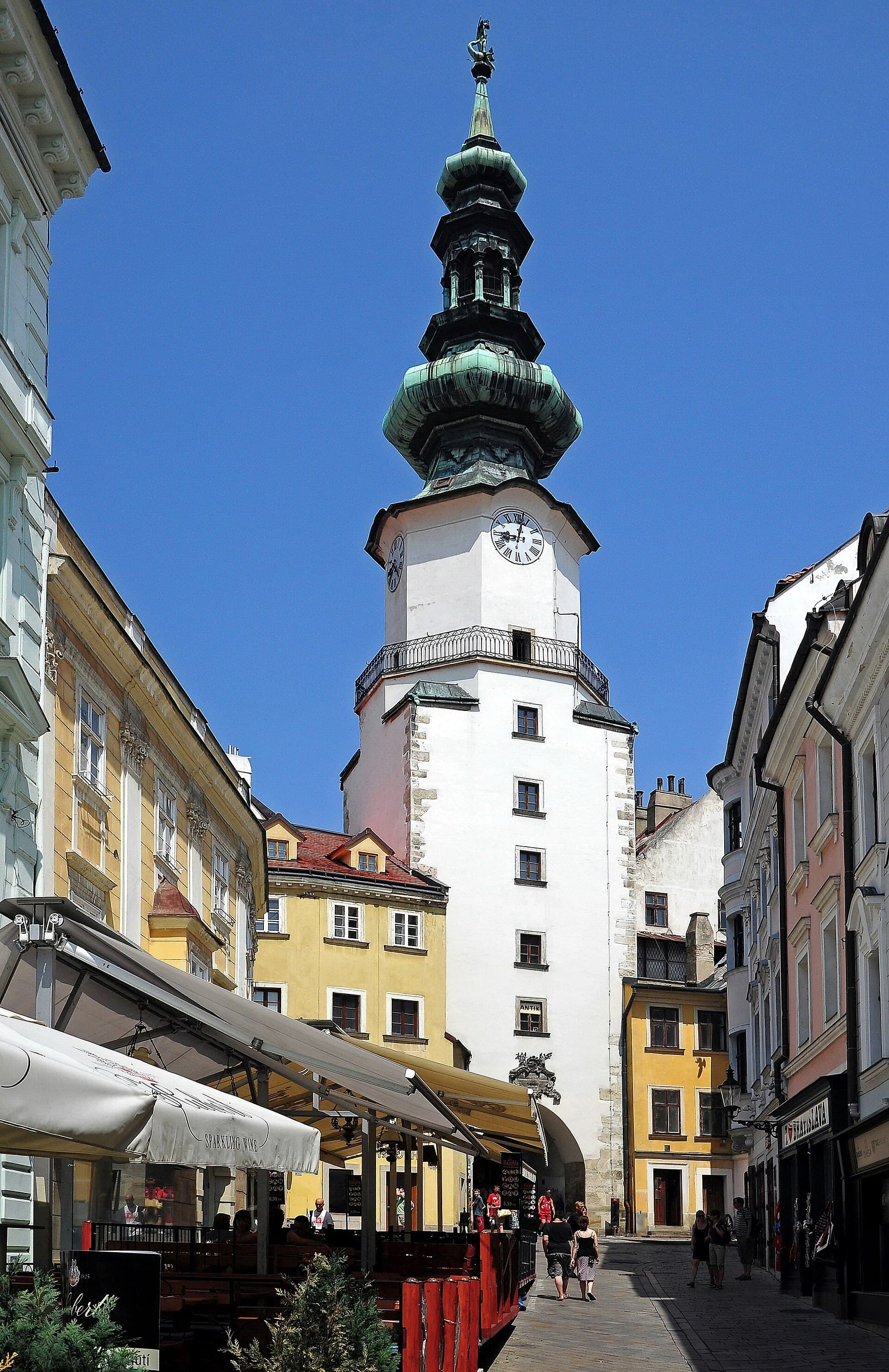 Michael's GateThe last of the city wall's four gates: Michael's Gate was built around 1300 and1 minute walk4.2
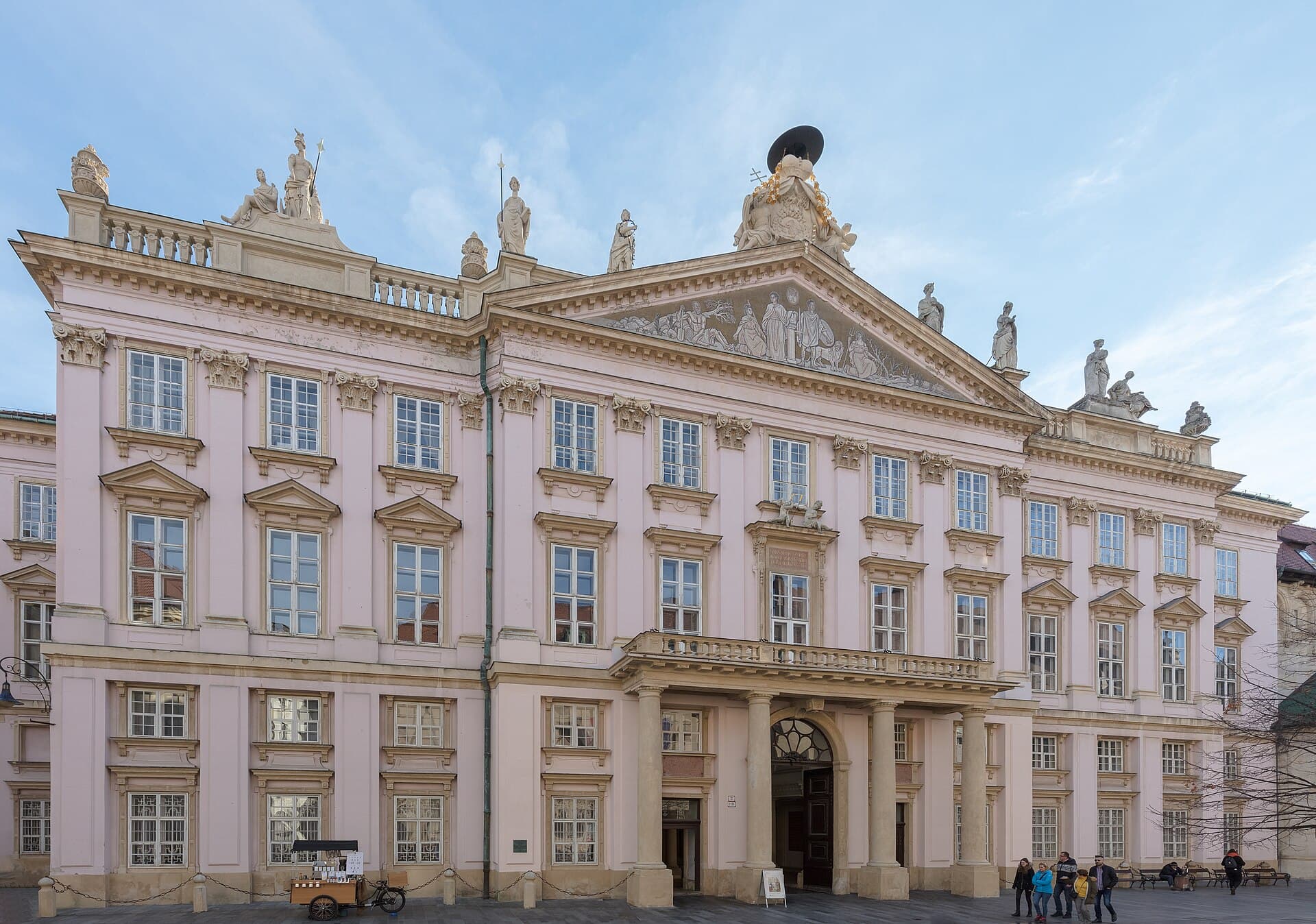 The Primate's PalaceA pink palace where Napoleon signed a treaty that redrew Europe: the Primate's P1 minute walk4.6
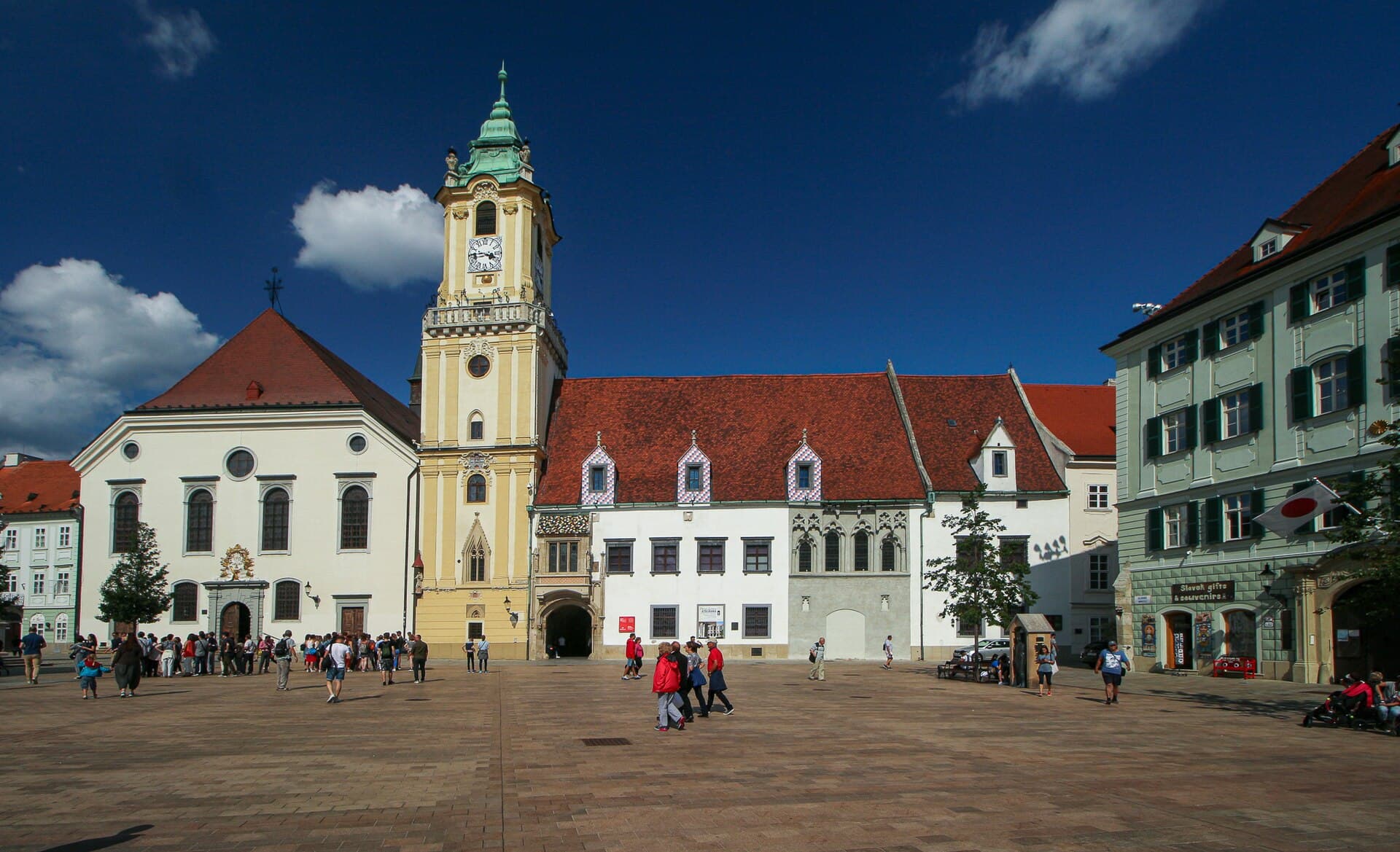 Old Town Hall and Main SquareSlovakia's oldest town hall: a group of houses fused over the centuries into one2 minutes walk4.5
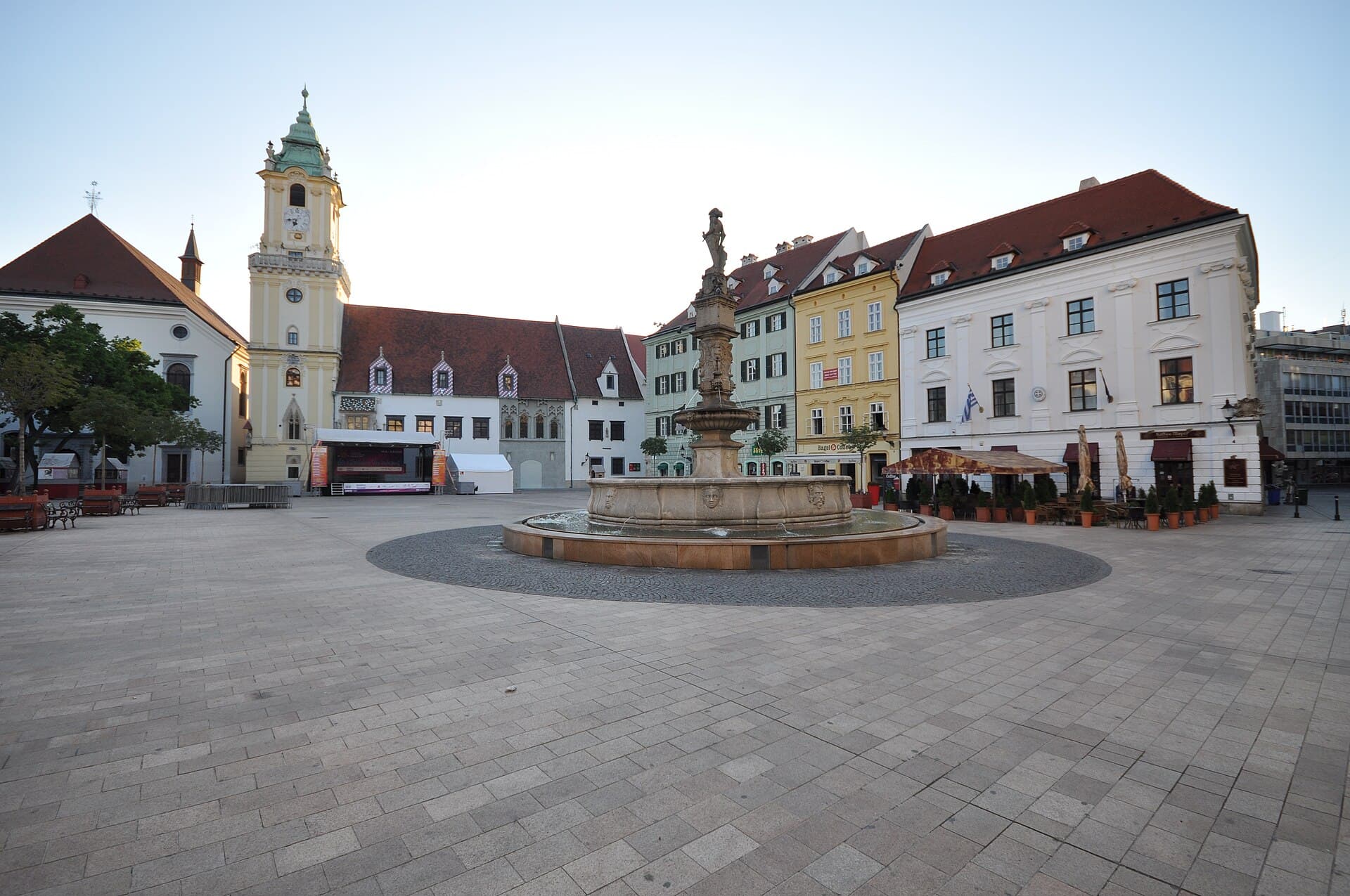 The Main SquareThe heart of the old town since the thirteenth century, and smaller than visitor2 minutes walk4.8
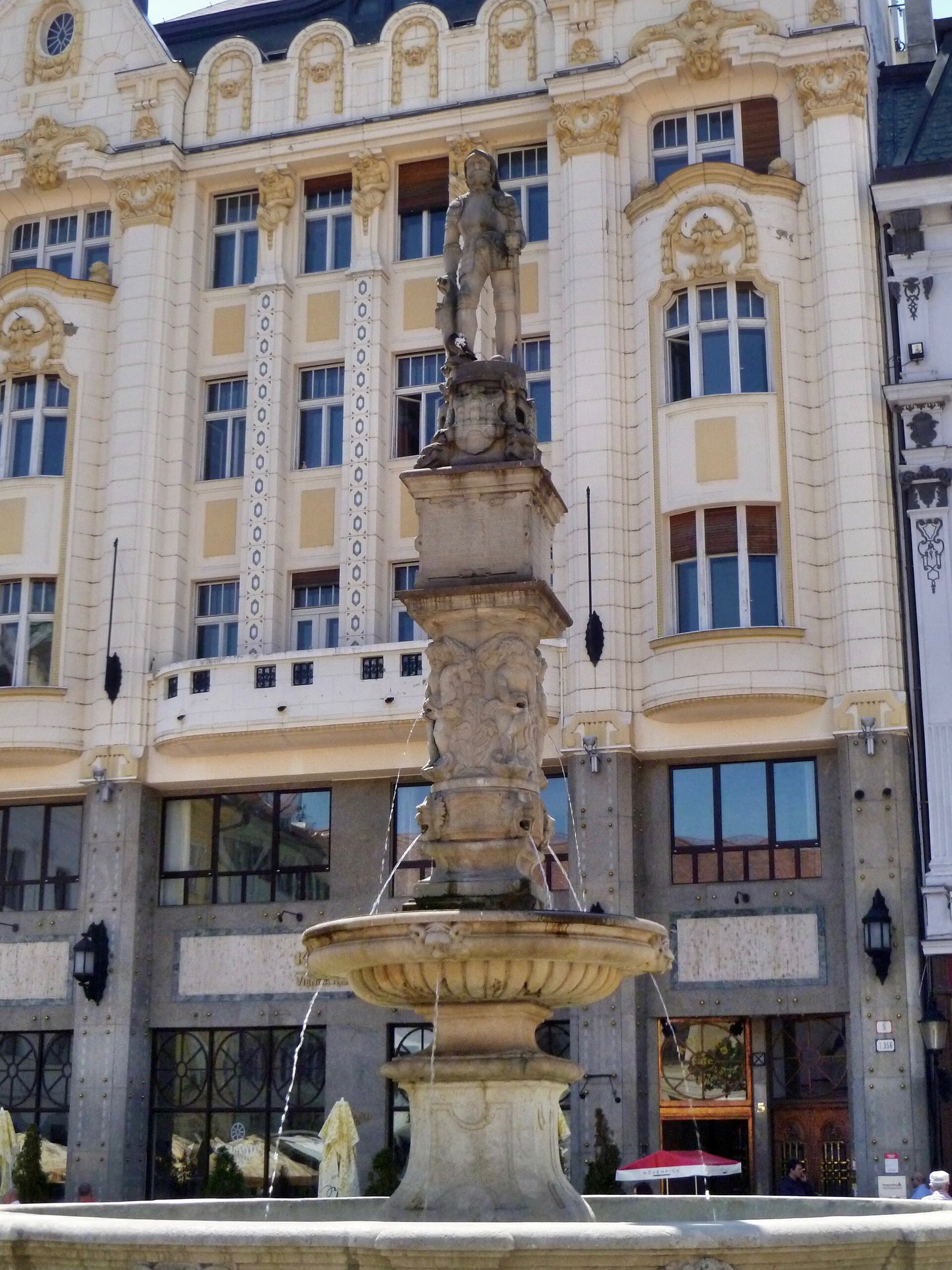 Roland's FountainThe oldest fountain in Bratislava, standing at the centre of the Main Square sin2 minutes walk4.7
A European fashion of roughly 1750 to 1790: instead of hanging prints in frames, they were cut from the paper and pasted directly onto the wall, surrounded by painted or moulded borders and arranged in a balanced composition covering the whole room. It was a way of **displaying the owner's taste and reading** — the prints were gathered on European travels and showed you had seen Rome and Paris. They are rare today because they are **impossible to move**: the paper is glued to the plaster, so any restoration or change of decoration destroys them outright. Only a handful survive in all of Europe, and the Mirbach rooms are among the most complete.