
The Mortlake tapestries
Six English works found behind the walls in 1903.
Diego Delso — CC BY-SA 4.0 · JoJan — CC BY 3.0 · Diego Delso — CC BY-SA 4.0 · Diego Delso — CC BY-SA 4.0
A pink palace where Napoleon signed a treaty that redrew Europe: the Primate's Palace was built in 1781 as the seat of the Archbishop of Esztergom, and in the room now called the Hall of Mirrors the Peace of Pressburg was signed in December 1805 between Napoleon and Austria after Austerlitz — the treaty that effectively ended the Holy Roman Empire. Its most famous possession was found by accident in 1903, when the city bought the palace: six seventeenth-century English tapestries woven at the Mortlake works telling the legend of Hero and Leander, hidden behind the walls and entirely forgotten — today among the most precious things Slovakia owns. The palace is Bratislava's mayoral seat today, its state rooms and picture gallery open to visitors, with the fountain of St George and the dragon in its courtyard. The pink facade under its iron crown on the roofline is among the city's most famous.
Six English works found behind the walls in 1903.
Where the Holy Roman Empire effectively ended.
Primaciálne námestie 1, Bratislava
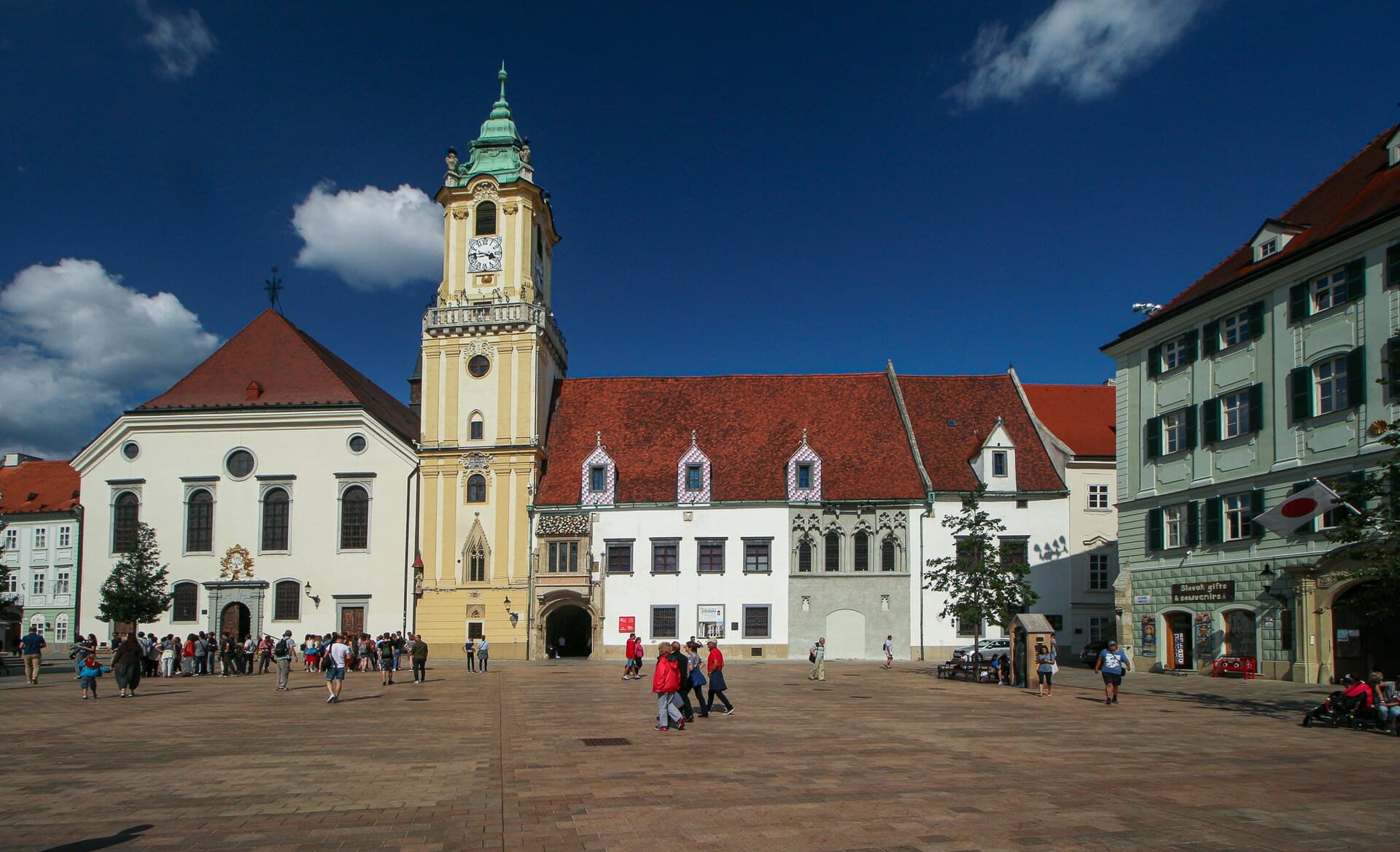 Old Town Hall and Main SquareSlovakia's oldest town hall: a group of houses fused over the centuries into one1 minute walk4.5
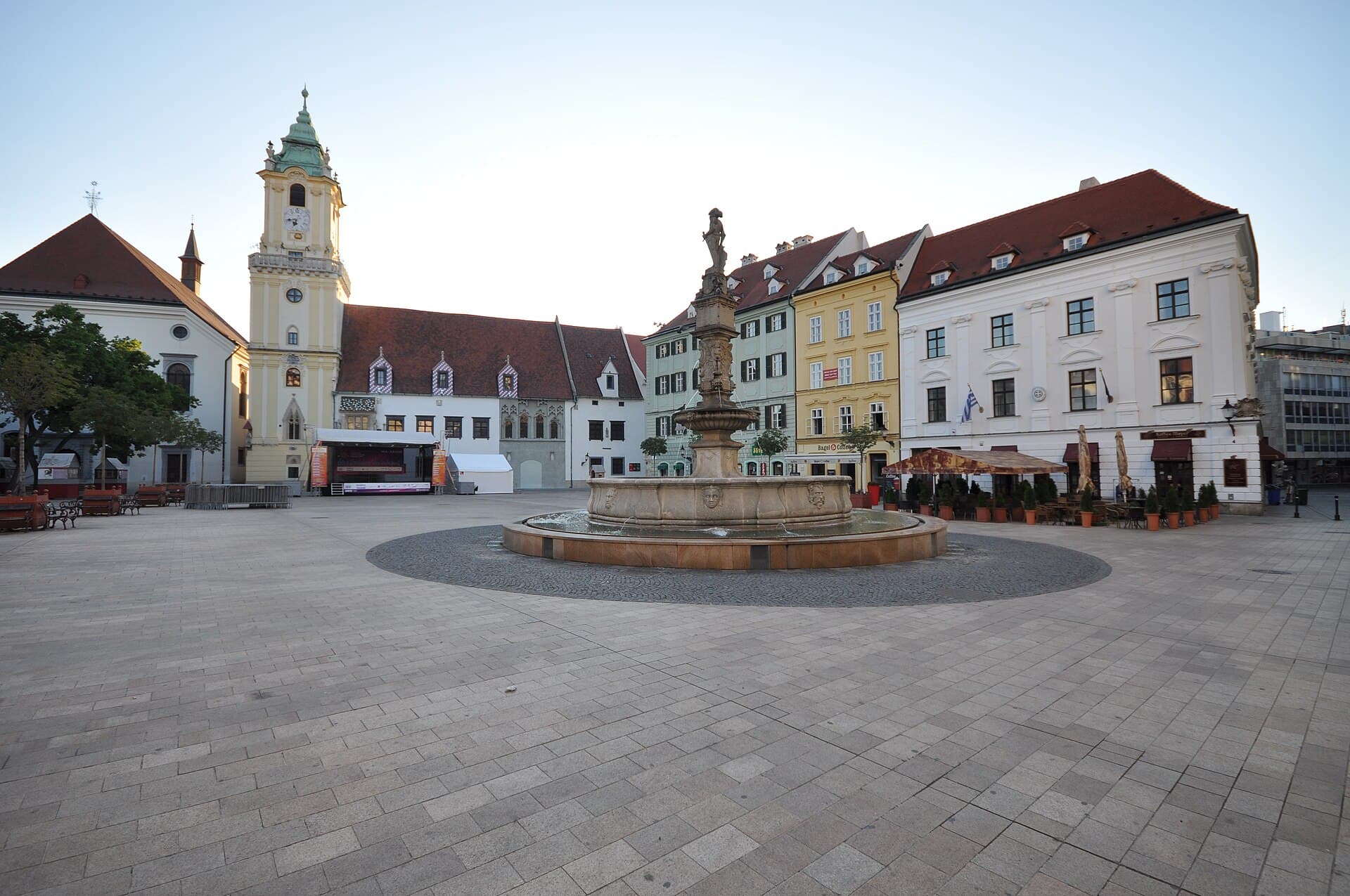 The Main SquareThe heart of the old town since the thirteenth century, and smaller than visitor1 minute walk4.8
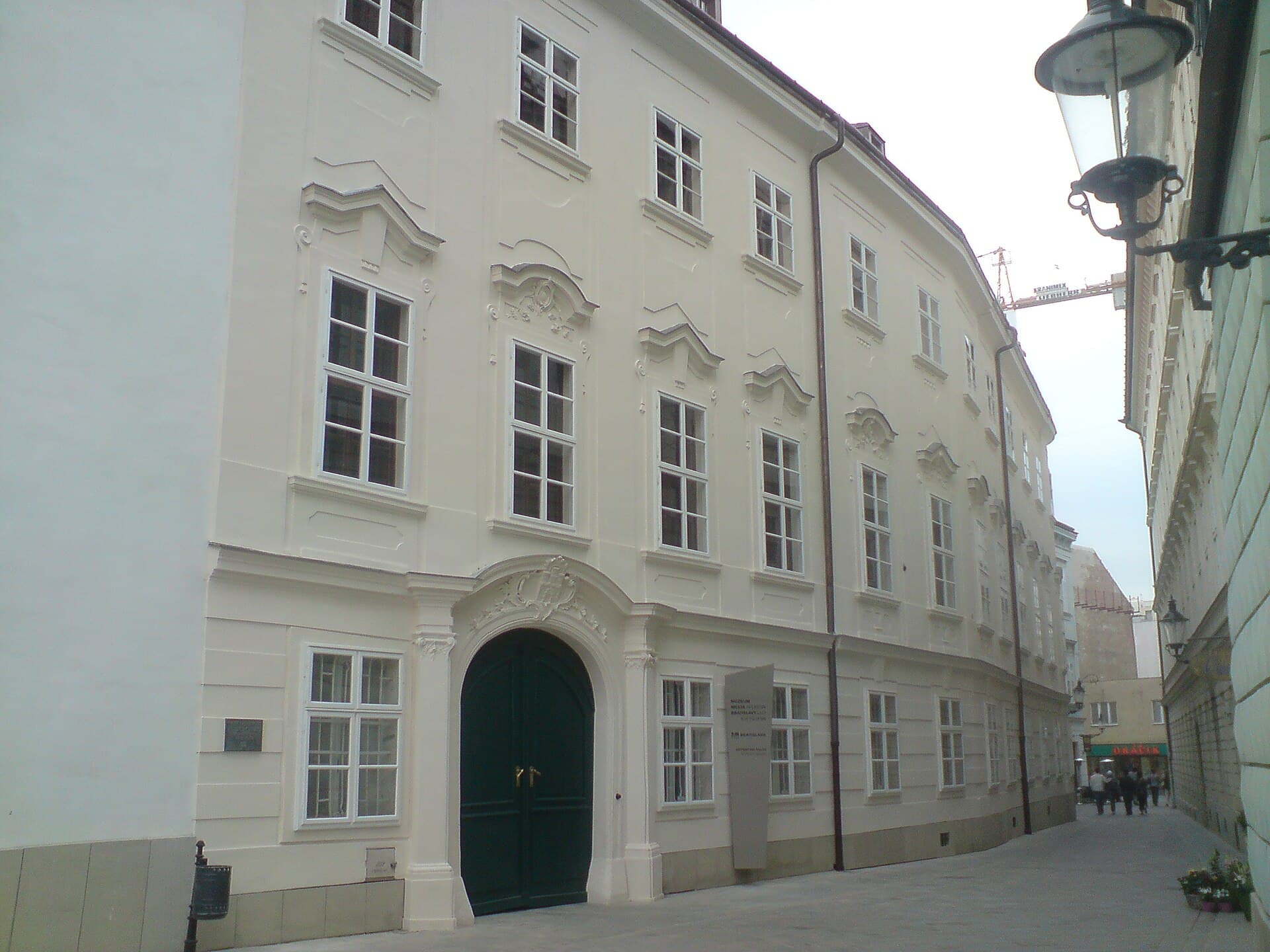 Apponyi PalaceA rococo palace of 1762 on the edge of the Main Square, built by Count **György 1 minute walk4.2
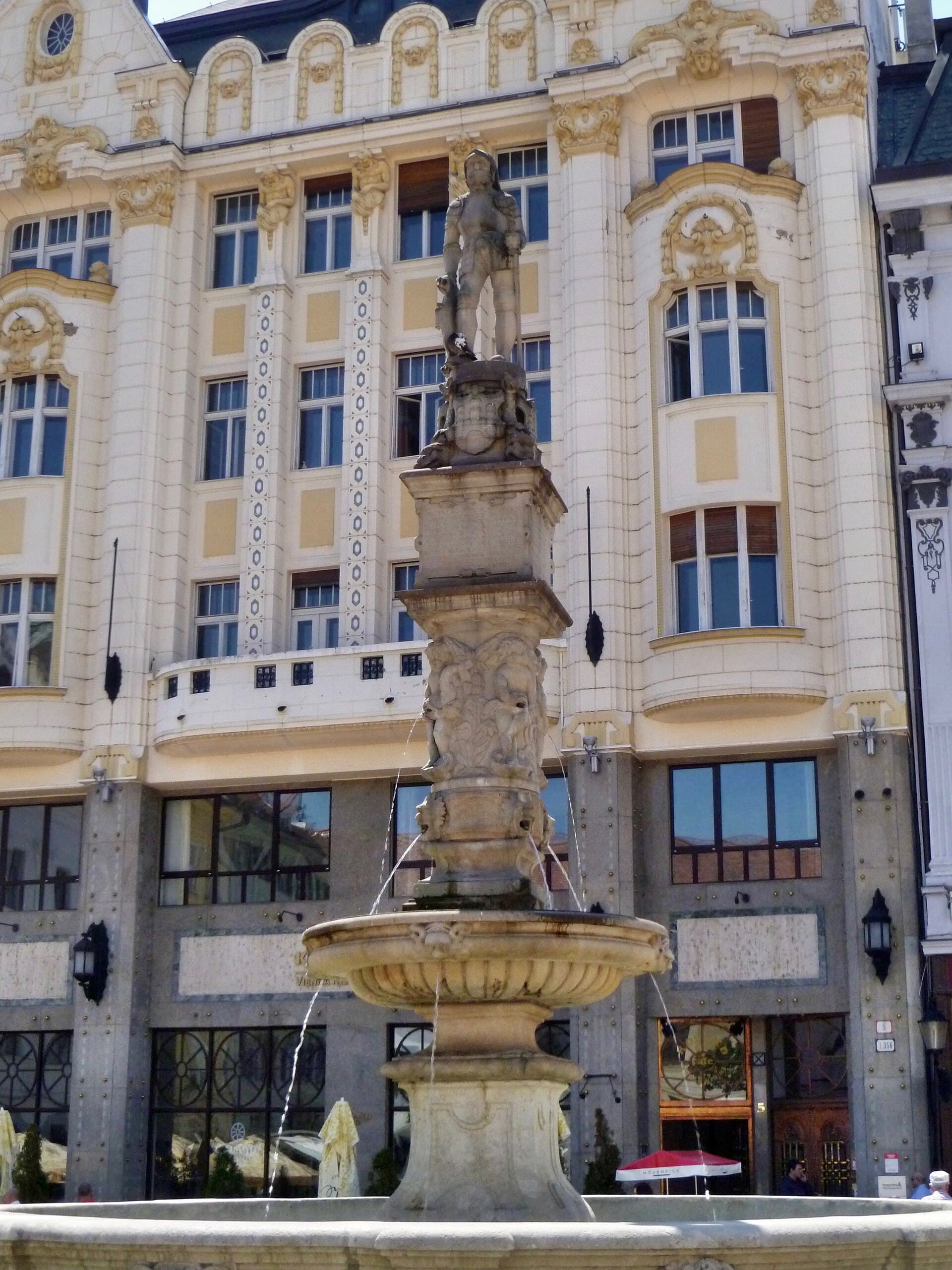 Roland's FountainThe oldest fountain in Bratislava, standing at the centre of the Main Square sin1 minute walk4.7
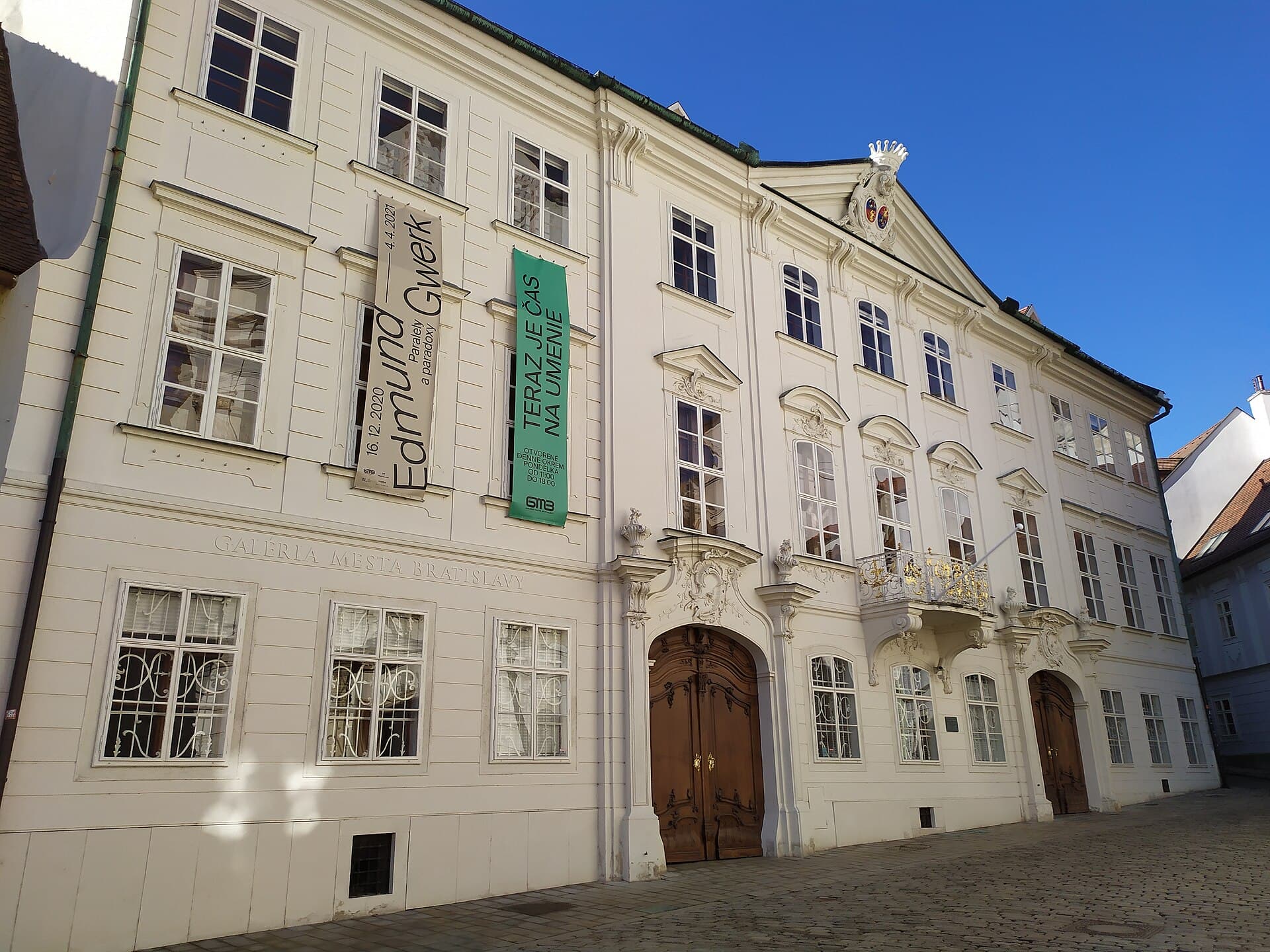 Mirbach PalaceA pink rococo palace on Franciscan Square, built by a wealthy brewer in 1770 to 1 minute walk4.4
Austria signed it after defeat at Austerlitz, ceding vast territory to Napoleon and his allies, and within months it led to the dissolution of the eight-hundred-year-old Holy Roman Empire — Pressburg being the German name for Bratislava.