
A desert fortress
A lone high wall.
Chabe01 — CC BY-SA 4.0 · Chabe01 — CC BY-SA 4.0 · Chabe01 — CC BY-SA 4.0 · Chabe01 — CC BY-SA 4.0 · Chabe01 — CC BY-SA 4.0
One of the largest and best-preserved ancient Coptic monasteries in Egypt, standing alone on a desert plateau on the west bank of the Nile opposite Aswan. It was founded around the seventh century, rebuilt in the tenth and abandoned in the thirteenth, and has stood as it was ever since. A high wall of stone and mud brick surrounds it, and inside are a church with remains of old wall paintings, a multi-storey monks' building of cells and passages, presses, kitchens and stores, so it looks like a fortress in the desert telling how the monks lived in their seclusion. It is quiet and little visited, with views over the golden desert and the Nile below. A foreign visitor's ticket costs about a hundred Egyptian pounds according to the ministry list, and it opens from seven to five. Reach it by boat to the west bank and then about half an hour's walk through the sand, or by camel from the landing near the Tombs of the Nobles. Bring water and a hat, as there is no shade on the way.
A lone high wall.
Cells, presses and kitchens.
From the Nile bank.
The desert on the west bank of the Nile opposite Aswan, near the Tombs of the Nobles
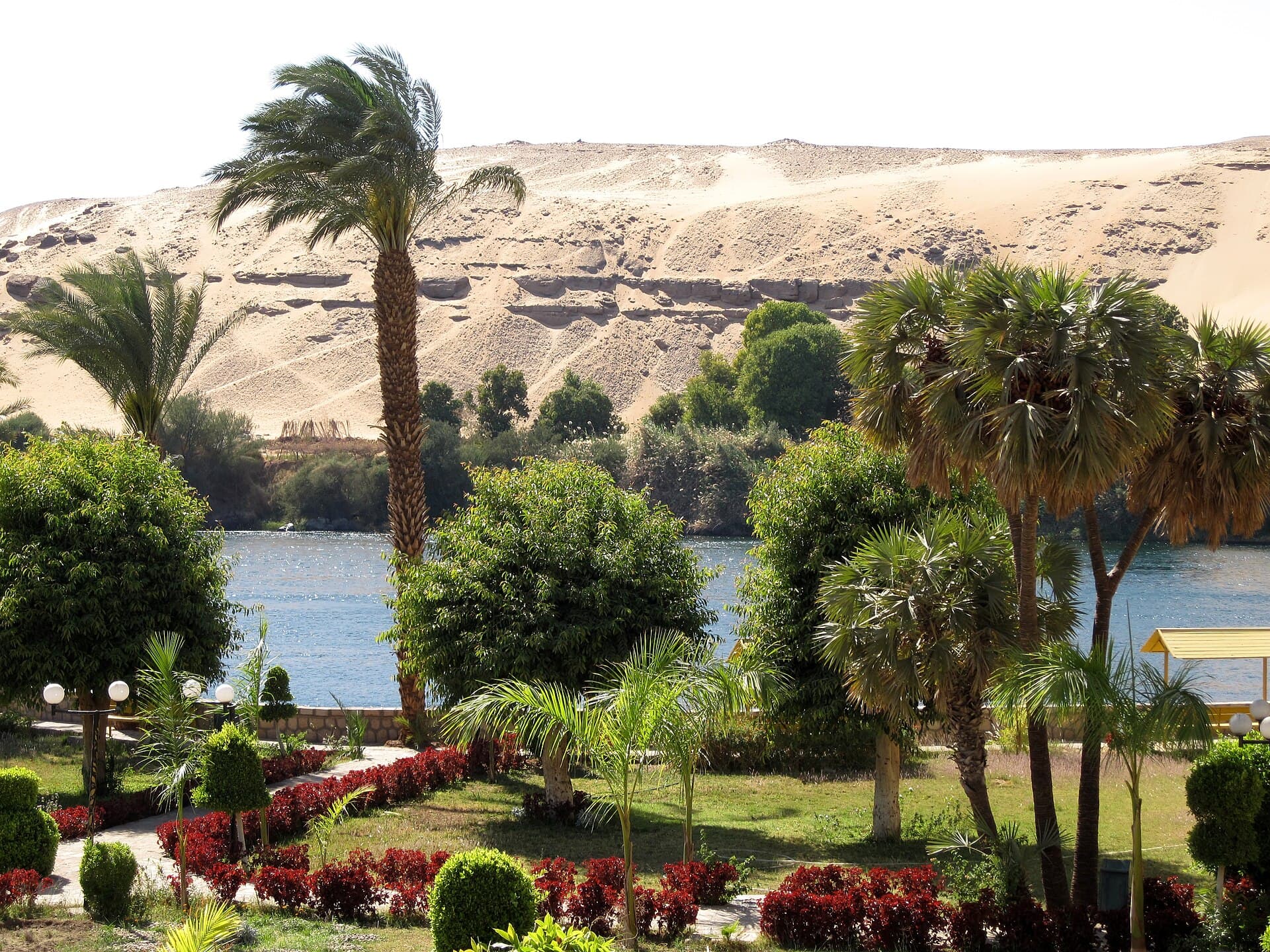 Aswan Botanical GardenA small, oval island in the Nile west of Elephantine that has become a lush bota14 minutes walk
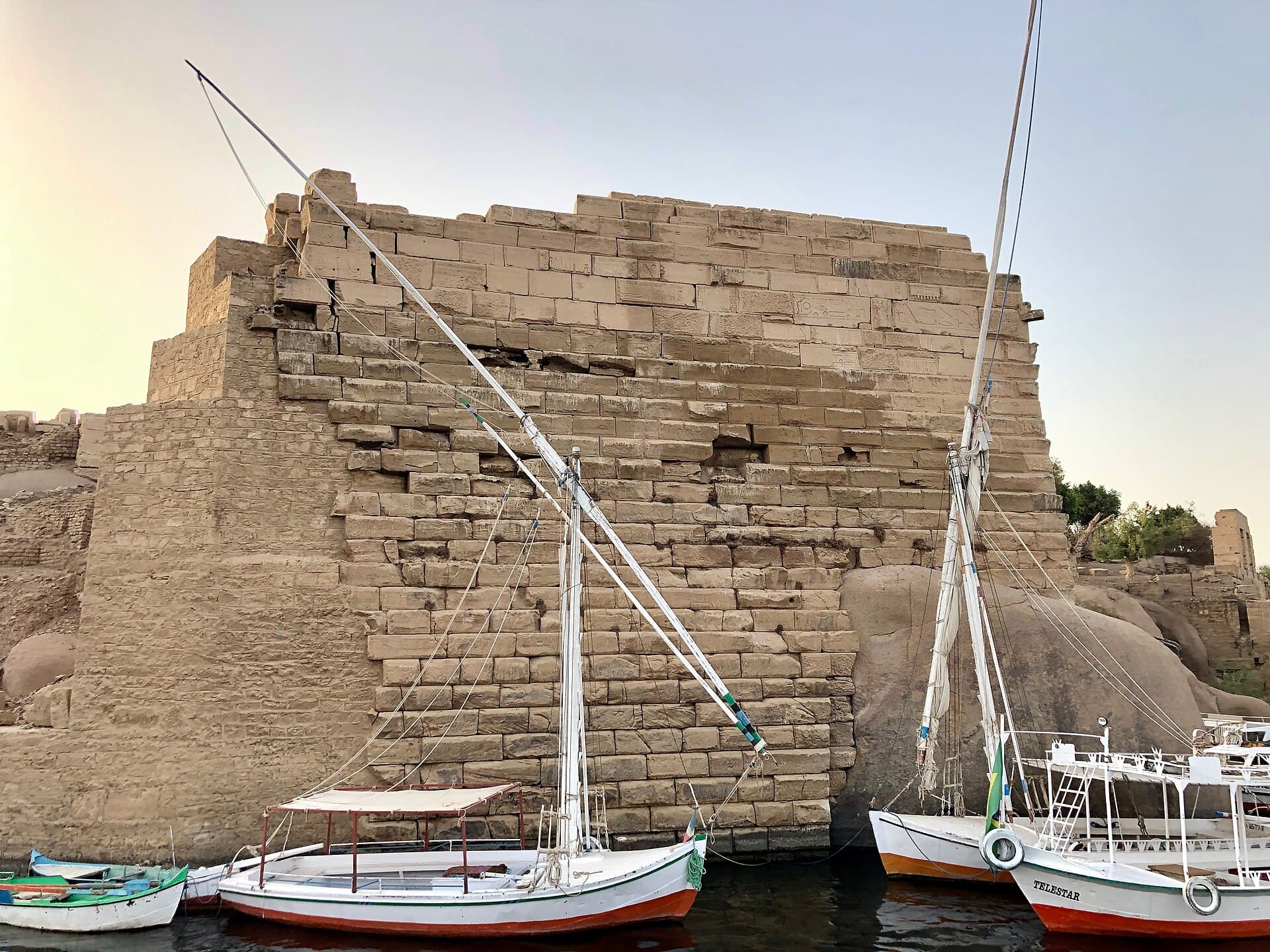 Elephantine IslandA large island in the Nile opposite the Aswan Corniche, from the dawn of history19 minutes walk
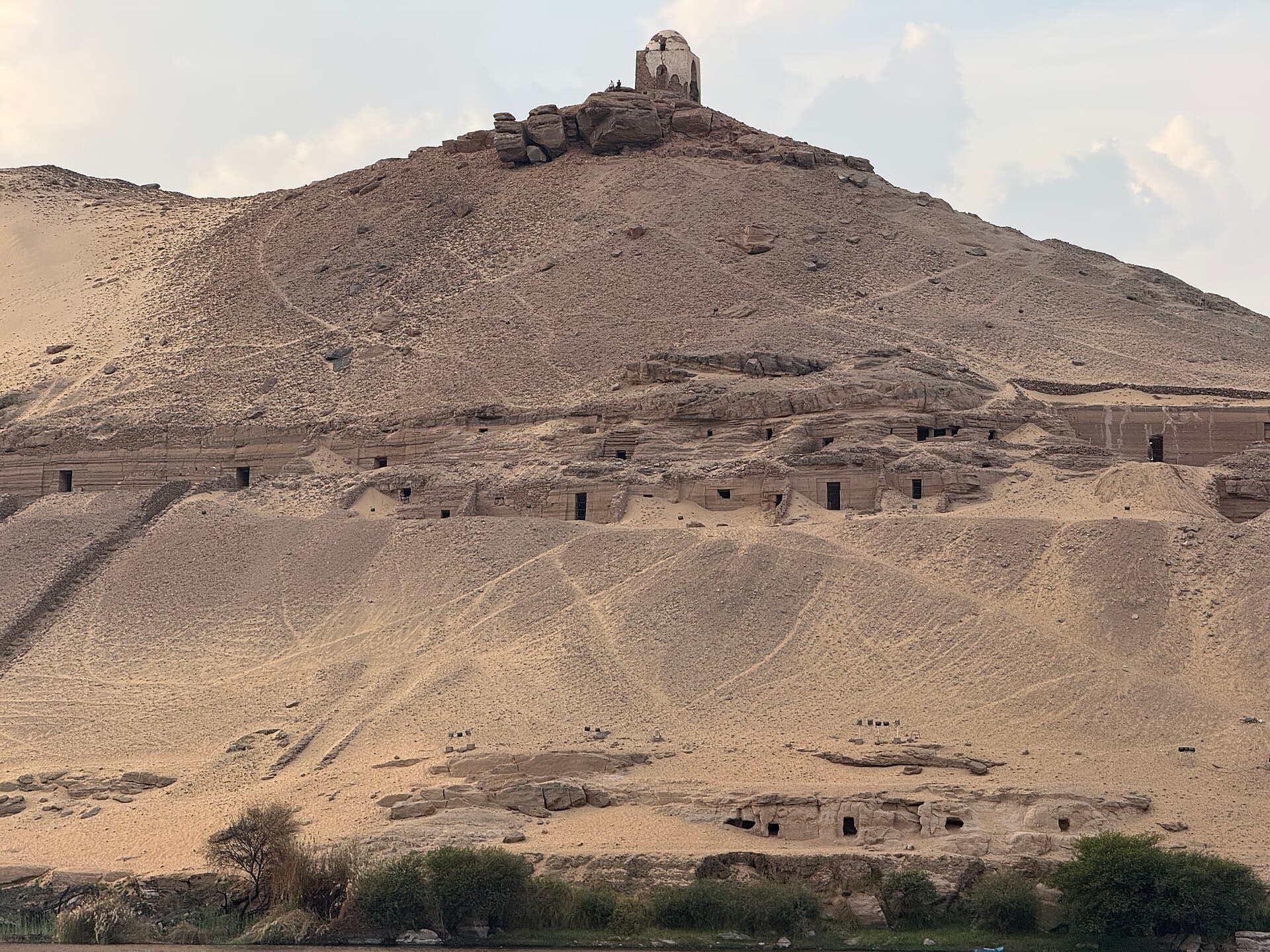 Tombs of the Nobles (Qubbet el-Hawa)Tombs cut into a hill on the west bank of the Nile opposite Aswan, where the reg22 minutes walk
By boat to the west bank, then about half an hour on foot through the sand or by camel; it is usually combined with the nearby Tombs of the Nobles.