
Colourful houses
Stacked on the slopes.
panza.rayada — CC BY-SA 3.0 · Adam Jones from Kelowna, BC, Canada — CC BY-SA 2.0 · josma — CC BY 3.0 · Adam Jones from Kelowna, BC, Canada — CC BY-SA 2.0 · Isaacvp — CC BY-SA 4.0
A massive stone statue on a hill above Guanajuato showing a miner raising a torch: El Pípila, a local hero of the War of Independence. The story goes that in 1810 he tied a stone slab to his back as a shield against bullets, crawled to the door of the Alhóndiga granary where the Spanish had barricaded themselves, set it on fire and opened the way for the rebels. The best part is the broad lookout at the statue's feet: the whole city in the valley below, its houses painted yellow, blue and pink packed onto the slopes, the church domes, Teatro Juárez and the white university, with mountains all around. At sunset the city lights up and its colours shift. You get up by funicular from behind Teatro Juárez in about a minute, or on foot up steep alleys and steps in a quarter of an hour, itself a fine walk between the houses. The lookout has stalls for drinks and souvenirs. Come a little before sunset, ride the funicular up and walk down through the alleys to see the city from the inside.
Stacked on the slopes.
A minute to the top.
Through the alleys.
Carretera Panorámica, above central Guanajuato; funicular from behind Teatro Juárez
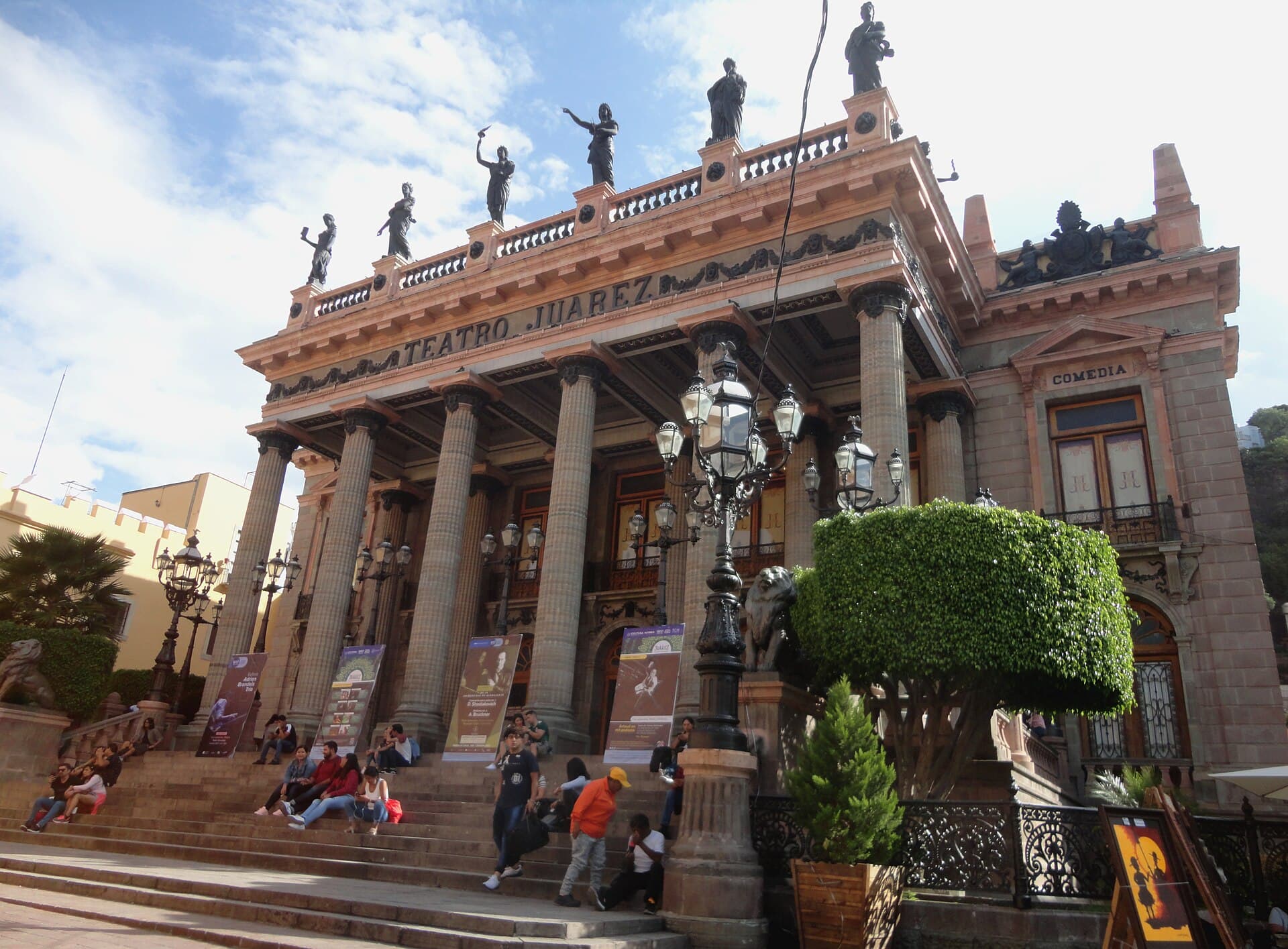 Teatro JuárezGuanajuato's most beautiful building, a 19th-century theatre with a neoclassical2 minutes walk4.7
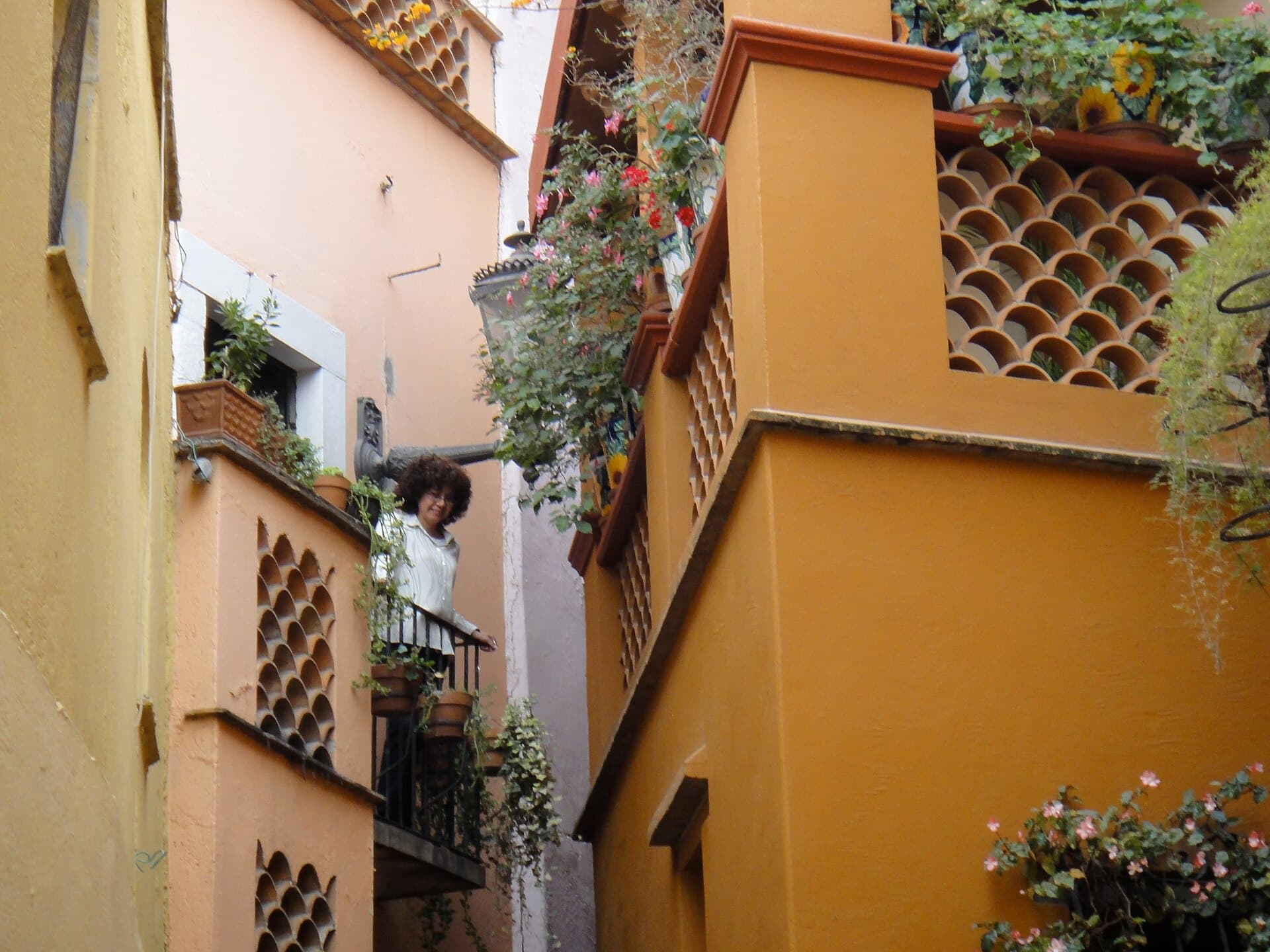 Callejón del Beso (Alley of the Kiss)A narrow, steep alley between tall houses whose facing first-floor balconies com4 minutes walk4.6
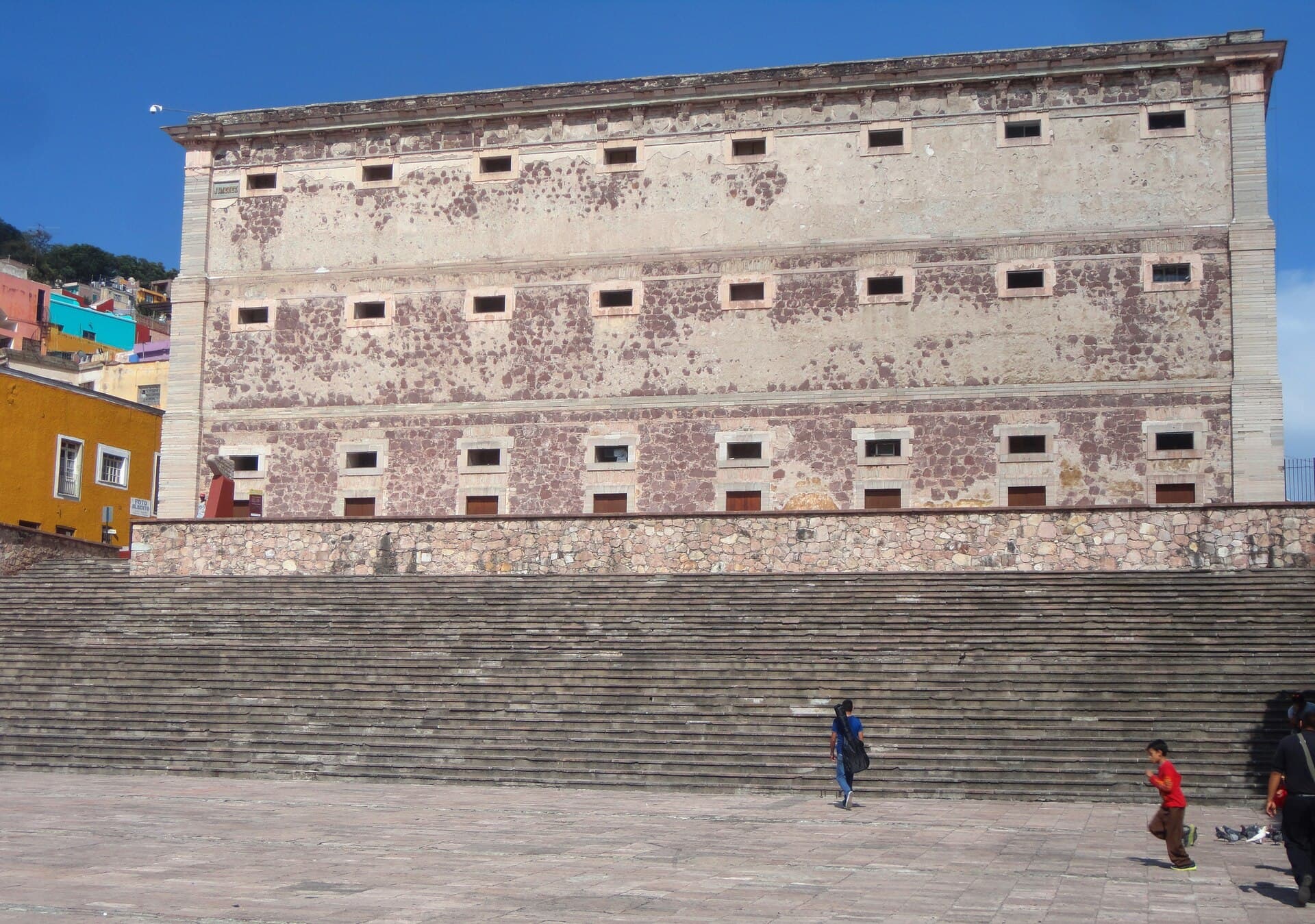 Alhóndiga de GranaditasA massive stone grain store built from 1798 to 1809 in neoclassical style; its n7 minutes walk4.8
By the funicular from behind Teatro Juárez, or on foot up steep alleys and steps in about fifteen minutes. Many ride up and walk down.