
The façade
Columns, steps, bronzes.
Juan Carlos Fonseca Mata — CC BY-SA 4.0 · Yair Tzur — CC BY-SA 4.0 · Adam Jones from Kelowna, BC, Canada — CC BY-SA 2.0 · Lameirasb — CC BY-SA 4.0 · Lameirasb — CC BY-SA 4.0
Guanajuato's most beautiful building, a 19th-century theatre with a neoclassical front of massive columns and a broad stairway, its roof topped by bronze statues, overlooking the little Jardín de la Unión in the heart of town. It was built from 1873 to 1903 and opened by President Porfirio Díaz with a performance of «Aida». The interior is a surprise: the auditorium is decorated in a style inspired by Andalusian and Moorish architecture, with arches, carving and gold and red colours, alongside a grand French-style foyer. Outside performance times, short tours of the building are offered. Since 1972 the theatre has been the main stage of the Festival Internacional Cervantino, the largest arts festival in Latin America, held every October, when the city fills with performances and visitors. The theatre's steps are where people sit in the evening to watch life on the square. Guanajuato is a hilly silver-mining town on UNESCO's list, with winding alleys, colourful houses on the slopes and streets running through tunnels underground. The theatre is a good starting point for a walk around the centre.
Columns, steps, bronzes.
Arches and gilt carving.
Town's heart in front.
Calle de Sopeña, facing the Jardín de la Unión, central Guanajuato
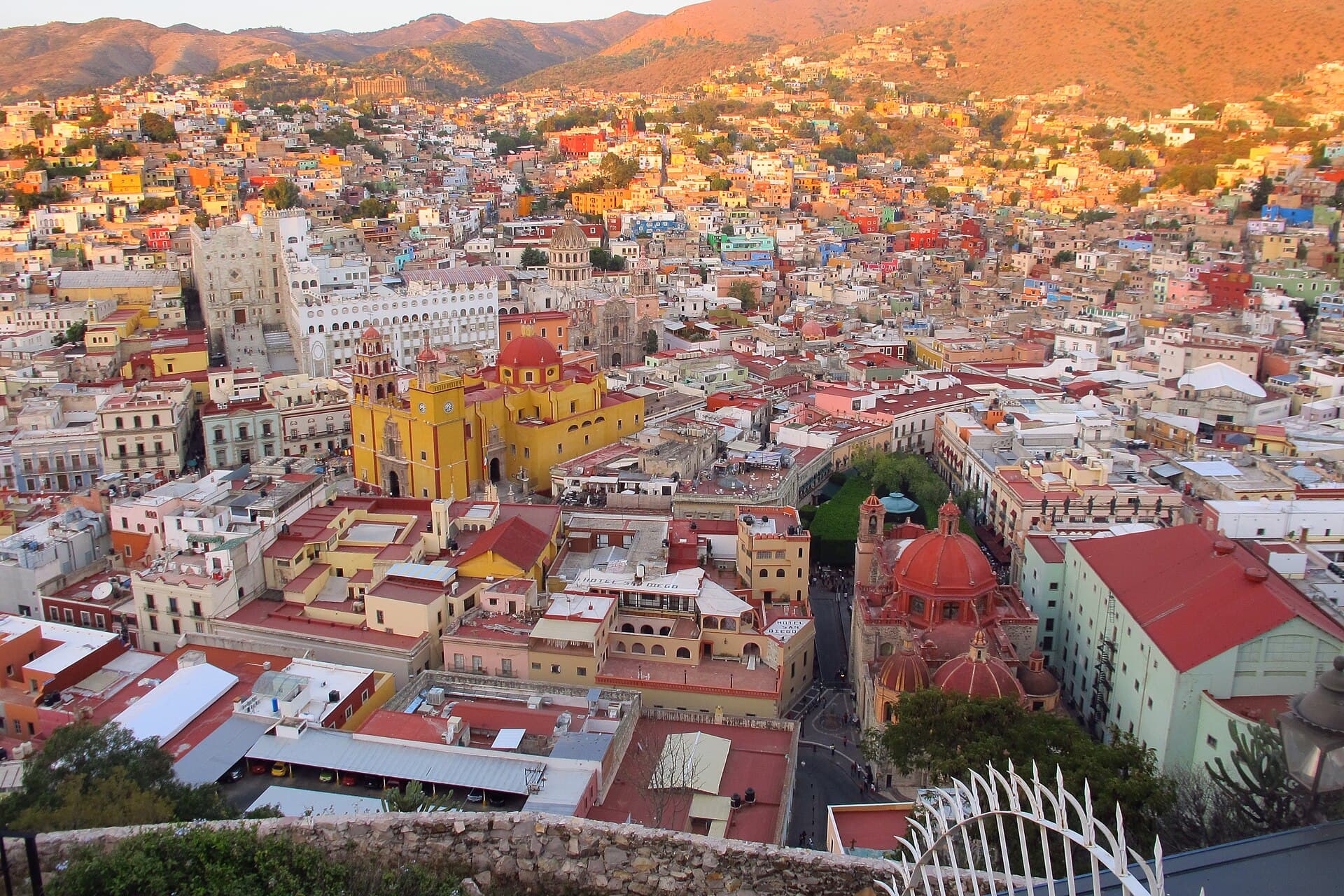 El Pípila Monument and ViewpointA massive stone statue on a hill above Guanajuato showing a miner raising a torc2 minutes walk4.8
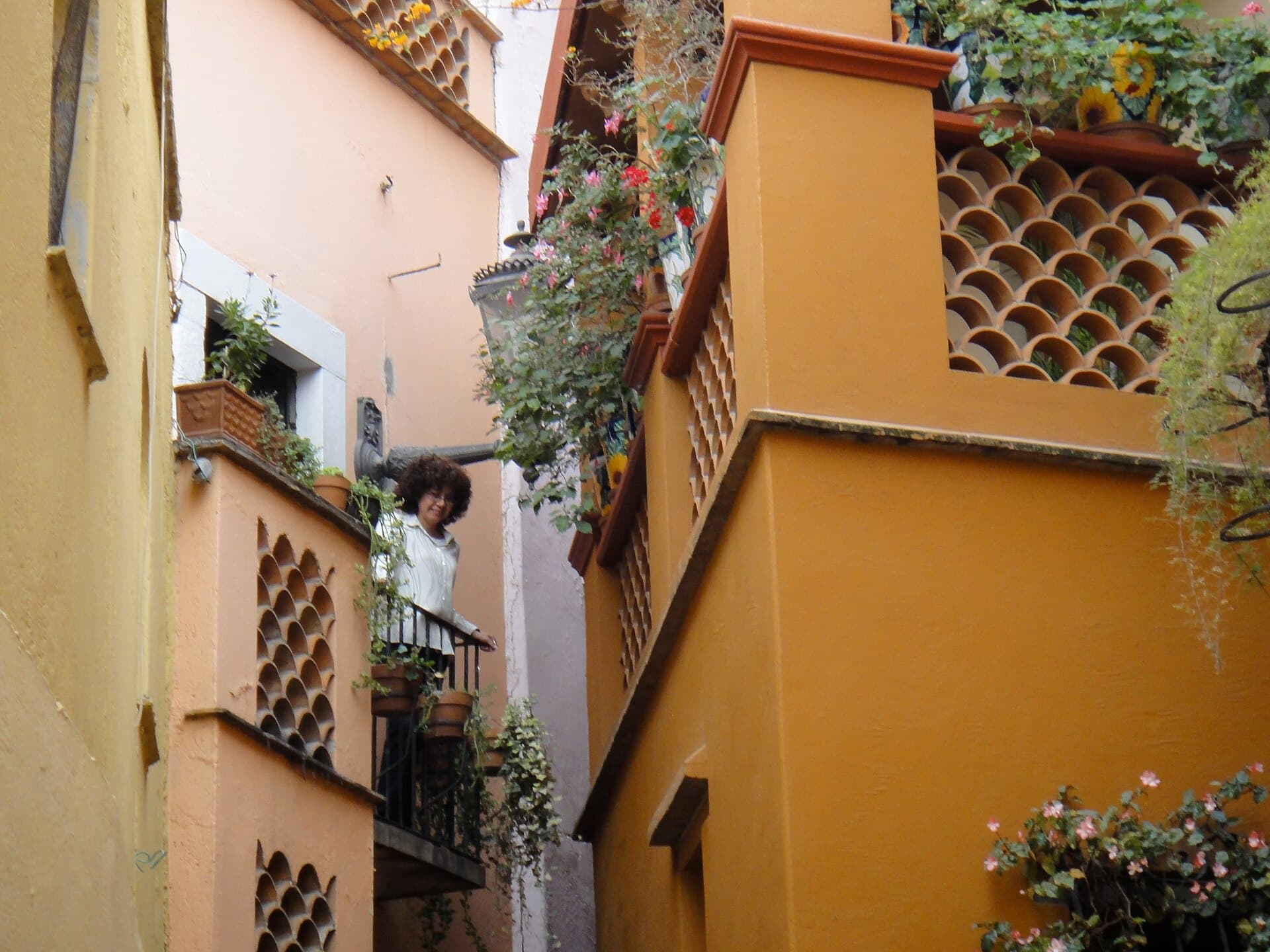 Callejón del Beso (Alley of the Kiss)A narrow, steep alley between tall houses whose facing first-floor balconies com5 minutes walk4.6
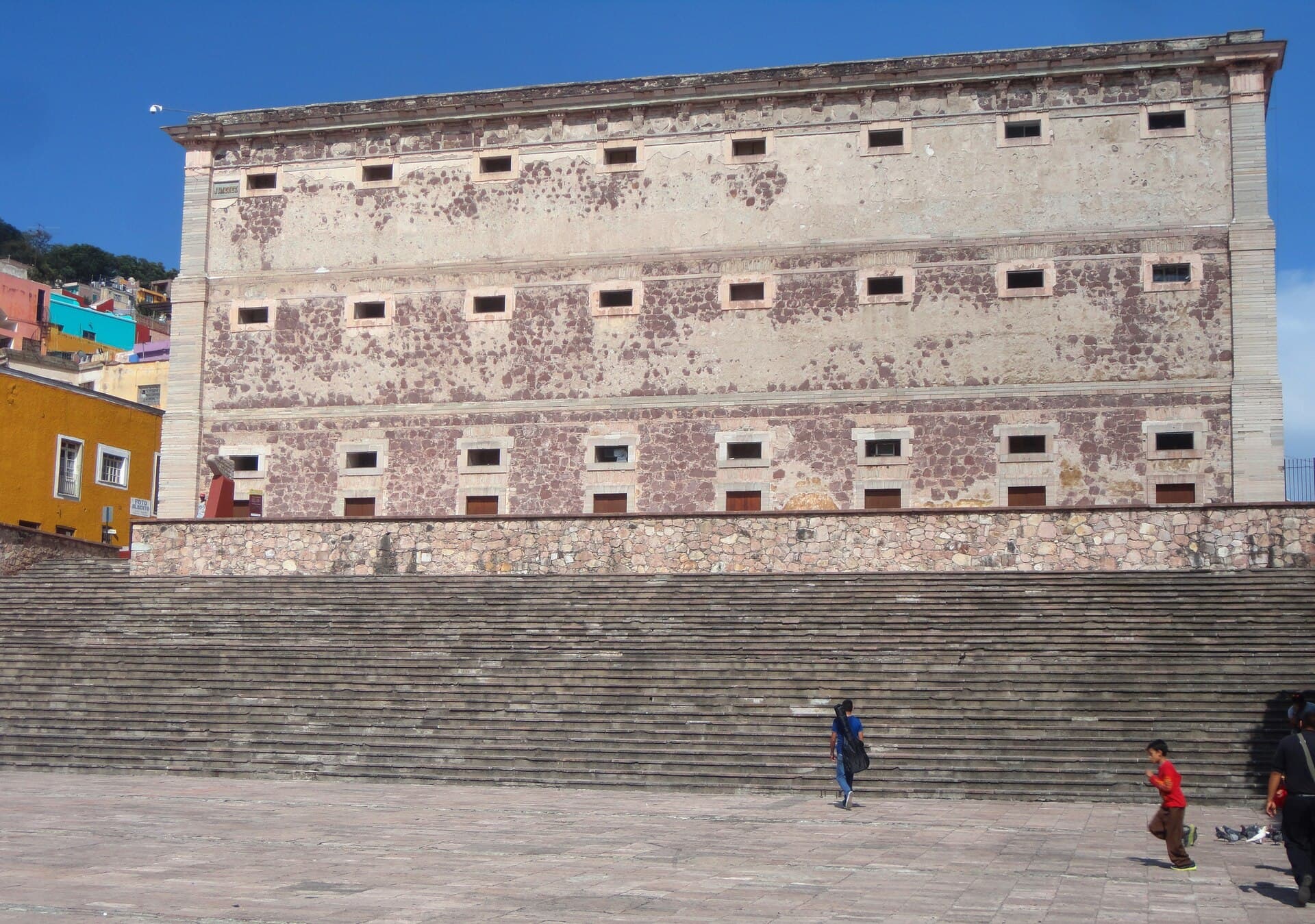 Alhóndiga de GranaditasA massive stone grain store built from 1798 to 1809 in neoclassical style; its n8 minutes walk4.8
Every October, running about three weeks, with Teatro Juárez as its main stage. The town is very busy then, so book accommodation early.