
The Baroda carpet
Set with over a million and a half pearls and hundreds of gemstones.
Musab.hawamda — CC BY-SA 4.0 · Davide Mauro — CC BY-SA 4.0 · Francesco Bini — CC BY-SA 4.0 · Francesco Bini — CC BY-SA 4.0
The building shaped like a desert rose, and the boldest piece of architecture in the Gulf — opened in 2019 to a design by Jean Nouvel. A desert rose is a natural crystal formation that grows when sand and minerals crystallise below the desert surface into interlocking discs set at random angles. Nouvel built the museum as that shape literally: five hundred and thirty-nine concrete discs of differing diameters intersecting at differing angles, no two alike. There is scarcely a single straight wall in the building. That complexity made it one of the hardest engineering projects in the region, and the result is a building like nothing else, whose shape changes completely with every step you take around it. Inside is a single continuous route of roughly a kilometre and a half through eleven galleries, and it cannot be shortened — you enter at one end and leave at the other. The display is unconventional: enormous films projected onto the slanting walls themselves rather than flat screens, shown alongside the objects. The story begins with the geological formation of the peninsula, moves through the Bedouin and pearl diving, to the collapse of the pearl trade when the Japanese invented the cultured pearl and impoverished Qatar completely, and then to the discovery of oil. Its most valuable object is the Baroda carpet, set with more than a million and a half pearls and hundreds of gemstones. The old palace of Sheikh Abdullah bin Jassim is preserved within the complex and is the museum's original core. The full route takes two hours and cannot be cut short — plan for that.
Set with over a million and a half pearls and hundreds of gemstones.
The Japanese cultured pearl impoverished Qatar entirely before oil was found.
The old house preserved inside the complex, the museum's original core.
Doha Corniche
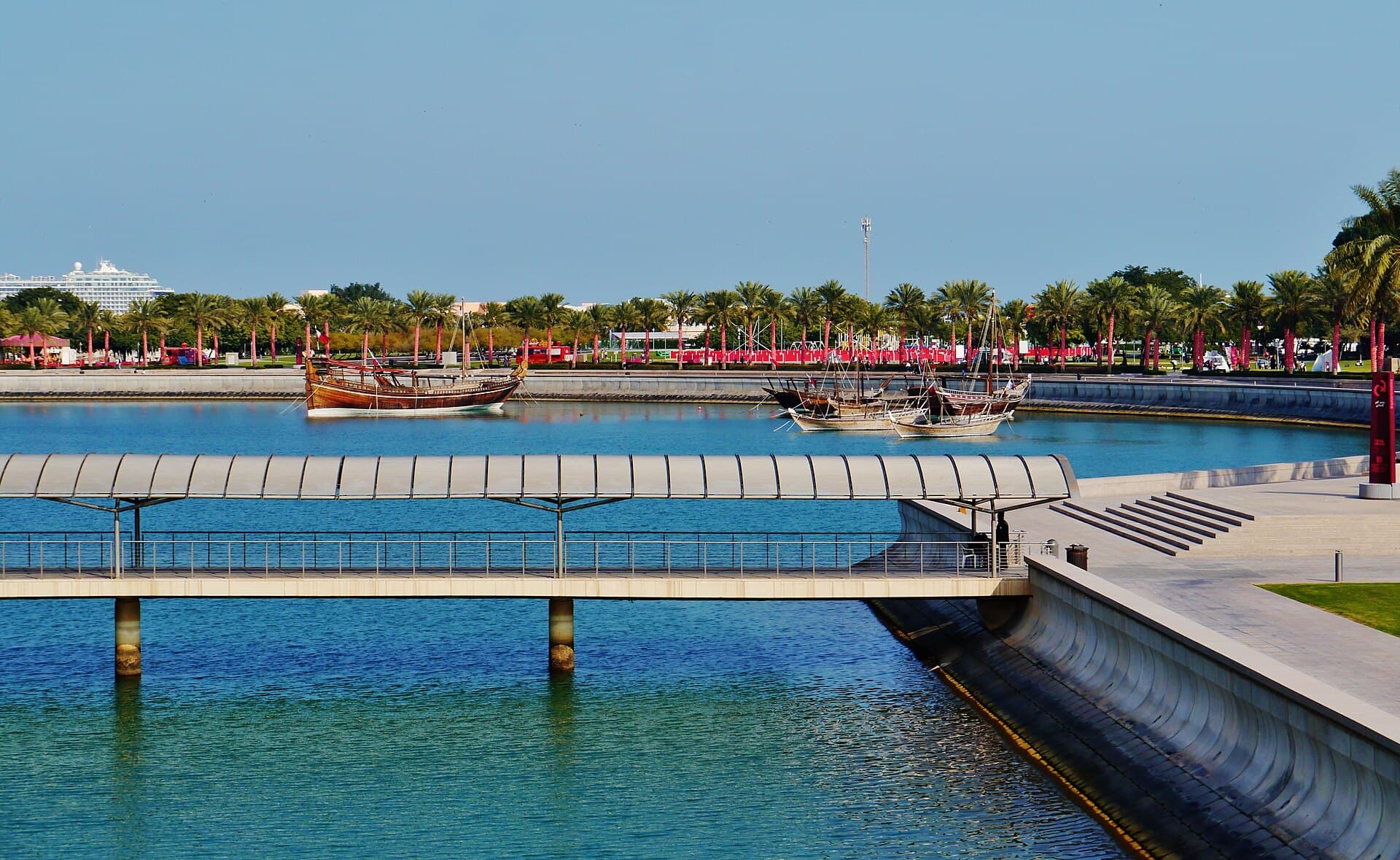 MIA ParkA large seaside park around the Museum of Islamic Art at the southern end of the12 minutes walk4.8
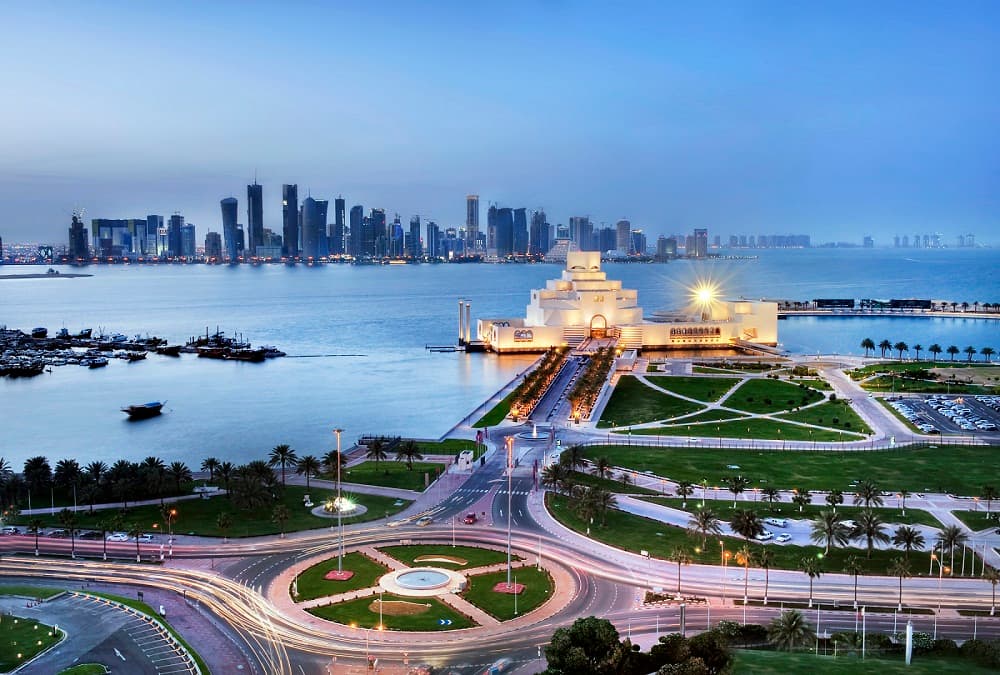 Museum of Islamic ArtThe most important museum of Islamic art in the world outside Istanbul and Cairo16 minutes walk4.8
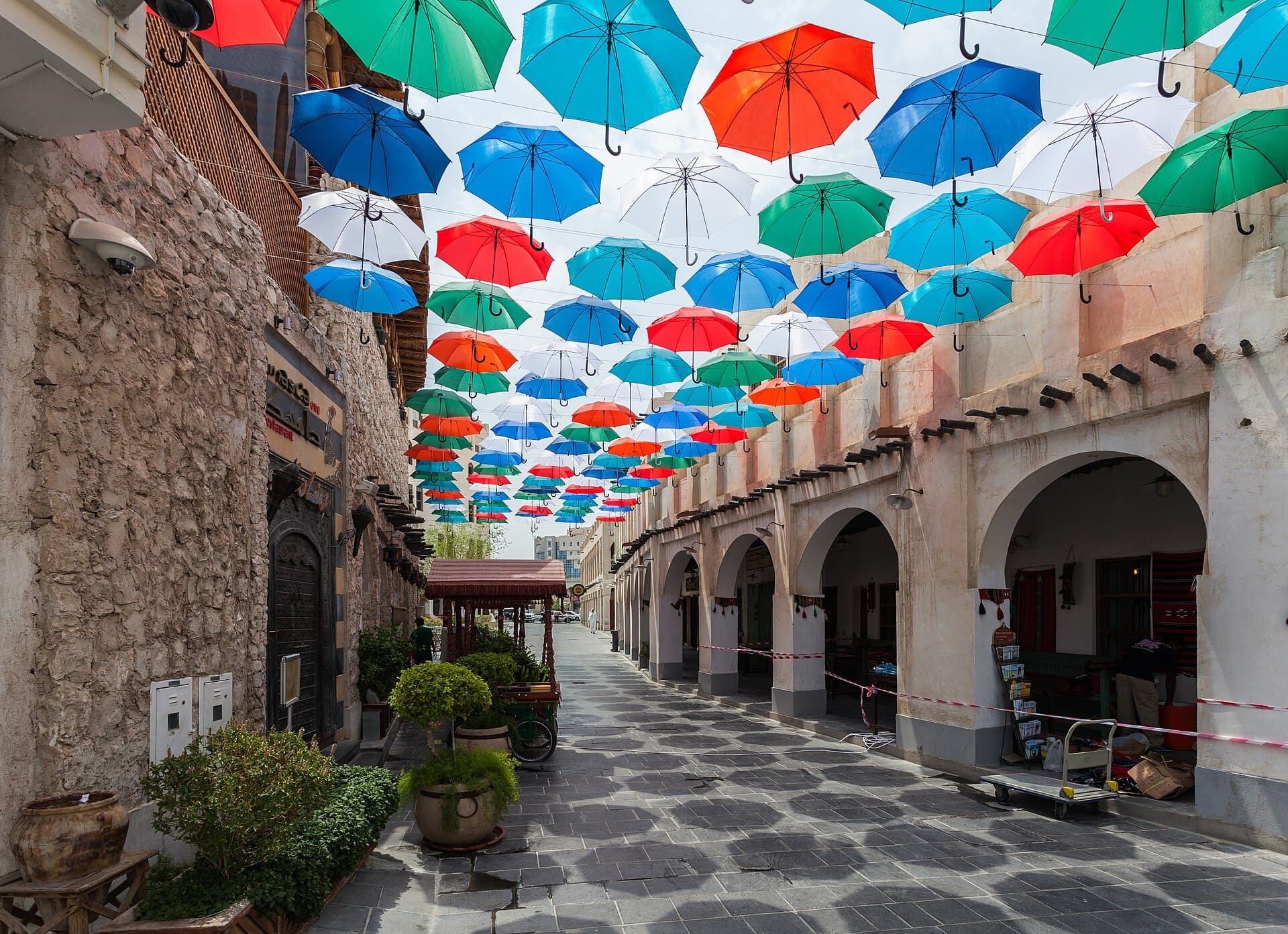 Souq WaqifDoha's old market and its social heart, and the liveliest place in the city afte21 minutes walk4.6
Two hours as a hard minimum. The route runs continuously for a kilometre and a half with no short cut out of the middle, so anyone entering with an hour will either leave exhausted or run past the second half. Do not make it the last stop of a long day.
The huge wall films genuinely hold them and work far better than a conventional museum display. The length of the route is the problem — a kilometre and a half with no exit halfway is tiring for small children. Go early while they are fresh, and do not pair it with another museum on the same day.