
The circular view
All Marseille, its islands and sea on three sides — nothing stands higher.
lienyuan lee — CC BY 3.0 · Tabletpc2 — CC BY 3.0 · Bybbisch94, Christian Gebhardt — CC BY-SA 4.0 · Bybbisch94, Christian Gebhardt — CC BY-SA 4.0
"The Good Mother", all Marseille calls her — the basilica on the city's highest hill, its gilded statue of the Virgin gleaming from the tower and visible from nearly everywhere in Marseille. It is the city's undisputed emblem and the visitor's first destination. The climb pays with the greatest view in the south of France: the whole city below with its harbours and islands — the Château d'If sitting in the water before you — and sea to the horizon on three sides. The viewpoint around the basilica is free and always open. The church itself is nineteenth-century, striped white and green in the Byzantine manner, its interior gold mosaic hung with sailors' offerings — model ships and paintings of rescues at sea, for Marseille is a sea city before all else.
All Marseille, its islands and sea on three sides — nothing stands higher.
The gilded Virgin on the tower, visible city-wide and blazing in the sun.
Model ships and rescue paintings hung for two centuries — Marseille's seafaring heart.
A striped Byzantine interior glinting with mosaic in the half-dark.
Rue Fort du Sanctuaire, 13006 Marseille
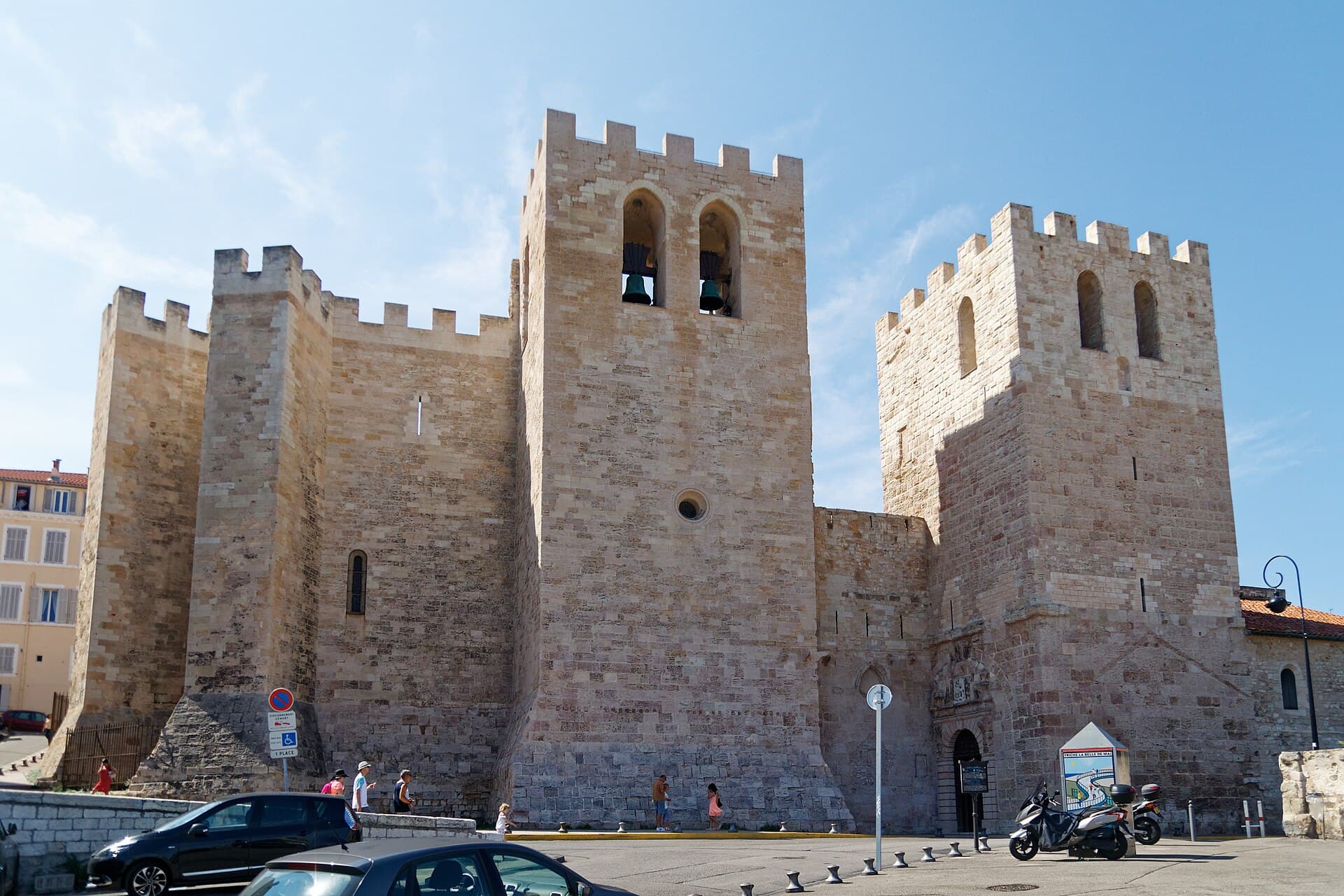 Abbey of Saint VictorFrom outside it does not look like a church but a **fortress**: blank walls, squ11 minutes walk4.5
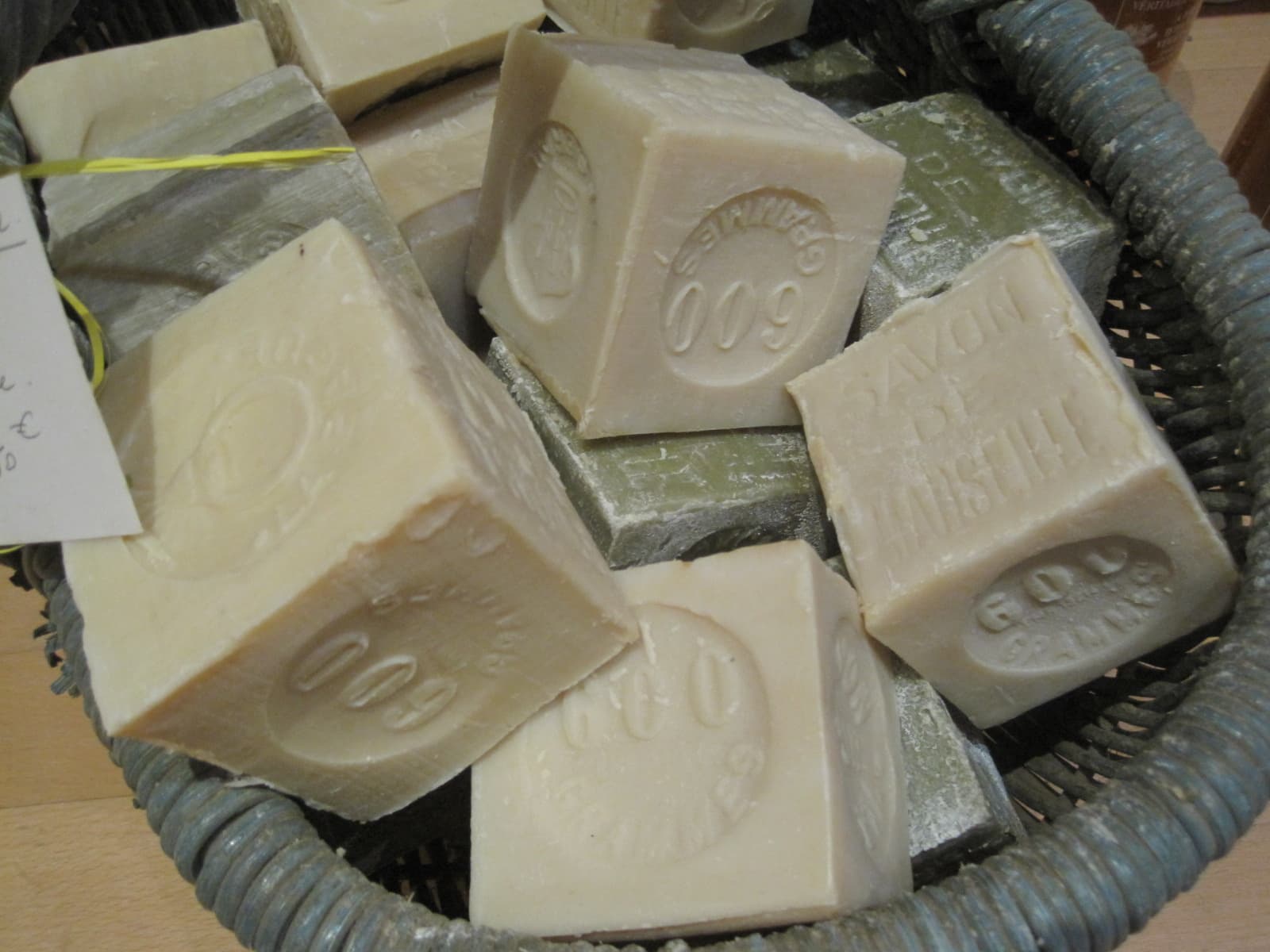 Museum of Marseille Soap**Savon de Marseille** is the most famous thing this city has produced after bou12 minutes walk4.5
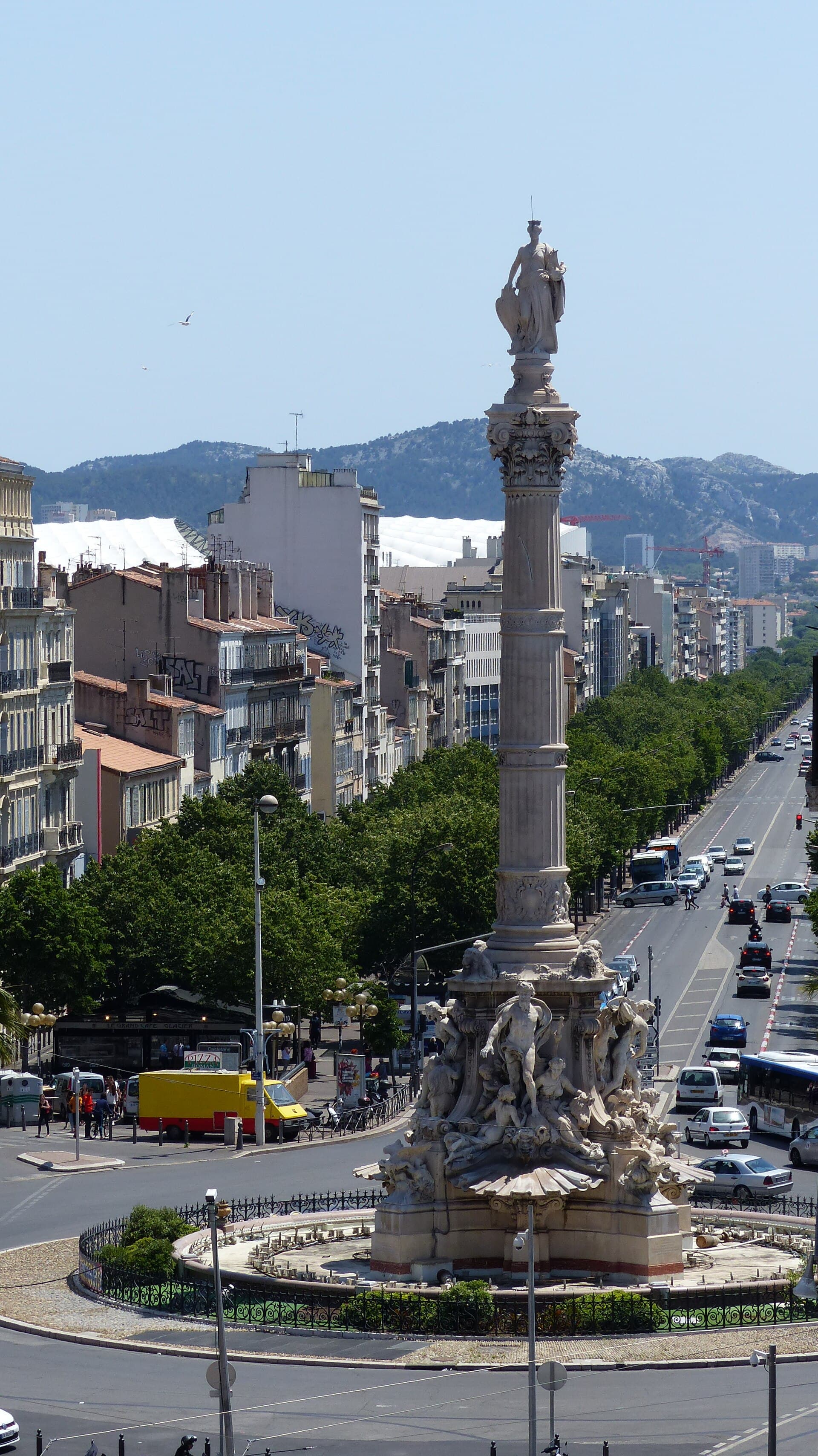 Place CastellaneA large circular square south of central Marseille where several main avenues me13 minutes walk3.9
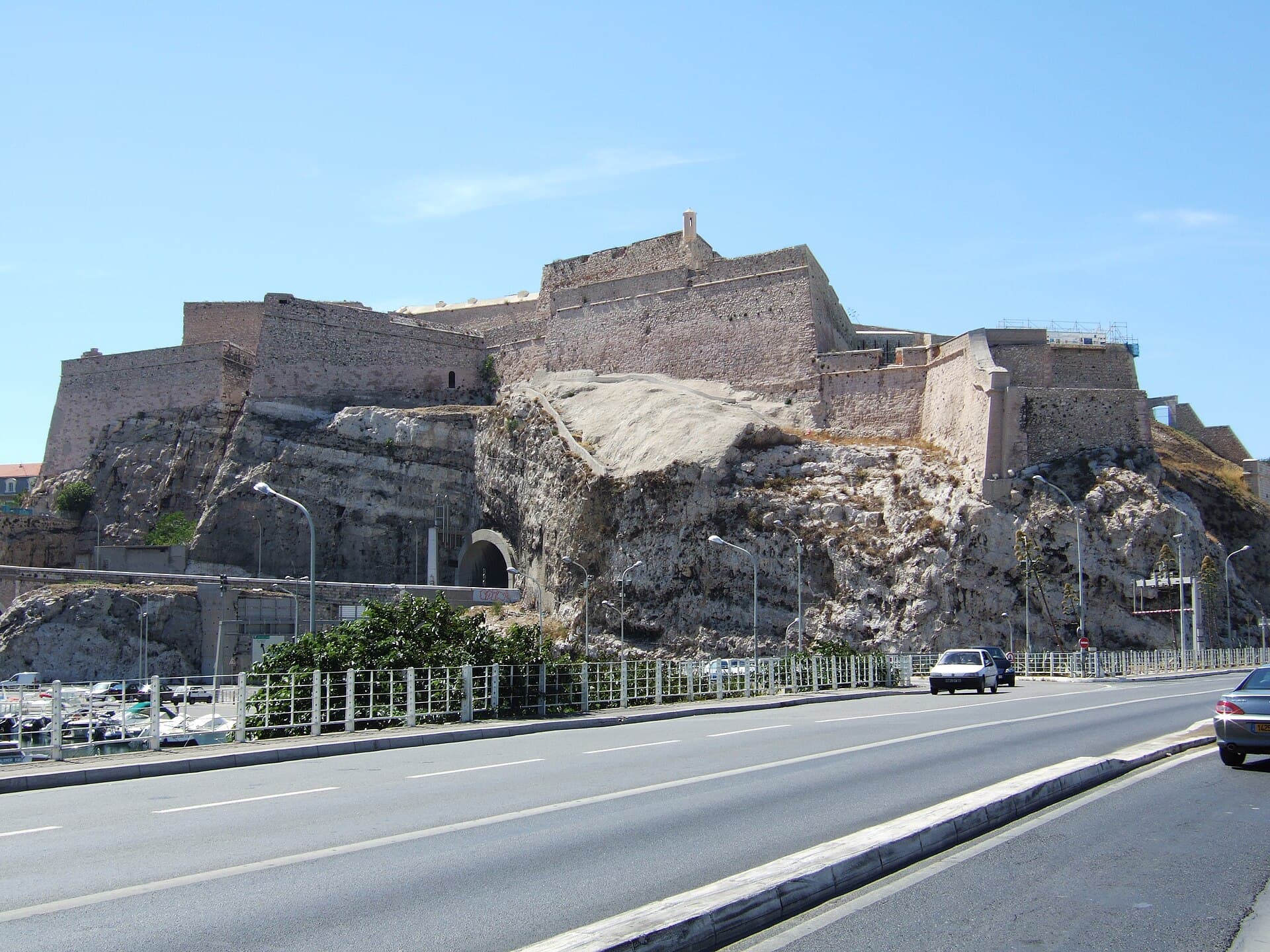 Fort Saint-Nicolas (Citadelle de Marseille)Two facing forts guard the mouth of the Old Port: Saint-Jean on the north side (13 minutes walk4.5
 Musée CantiniThe Cantini is Marseille's treasury of modern art: in an elegant seventeenth-cen14 minutes walk4.2
The little tourist train from the Vieux-Port goes straight up with a mini-tour en route, or bus 60 from the same spot. By car there is a small lot that fills fast. On foot it is a half-hour climb — pleasant in mild weather, punishing in summer.
Yes — the church is open to everyone with quiet and modest dress, and many visitors are tourists of every background. The view is outside the church anyway and requires no entry.
Day one: from up there the whole city's geography — port, islands, quarters — falls into place, and everything after plans itself.