
The continuous wall
Among Europe's most complete surviving medieval walls.
DALIBRI — CC BY-SA 4.0 · Planet Hoffnung — CC BY-SA 3.0 · Sergei Gussev — CC BY 3.0
Nuremberg's old town is ringed by a medieval wall still standing along almost its whole length — some five kilometres of it, with four great towers and more than eighty smaller ones, among the most complete medieval walls surviving in Europe. Nearly every sight in the city lies inside it. But what stands within needs an honest clarification: in a single night in January 1945, around ninety per cent of the old town was destroyed in an air raid. The pointed-gabled houses and narrow streets you see today are a careful reconstruction carried out in the 1950s and 60s on the original medieval plan and in the same materials. The decision to rebuild historically was contested — architects argued the city should build an honest modernism rather than a copy of a vanished past. But Nuremberg chose restoration, partly because the Nazi regime had appropriated the city's medieval image for its propaganda, so reclaiming it was a symbolic act. The wall, the castle and the great churches retain original fabric.
Among Europe's most complete surviving medieval walls.
The medieval plan rebuilt in the same materials.
Altstadt, 90403 Nuremberg
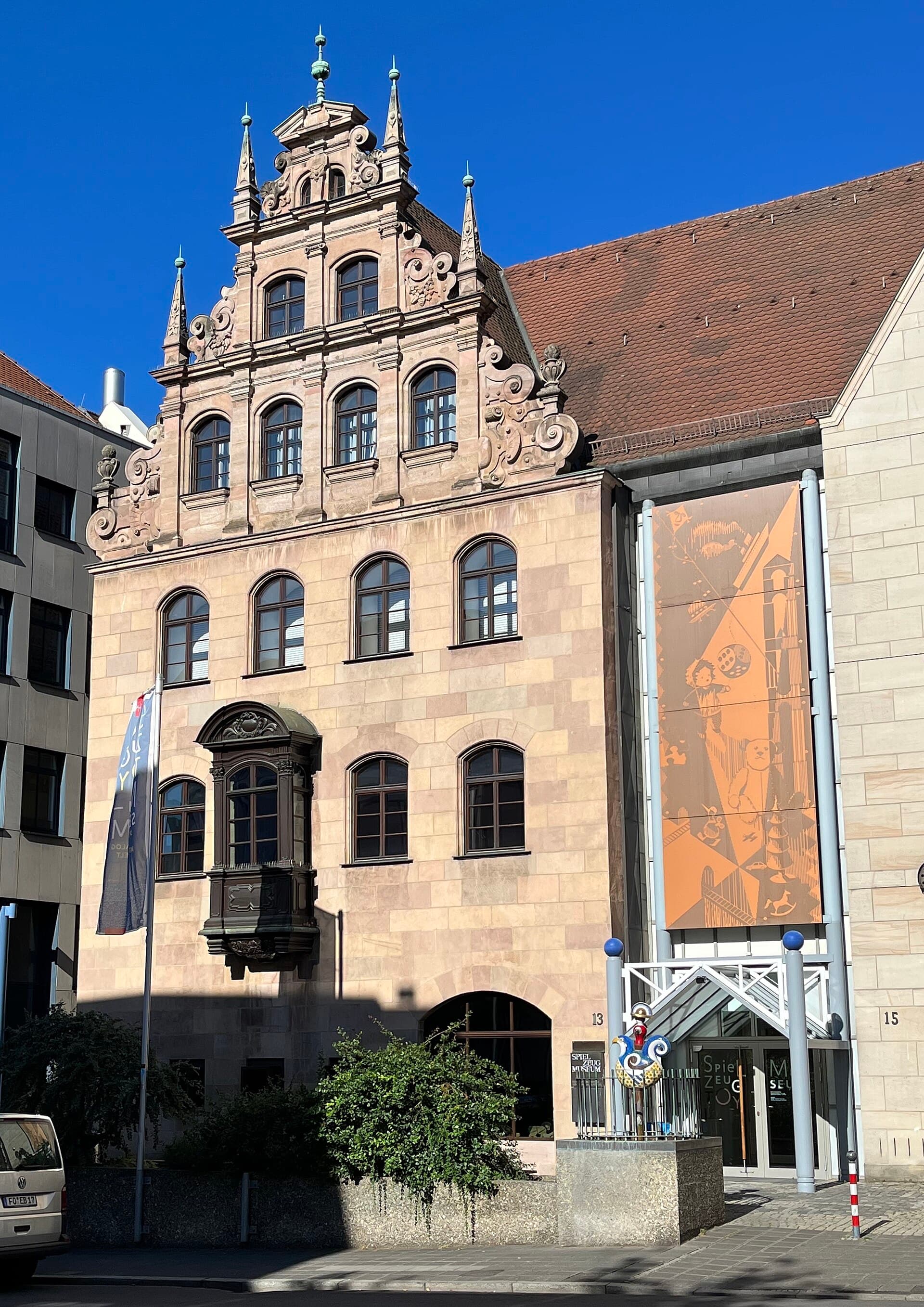 Nuremberg Toy MuseumThe Nuremberg Toy Museum is among the best-known toy museums in the world, and i1 minute walk4.6
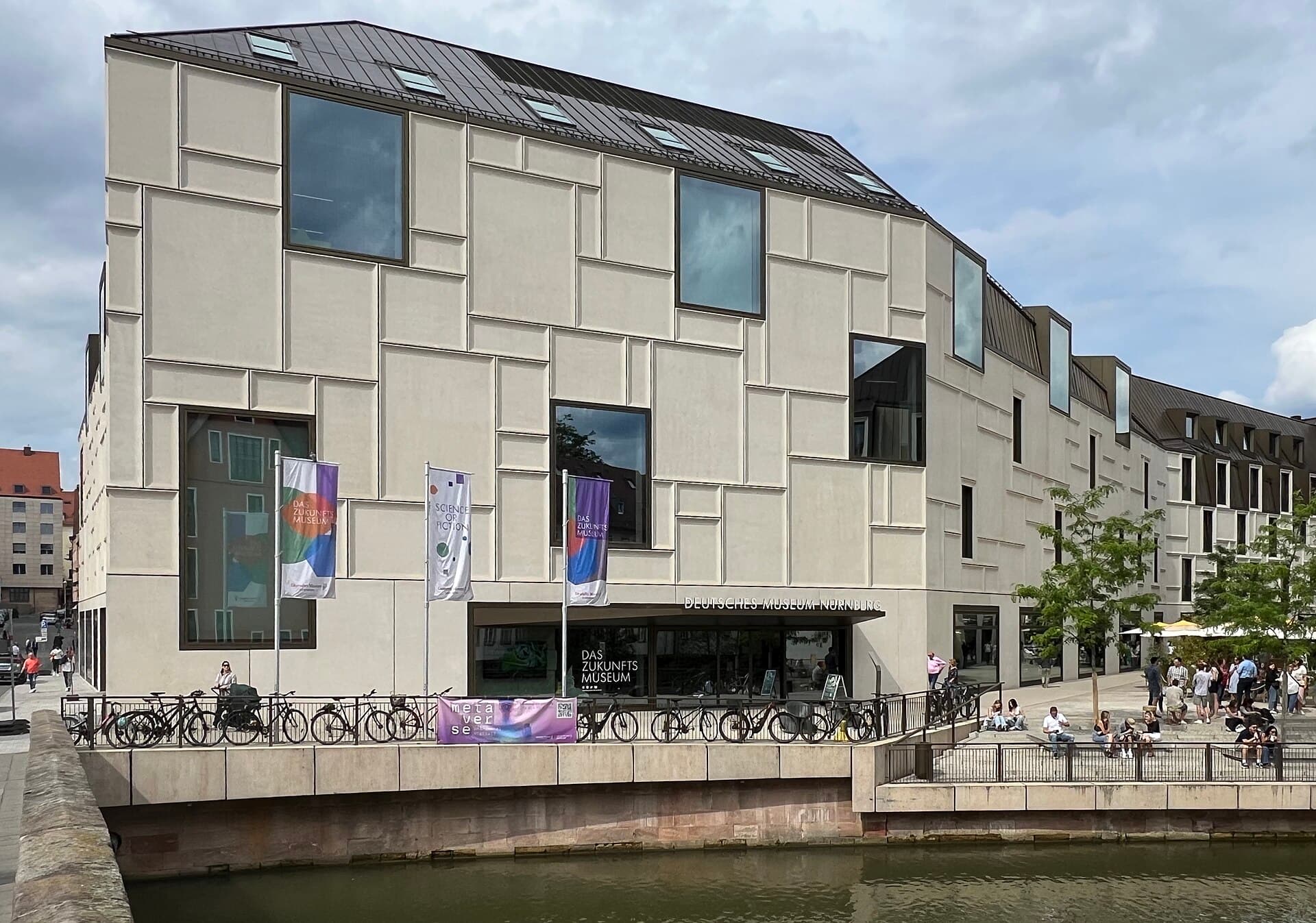 Deutsches Museum NurembergThe Zukunftsmuseum is a modern branch of the Deutsches Museum, opened in 2021 in1 minute walk4.3
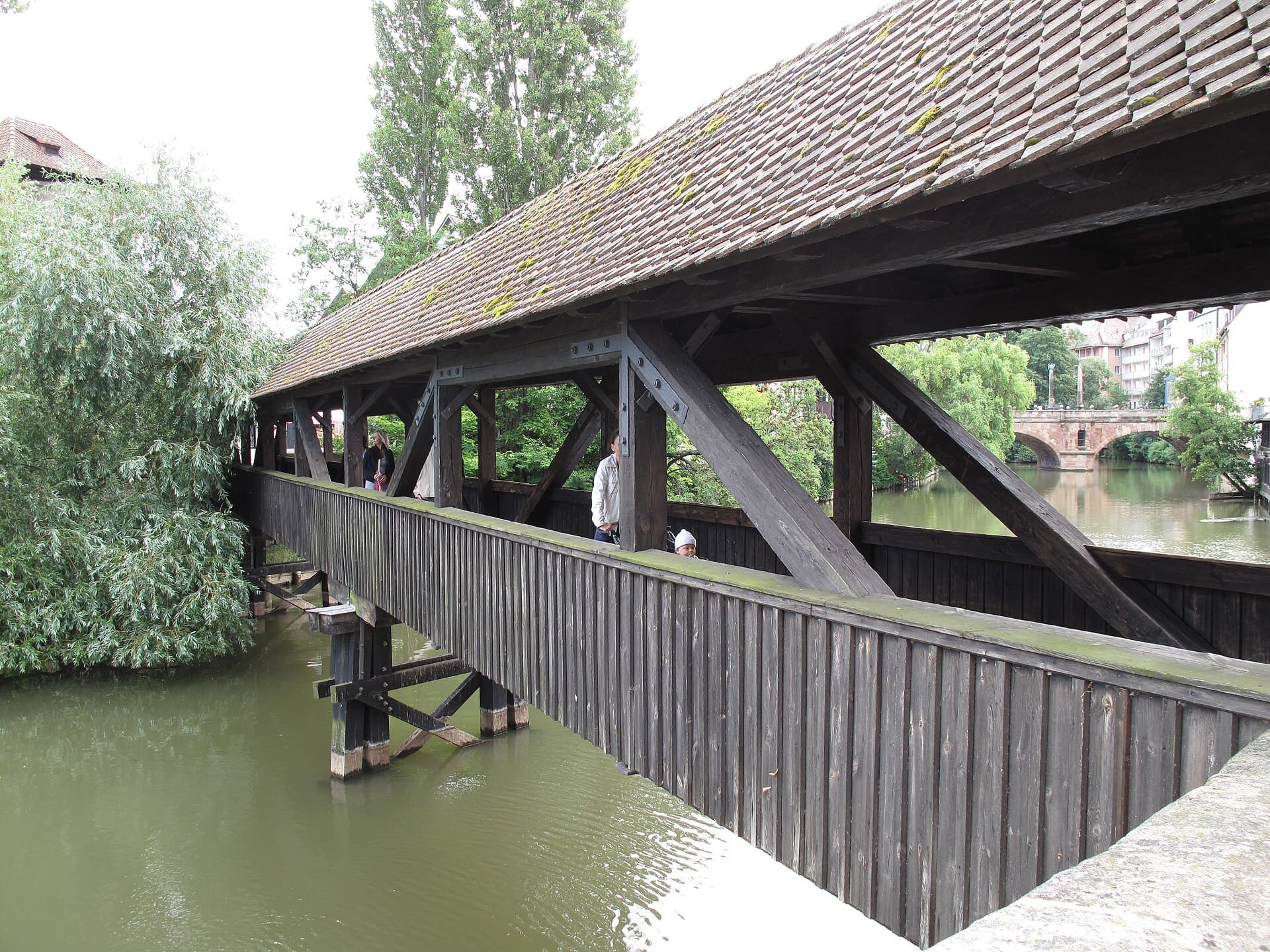 Hangman's Bridge & HouseA covered wooden bridge crosses the Pegnitz to a stone tower and a half-timbered2 minutes walk4.9
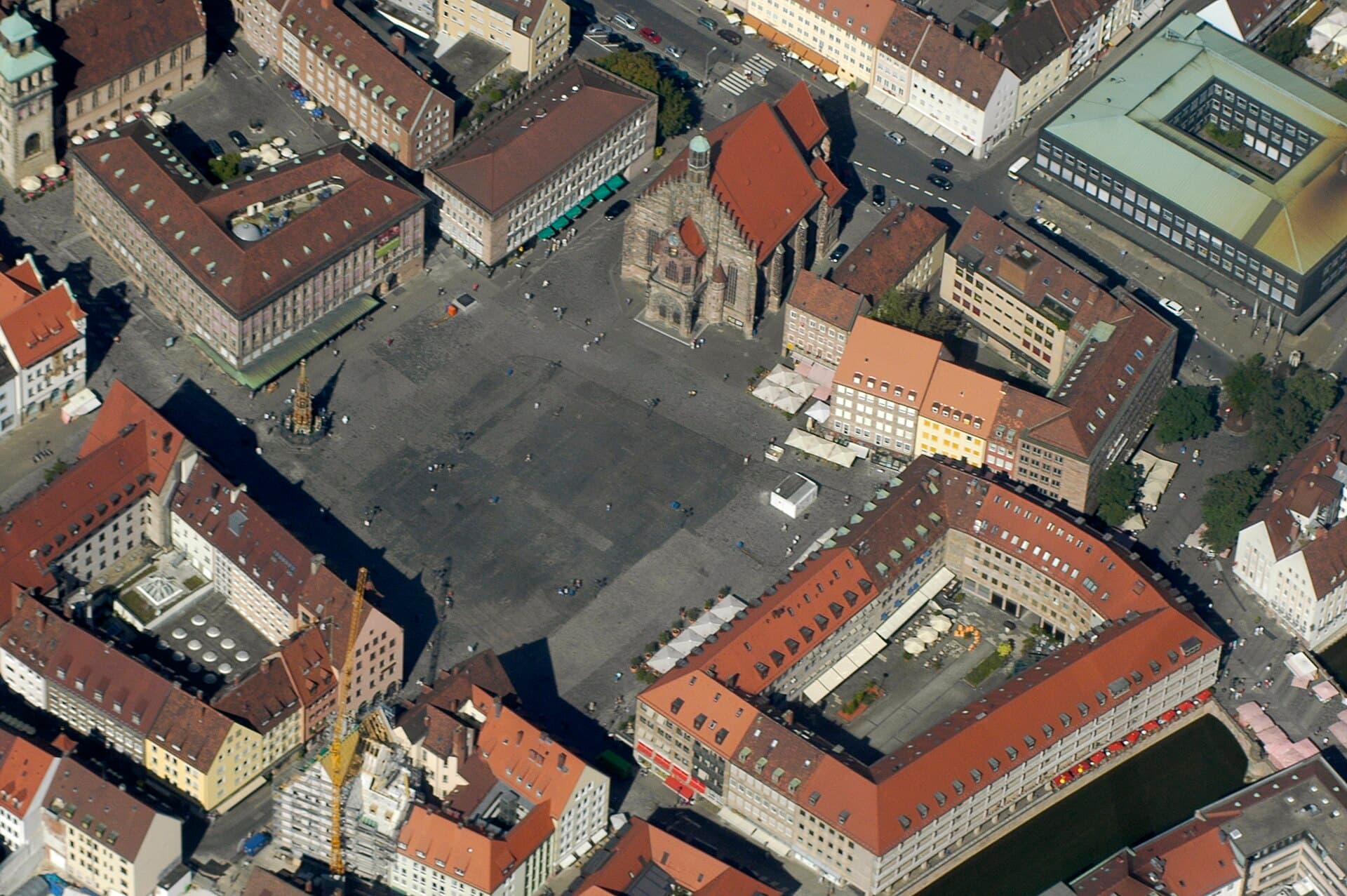 Nuremberg Main Market SquareThe commercial heart of Nuremberg since the middle of the fourteenth century, an2 minutes walk4.5
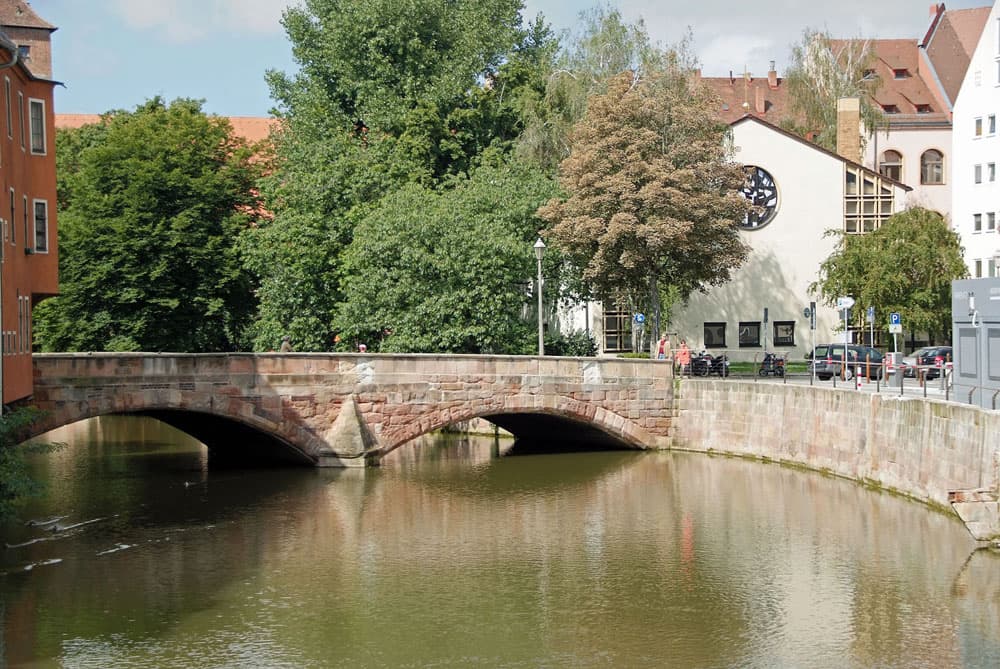 The KarlsbrückeA stone bridge over the Pegnitz in Nuremberg's old town, built in 1728 and named2 minutes walk4.8
Because the question here was political rather than merely aesthetic: the Nazi regime made Nuremberg the stage for its rallies and used the city's medieval image as a symbol of an authentic Germany. After the war many residents felt that leaving the city in ruins or building abstract modernism would cede that image to Nazism, while restoring the real city would reclaim it. The argument ran for years and was settled in favour of restoration.