
The covered bridge
Fifteenth-century timber over the river — Nuremberg's signature corner.
Schlaier — CC BY-SA 3.0 · Uoaei1 — CC BY-SA 4.0 · Aarp65 — CC BY-SA 3.0 · LBM1948 — CC BY-SA 4.0
A covered wooden bridge crosses the Pegnitz to a stone tower and a half-timbered house hanging over the water — Nuremberg's most photographed corner, with its strangest story: here lived the city's executioner for centuries, isolated above the river because his trade made him untouchable — never greeted, never neighboured — yet indispensable to old justice. The house holds a small museum on the city's most famous hangman, Franz Schmidt, who kept a unique diary recording forty years of his work — an astonishing document of a terrible profession written in its holder's own hand, presented without sensationalism. The whole water passage — the covered bridge, the neighbouring Chain Bridge, the little river island — is the old town's loveliest short walk, free at every hour.
Fifteenth-century timber over the river — Nuremberg's signature corner.
Forty years in Franz Schmidt's own hand — a document without equal.
Boardwalks, an islet and the Chain Bridge — the old town's finest short stroll.
Trödelmarkt 2, 90402 Nuremberg
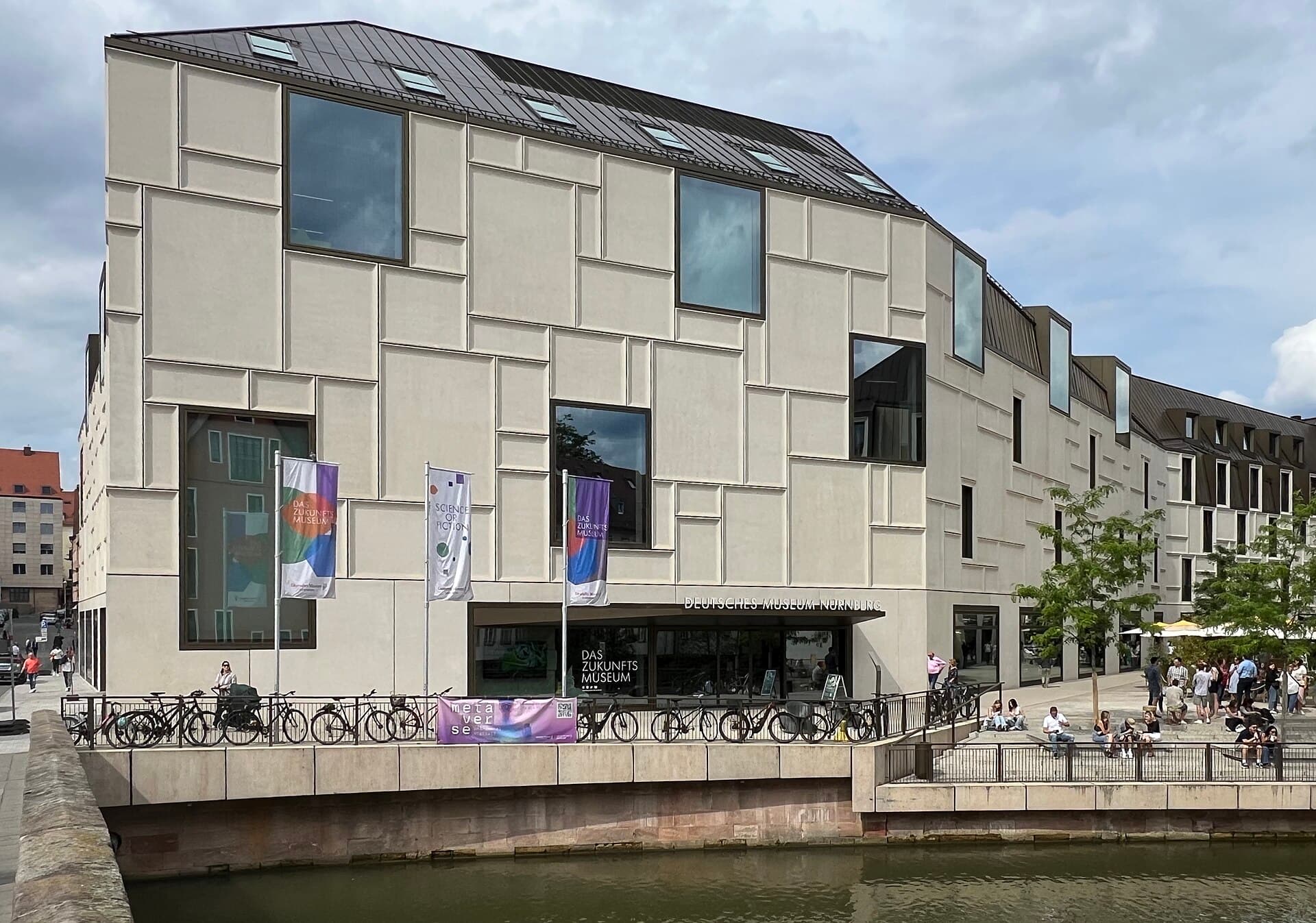 Deutsches Museum NurembergThe Zukunftsmuseum is a modern branch of the Deutsches Museum, opened in 2021 in1 minute walk4.3
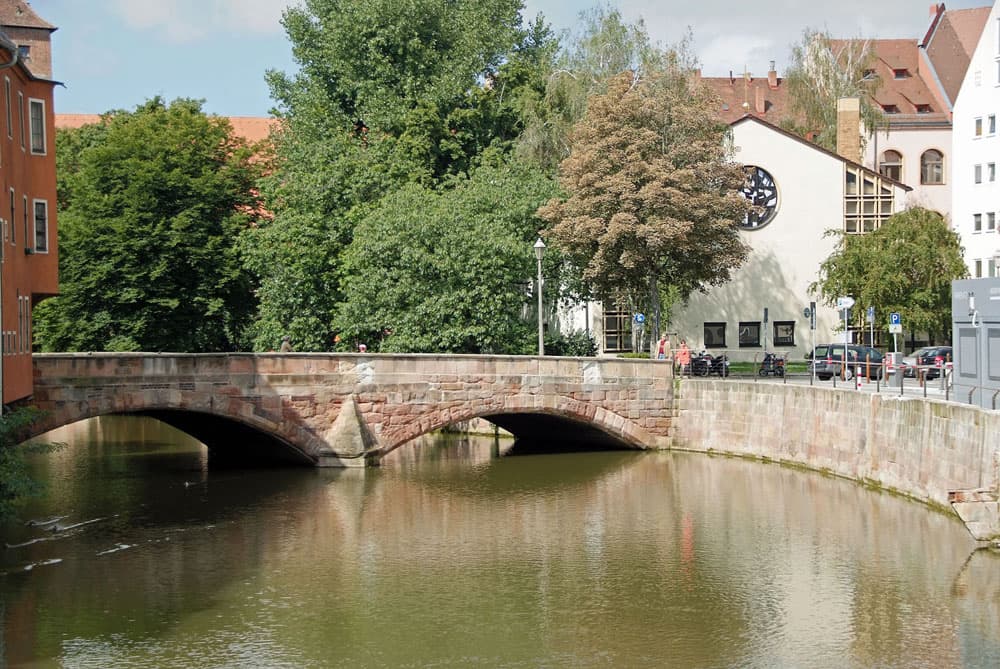 The KarlsbrückeA stone bridge over the Pegnitz in Nuremberg's old town, built in 1728 and named1 minute walk4.8
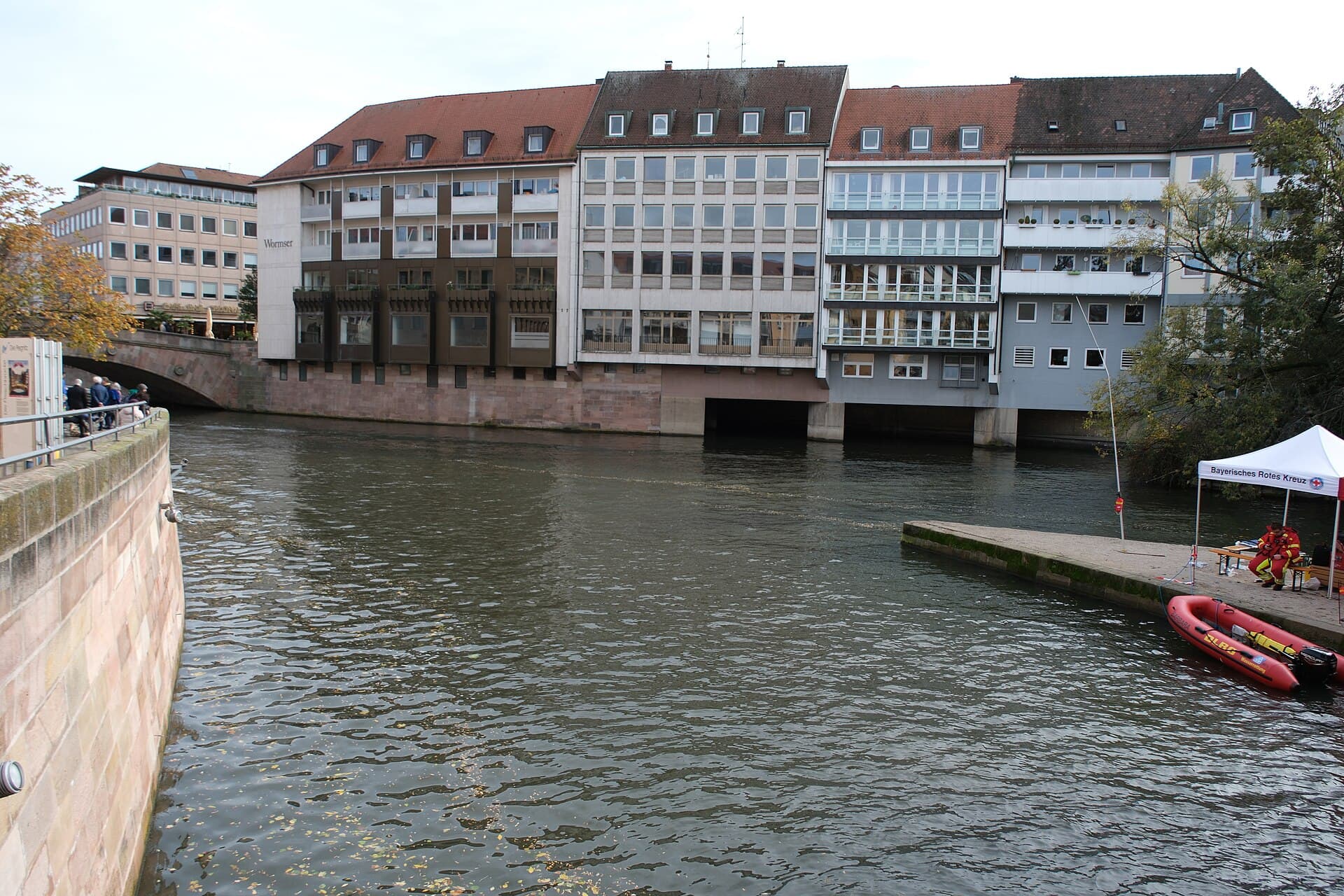 The Old TownNuremberg's old town is ringed by a medieval wall still standing along almost it2 minutes walk4.6
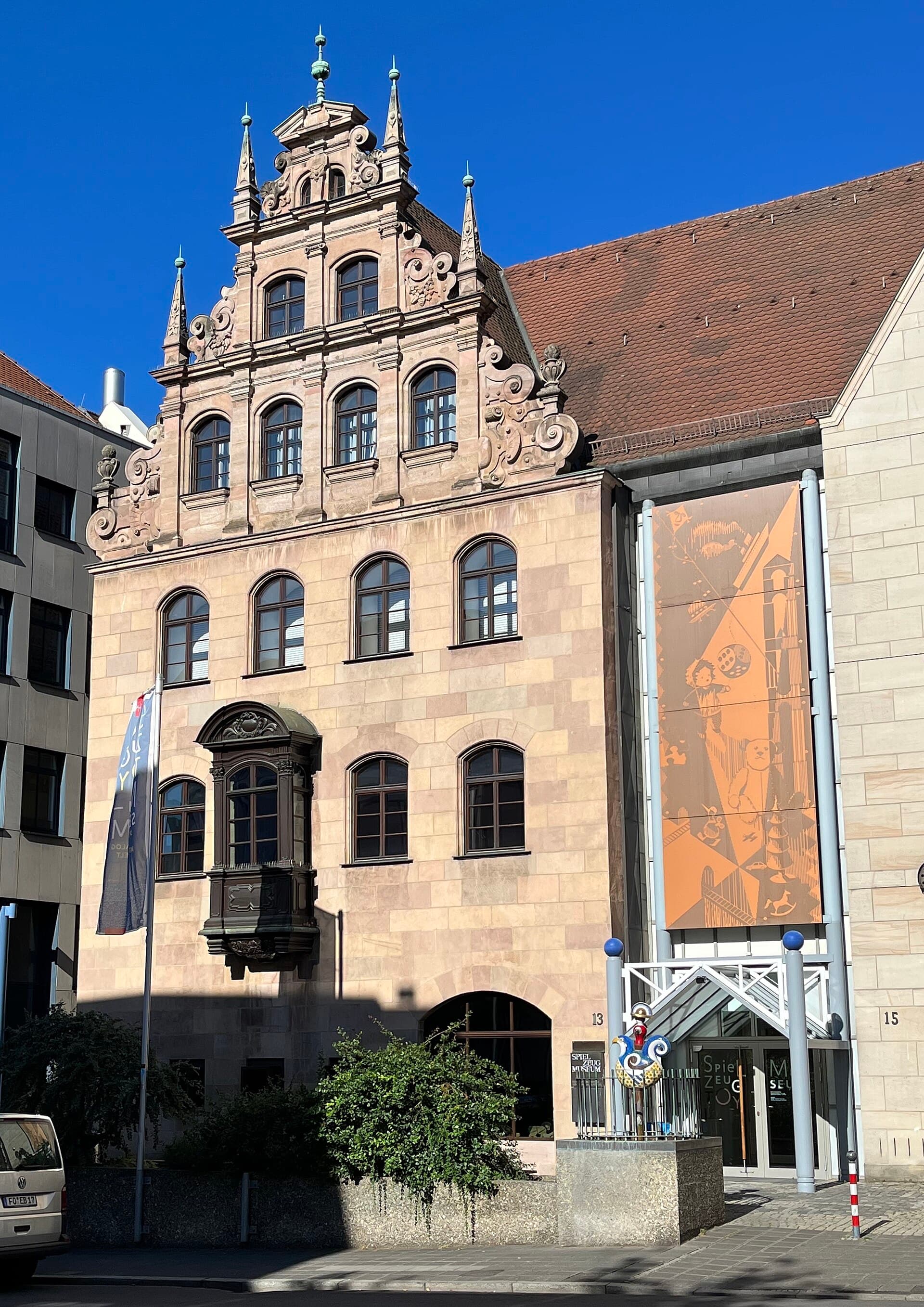 Nuremberg Toy MuseumThe Nuremberg Toy Museum is among the best-known toy museums in the world, and i2 minutes walk4.6
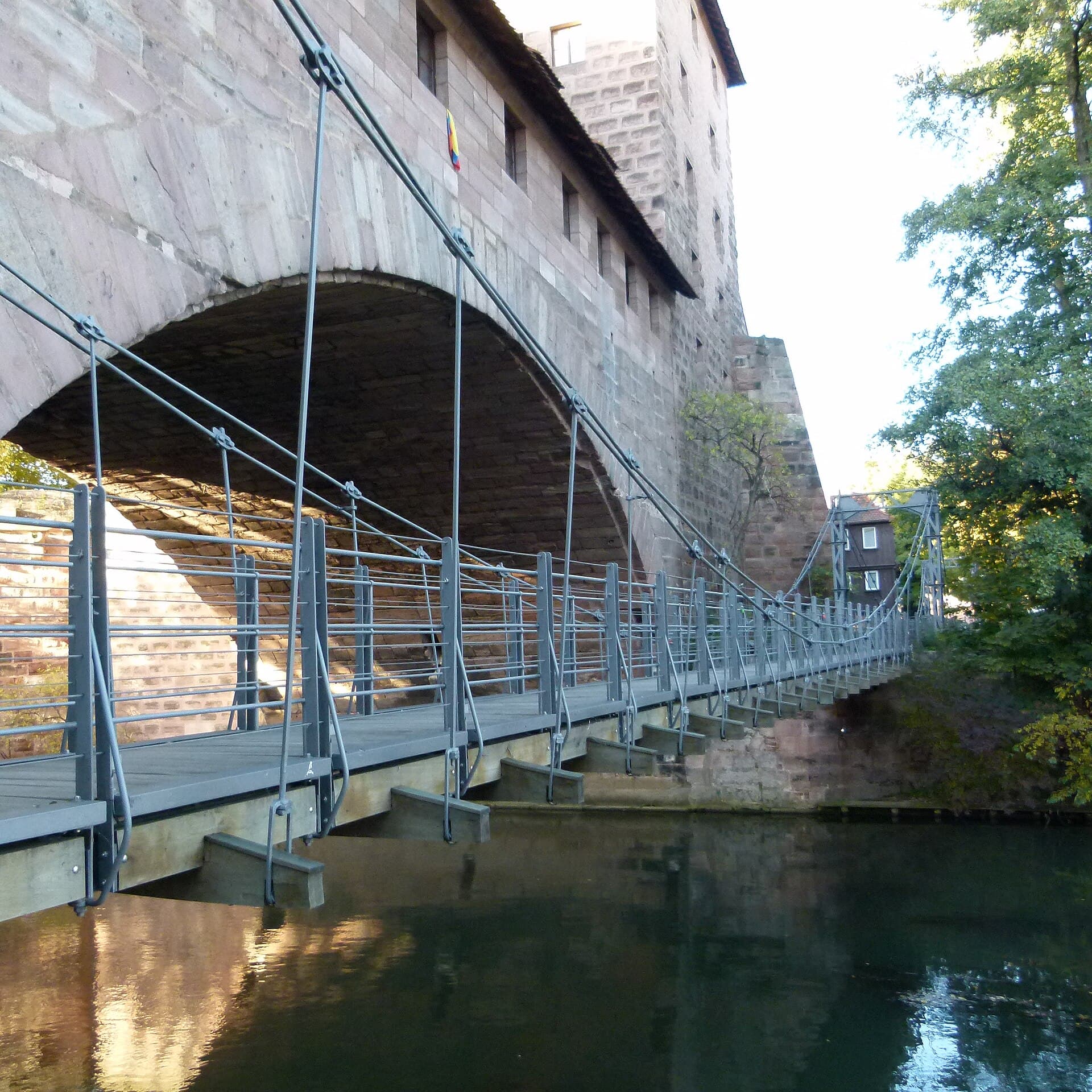 Kettensteg Chain BridgeA sixty-eight-metre footbridge crossing the river Pegnitz at the western end of 3 minutes walk4.6
His trade made him socially unclean: barred from taverns and company, his children marrying only into other executioners' families — yet his salary was excellent and his house among the finest. The hanging house is that whole paradox: an outcast in a small palace.
If it is open as you pass, its quarter hour earns itself: the diary alone — an executioner honestly logging forty years — can be met nowhere else. If shut, bridge and story fully suffice.
It is the perfect midpoint: main market and town hall to the bridge (five minutes), then across the river island to the Germanisches and the railway museum — the finest walking arc in all Nuremberg.