
The green-blue dome
Glazed tile.
Bgag — CC0 · Iaa2023 — CC BY-SA 4.0 · Fulvio Spada from Torino, Italy — CC BY-SA 2.0 · Gregor Rom — CC BY-SA 4.0 · Ramón — CC BY-SA 2.0 · Iaa2023 — CC BY-SA 4.0 · Panpanchik — CC BY-SA 4.0 · Panpanchik — CC BY-SA 4.0
The tomb of Khiva's patron saint and its most sacred place for locals: Pahlavan Mahmud (1247-1326), a poet from humble craftsmen who was famed as an unbeatable wrestler and a healer. He asked to be buried in the leather workshop where he worked, and his grave became a place of pilgrimage. The inscription on the gatehouse says Shohniyoz Khan built the complex in 1701; it was rebuilt between 1825 and 1835 into a broad ensemble of about 50 by 30 m, with the tomb, a pilgrims' hall, a mosque and a khanqah. It is crowned by the largest dome in Khiva, clad in blue-green glazed tiles, and under Allah Kuli Khan it was dressed in ceramic tile. The interior is covered entirely in blue and white tiles with fine floral patterns and inscriptions, among the most beautiful in Central Asia. Entry needs a ticket separate from the Itchan Kala pass, about 30,000 som in cash, per visitor guides. It is a shrine, so keep quiet and dress modestly.
Glazed tile.
Blue and white.
For locals.
Central Itchan Kala, near the Islam Khoja minaret, Khiva
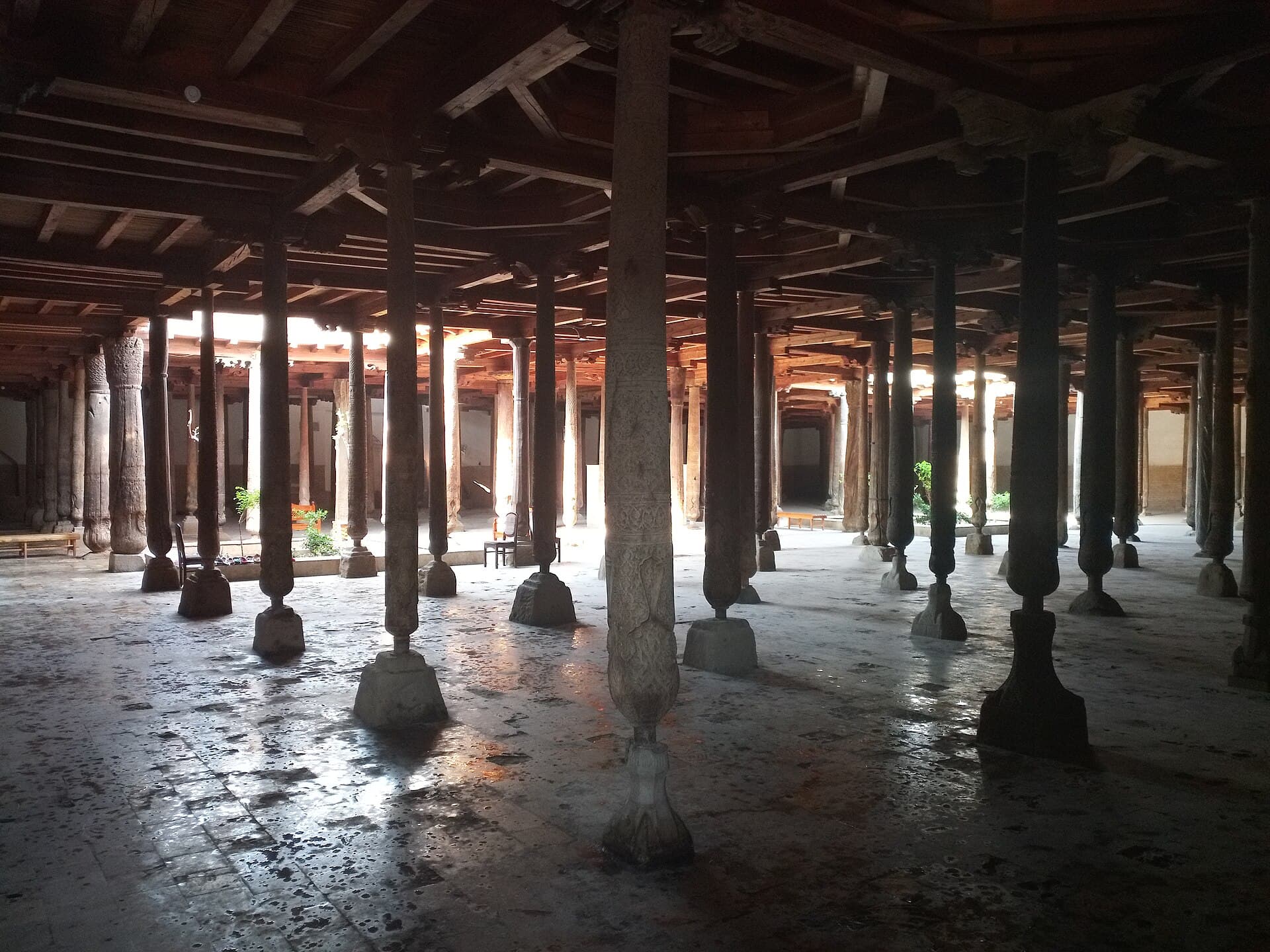 Juma Mosque, KhivaOne of Itchan Kala's principal monuments, in its middle on the road between the 1 minute walk4.6
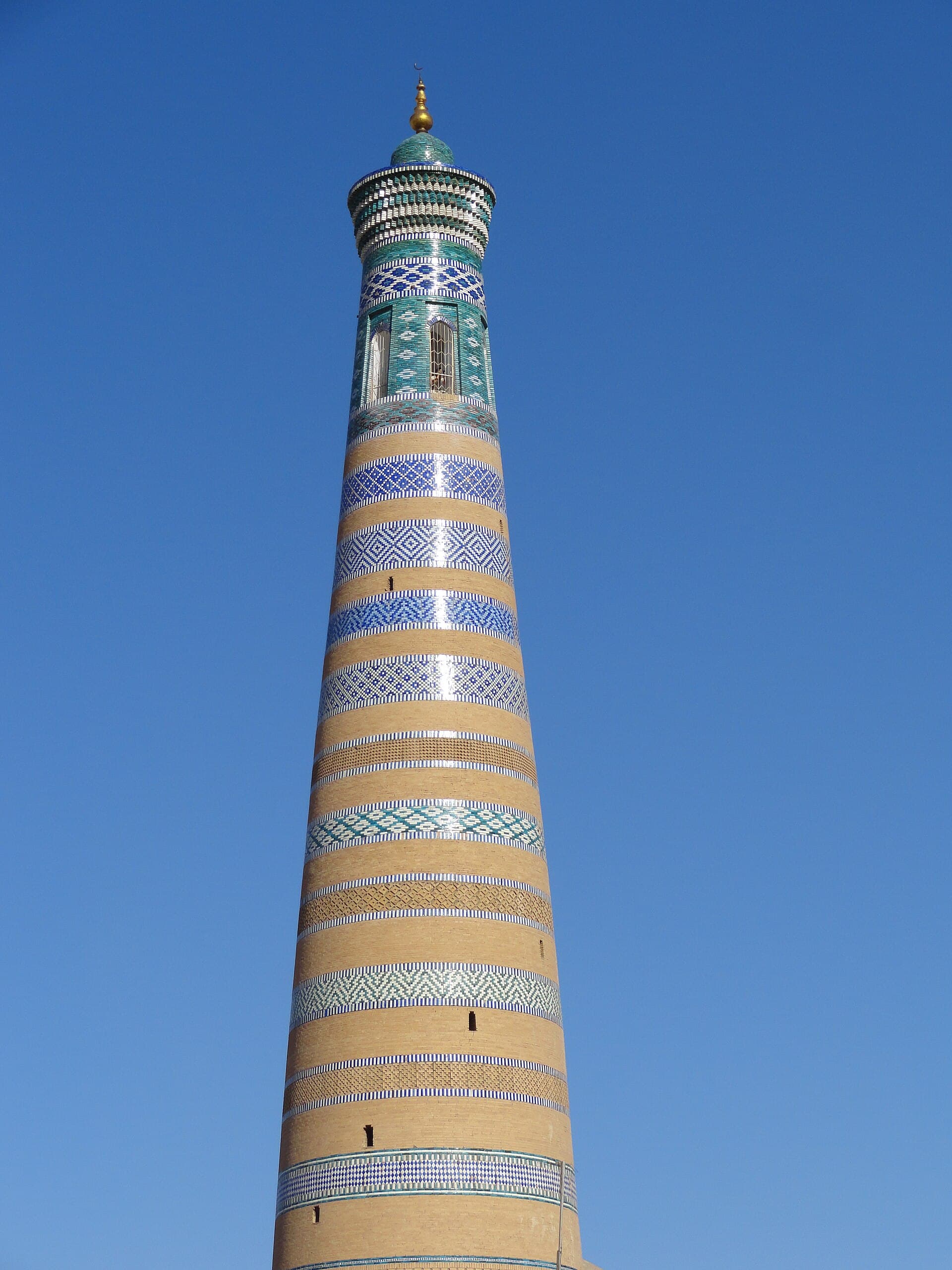 Islam Khoja MinaretKhiva's tallest minaret, about 57 metres including its base, built in 1908-1910 1 minute walk4.7
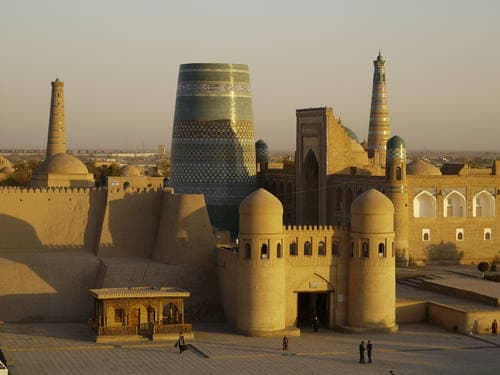 Itchan Kala, Khiva's walled cityThe walled inner town of Khiva, a World Heritage Site since 1990. It holds more 1 minute walk4.8
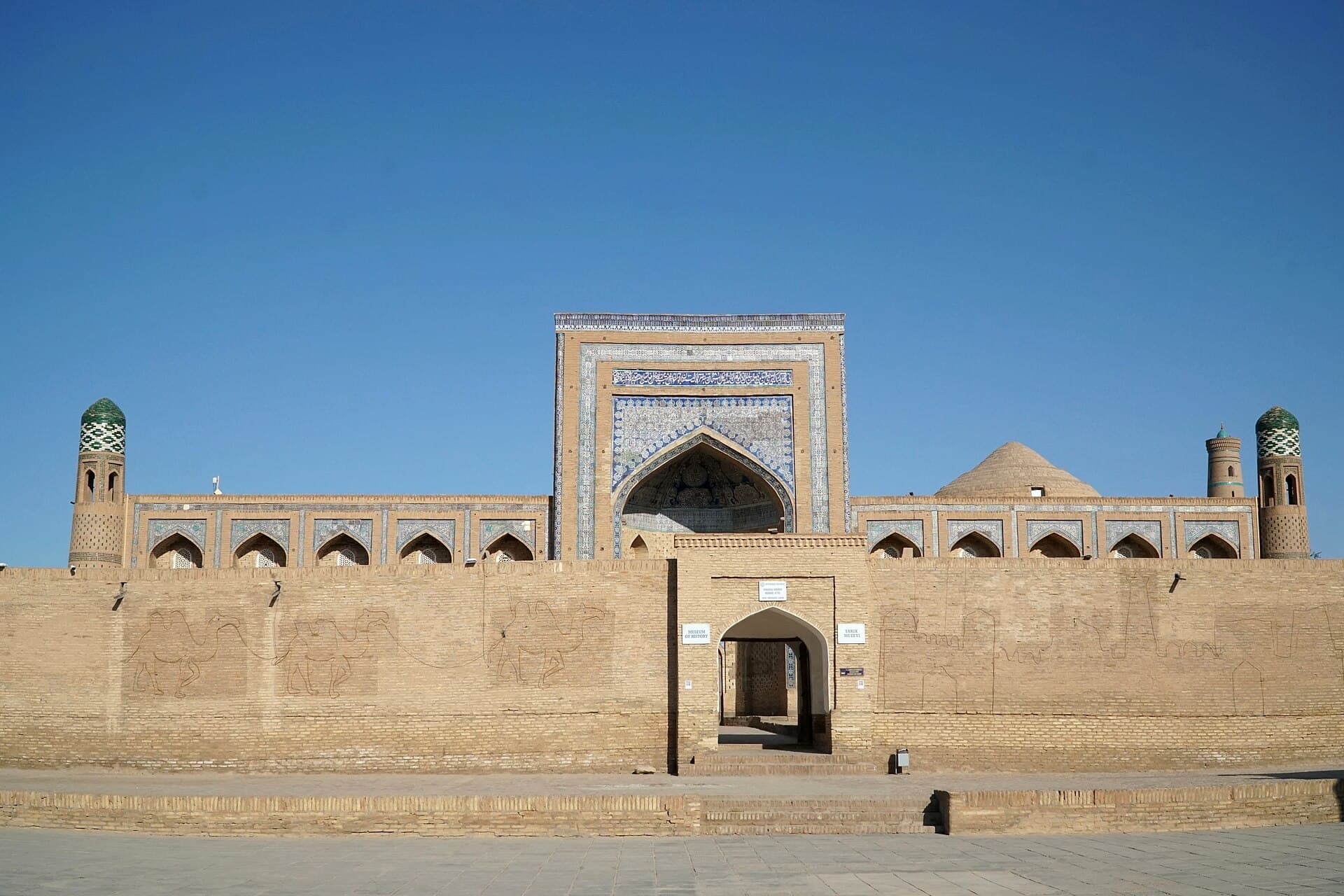 Muhammad Rahim Khan MadrasaOne of Khiva's largest madrasas, facing the Kunya Ark citadel inside Itchan Kala2 minutes walk4.7
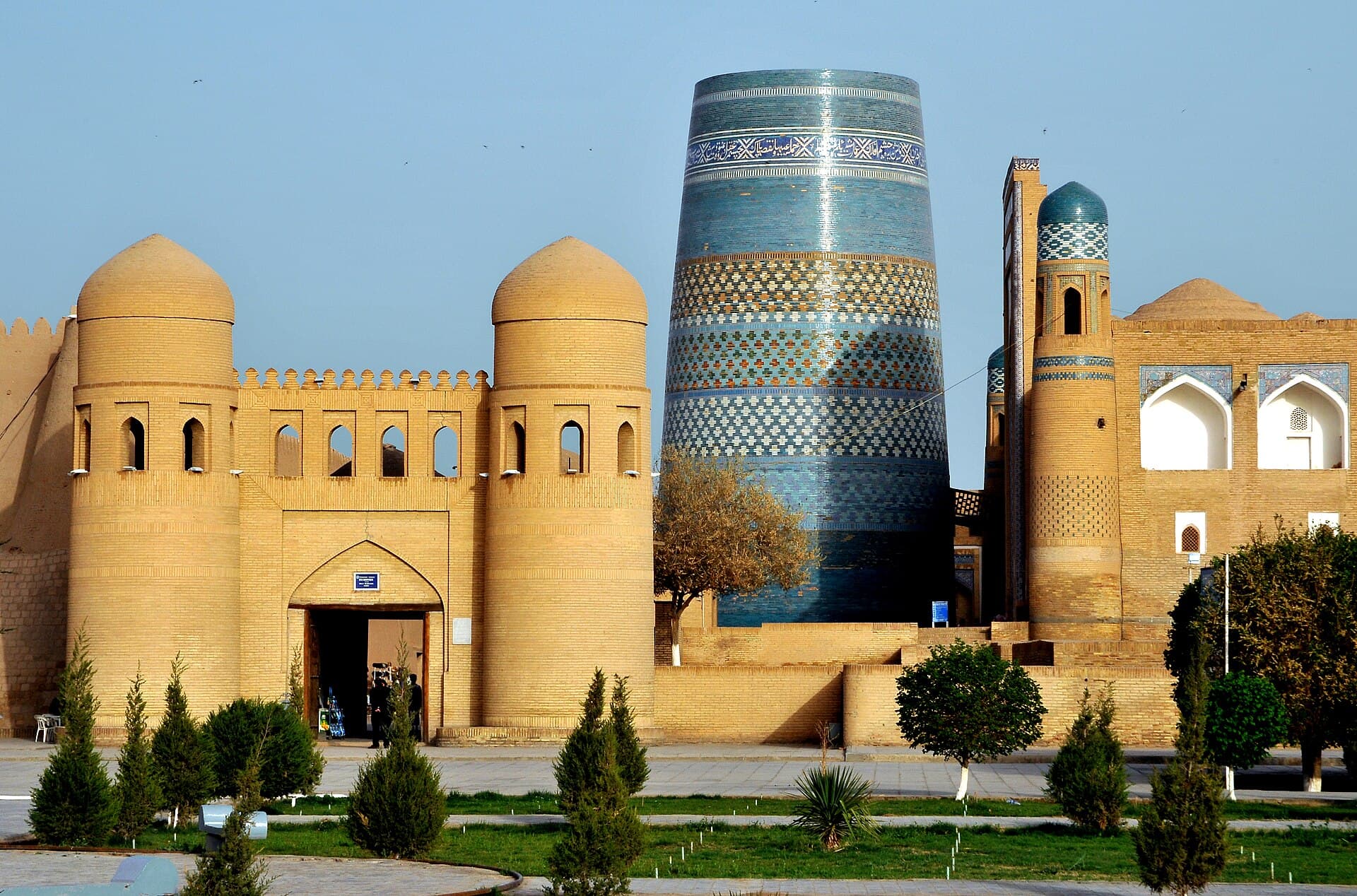 Kalta Minor minaretAn unfinished minaret in Khiva's Itchan Kala, in front of the Muhammad Amin Khan2 minutes walk4.9
A poet, wrestler and healer (1247-1326) whom Khiva holds as its patron saint; his tomb needs a separate ticket of about 30,000 som, per visitor guides.