
The Sala dei Nove
Three walls that read as one continuous political argument.
Eckhard Henkel — CC BY-SA 3.0 de · Berthold Werner — CC BY-SA 4.0 · Holger Uwe Schmitt — CC BY-SA 4.0 · Holger Uwe Schmitt — CC BY-SA 4.0
**A 14th-century town hall still in use, holding the most famous political painting in the world** — at the lowest point of Piazza del Campo. It was built between **1297 and 1310** as the seat of the **Council of Nine**, **and part of it is still Siena's town hall today** — the rest is the **civic museum**. ⚠ **Its great work is the *Allegory of Good and Bad Government***: an enormous fresco painted by **Ambrogio Lorenzetti** between **1338 and 1339**, covering three walls of the Nine's council chamber. ✅ **It is a political rather than a religious work**: **on one wall a flourishing city** — markets, dancing, building and cultivated fields beneath a figure of Security; **opposite, a ruined city** ruled by a demonic figure of Tyranny, surrounded by devastation and violence. ⚠ **It was painted for the government itself to see every day** as it sat. ✅ **And it contains some of the earliest landscape in European art.**
Three walls that read as one continuous political argument.
Markets, dancing and fields beneath the figure of Security.
The fresco of the Virgin in the Sala del Mappamondo.
Piazza del Campo 1, 53100 Siena, Italy
 Torre del Mangia**An 88-metre tower built to exactly equal the cathedral — a statement that stat1 minute walk3.8
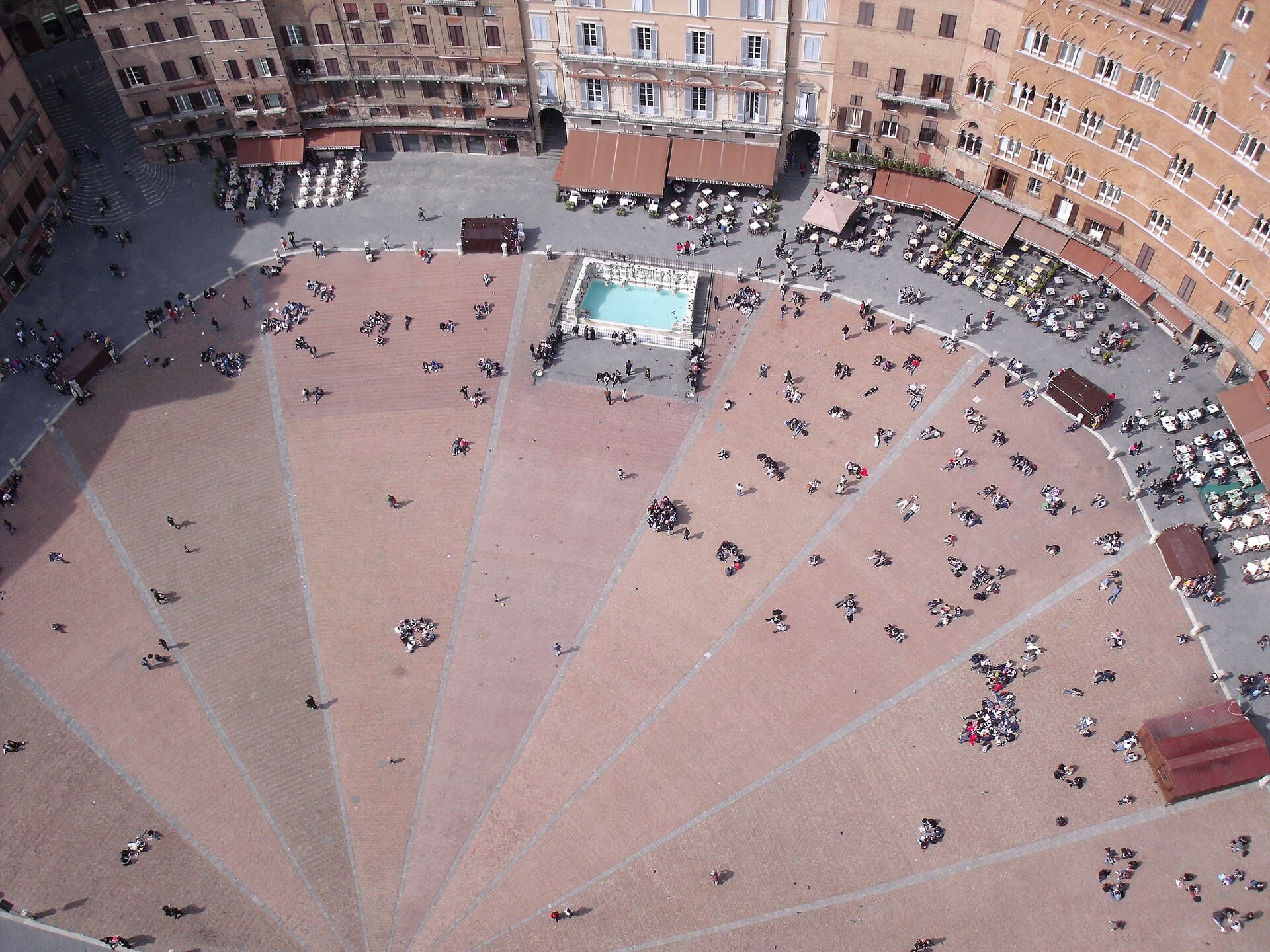 Piazza del Campo**A shell-shaped square sloping inward, divided into nine sectors, where a horse1 minute walk4.9
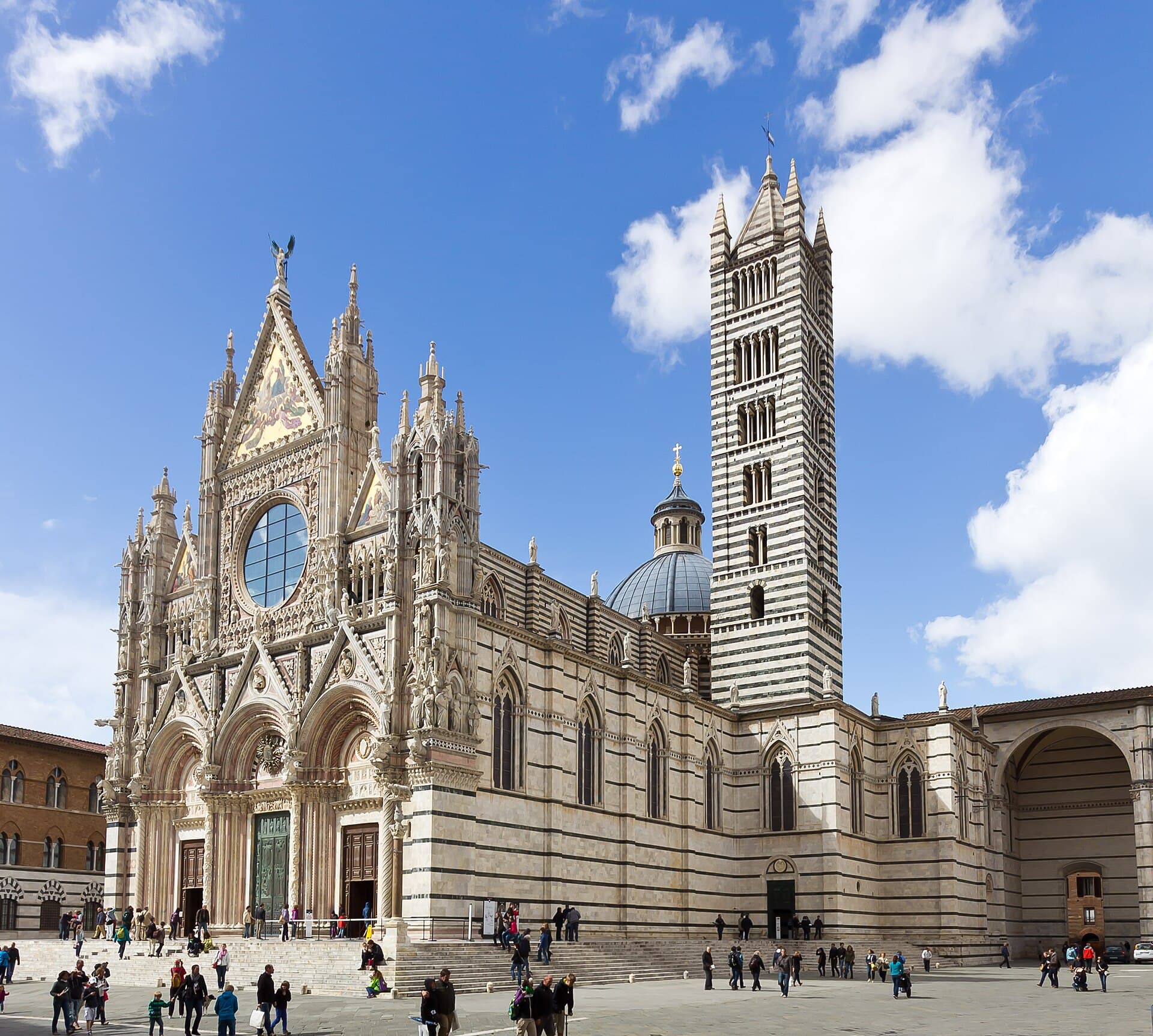 Siena Cathedral**A cathedral striped throughout in black and white marble, its floor fifty-six 3 minutes walk4.9
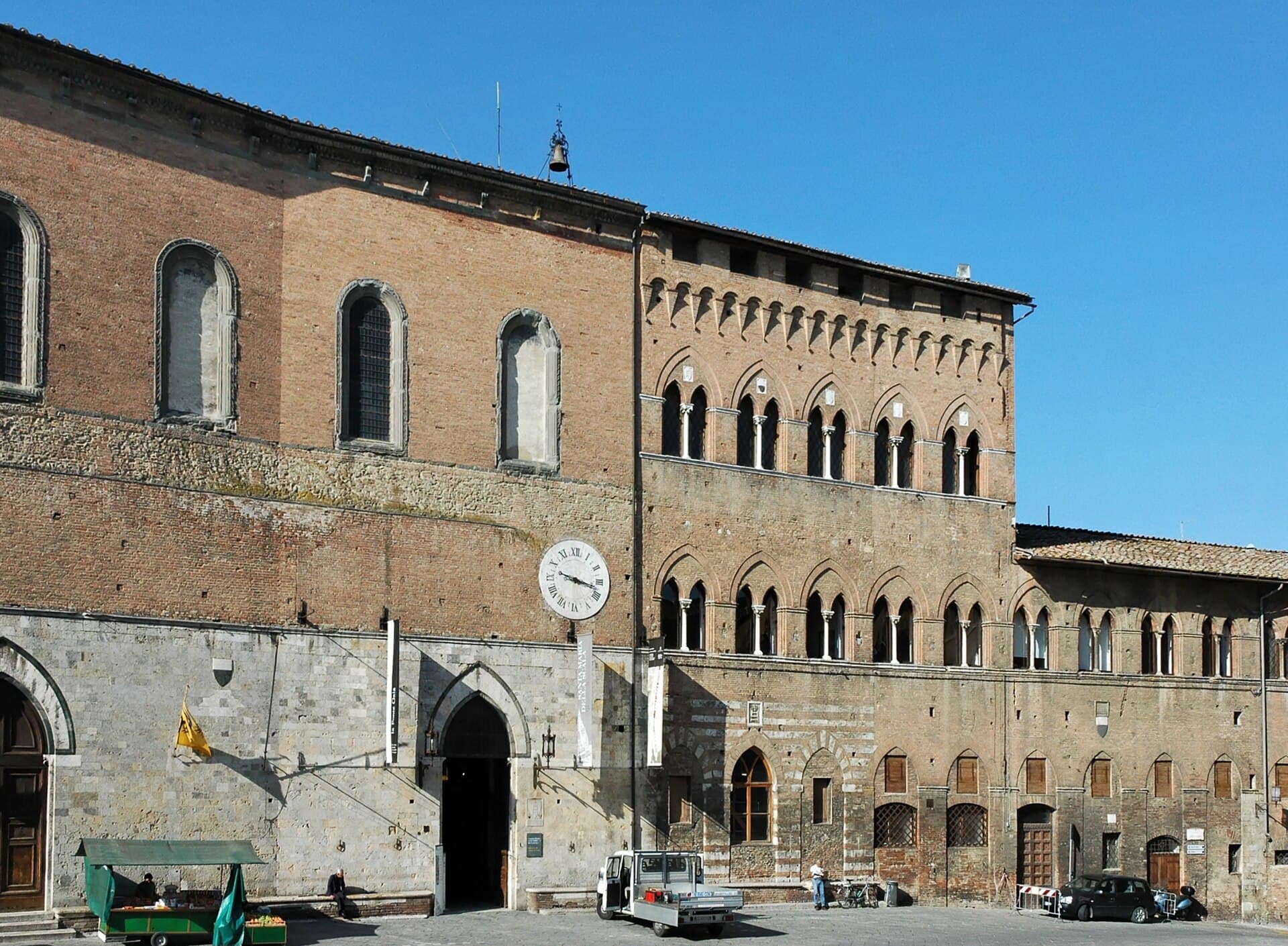 Santa Maria della Scala**One of Europe's oldest hospitals — it worked for a thousand years and is now a3 minutes walk4.7
 National Picture Gallery of Siena**The complete collection of the Sienese school of painting — gold, flat grounds4 minutes walk4.5
**Because it is the first major European artwork whose subject is politics rather than religion — and its message is aimed at the rulers themselves.** ✅ **The first exception — subject**: 14th-century European art was **overwhelmingly religious**. ⚠ **This is a fresco about government**: about **what good and bad rule do to people's daily lives** — not about saints. ✅ **The second — audience**: it was painted in **the Council of Nine's meeting chamber** — **so the viewers were the rulers**, and the fresco is **a daily reminder of their responsibility** and of what becomes of the city if they fail. **This is art holding its own patron to account.** ✅ **The third — realism**: the **flourishing city** shows **actual daily life**: open shops, a teacher lecturing, women dancing, builders on scaffolding, a caravan entering the gate; **and behind it countryside with worked fields and labourers** — **among the earliest expansive landscapes in European art**, a century before they became common. ⚠ **The cruel irony**: **it was painted in 1338–1339**, **and just nine years later the Black Death killed half of Siena** — **and probably killed Lorenzetti himself**. ✅ **So the flourishing city on the wall is a city that vanished.**