
The Pellegrinaio
Frescoes of the sick being received and foundlings raised.
Jastrow — Public domain · bradhostetler — CC BY 2.0 · Zairon — CC BY 4.0 · Warja Lavater — Public domain
**One of Europe's oldest hospitals — it worked for a thousand years and is now a museum** — directly facing the cathedral. It began as a **shelter for pilgrims** on the **Via Francigena** — the pilgrimage road from Canterbury to Rome, on which Siena was a principal stage — **then became a hospital and orphanage** and one of the city's richest institutions. **It went on working as a hospital until the 1980s.** ⚠ **Its great room is the Pellegrinaio**: **15th-century frescoes depicting the hospital's own work** — receiving the sick, feeding the poor, raising foundlings, distributing alms. ⚠ **These are secular scenes of daily life**, very rare in the art of that period. ✅ **The building is a labyrinth on several levels** descending into the hill, **with an archaeological museum in its cellars** and **the original Fonte Gaia**.
Frescoes of the sick being received and foundlings raised.
The original sculpture of which the Campo's is a copy.
A museum in the lower levels inside the hill.
Piazza del Duomo 1, 53100 Siena, Italy
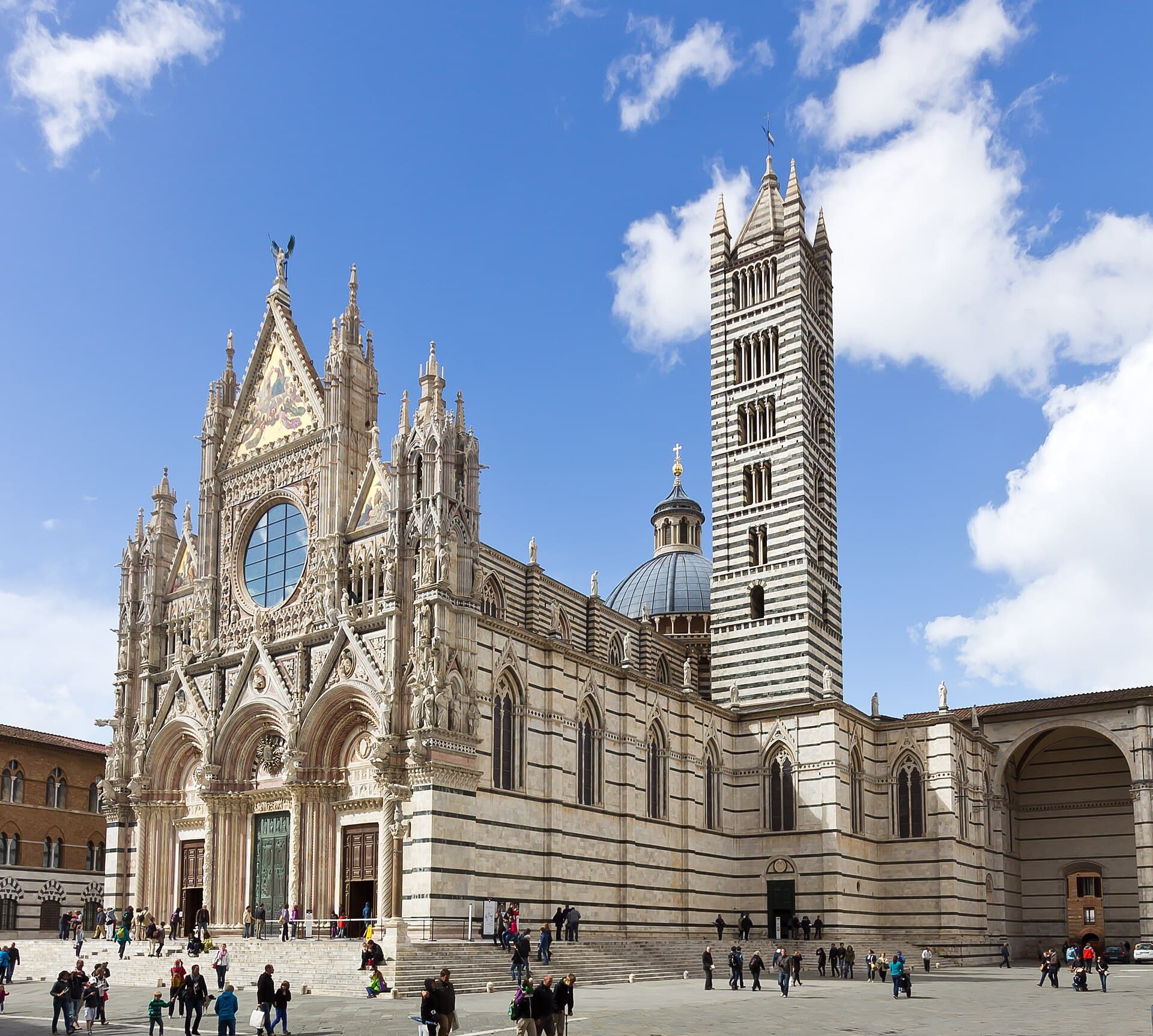 Siena Cathedral**A cathedral striped throughout in black and white marble, its floor fifty-six 1 minute walk4.9
 National Picture Gallery of Siena**The complete collection of the Sienese school of painting — gold, flat grounds2 minutes walk4.5
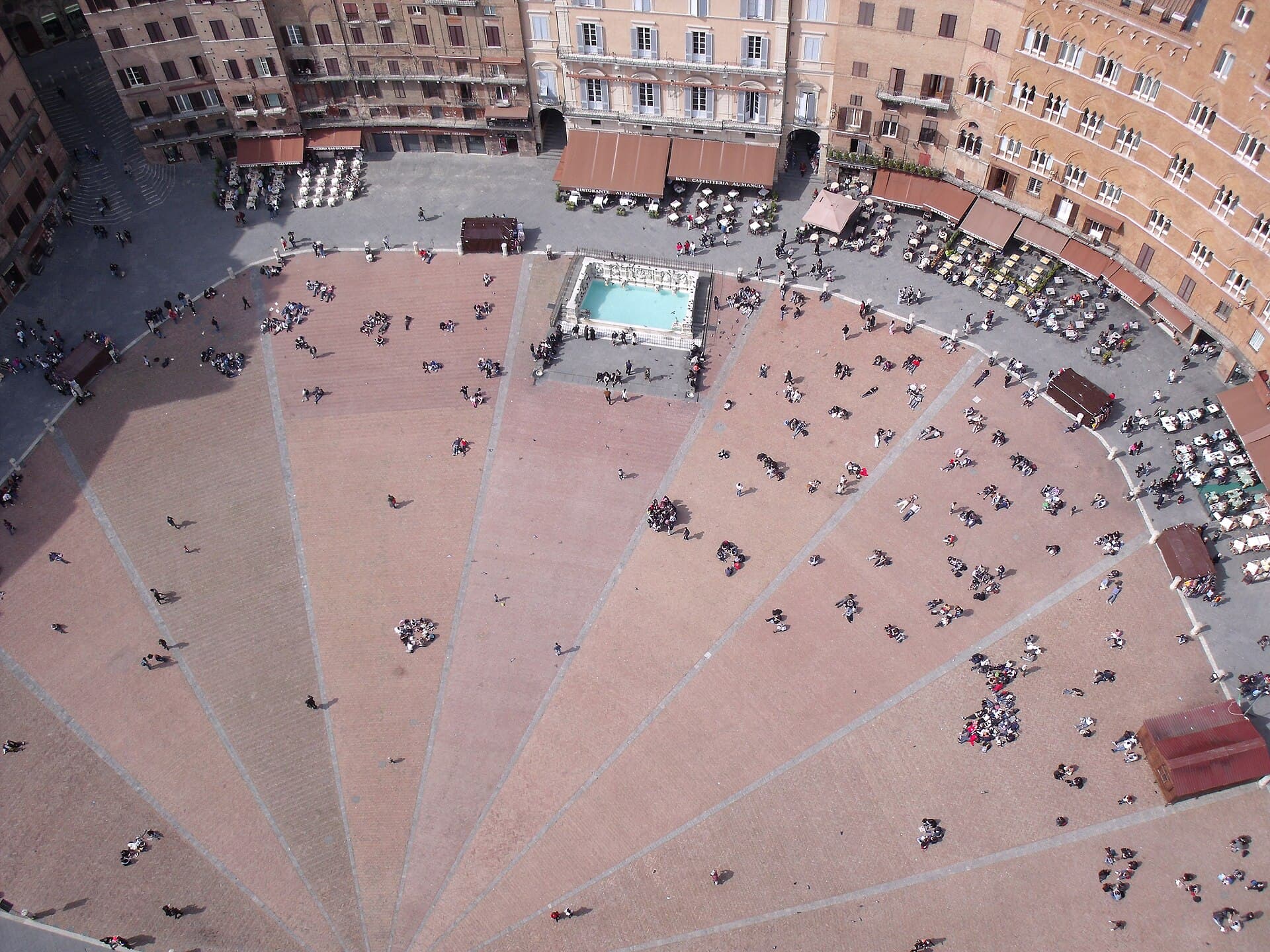 Piazza del Campo**A shell-shaped square sloping inward, divided into nine sectors, where a horse3 minutes walk4.9
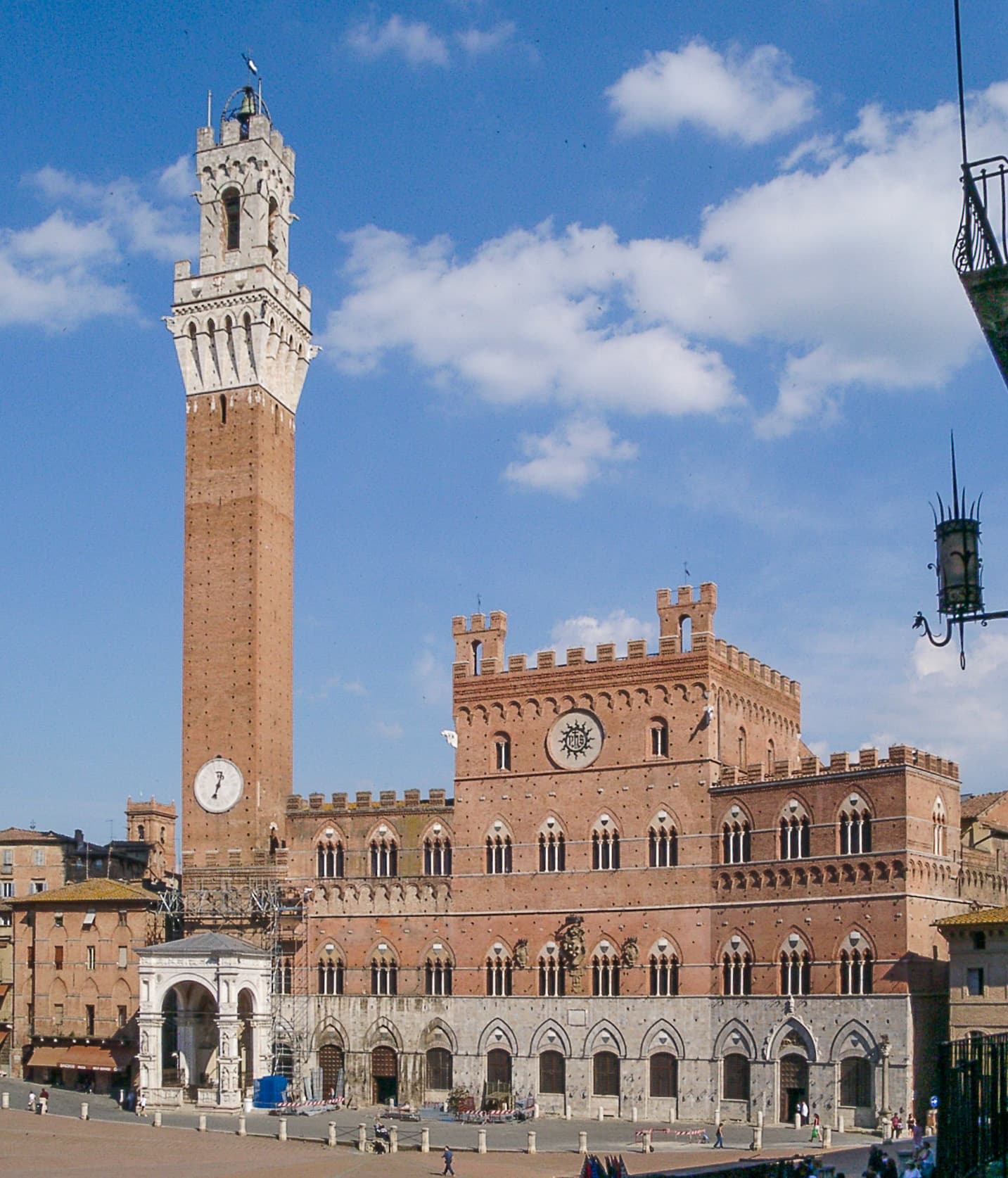 Palazzo Pubblico**A 14th-century town hall still in use, holding the most famous political paint3 minutes walk4.8
 Torre del Mangia**An 88-metre tower built to exactly equal the cathedral — a statement that stat4 minutes walk3.8
**The pilgrim road from England to Rome — it passed through Siena and made its fortune.** ✅ **What it is**: the **Via Francigena** («the road of the Franks») is a pilgrimage route more than a thousand years old running from **Canterbury in England** through France, Switzerland and the Alps **to Rome** — **and Archbishop Sigeric of Canterbury documented it in 990** in the diary of his journey, so its course is precisely known. ✅ **Why it mattered**: **before railways and modern roads, pilgrimage was a mass movement of people** — thousands crossing Europe on foot each year. **And every pilgrim needed a bed, food, treatment and money changed.** **The towns on the road grew rich on its traffic.** ✅ **Siena was a principal stage**: **this hospital was built to serve the pilgrims**, **and Sienese banking grew up** to change currency and lend to travellers — **producing Banca Monte dei Paschi di Siena (1472), the oldest bank still operating in the world**. ⚠ **This explains the city's wealth**, its palaces and its overreaching cathedral. ⚠ **It also explains its collapse**: when **trade routes shifted** and plague struck, **the artery it lived on withered**. ✅ **Today the road is a waymarked long-distance walk** done in stages.