Colonial houses
Coloured doors and windows.
Deni Williams from São Paulo, Brasil — CC BY 2.0 · Deni Williams from São Paulo, Brasil — CC BY 2.0 · Rodrigo Soldon from Rio de Janeiro, Brazil — CC BY 2.0 · Deni Williams from São Paulo, Brasil — CC BY 2.0 · Deni Williams from São Paulo, Brasil — CC BY 2.0
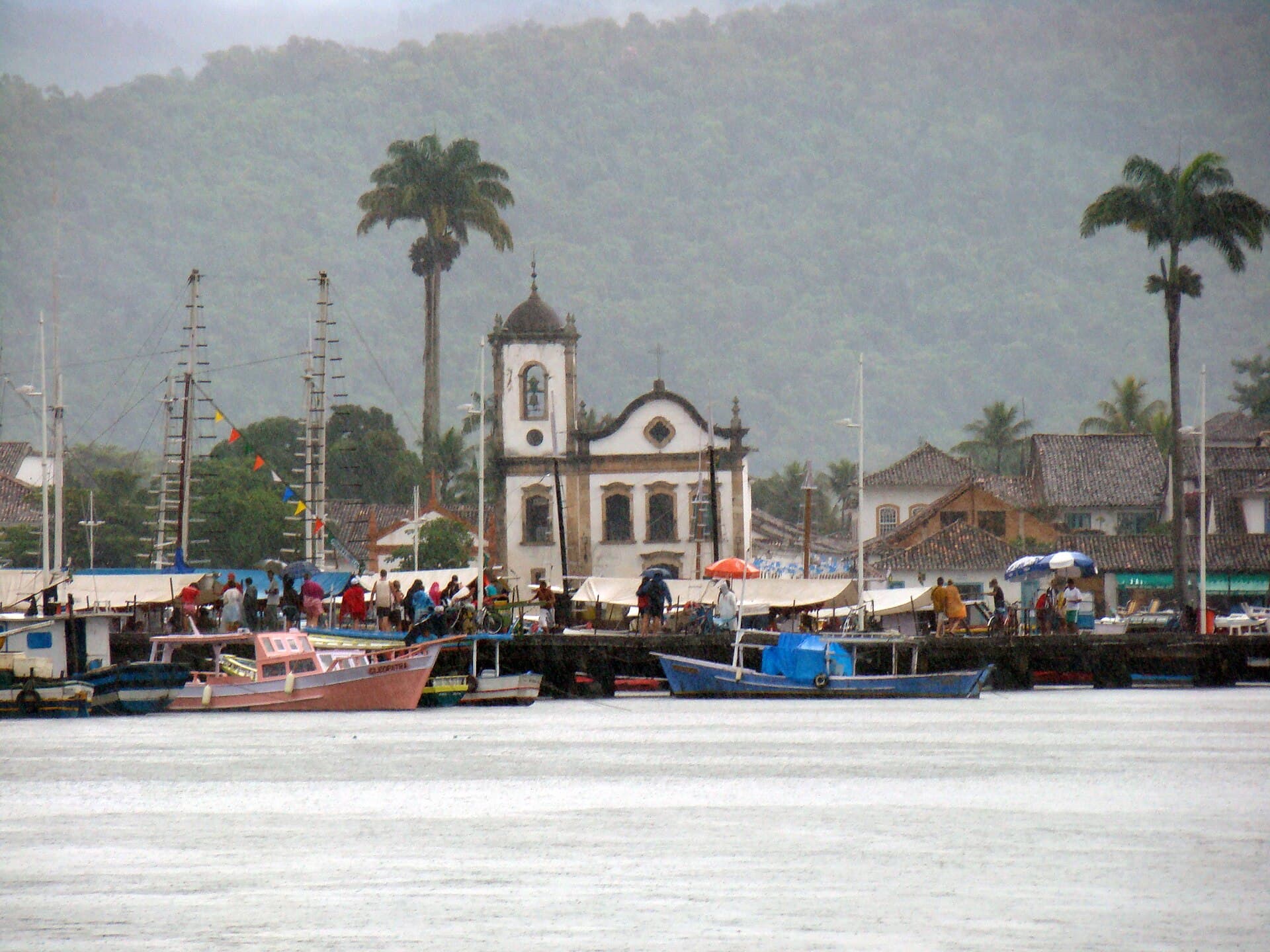
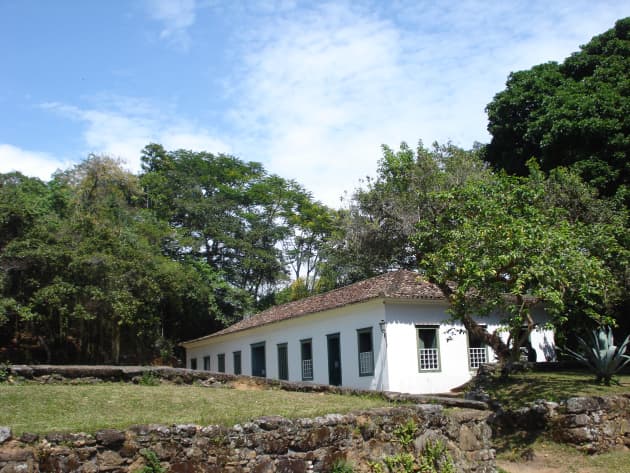
Paraty is a small colonial town on the coast of Rio de Janeiro state, between mountains clad in Atlantic forest and a bay dotted with islands. Its village was founded in 1597 and became a town formally in 1667, then boomed after gold was discovered in Minas Gerais in 1696, becoming the port from which gold was shipped to Rio and on to Portugal, along the stone-paved Gold Trail that linked it to the mountains. Since 2019 UNESCO has listed it as a World Heritage Site together with the island of Ilha Grande, for both its culture and its nature. Its historic centre has kept its architecture for more than 250 years: white houses with coloured doors and windows, and streets paved with large, uneven stones that cars cannot enter; vehicles come in only on Wednesdays for deliveries. A local curiosity: at high tide on full-moon nights the sea enters some streets through openings in the seawall, flooding them 15 to 25 centimetres deep for a short while. The pleasure is in wandering: craft shops and galleries in old houses, baroque churches, and the quay where boats leave for the islands. Wear flat shoes, as the stones are slippery, and note that the town is famous for cachaça, an alcoholic sugarcane spirit offered for tasting in many of its shops.
Coloured doors and windows.
From the gold era.
Trips to the bay's islands.
Historic centre of Paraty, on the Bay of Ilha Grande
At high tide on full-moon nights the sea enters some streets through openings in the seawall, 15 to 25 centimetres deep, and recedes after a short while.