
A central European passage
A common early twentieth-century form linking two streets and multiplying shopfronts.
Zorka Sojka — CC BY-SA 4.0 · Zorka Sojka — CC BY-SA 4.0 · Zorka Sojka — CC BY-SA 4.0 · Zorka Sojka — CC BY-SA 4.0 · Zorka Sojka — CC BY-SA 4.0
A covered shopping arcade in central Karlovy Vary, cutting through a block between two streets and named after Tomáš Garrigue Masaryk, the first president of Czechoslovakia. Covered passages of this kind were common in central European cities at the start of the twentieth century: an internal commercial space linking two streets, multiplying shopfronts within a single block and sheltering shoppers from the weather. That makes it practically useful in Karlovy Vary in particular: the town lies in a narrow valley with a wet, cold climate for much of the year, and covered passages are part of how the town works rather than decoration. What it holds is ordinary shops and cafés, and there is nothing to visit — you pass through and look up at its roof and inner fronts. Free and open, a few minutes on your route through the centre. Karlovy Vary itself is visited for its thermal spring colonnades and their nineteenth-century fronts, and this passage is a detail within that route.
A common early twentieth-century form linking two streets and multiplying shopfronts.
The town lies in a narrow wet valley — the passages are function, not decoration.
Tomáš Garrigue Masaryk, founder and first president of Czechoslovakia.
T. G. Masaryk street, central Karlovy Vary
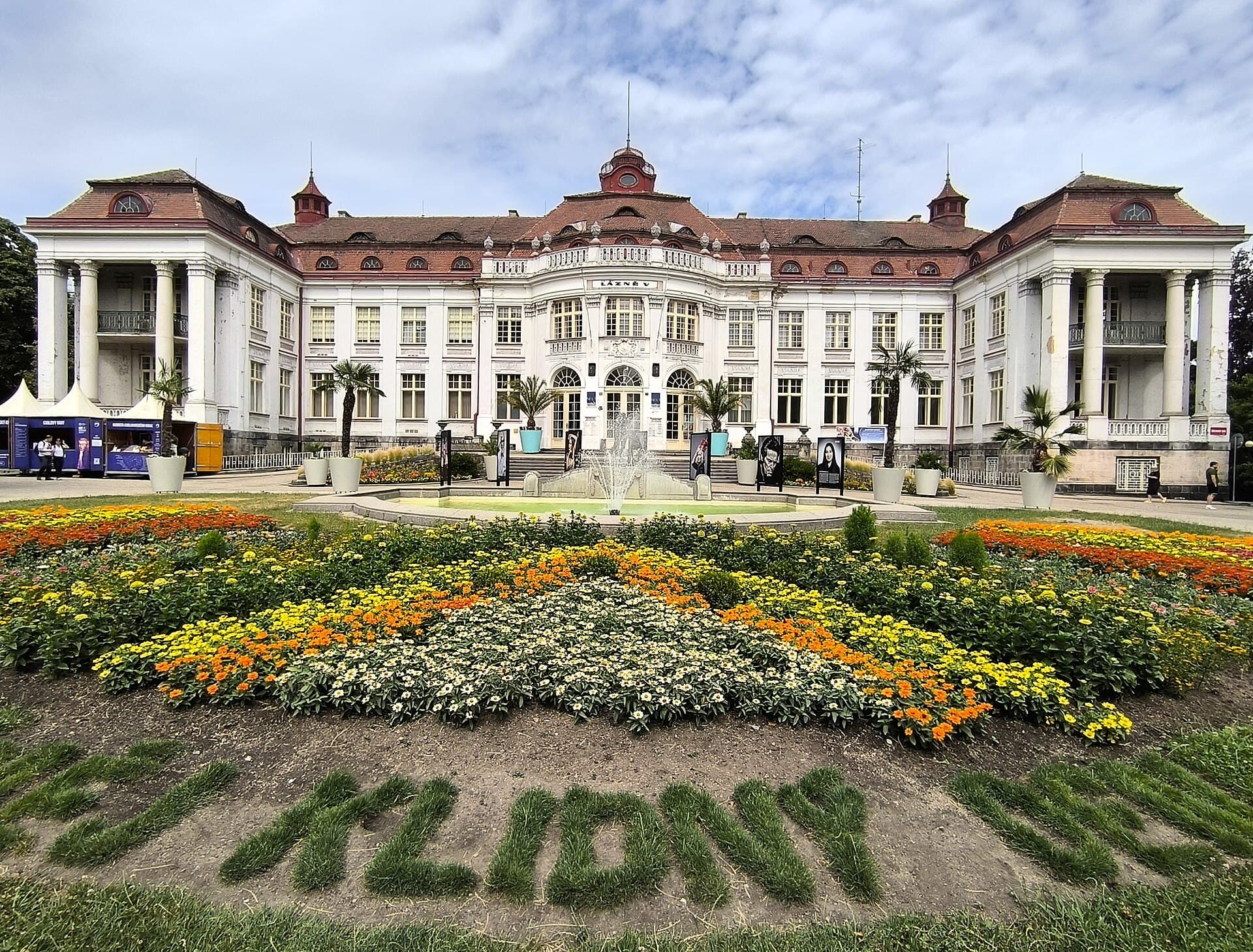 Elizabeth BathsThe largest thermal bathing establishment in Karlovy Vary, built in 1906 and nam4 minutes walk4.0
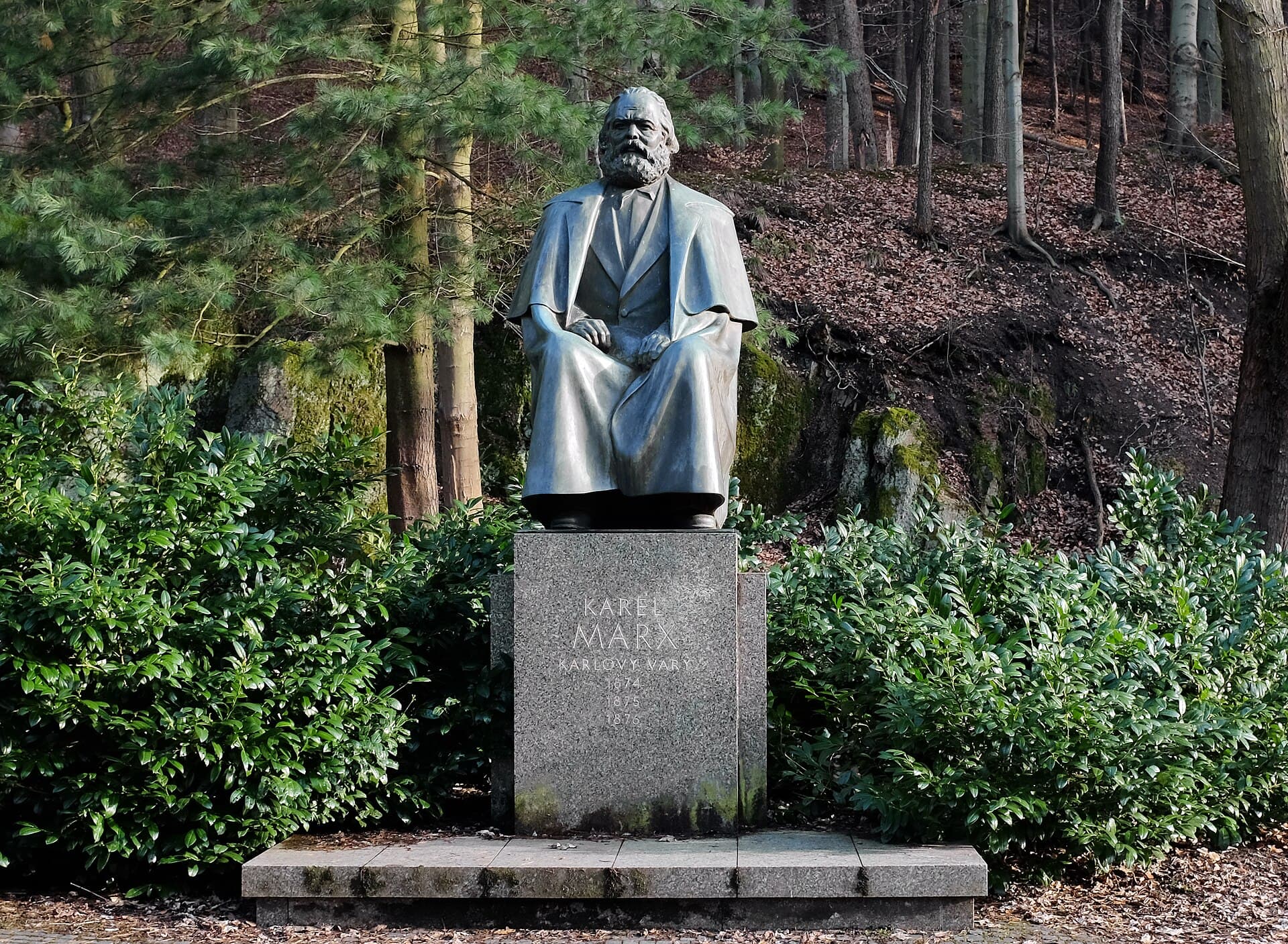 The Karl Marx StatueA bronze statue of Karl Marx on Petra Velikého street in Karlovy Vary, and the r11 minutes walk4.1
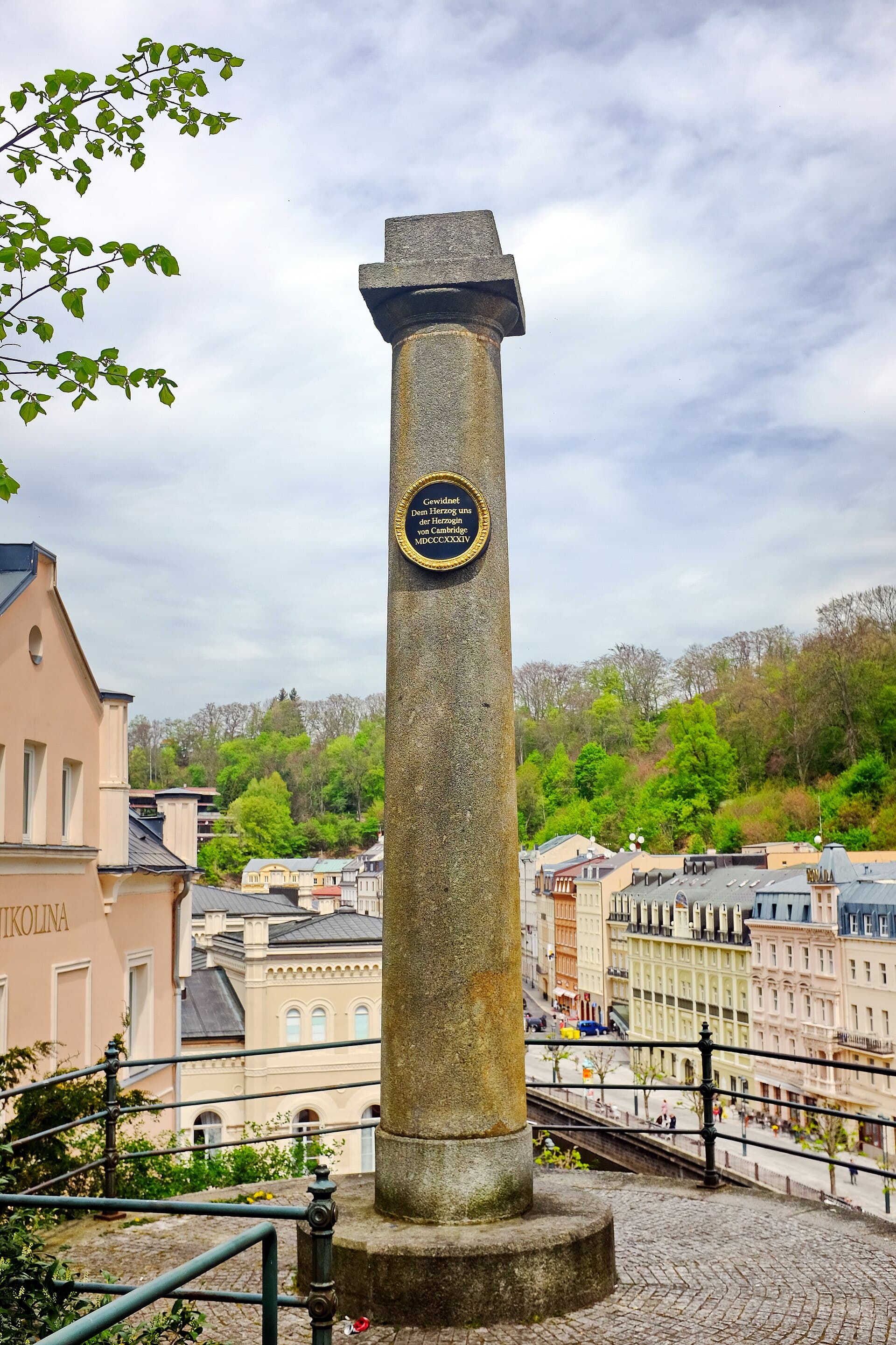 The Duke and Duchess of Cambridge ColumnA commemorative column in the forests of Karlovy Vary, raised in the nineteenth 13 minutes walk4.1
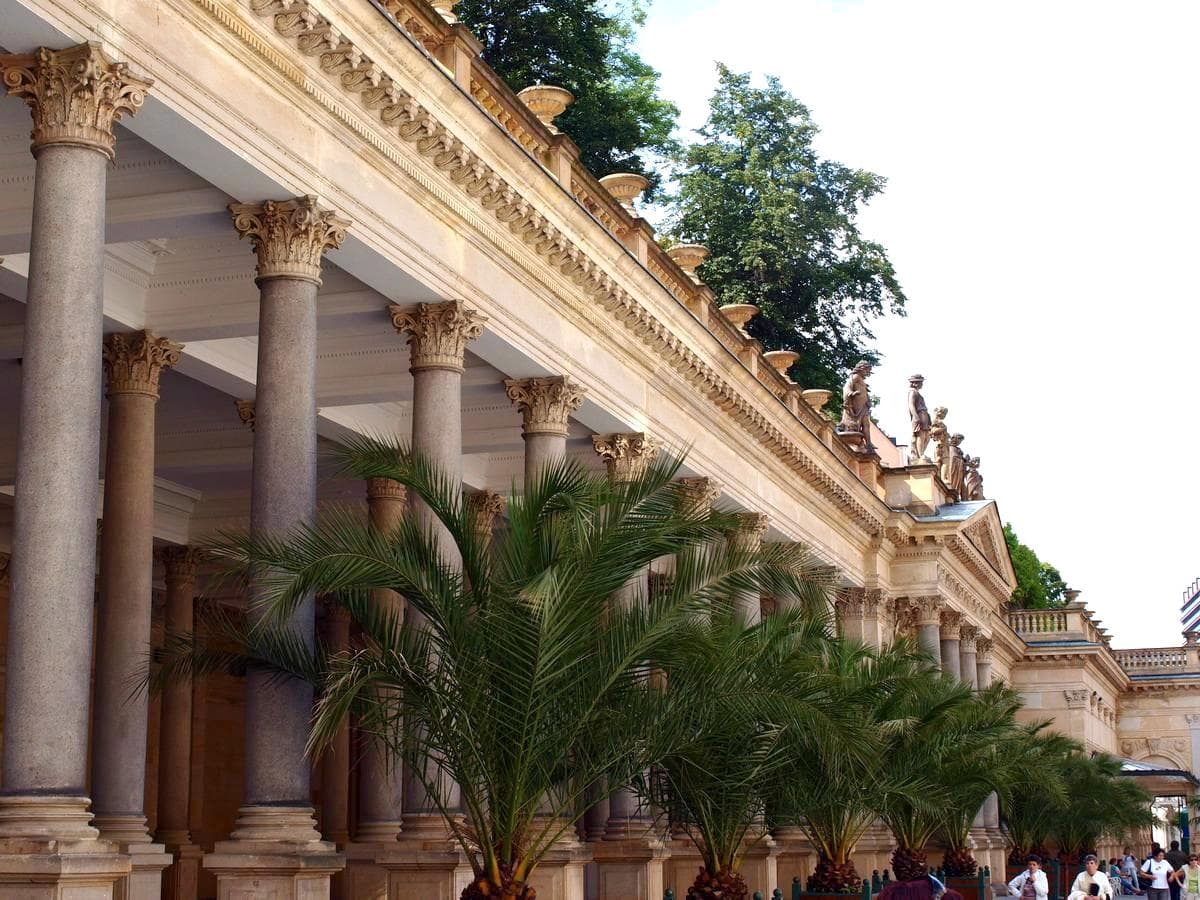 The Mill ColonnadeThe spa city's icon: a 132-metre Neo-Renaissance gallery of 124 columns on the T14 minutes walk4.8
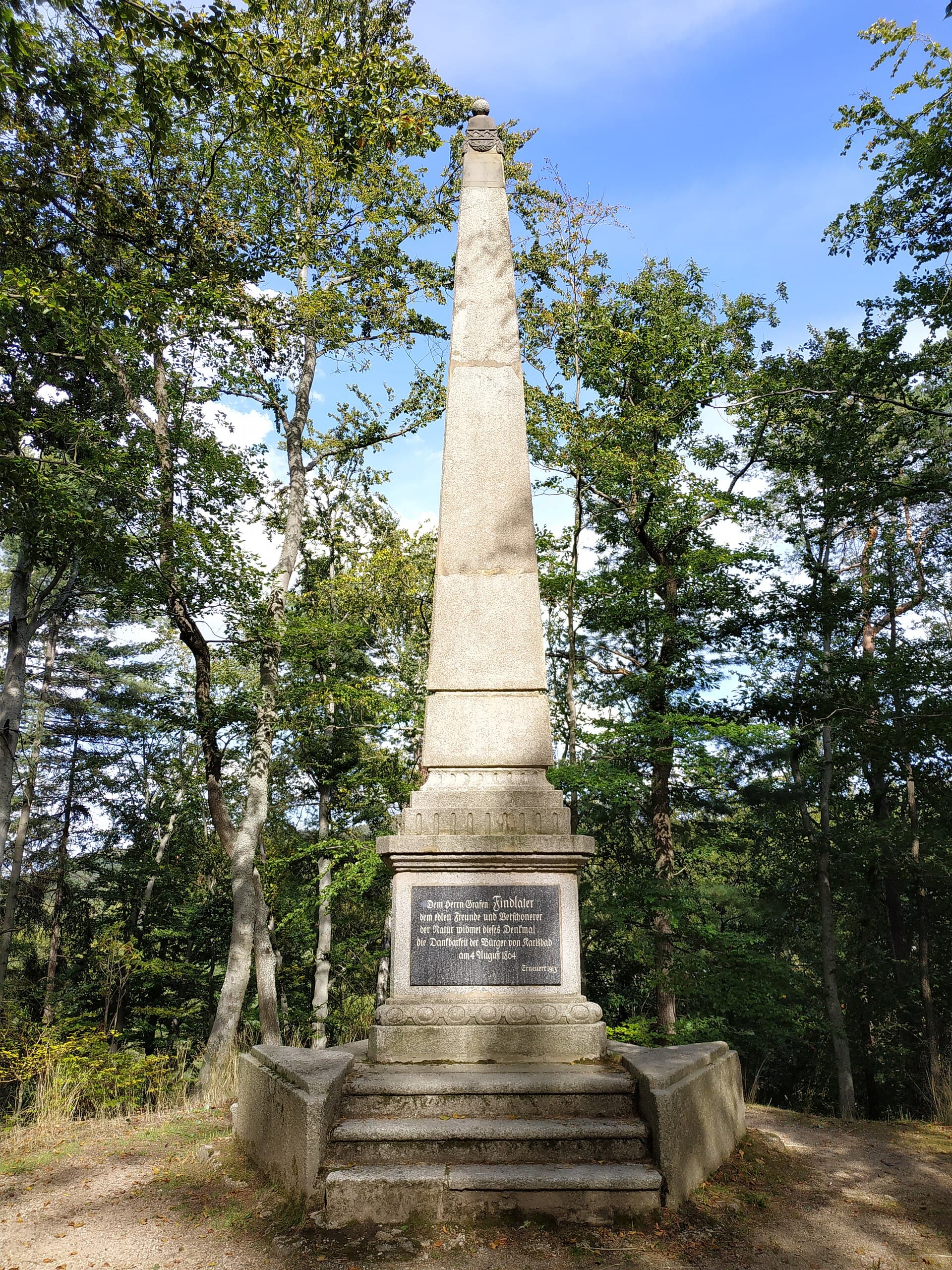 The Findlater ObeliskA stone obelisk in the forests of Karlovy Vary, raised in the early nineteenth c14 minutes walk4.4
The thermal spring colonnades, the Mill Colonnade above all, and drinking the mineral water from the spouted cups as spa guests have for two centuries. Then the Diana tower with its funicular and view, the nineteenth-century fronts along both riverbanks, and the Moser glassworks.
Yes, and it is why the town exists. The springs are hot and mineral at different temperatures, drunk from special porcelain cups with a side spout sold everywhere. The taste is strongly mineral and unpleasant to many. Do not overdo it: the water is therapeutic and has a marked effect on digestion.