
A medical reason, not political
Liver and skin — his doctor prescribed the Carlsbad waters.
Lubor Ferenc — CC BY-SA 4.0 · Juan de Vojníkov — CC BY-SA 3.0 · Juan de Vojníkov — CC BY-SA 3.0 · SchiDD — CC BY-SA 4.0
A bronze statue of Karl Marx on Petra Velikého street in Karlovy Vary, and the reason for it is not ideological but medical: Marx visited the town three times in the 1870s to take its waters. He suffered from liver disease and chronic skin problems, and his doctor prescribed the mineral waters of Carlsbad. He stayed for weeks on each visit, and his letters record details of the treatment routine, the forest walks and the cost of lodging. There is an irony in the author of Das Kapital spending therapeutic holidays at a resort for the European elite, and he noticed it himself in his correspondence. The statue was raised during the communist period, when Czechoslovakia commemorated Marx officially. Its survival after 1989 was not an obvious decision: many statues from that era were removed, and this one remained because its connection to the town is historical and documented rather than propagandistic. Practical points: free and always open on a public street. The visit is minutes on a walk through the centre.
Liver and skin — his doctor prescribed the Carlsbad waters.
The author of Das Kapital at the European elite's resort.
Many statues of that era were removed; this stayed for its documented link.
Petra Velikého street, Karlovy Vary
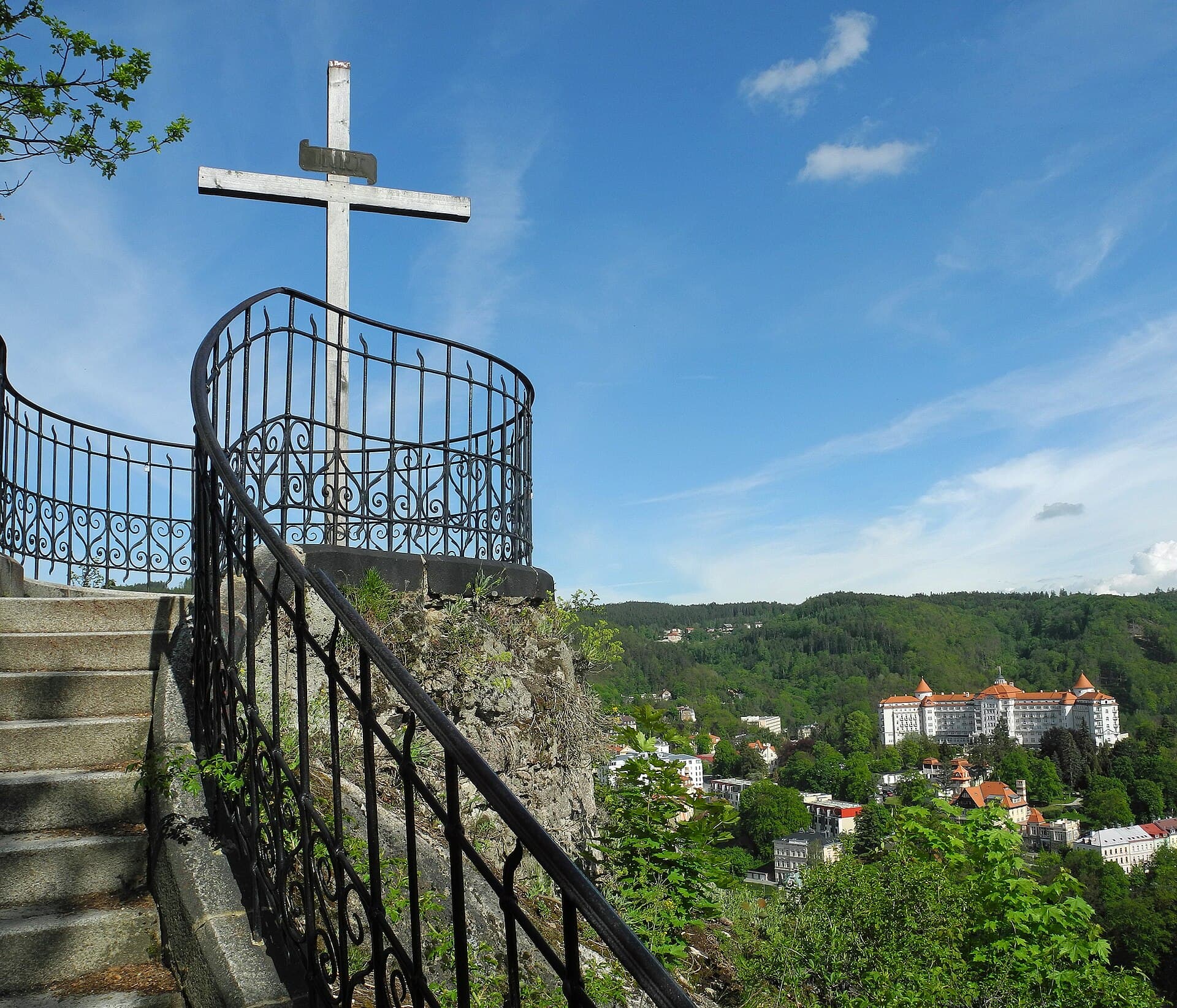 Peter the Great's LookoutA viewpoint on a rock in the spa woods above Karlovy Vary, carrying a bust of th3 minutes walk4.7
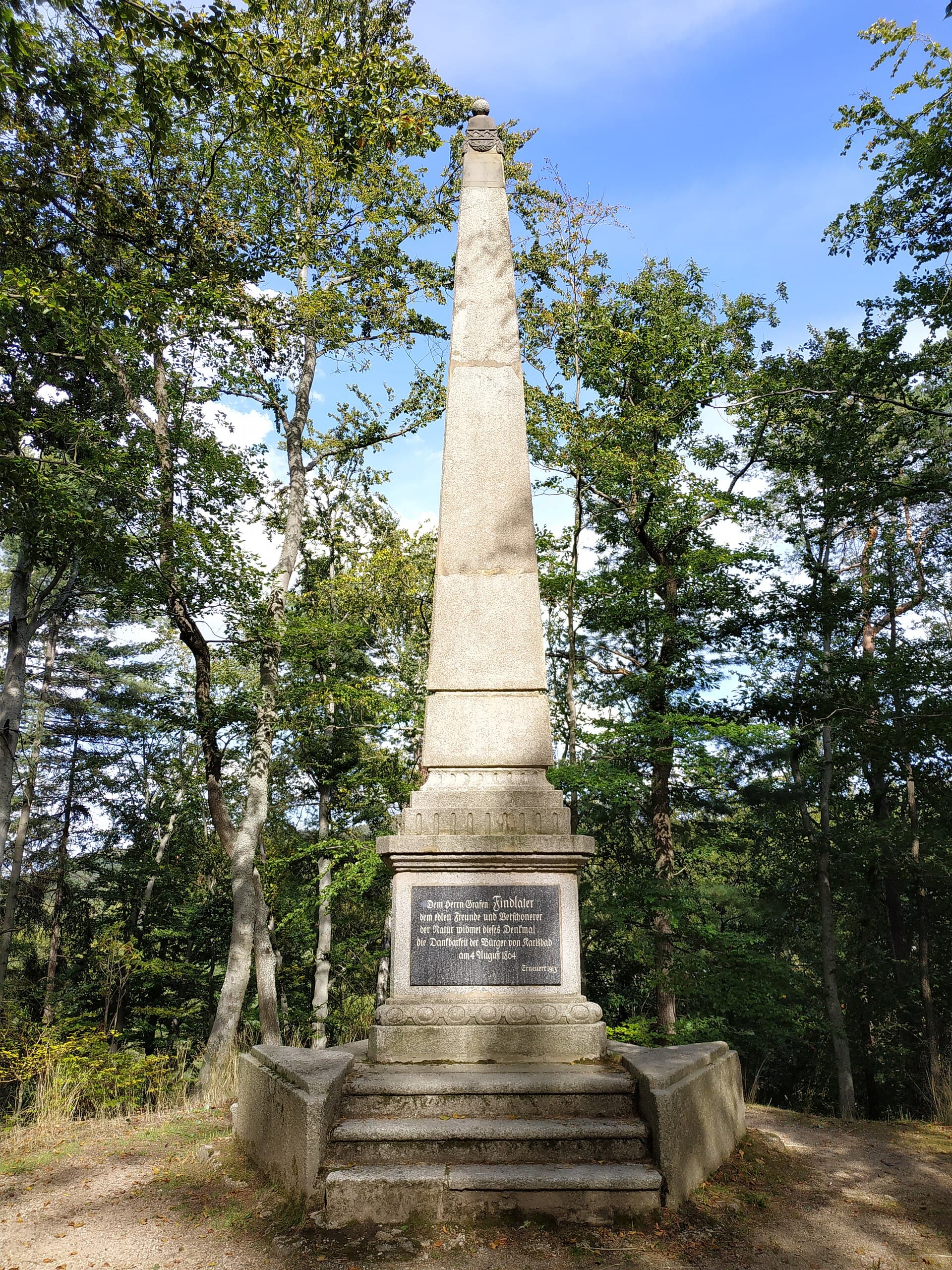 The Findlater ObeliskA stone obelisk in the forests of Karlovy Vary, raised in the early nineteenth c5 minutes walk4.4
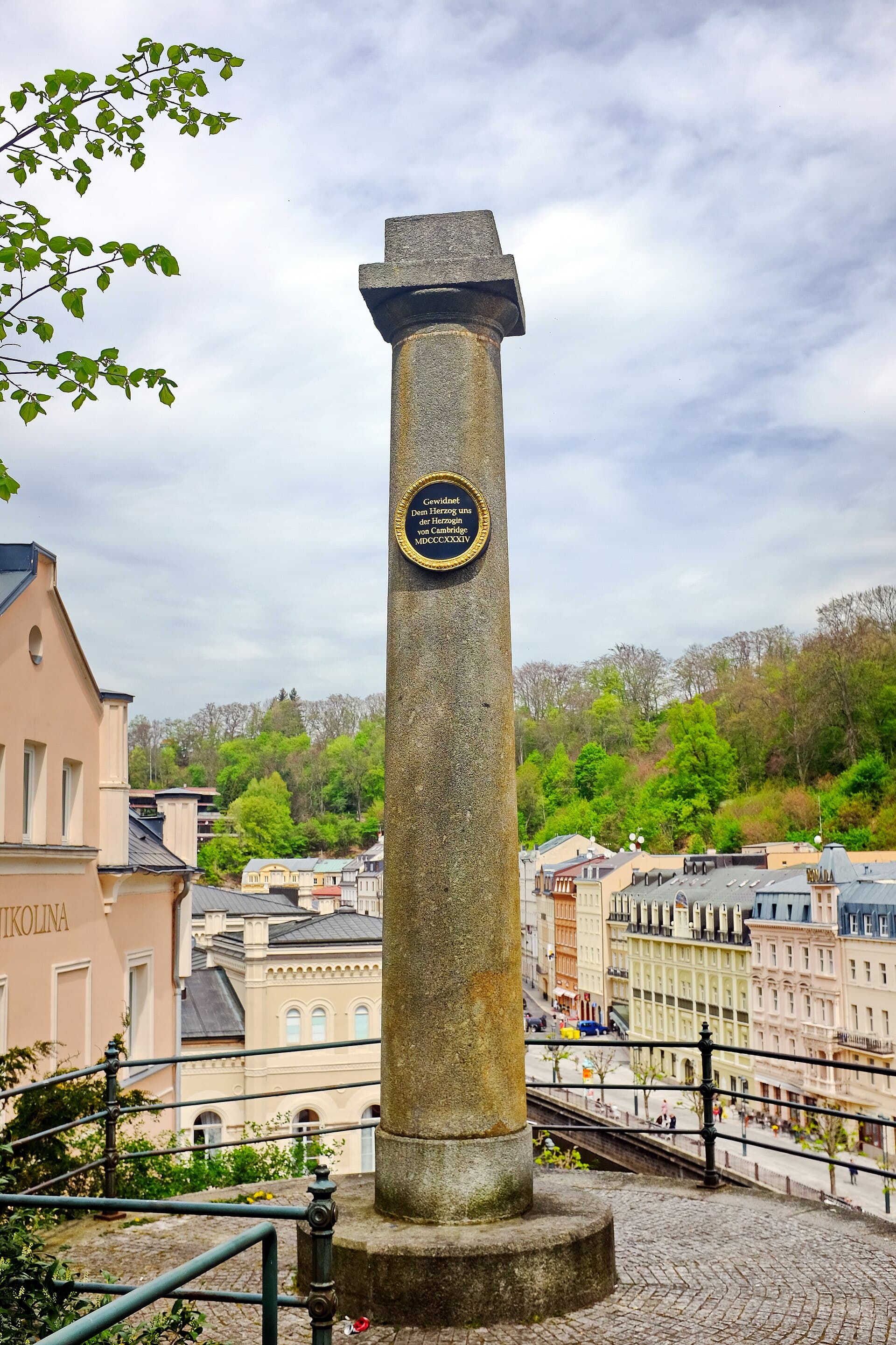 The Duke and Duchess of Cambridge ColumnA commemorative column in the forests of Karlovy Vary, raised in the nineteenth 5 minutes walk4.1
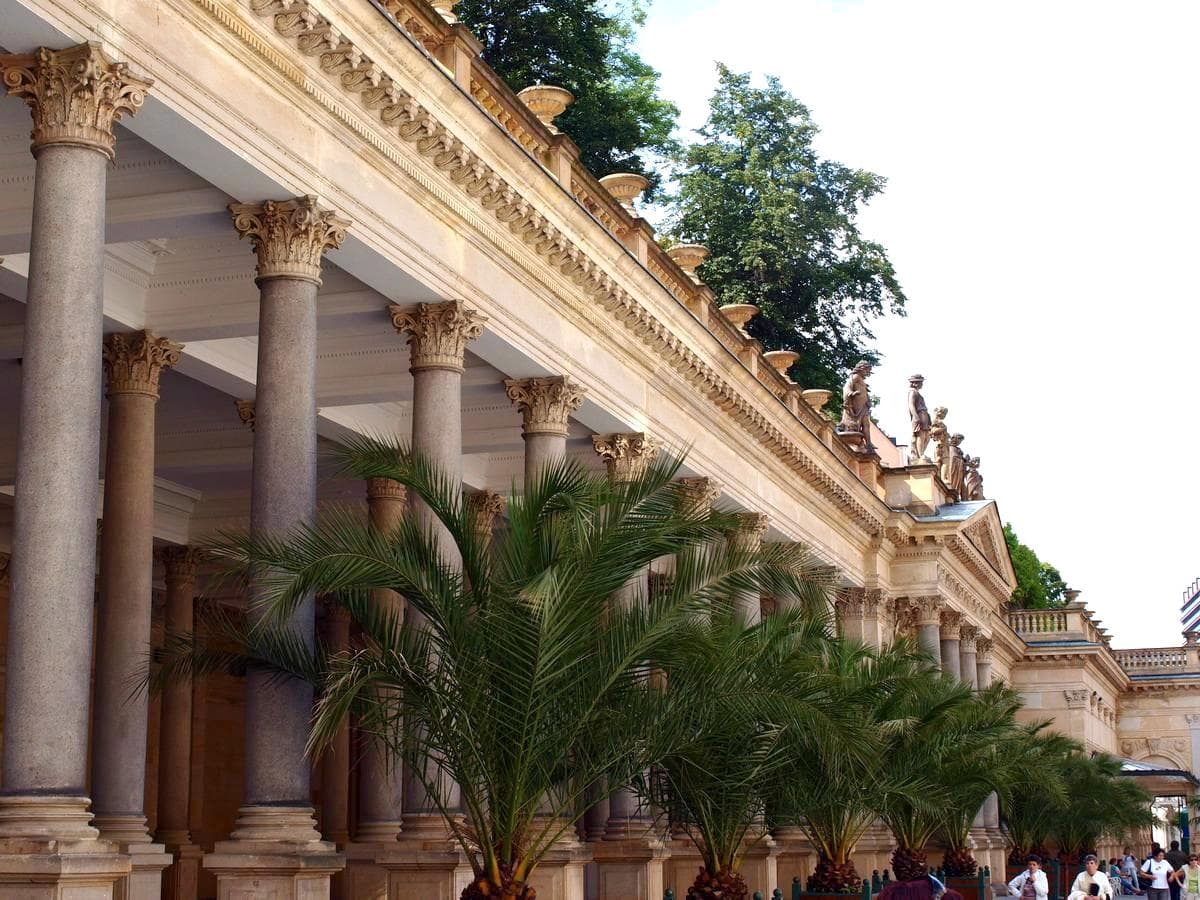 The Mill ColonnadeThe spa city's icon: a 132-metre Neo-Renaissance gallery of 124 columns on the T6 minutes walk4.8
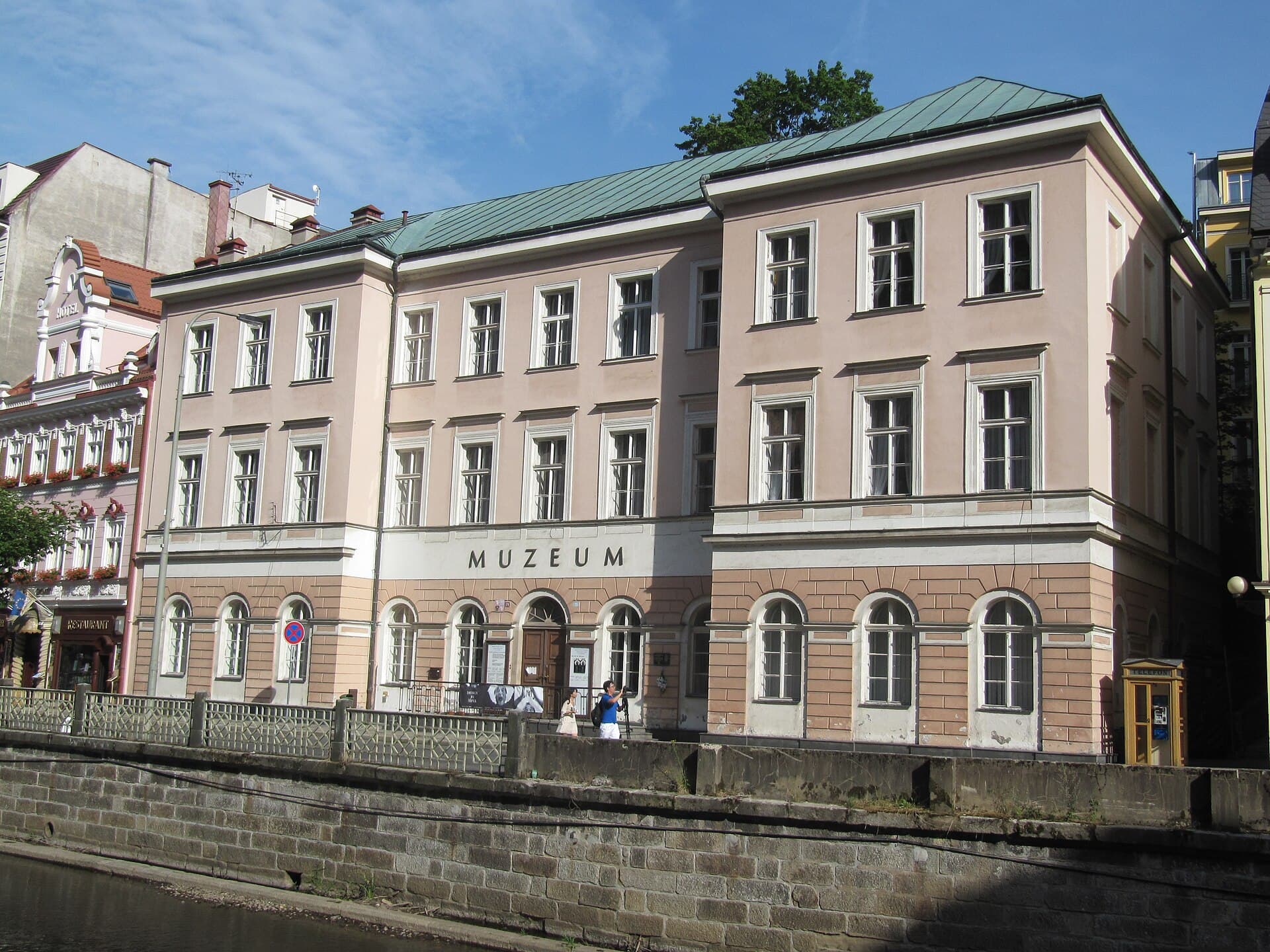 The Karlovy Vary MuseumThe mineral city's story in order: the regional museum on the Nová louka bank, i6 minutes walk4.9
Because the distinction Czechia applied after 1989 was between propaganda monuments and monuments with a genuine historical link to the place. Statues of Soviet leaders and party emblems were removed widely, but Marx really did stay in Karlovy Vary and documented it himself, so the statue remained as a trace of a visitor rather than a symbol of power. The argument was never fully settled and is still raised locally.
A regime based on drinking hot mineral water from different springs of varying temperature and composition, on a schedule set by a physician, with walking between the springs in the intervals. That is why the covered colonnades and forest paths were built: drinking and walking are parts of the same prescription. The regime is still practised today, and visitors buy porcelain cups with a built-in spout for the purpose.