
Gaudí tiles underfoot
The pavements use a hexagonal tile he designed that became a city symbol — look down, not only up.
Andrew — CC BY-SA 3.0 · Enric — CC BY-SA 4.0 · Enric — CC BY-SA 4.0 · Enric — CC BY-SA 4.0
The main avenue of the Eixample, at once Barcelona's most expensive shopping street and the axis along which the important buildings of Catalan modernisme line up. Walk it and you pass Casa Batlló, Casa Milà and Casa Lleó Morera without needing a map. The big buildings are not the only thing worth noticing. The pavements are laid with a hexagonal tile designed by Gaudí that has become a symbol of the city and is sold in copies in the shops. The street lamps, with stone benches at their base, were designed by Pere Falqués, a detail most people walk past without seeing. The avenue is also a practical axis: it links Plaça de Catalunya with the Gràcia district, and several Metro stations underneath make it a convenient starting point for any programme in the city. It needs no ticket and no set time. Walk its length once in daylight for the buildings, and once after dark when the facades are lit and the crowds thin a little.
The pavements use a hexagonal tile he designed that became a city symbol — look down, not only up.
Street lamps with stone benches at their base by Pere Falqués, which most people walk past unnoticed.
Once by day for the buildings and once after dark when the facades are lit — two different streets.
Passeig de Gràcia, Eixample district, Barcelona
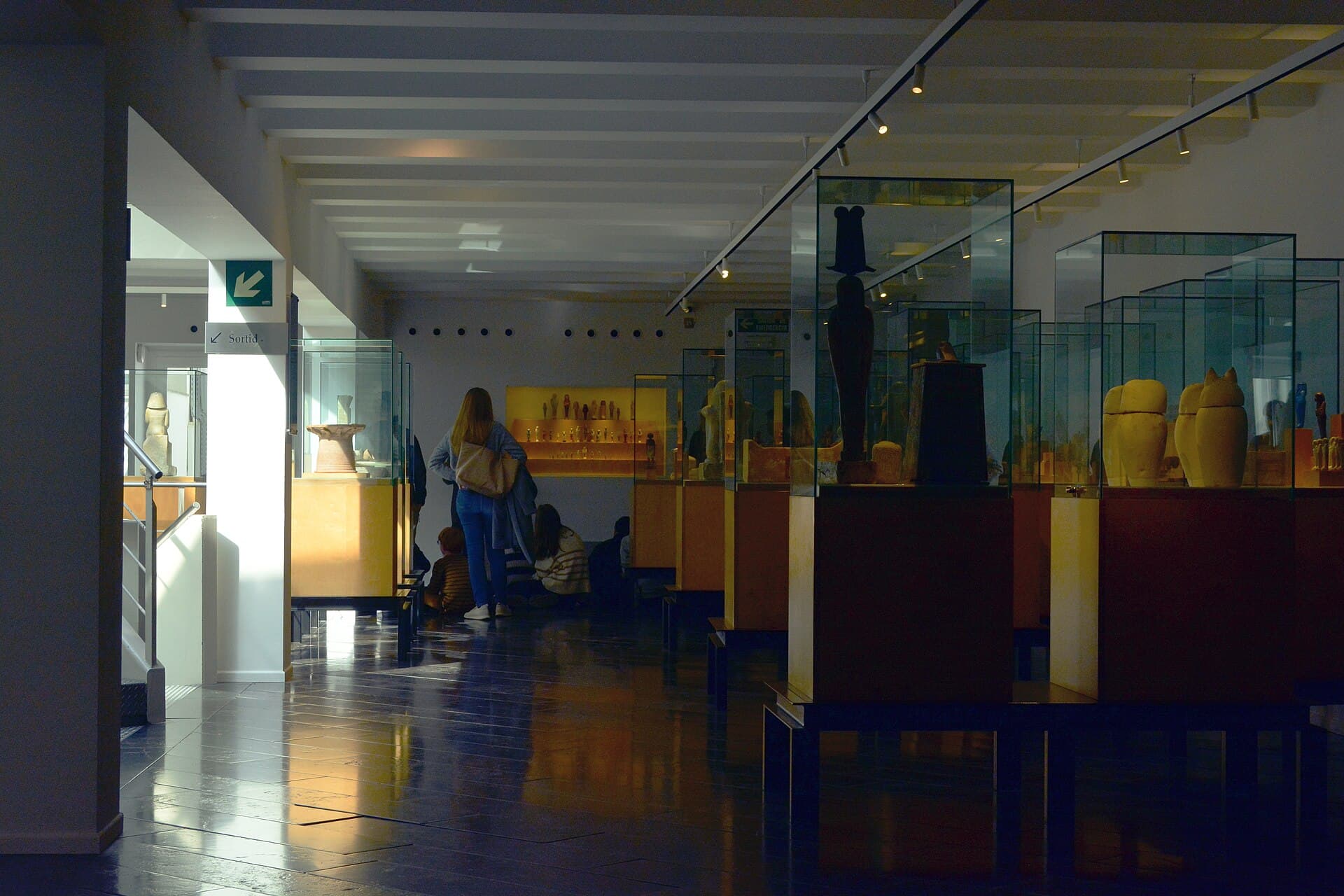 Museu Egipci de BarcelonaThe Museu Egipci de Barcelona is a private collection before it is a public muse1 minute walk4.4
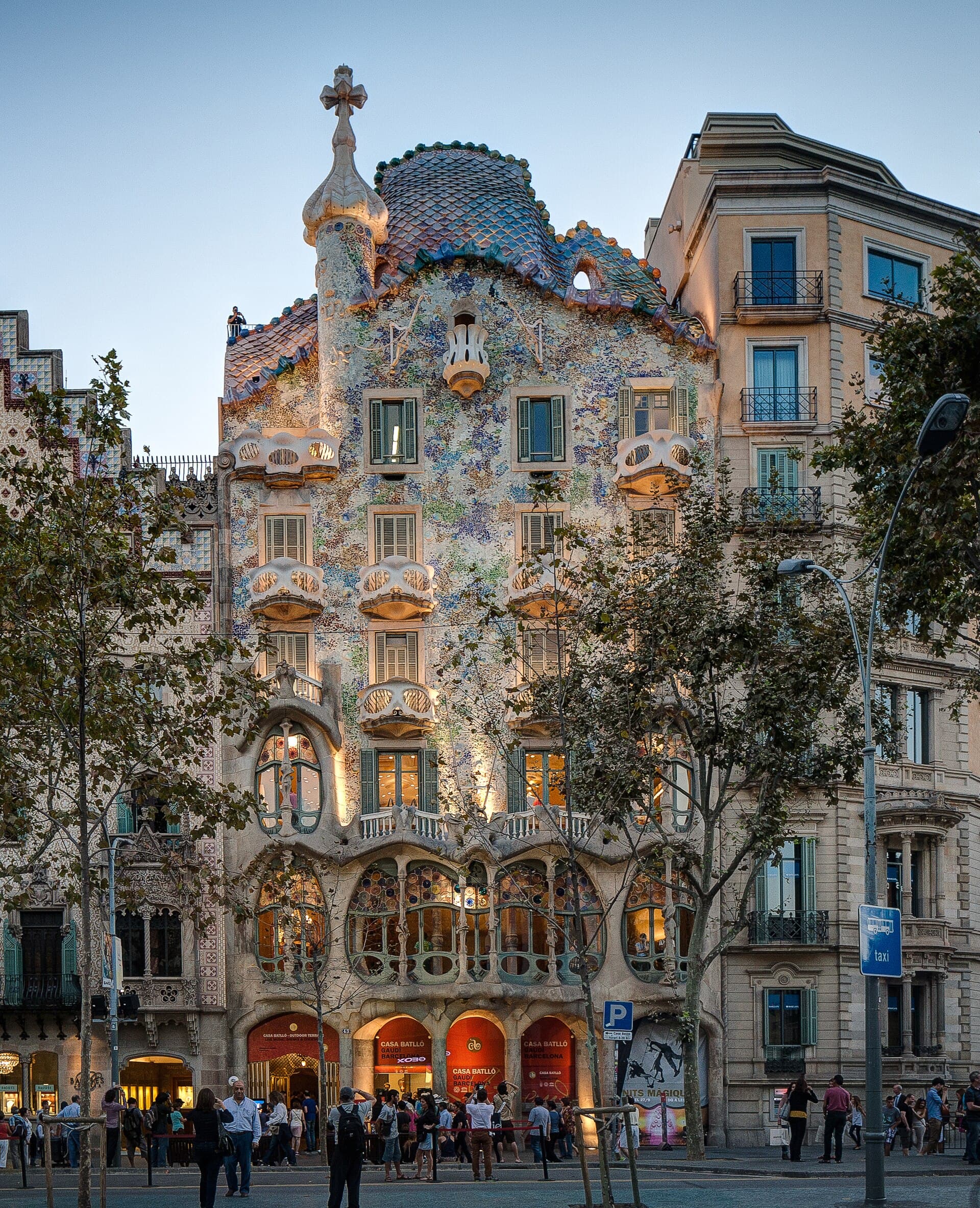 Casa BatllóCasa Batlló is Gaudí's most bewitching house: a façade on Passeig de Gràcia glit2 minutes walk4.8
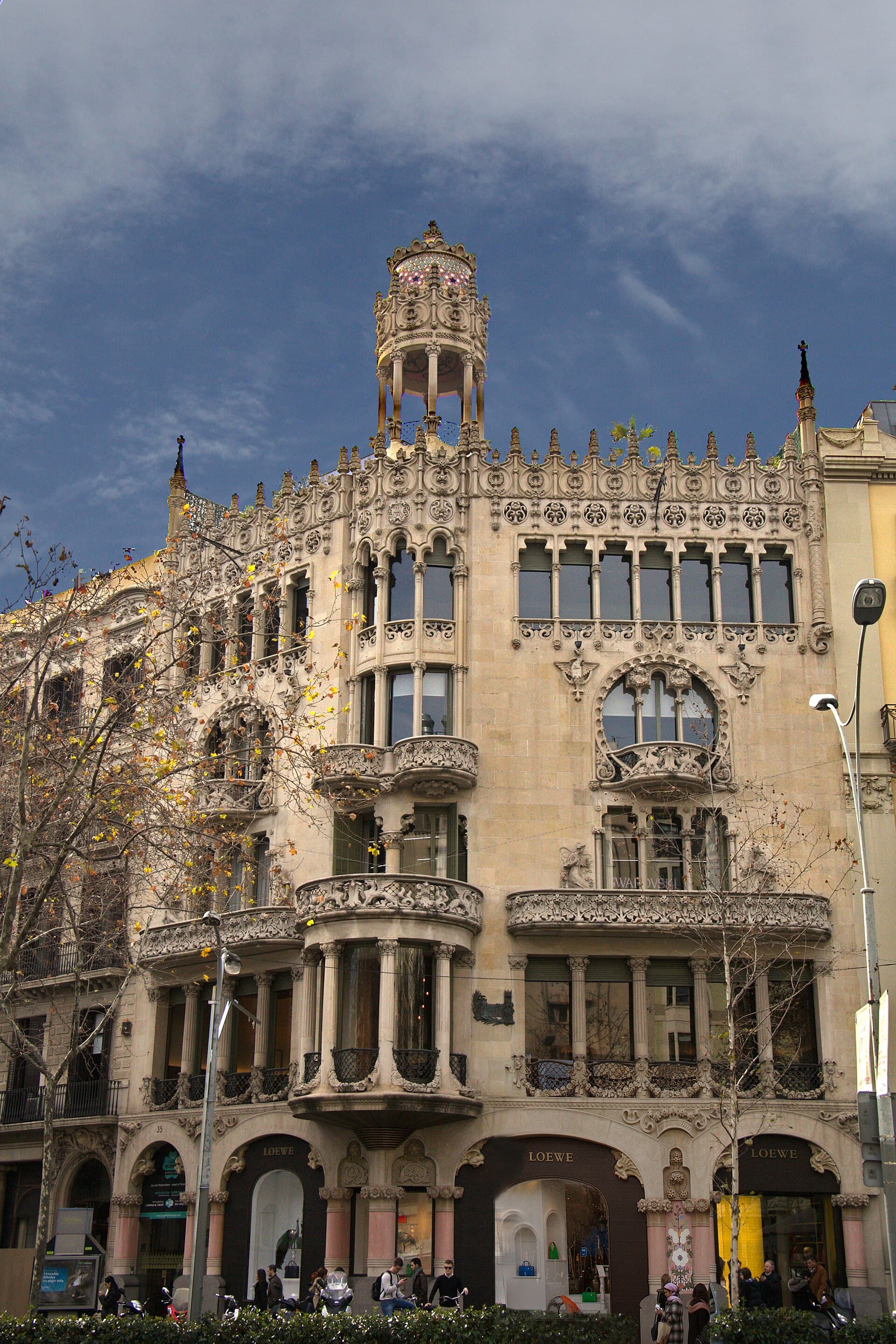 Casa Lleó i MoreraCasa Lleó i Morera stands at the Plaça Catalunya end of the Passeig de Gràcia bl3 minutes walk4.6
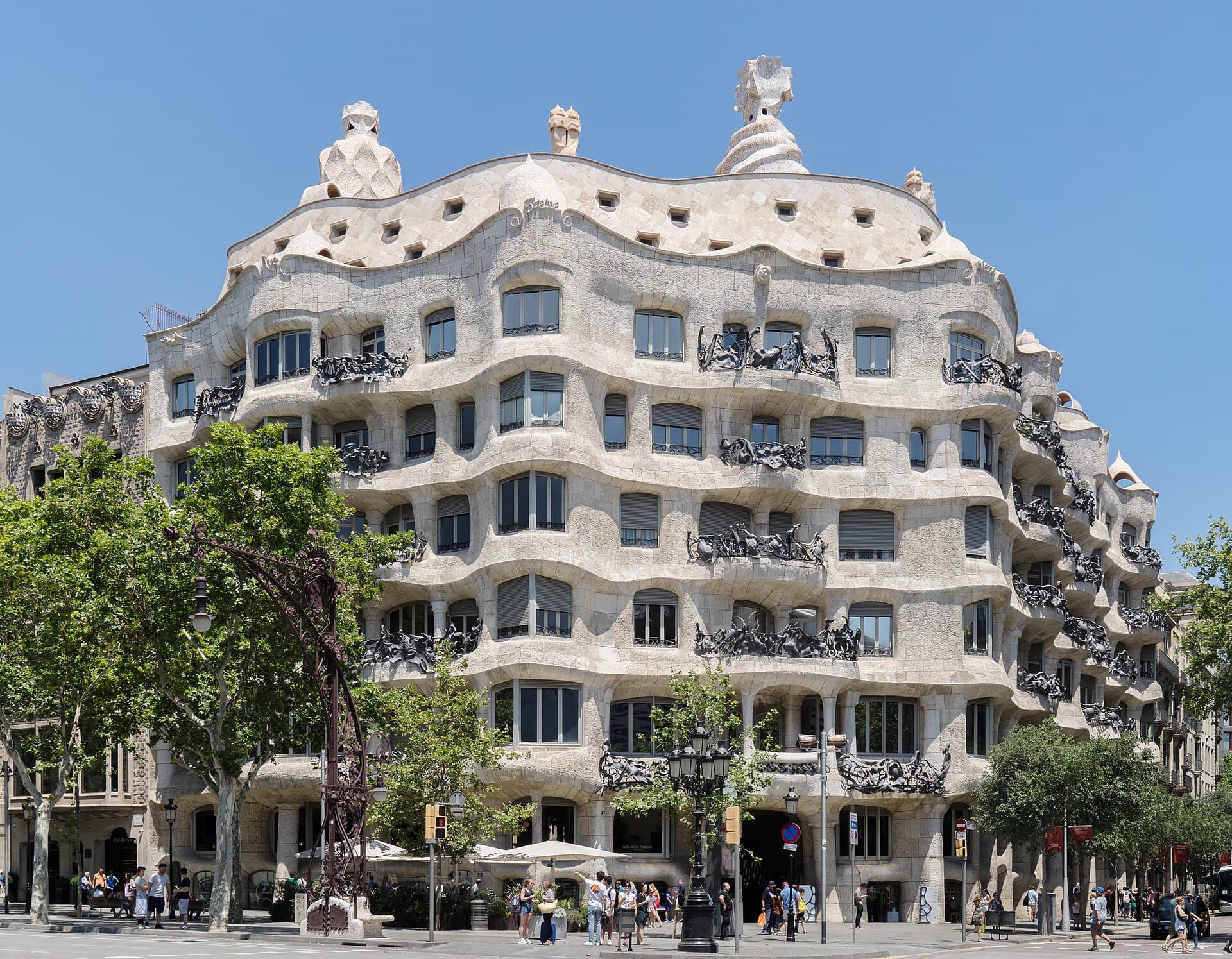 Casa Milà (La Pedrera)Casa Milà — "La Pedrera", the quarry, as contemporaries mocked it — is Gaudí's l4 minutes walk4.7
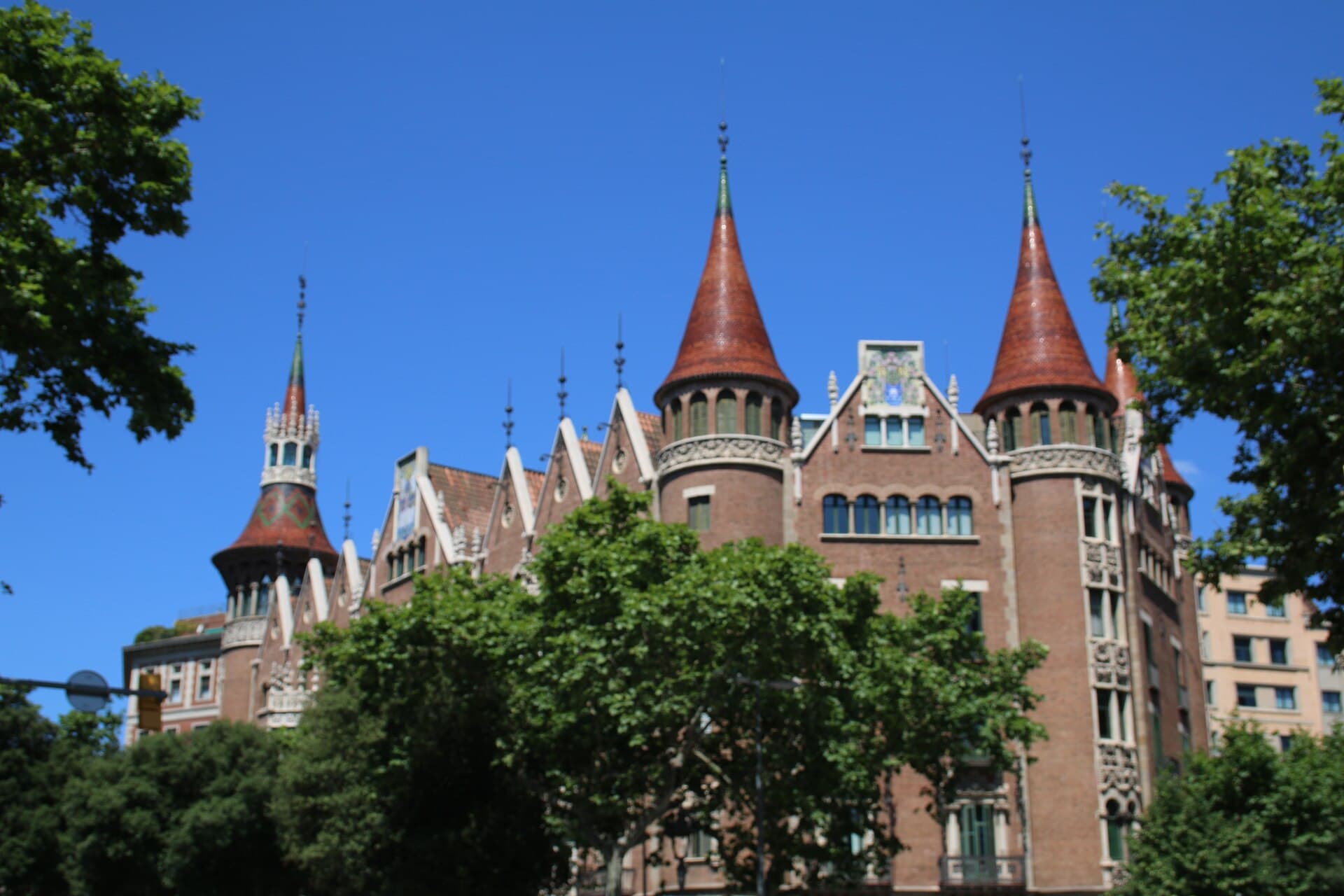 Casa de les PunxesA modernista apartment block on the corner of Avinguda Diagonal, on its own tria7 minutes walk4.3
Not from outside, which is enough for many people. Going inside Casa Batlló or Casa Milà needs a separate ticket for each, prices are high, and booking ahead in season avoids the queues.
Early morning to photograph the facades in relative calm, or after dark when the buildings are lit. Midday is the most crowded and, in summer, the hottest.