The tumulus tombs
Dozens of round corbelled stone domes scattered along the ridge, built by the Lelegians in the early centuries of the first millennium BC.
Vano111ru — CC BY-SA 4.0 · Oystercard — CC BY-SA 4.0 · Oystercard — CC BY-SA 4.0 · Oystercard — CC BY-SA 4.0
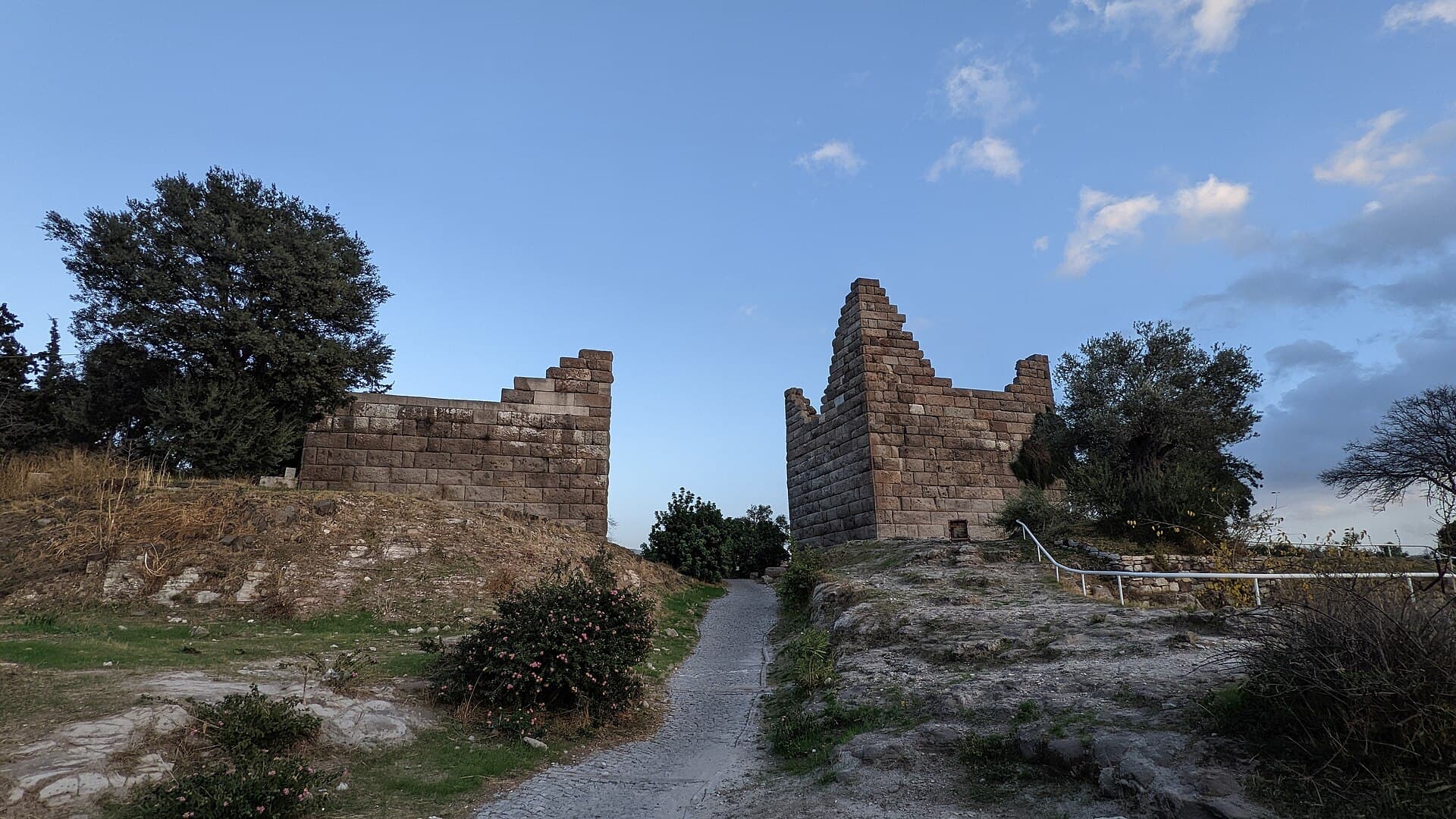
Long before Halicarnassus grew into a great city, the people of this pine-covered ridge were burying their dead under round stone domes, and dozens of them still dot the hilltop today. Pedasa was the largest of the eight Lelegian cities of the Halicarnassus peninsula, home to a people who were here before the Greeks; Herodotus names it, it fought the Persian invasion, it paid tribute to the Delian League in the fifth century BC and was an independent polis by around 400 BC, until Alexander folded it into Halicarnassus and stripped it of self-rule. Then it was forgotten on its hill until Muğla University began systematic excavation in 2007. It is only about five kilometres from Bodrum centre, a quarter of an hour by car up through the Konacık neighbourhood, where the tarmac gives way to a track ending at the temple of Athena and a small car park. From there a signed path climbs to the walled acropolis and runs on along the tomb fields. What you see: the dry-stone walls of the inner fortress, laid without mortar and still standing well on the eastern side; the foundations of the Athena temple in its several phases, the earliest going back to the sixth century BC; cisterns; Lelegian houses; and the corbelled tumulus tombs. There is no ticket, no gate and no ticket booth - the site is open in daylight hours with no facilities whatsoever. Honesty is owed here: the remains are low walls that need imagination, with no soaring columns and no theatre. What genuinely rewards the climb is the wide view over Bodrum, its gulf and, on a clear day, distant Kos, plus a silence you will not find anywhere in town. The walk takes an hour and a half to two hours over rough, rocky ground, so sturdy shoes are essential, a pushchair is out of the question, and children under ten will be bored after the first half hour. Timing decides everything. There is almost no shade on the ridge, and in July and August the walk becomes genuinely punishing - go at sunrise or two hours before sunset and carry water. Spring and autumn are the seasons to come, when the hillside greens up and the heat relents. There is no café and no toilet on the mountain; the nearest services are down in Konacık.
Dozens of round corbelled stone domes scattered along the ridge, built by the Lelegians in the early centuries of the first millennium BC.
An inner fortress of mortarless dry-stone walls whose eastern side and gate towers still stand well.
From the summit you take in all of Bodrum, the gulf and, on a clear day, distant Kos in complete silence.
Pedasa hill above Konacık, Gökçeler, Bodrum, Muğla
If visible monuments are what you are after, the castle and its museum matter far more and Pedasa adds nothing to them in stone. Go to Pedasa only if you enjoy a walk in nature and want a quiet viewpoint away from the crowds, and go in spring or autumn rather than high summer.
The track reaches the Athena temple and a small car park, but the acropolis and tomb fields are only seen on foot along a rough rocky path taking at least an hour and a half. It is not suitable for pushchairs or anyone who finds walking difficult.
Sign in to write your review of this place.
No reviews yet — be the first.