
The Siq, then the Treasury
A 1.2 km rock corridor opening without warning onto the facade — the sequence is the experience.
Diego Delso — CC BY-SA 3.0 · Steffen 962 — CC BY-SA 4.0 · Palimpsestlover — CC BY-SA 4.0 · SinanDira — CC BY-SA 4.0
The Nabataean capital carved into rose sandstone in southern Jordan, and one of the most important archaeological sites in the world. The Nabataeans were an Arab people who controlled the incense and spice caravan routes between Arabia and the Levant, and turned that wealth into a city cut into mountains of stone. Entry begins with the Siq: a narrow corridor about 1.2 kilometres long between rock walls tens of metres high. The walk through it is slow and shaded and meant to be, and then it opens without warning onto the facade of the Treasury. That sequence is the reason Petra affects people, and no photograph delivers it. The Treasury is not the end of the visit but the start of it. Behind it lies a whole city: a theatre, royal tombs, a colonnaded street, a Byzantine church with its mosaics, and then the Monastery, which takes some eight hundred steps to reach and repays them. The commonest mistake is to allow two hours. The sensible minimum is a full day, and two is better: the first for the main route as far as the Monastery, the second for the higher trails such as the High Place of Sacrifice. Petra is larger than anyone expects.
A 1.2 km rock corridor opening without warning onto the facade — the sequence is the experience.
Some eight hundred steps up to Petra's largest carved facade, and far less crowded than the Treasury.
Behind the Treasury lie a theatre, royal tombs, a colonnaded street and a Byzantine church with mosaics.
Wadi Musa, Ma'an Governorate, southern Jordan
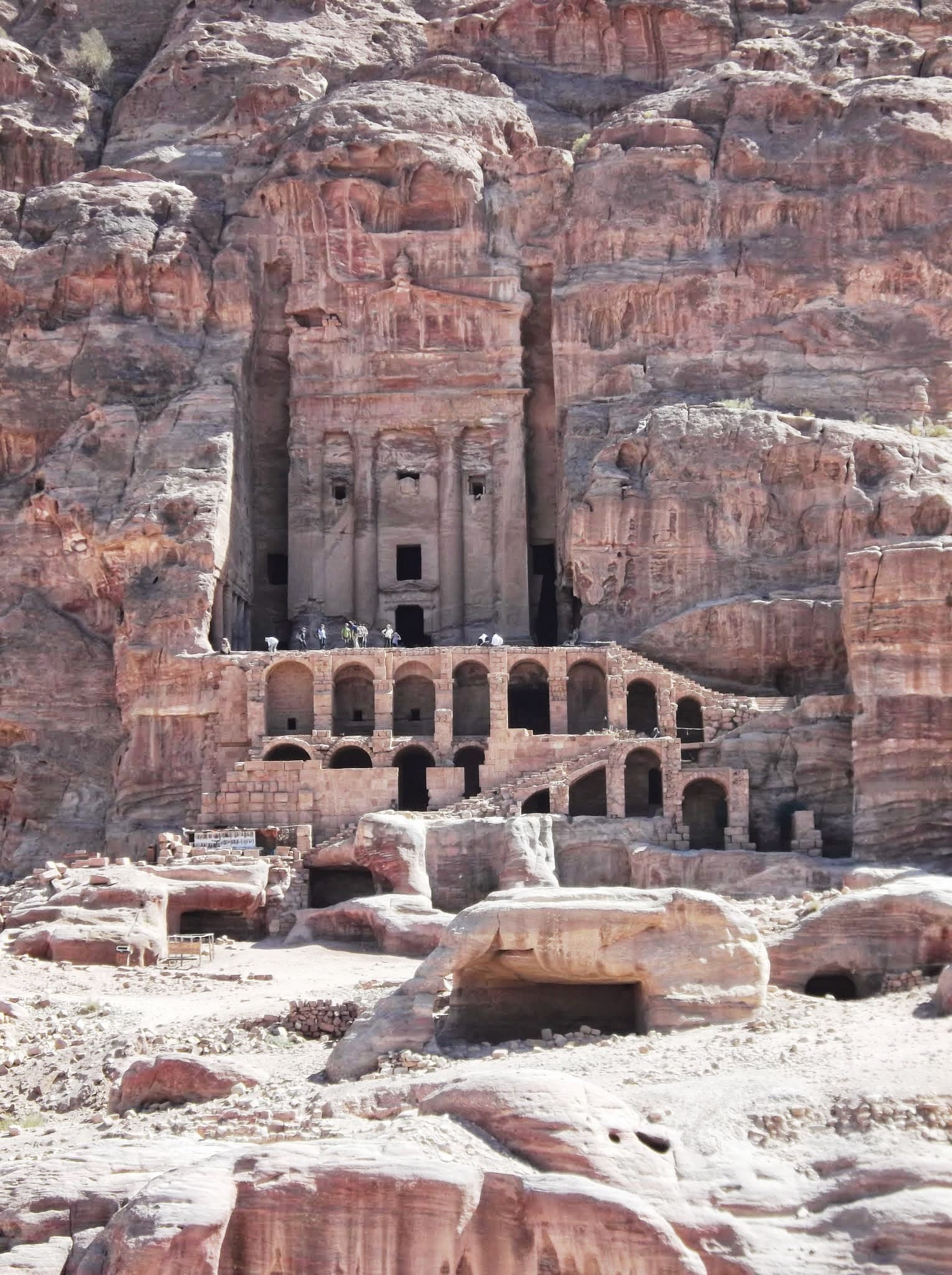 Royal Tombs of PetraA row of huge façades carved into the flank of Jabal al-Khubtha, looking over th6 minutes walk4.7
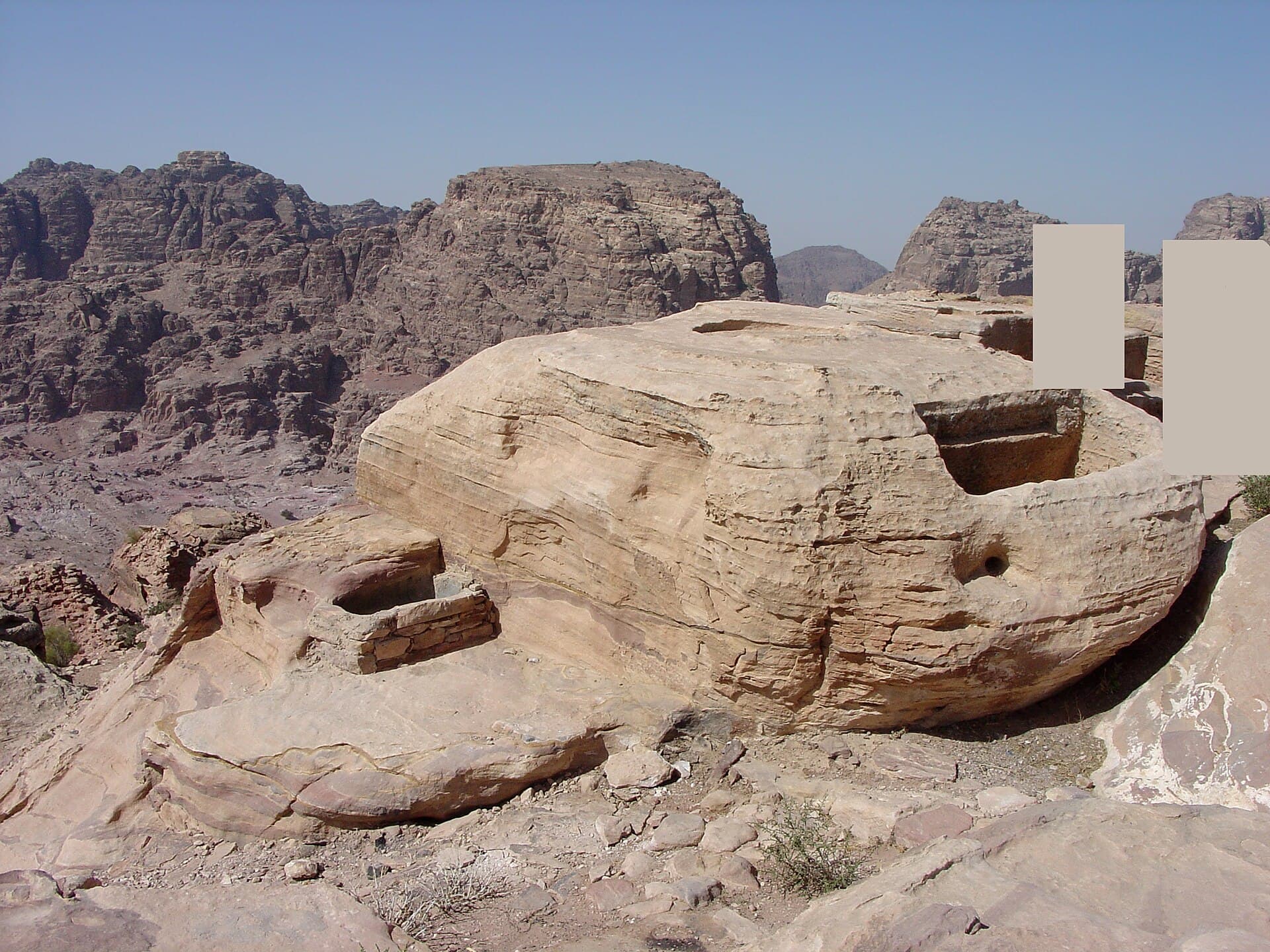 High Place of SacrificeA Nabataean ritual platform on the summit of Jabal al-Madhbah above central Petr10 minutes walk4.7
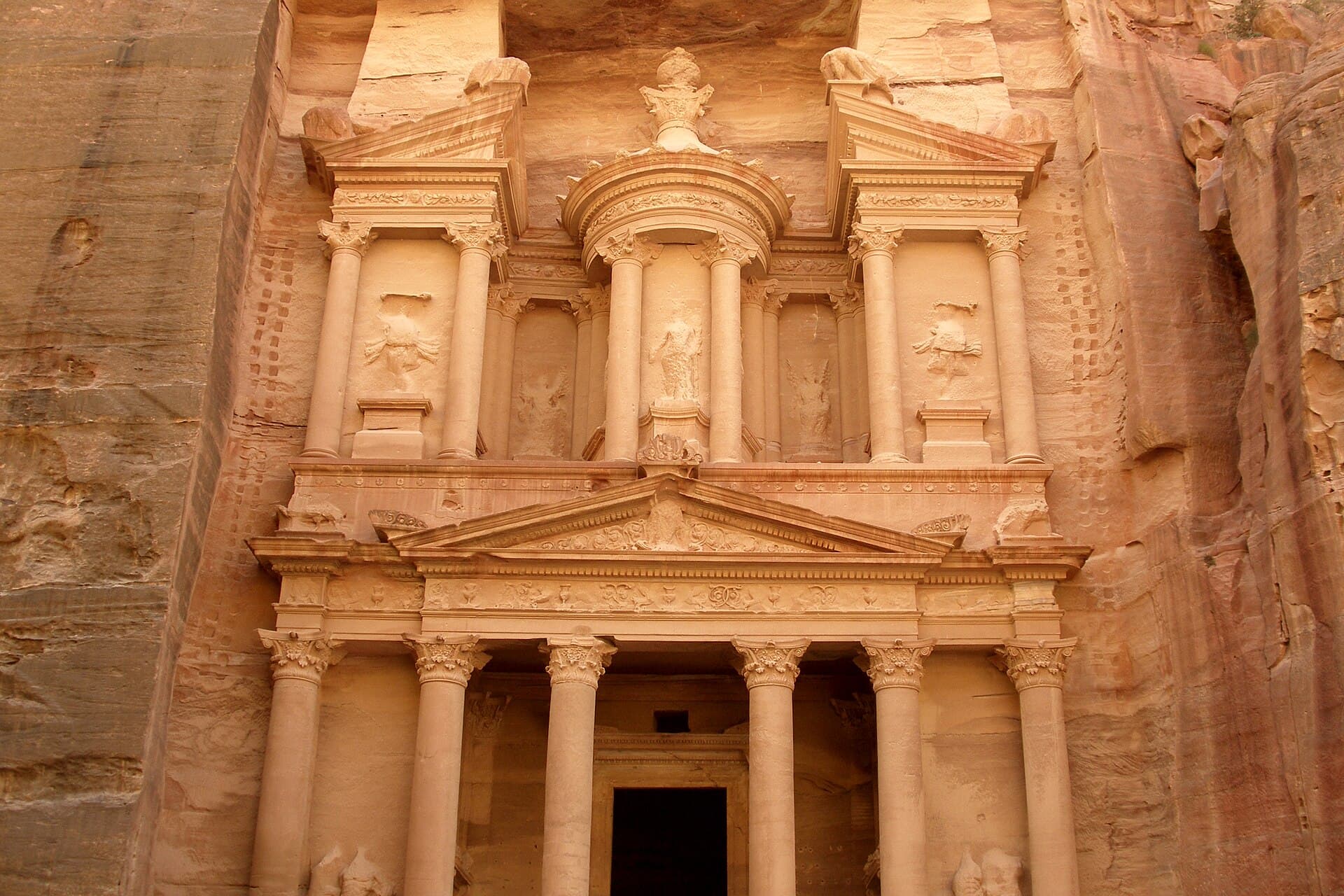 Al-Khazneh (The Treasury)Petra's most famous monument and its most elaborate rock-cut tomb, carved by the12 minutes walk4.9
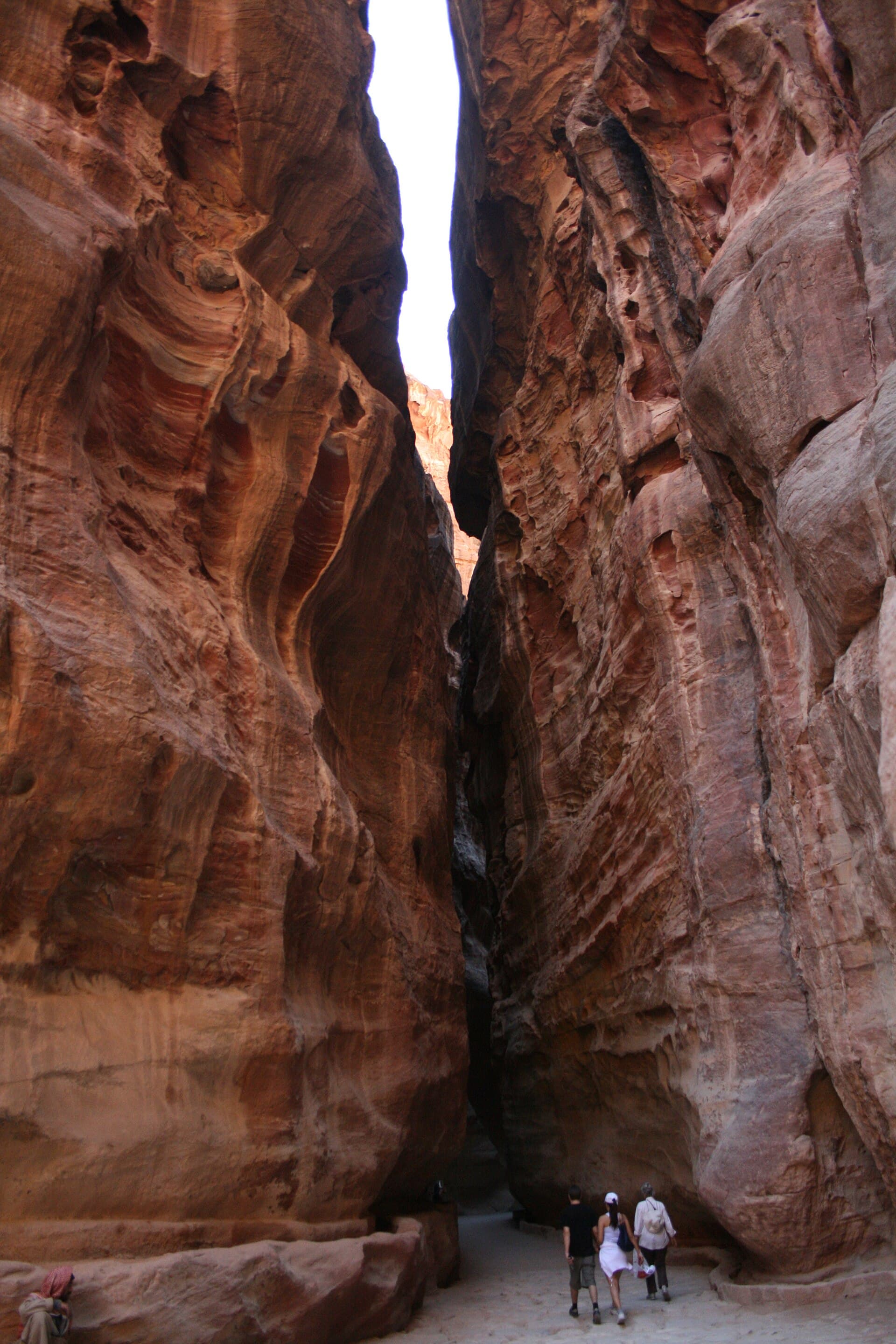 The SiqThe rock passage into the Nabataean city of Petra, winding about 1.2 km between 16 minutes walk4.9
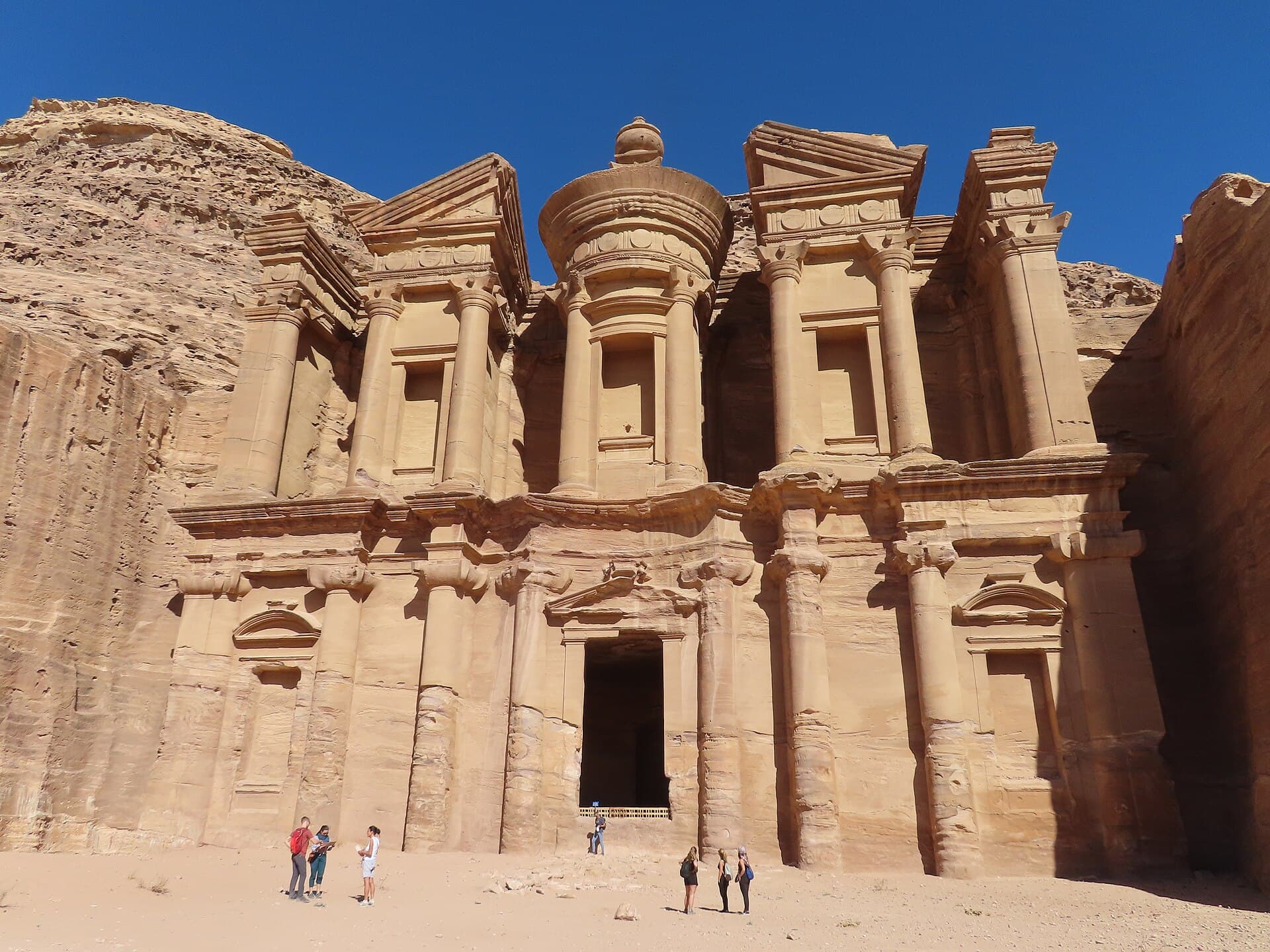 Ad Deir (The Monastery)A colossal carved façade high in the hills northwest of Petra, 47 m tall and 48 21 minutes walk4.8
A full day is the minimum for the main route from the Siq to the Monastery, and two days allow the High Place of Sacrifice, the upper trails and seeing the Treasury twice in different light. Anyone coming on a day trip from Amman spends four hours on the road and sees only a fraction.
The main route is largely level from the Siq to the colonnaded street and suits most people. The climbs to the Monastery or the High Place of Sacrifice are another matter: uneven rock steps and full sun. Take water, a hat and proper shoes, and avoid midday in summer.
Spring or autumn. Summer is very hot and the trails are exposed; winter is cold and sometimes wet, and the Siq can close on flash-flood risk. Early morning is the best hour in any season: softer light and fewer people at the Treasury.