
Palace gateway
Zellij and brass.
Dickelbers — CC BY-SA 3.0 · Jaro Varga — CC BY-SA 3.0 · Dickelbers — CC BY-SA 3.0 · Jaro Varga — CC BY-SA 3.0 · Diego Tirira from Quito, Ecuador — CC BY-SA 2.0 · Jaro Varga — CC BY-SA 3.0 · Lee Kyung-joon — CC BY-SA 2.0 · Jaro Varga — CC BY-SA 3.0
Tetouan's main square, linking the medina with the modern town built during the Spanish Protectorate, when Tetouan was the capital of the northern zone. Locals call it el-Feddan, and it is the city's meeting place and the setting for official ceremonies. Its best-known feature is the Royal Palace, or Dar al-Makhzen, with gleaming white walls and a huge gateway decorated with carving, zellij and brass doors, guarded by sentries. The square is ringed by tall, minaret-shaped ornamental lamp columns, palm trees and flower beds, on a paving of geometric patterns. From its eastern side you enter the medina's white lanes, and to the west run the streets of the modern town with their Spanish-style buildings and white balconies. The Archaeological Museum is close by. The square is open and free, while the Royal Palace is not open to visitors; you can admire and photograph its gateway from the square, following the guards' instructions.
Zellij and brass.
Ornamental lamps.
Old and modern.
Between the medina and the modern town, Tetouan
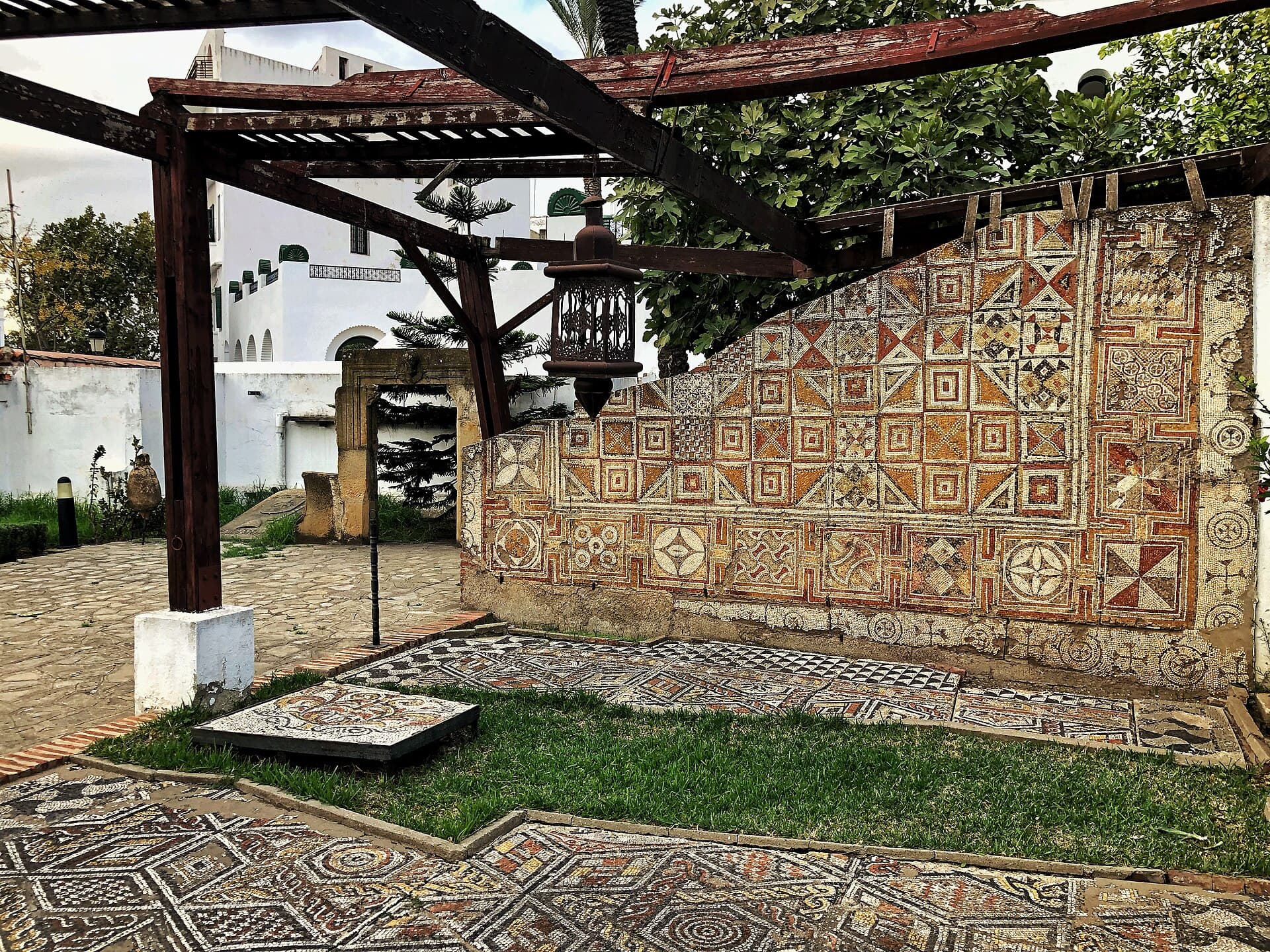 Archaeological Museum of TetouanAn archaeological museum in a building completed in 1939 near Place Hassan II, o2 minutes walk
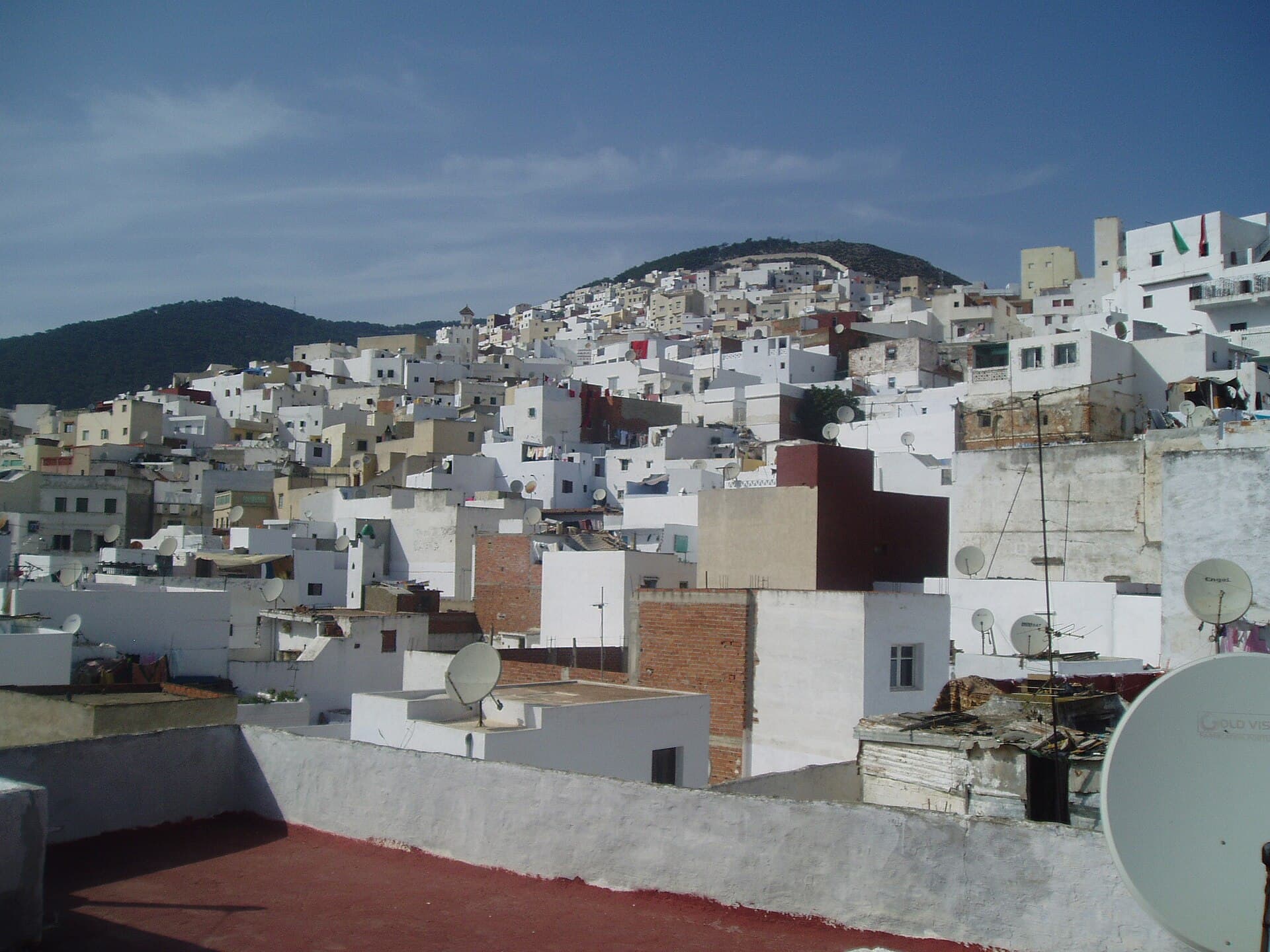 Medina of TetouanThe old walled town of Tetouan, nicknamed the White Dove, on the slope of Jbel D4 minutes walk
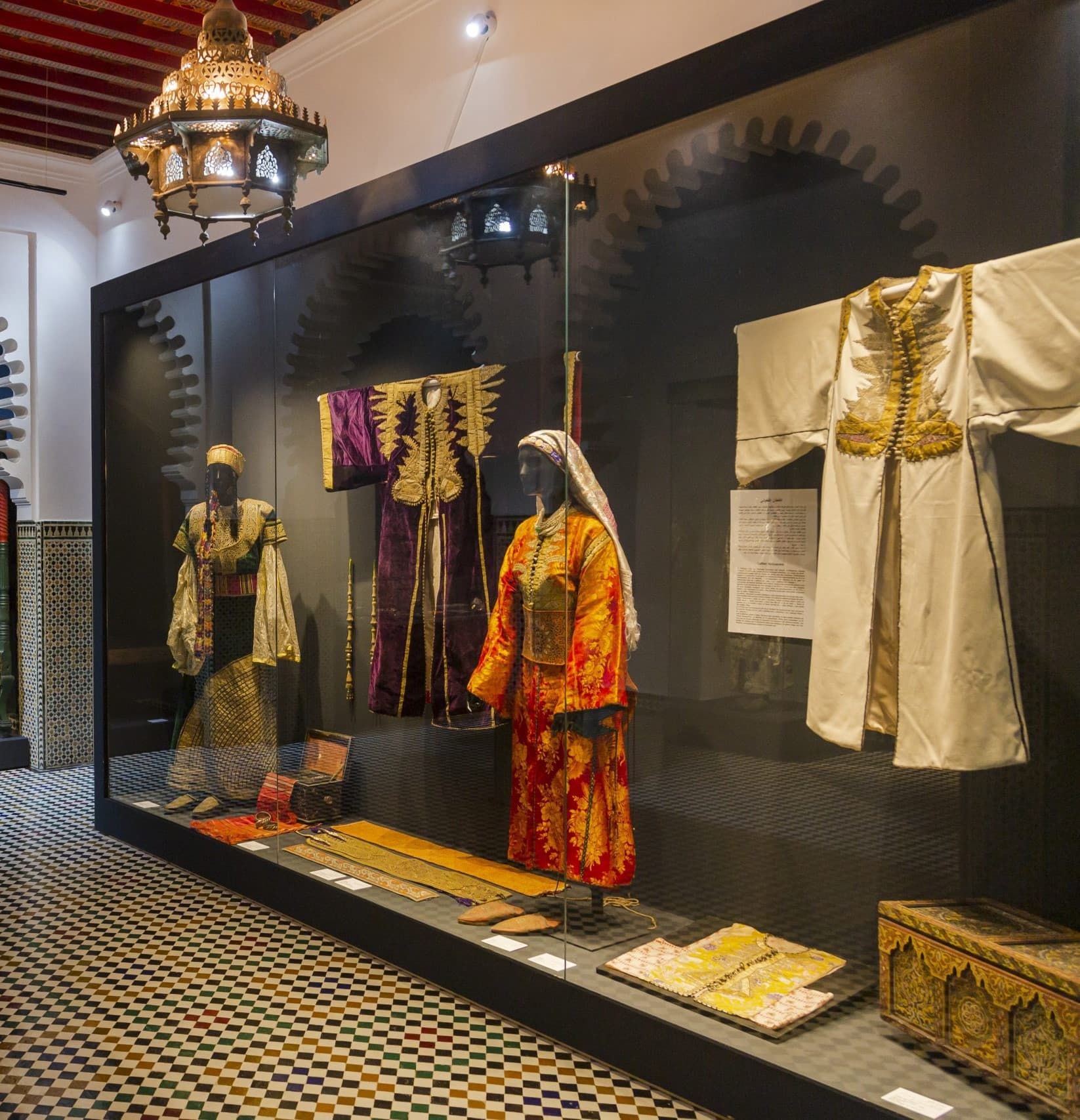 Bab El Okla Museum (Ethnographic Museum)An ethnographic museum in an old defensive bastion at Bab El Okla, one of the hi5 minutes walk
No, it is a royal palace closed to visitors, who admire and photograph its decorated gateway from the square.