
The half-circle
Two hundred metres of brick and ceramic, two arms, two towers.
Carlos Delgado — CC BY-SA 4.0 · Holger Uwe Schmitt — CC BY-SA 4.0 · Holger Uwe Schmitt — CC BY-SA 4.0 · Holger Uwe Schmitt — CC BY-SA 4.0
The Plaza de España is the grandest thing modern Seville ever built: a colossal two-hundred-metre half-circle crowned the 1929 Ibero-American Exposition — a brick-and-ceramic palace embracing its square with two tower-ended arms, a moat curving with it under blue ceramic bridges, and at its base 48 mosaic alcoves for every Spanish province with maps and scenes. It is where the visitor grasps the Sevillian manner all at once: brick, neo-Mudéjar and painted ceramic beyond measure. Boats row the canal, horse carriages circle, flamenco dancers improvise beneath the arcades — a complete city theatre without a ticket. Cinema fell for it (Star Wars and Lawrence of Arabia filmed here), and it gates the María Luisa park — the pair making a full Sevillian late afternoon, its sunset gold beyond telling.
Two hundred metres of brick and ceramic, two arms, two towers.
48 mosaics of all Spain — geography taught in ceramic.
Rowing under blue ceramic bridges — Seville's little Venice.
Dancers improvising in the gallery — echo money can't buy.
Avenida de Isabel la Católica, 41004 Seville
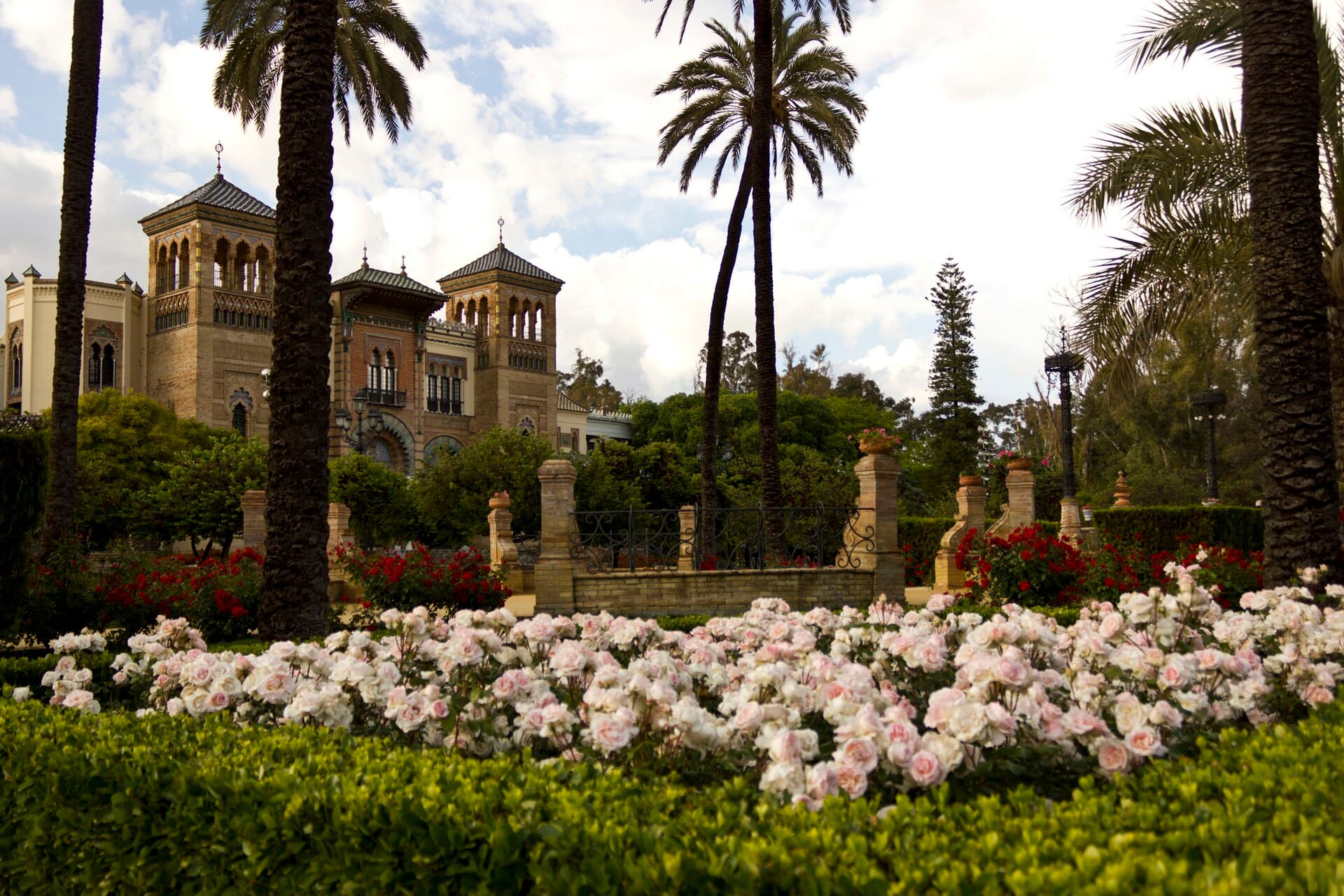 María Luisa ParkMaría Luisa is Seville's great oasis: the San Telmo palace orchards given to the3 minutes walk4.7
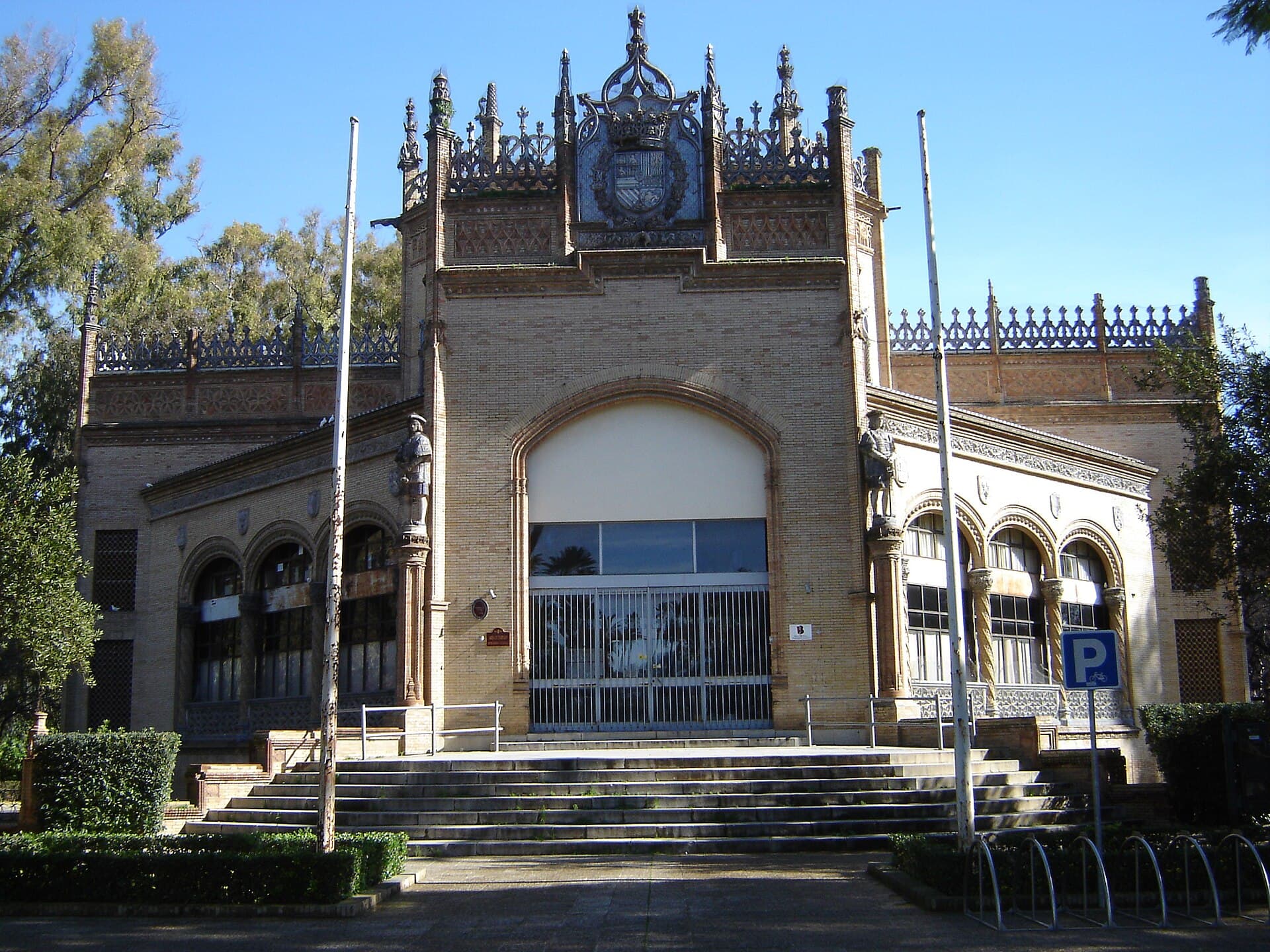 Royal PavilionA small pavilion in the María Luisa park south of Seville, built for the 1929 Ib7 minutes walk4.7
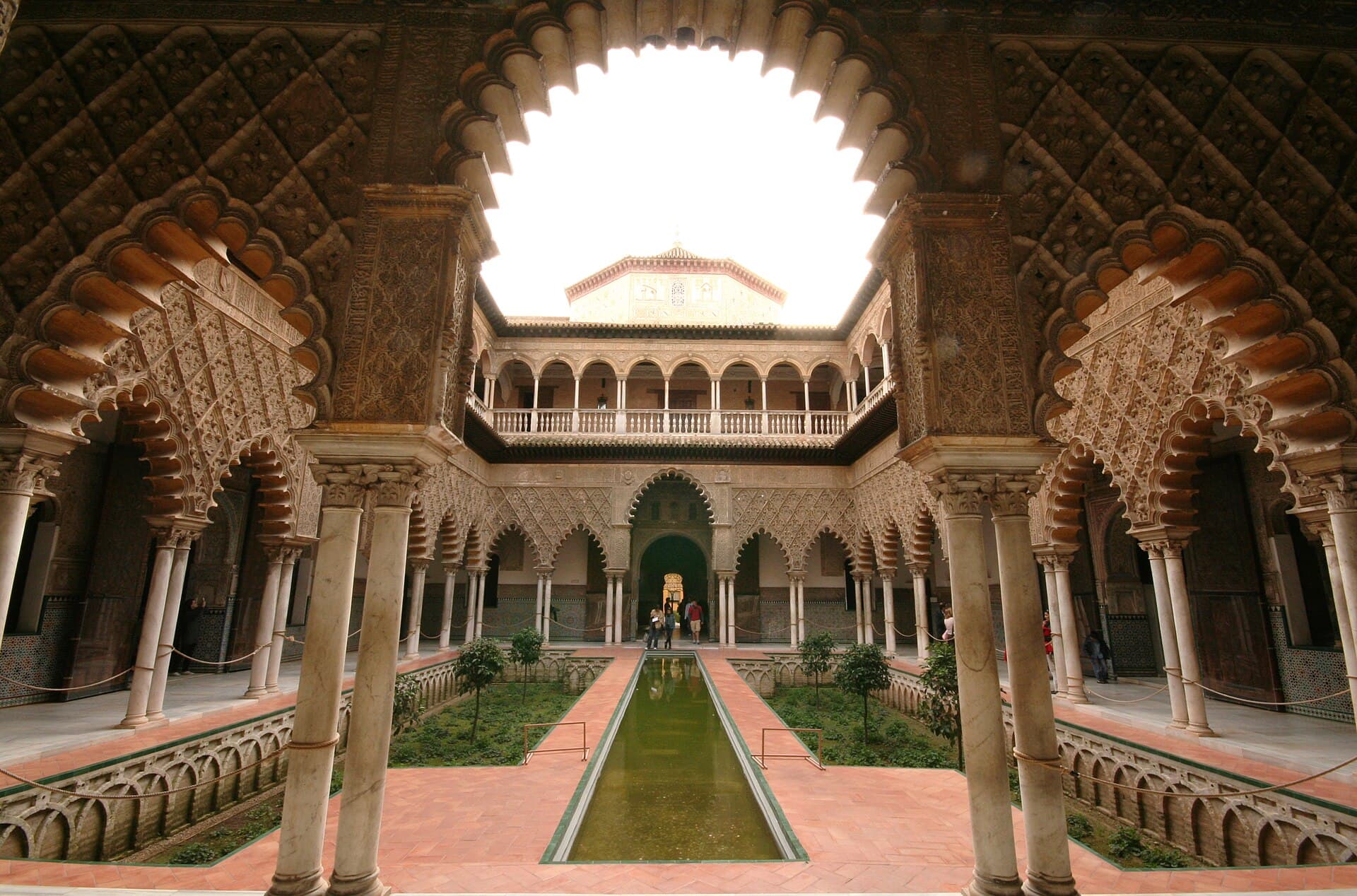 Royal Alcázar of SevilleSeville's Alcázar is Europe's oldest royal palace still in use — and its soul is11 minutes walk4.6
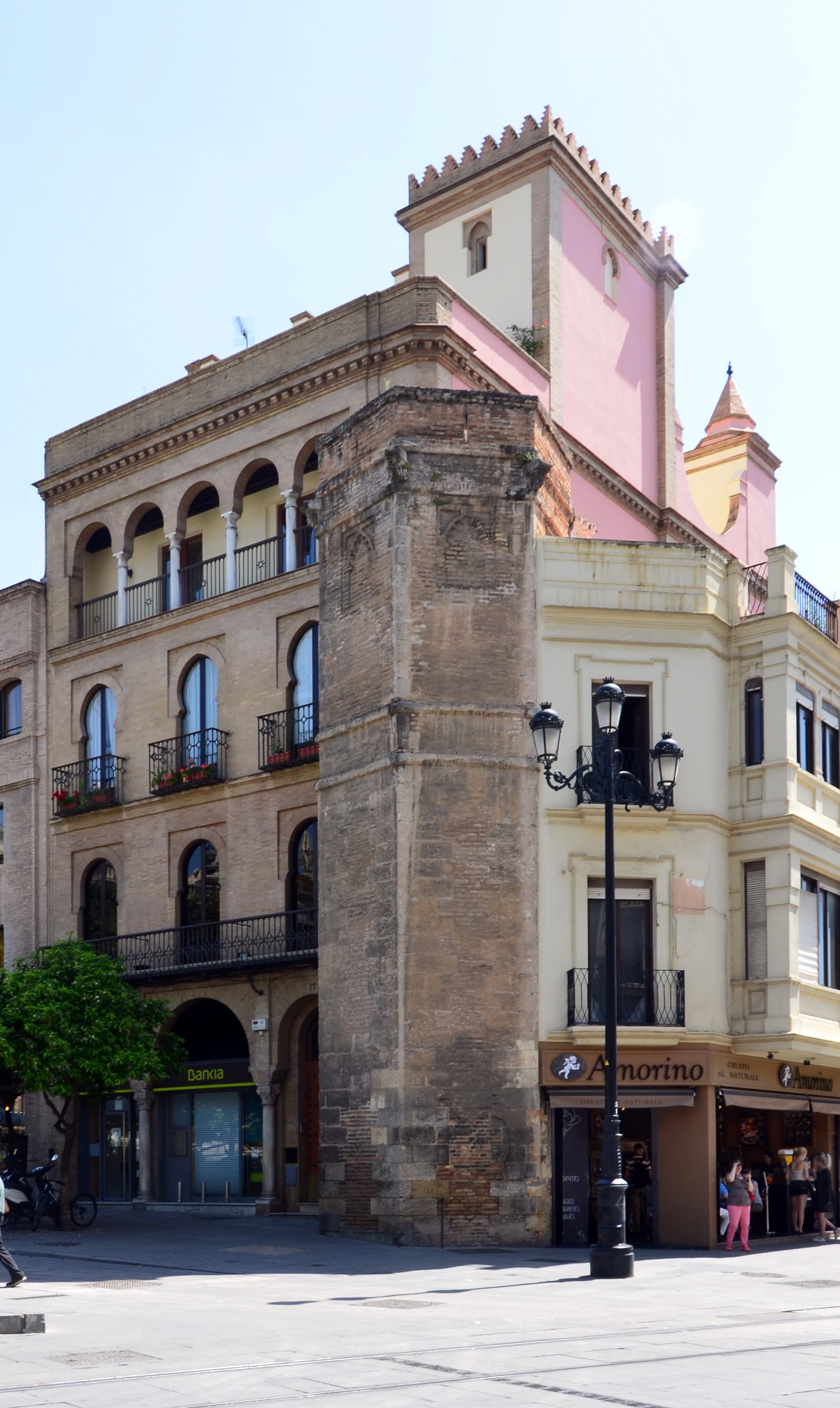 Torre de Abd el AzizAn octagonal Almohad tower on the Avenida de la Constitución in central Seville,12 minutes walk4.3
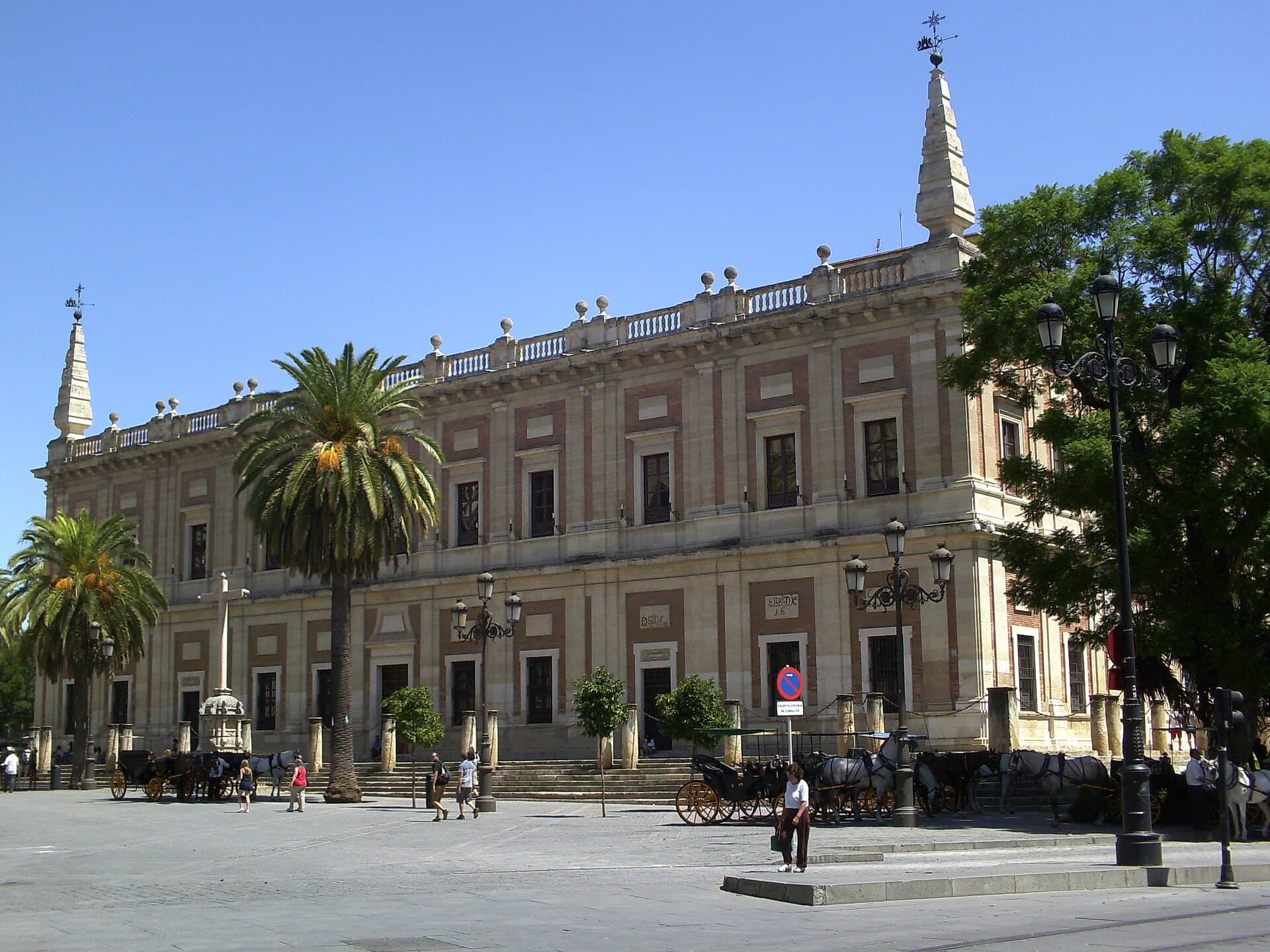 General Archive of the IndiesA sixteenth-century building between the cathedral and the Alcázar, built origin13 minutes walk4.3
Lawrence of Arabia made it Cairo's palace; Star Wars Episode II the city of Theed with its colonnades — walking the upper gallery is literally the Naboo shot. Spanish series scenes are countless: the square is a standing open studio.
Enter María Luisa park by the southern arm for shade, fountains and white doves, Plaza América deep inside with its two museums — then return for sunset. A complete free afternoon, Seville's gentlest gift.