
The 1929 exposition's legacy
The Plaza de España, the park and the pavilions all come from that fair.
No machine-readable author provided. Lobillo assumed (based on copyright claims). — Public domain · Alberto-g-rovi — CC BY 4.0 · CarlosVdeHabsburgo — CC BY-SA 4.0 · CarlosVdeHabsburgo — CC BY-SA 4.0
A small pavilion in the María Luisa park south of Seville, built for the 1929 Ibero-American Exposition. That exposition changed the face of Seville: the vast Plaza de España, the Plaza de América and dozens of pavilions were created for it, and the whole park was replanned. Most of what visitors go south of the city for today is the legacy of that fair rather than of antiquity. The Royal Pavilion is a small neo-Gothic building with a stone front and fine ornament, unlike the other exposition pavilions, which leaned towards Andalusi and Mudéjar styles. The building is in administrative use and is not visited inside. What you do is look at it as you walk through the park. That is its correct use: a point on a walk through the María Luisa park, among Spain's finest public gardens, free and shaded — and that shade is what makes it necessary in a Seville summer.
The Plaza de España, the park and the pavilions all come from that fair.
Its style differs from the exposition's other, Andalusi-flavoured pavilions.
Dense trees, pools and paths — a necessity in a Seville summer, not a luxury.
María Luisa park, south Seville
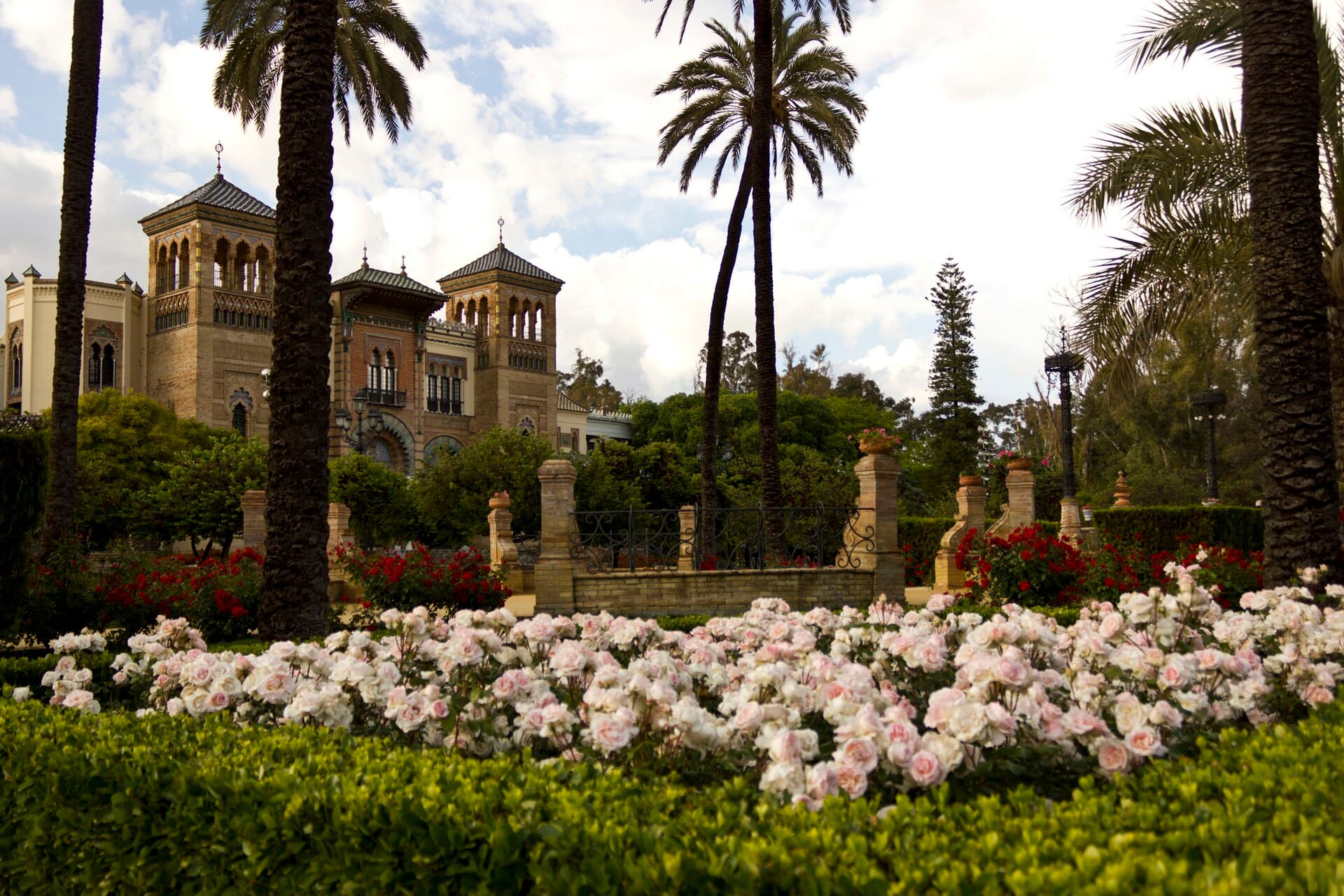 María Luisa ParkMaría Luisa is Seville's great oasis: the San Telmo palace orchards given to the6 minutes walk4.7
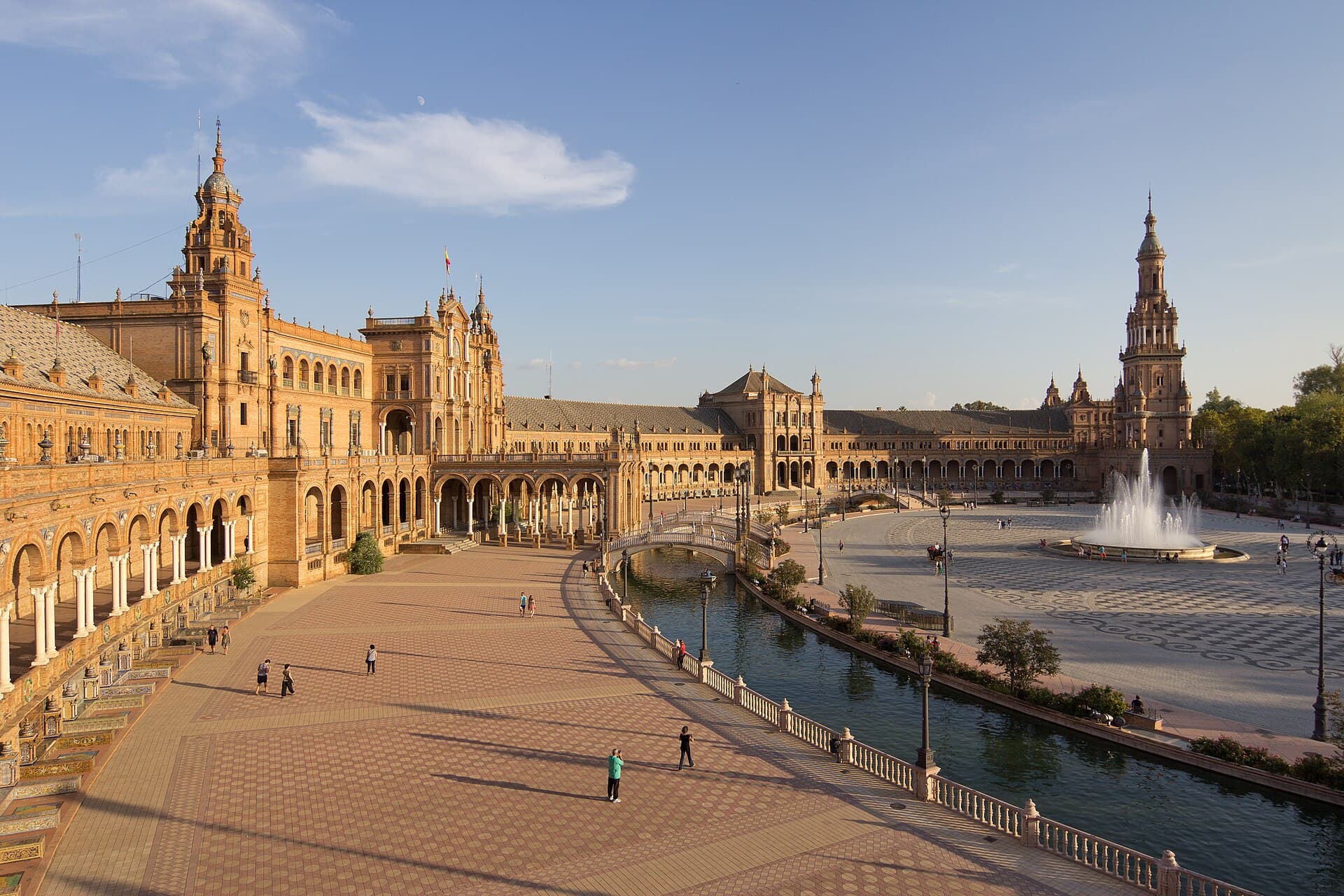 Plaza de EspañaThe Plaza de España is the grandest thing modern Seville ever built: a colossal 7 minutes walk4.9
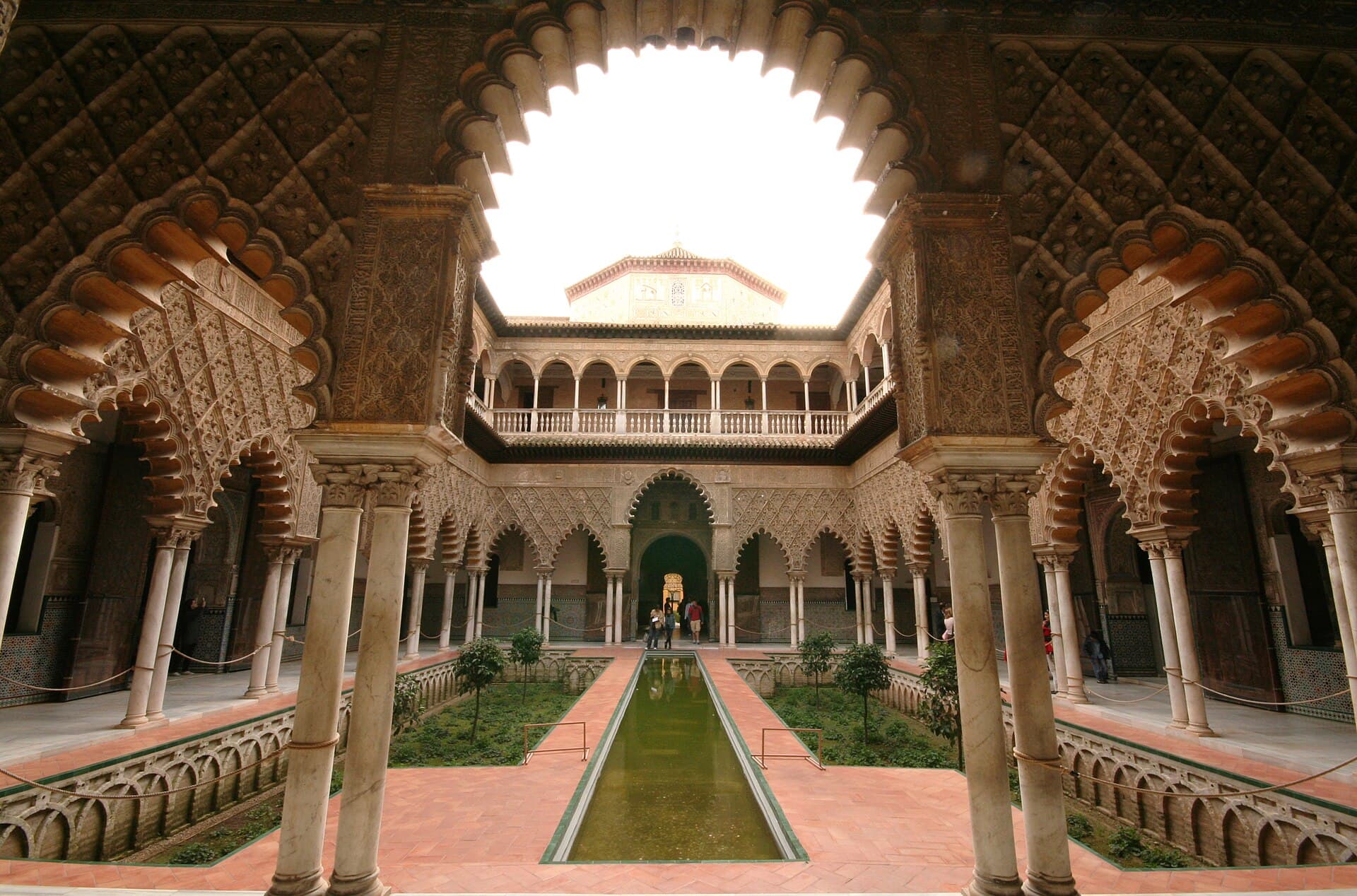 Royal Alcázar of SevilleSeville's Alcázar is Europe's oldest royal palace still in use — and its soul is18 minutes walk4.6
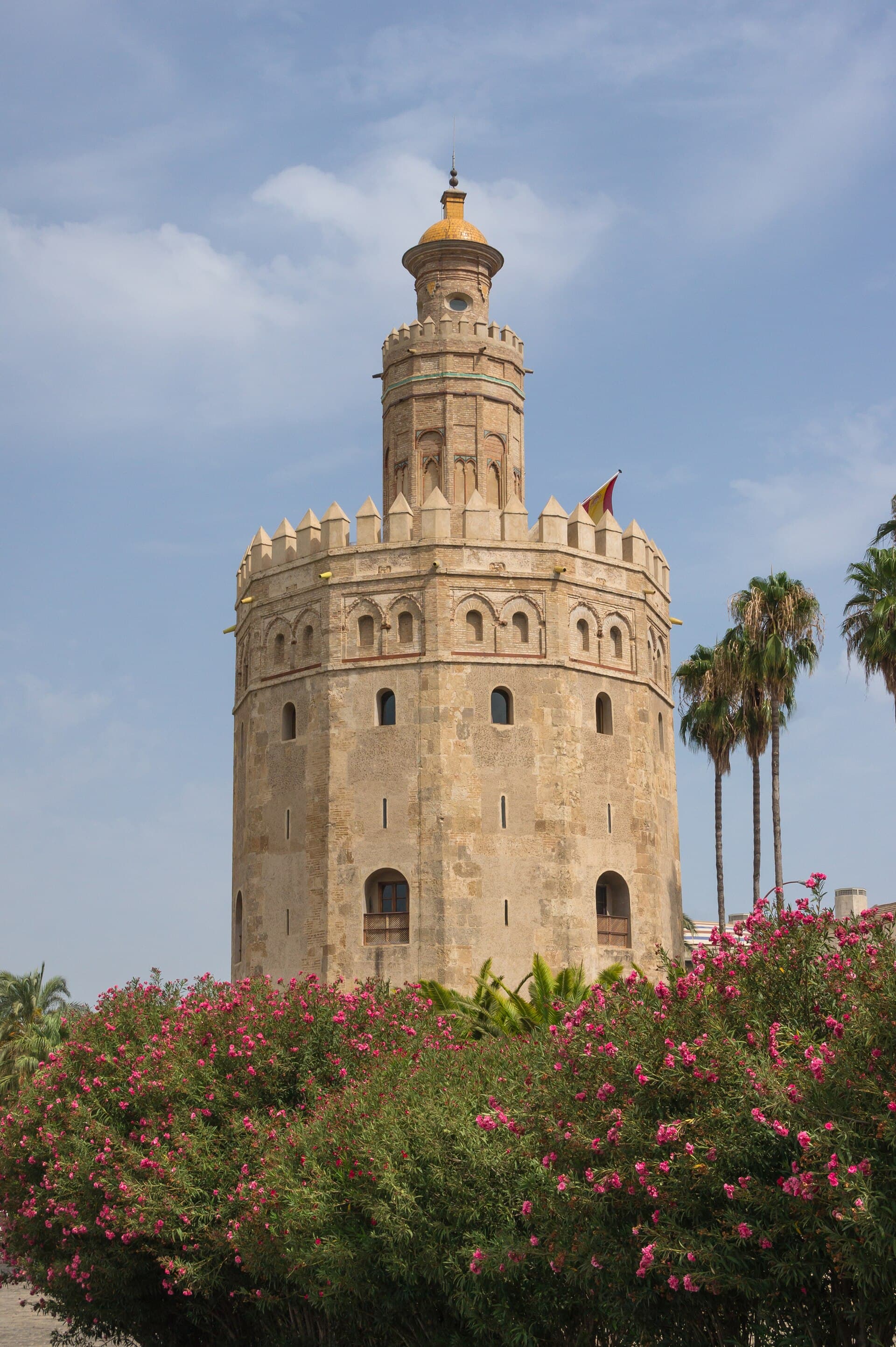 Torre del OroThe Tower of Gold has guarded Seville's river for eight hundred years — Almohad-18 minutes walk4.6
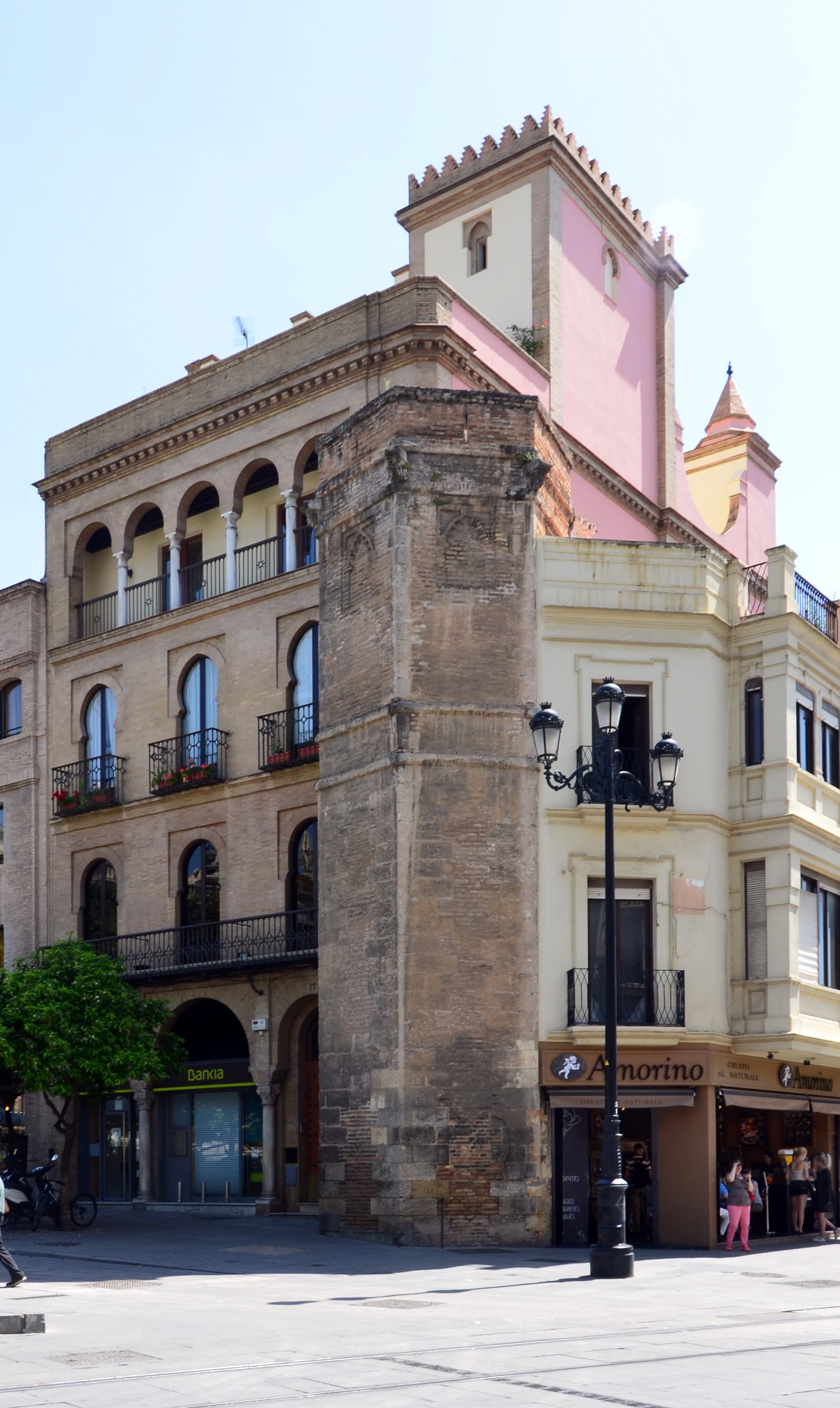 Torre de Abd el AzizAn octagonal Almohad tower on the Avenida de la Constitución in central Seville,19 minutes walk4.3
The Plaza de España, Seville's best-known sight after the cathedral: a vast brick and ceramic semicircle with a canal and rowing boats, filmed in international productions. Beyond it, the Plaza de América with its pavilions, the folk arts museum and the archaeological museum.
Seville is among Europe's hottest cities in summer. Start at seven, do the walking and open-air sights before noon, rest somewhere air-conditioned from one until six, then go out in the evening. The park itself is among the better daytime places because its shade is dense.