
From the Almohad wall
The same layer that built the Giralda and the Torre del Oro.
Gzzz — CC BY-SA 4.0 · PantheraLeo1359531 — CC BY 4.0 · Harvey Barrison from Massapequa, NY, USA — CC BY-SA 2.0 · CarlosVdeHabsburgo — CC BY-SA 4.0
An octagonal Almohad tower on the Avenida de la Constitución in central Seville, what remains of the city's Islamic wall on this side. It carries the name of Abd al-Aziz ibn Musa ibn Nusayr, son of the commander who entered al-Andalus, who made Seville the seat of his rule in the first years after the conquest. The name therefore reaches back to the beginning of the Muslim presence in the Iberian peninsula rather than its end. The tower itself is Almohad work of the twelfth century, from the same layer that built the Giralda and the Torre del Oro. These are three witnesses to a single system of fortification, and a visitor who connects them understands the scale of Islamic Seville better than one who sees each alone. Today it is hemmed in by modern buildings and shopfronts on a busy commercial street, and that contrast is itself part of the sight. It is not entered and there is no fee — a few minutes as you pass between the cathedral and the rest of the centre.
The same layer that built the Giralda and the Torre del Oro.
Abd al-Aziz ibn Musa made Seville the seat of his rule.
Hemmed in by modern buildings on a commercial street — the contrast is the sight.
Avenida de la Constitución, central Seville
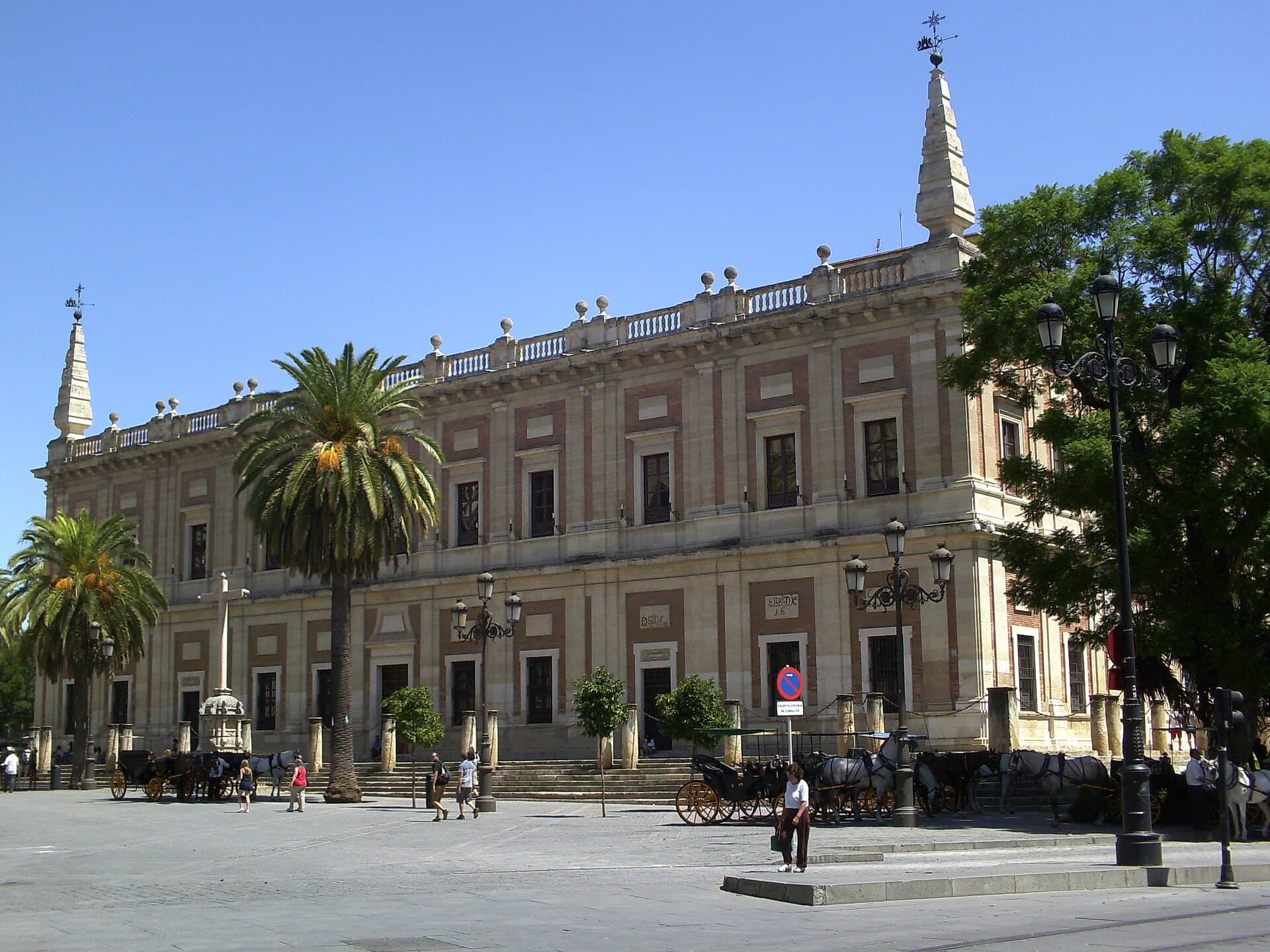 General Archive of the IndiesA sixteenth-century building between the cathedral and the Alcázar, built origin1 minute walk4.3
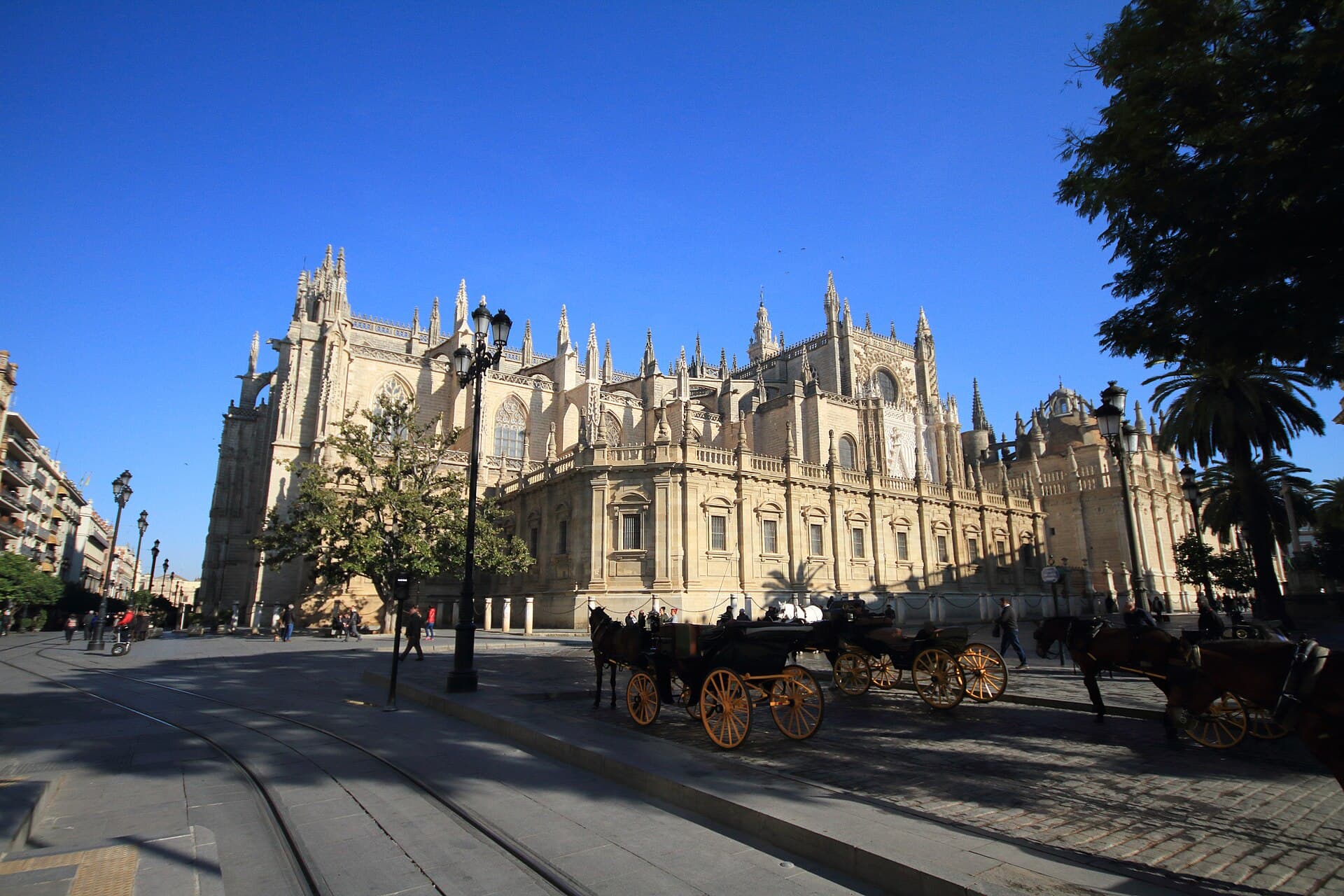 Seville Cathedral & the GiraldaSeville's cathedral is the world's largest Gothic cathedral — and its story begi2 minutes walk4.9
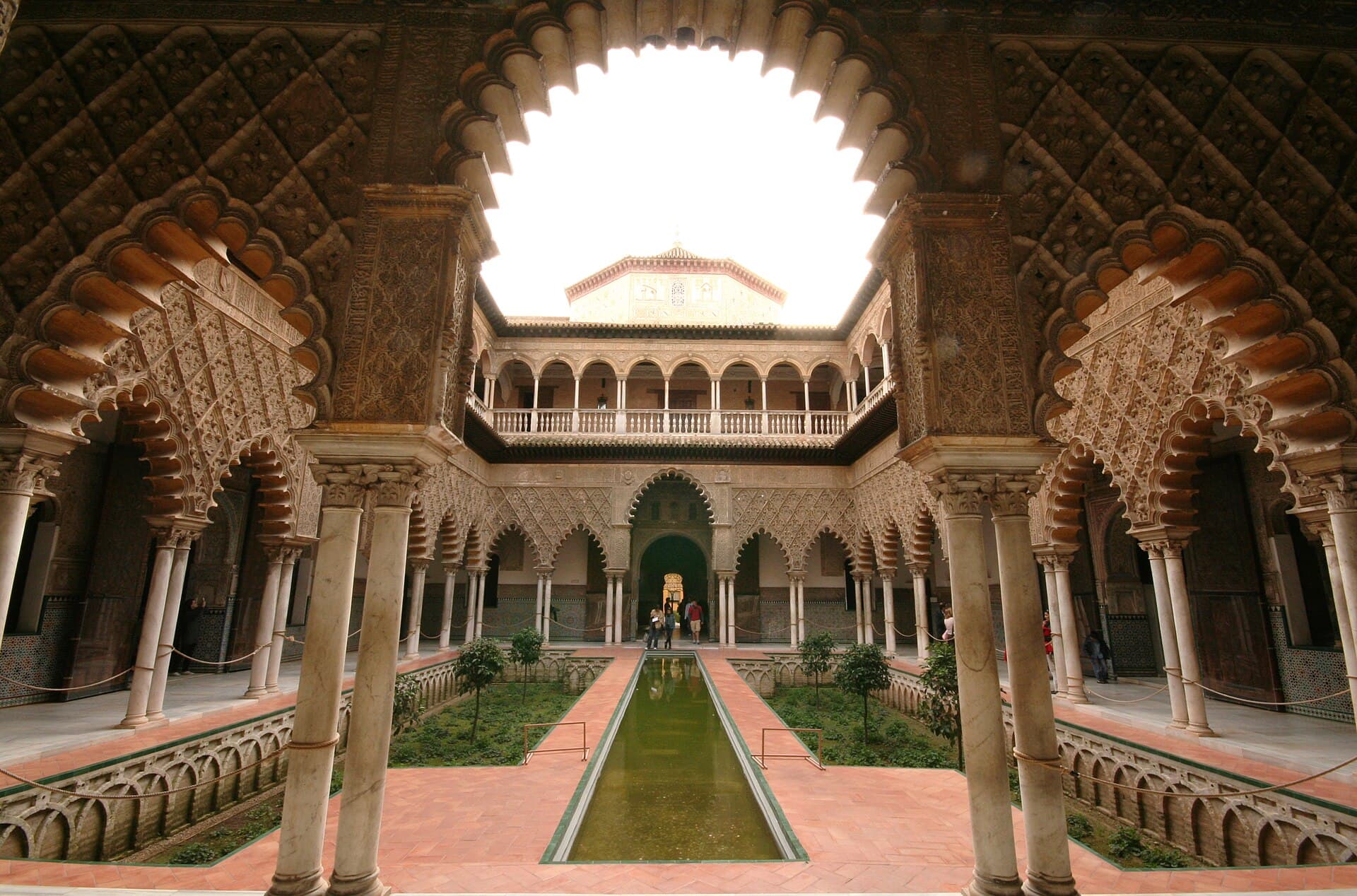 Royal Alcázar of SevilleSeville's Alcázar is Europe's oldest royal palace still in use — and its soul is3 minutes walk4.6
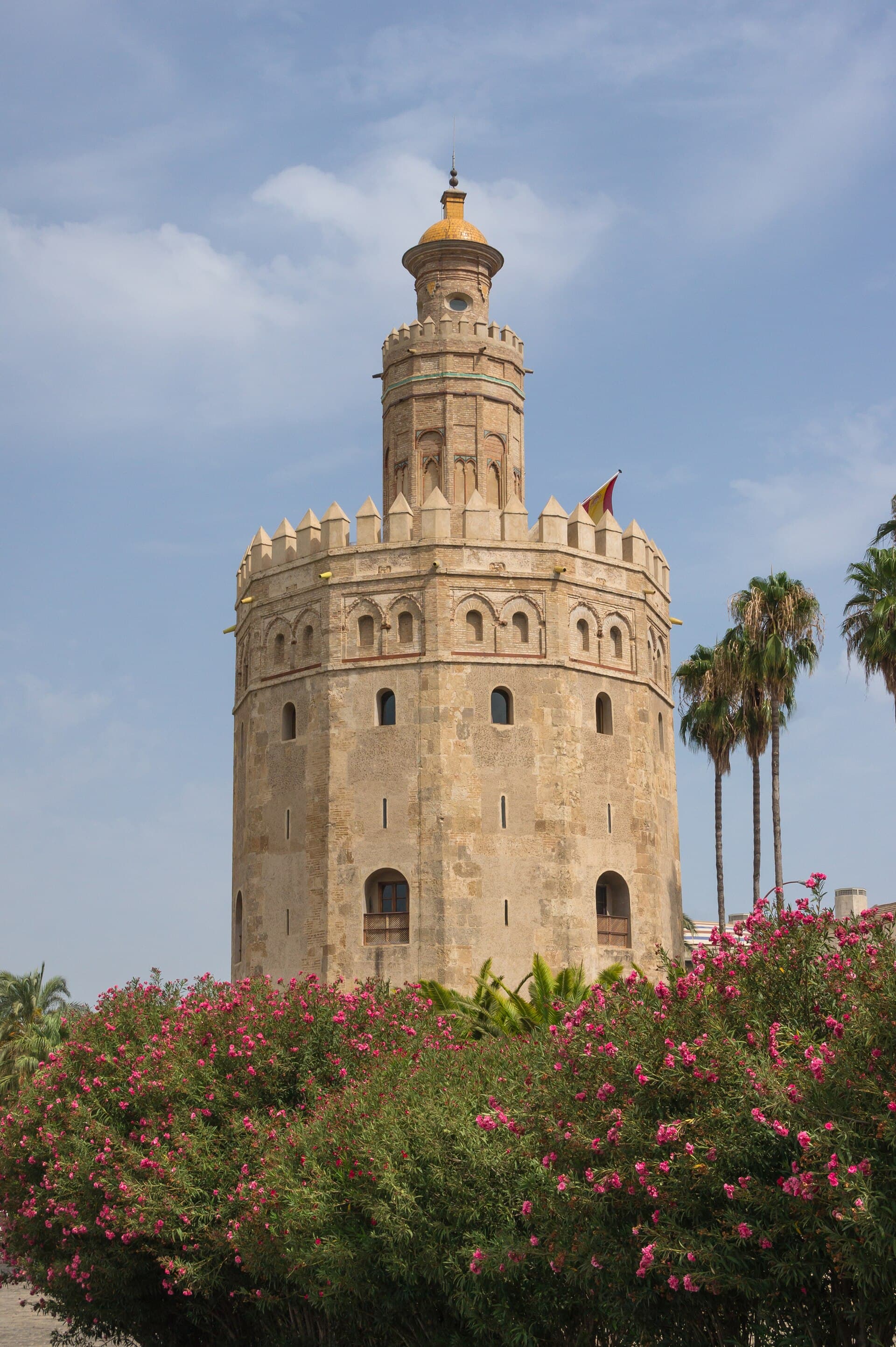 Torre del OroThe Tower of Gold has guarded Seville's river for eight hundred years — Almohad-4 minutes walk4.6
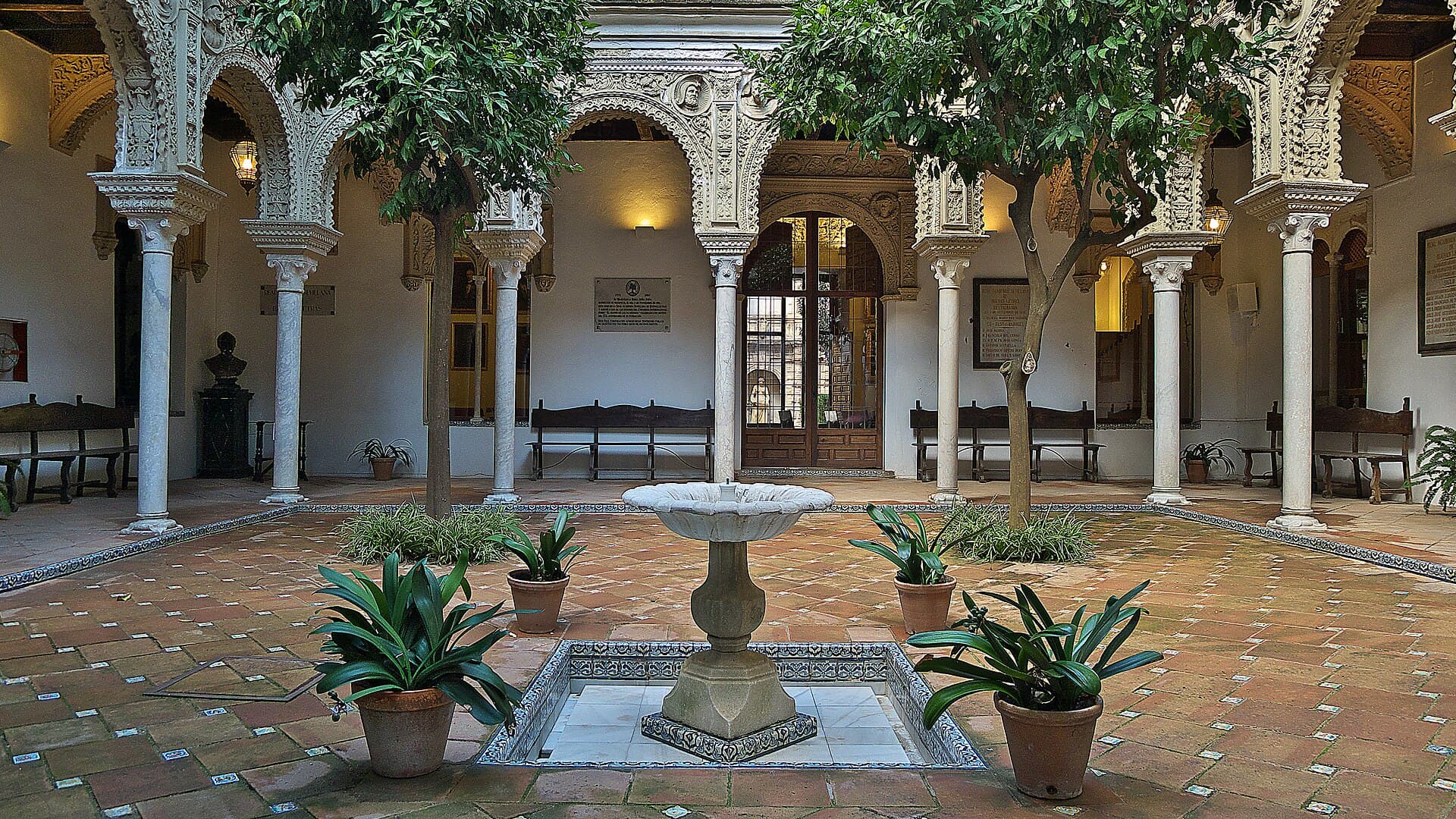 Royal Academy of Fine ArtsSeville's academy of fine arts, an institution going back to the eighteenth cent6 minutes walk4.8
The Giralda, minaret of the congregational mosque and the best known of them; the Torre del Oro on the river; and the Alcázar, built on Islamic foundations and finished by Muslim craftsmen under Castilian rule. This tower is a small link that ties them together as one fortification system.
No — the tower is closed, not entered, and has no platform. What you see is the exterior from the street. If you want to climb in Seville, the Giralda is the destination; its internal ramp is walked up and the view from the top takes in the whole city.