
Fishermen's path
Sea wall walk.
Diego Baravelli — CC BY-SA 4.0 · MTur Destinos — Public domain · Vinícius Araújo de Oliveira — CC BY-SA 4.0 · Halleypo — CC BY-SA 3.0 · IngridGL — CC BY-SA 4.0 · IngridGL — CC BY-SA 4.0 · Núcleo de digitalização / IMS — Public domain
Leme Beach is the quiet eastern end of Rio's Copacabana arc, closed off by the Pedra do Leme, a forested rocky headland crowned by the colonial Duque de Caxias fort. The district grew up with Copacabana: in imperial times it was hard to reach and held only farms, its first street opened in the 1890s, and development came with the opening of the Túnel Novo in 1906. Surfers, fishermen and families come here, and on very hot days the water turns so calm and clear that locals jokingly call it «Leme de Noronha», after the famous Fernando de Noronha archipelago. At the foot of the rock runs the Caminho dos Pescadores, the fishermen's path, with its low sea wall and a statue of the writer Clarice Lispector that visitors pose beside. The climb to the fort starts nearby, so the spot combines beach, a walk and views over Copacabana.
Sea wall walk.
Lispector.
On hot days.
Leme, eastern end of Copacabana, Rio de Janeiro
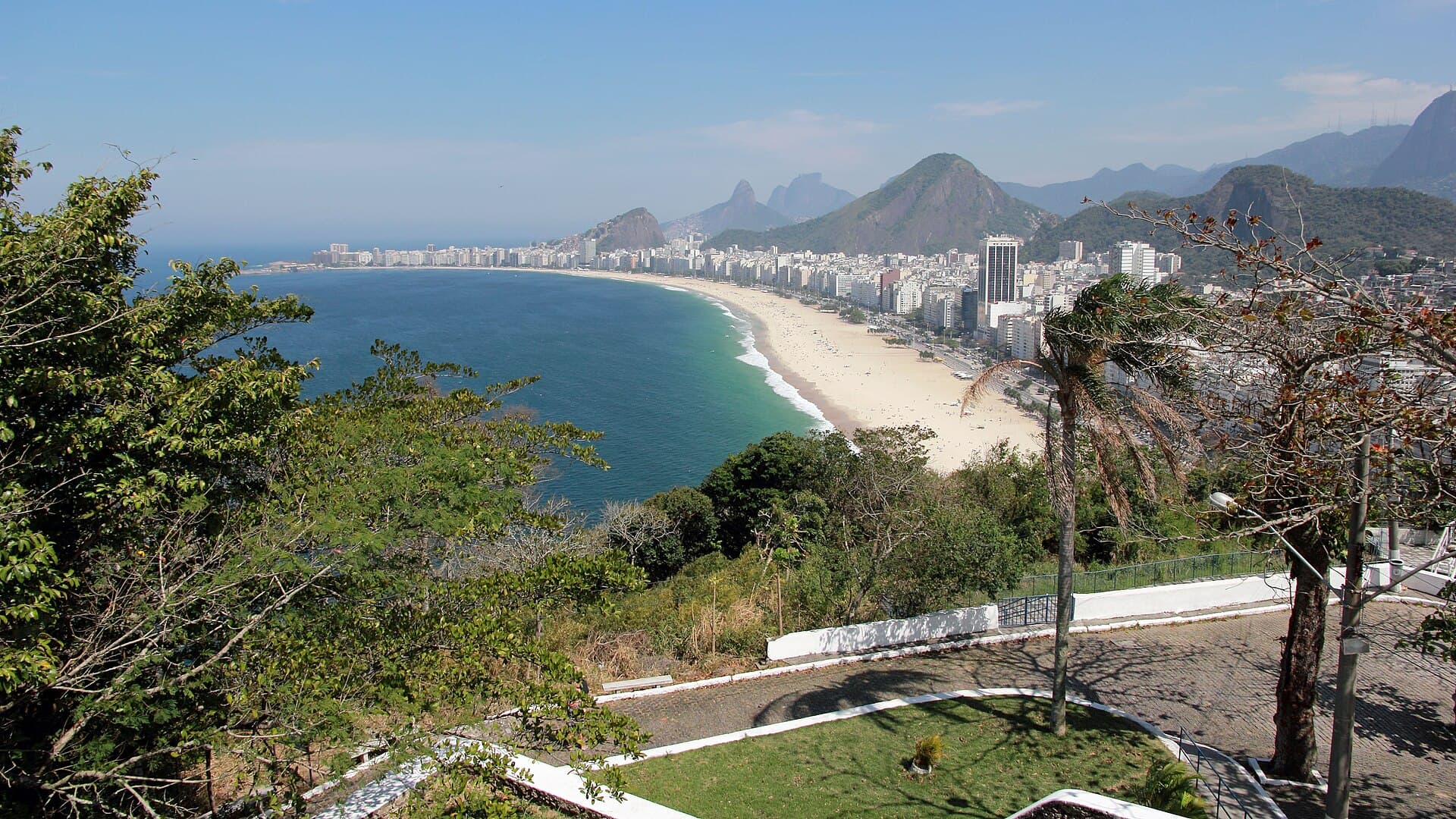 Forte Duque de Caxias (Forte do Leme)The Duque de Caxias Fort, known as the Leme Fort, is a colonial fort on top of t6 minutes walk4.9
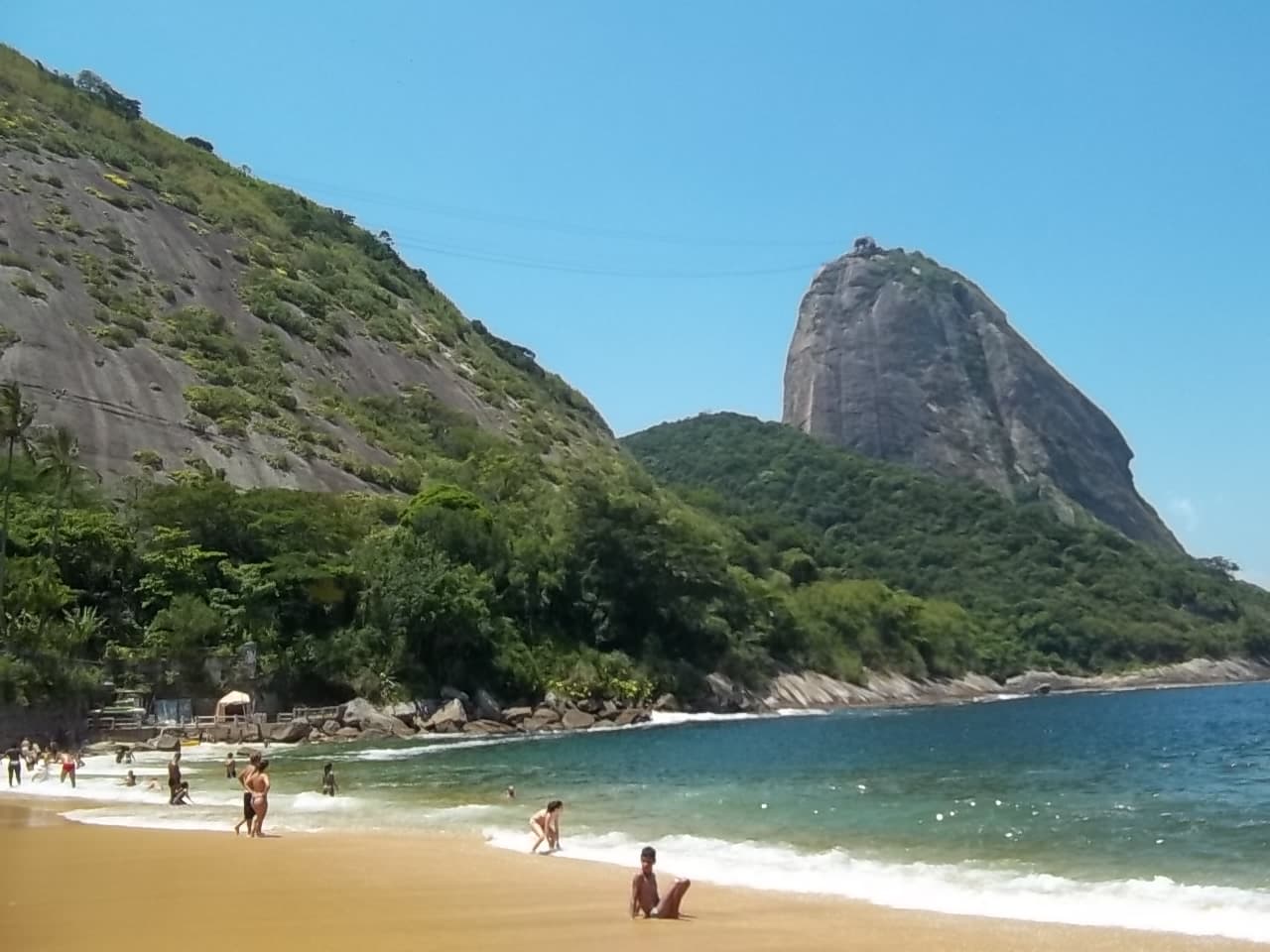 Praia Vermelha and the Cláudio Coutinho TrailPraia Vermelha, «Red Beach», is a small beach in the quiet Urca district at the 11 minutes walk4.6
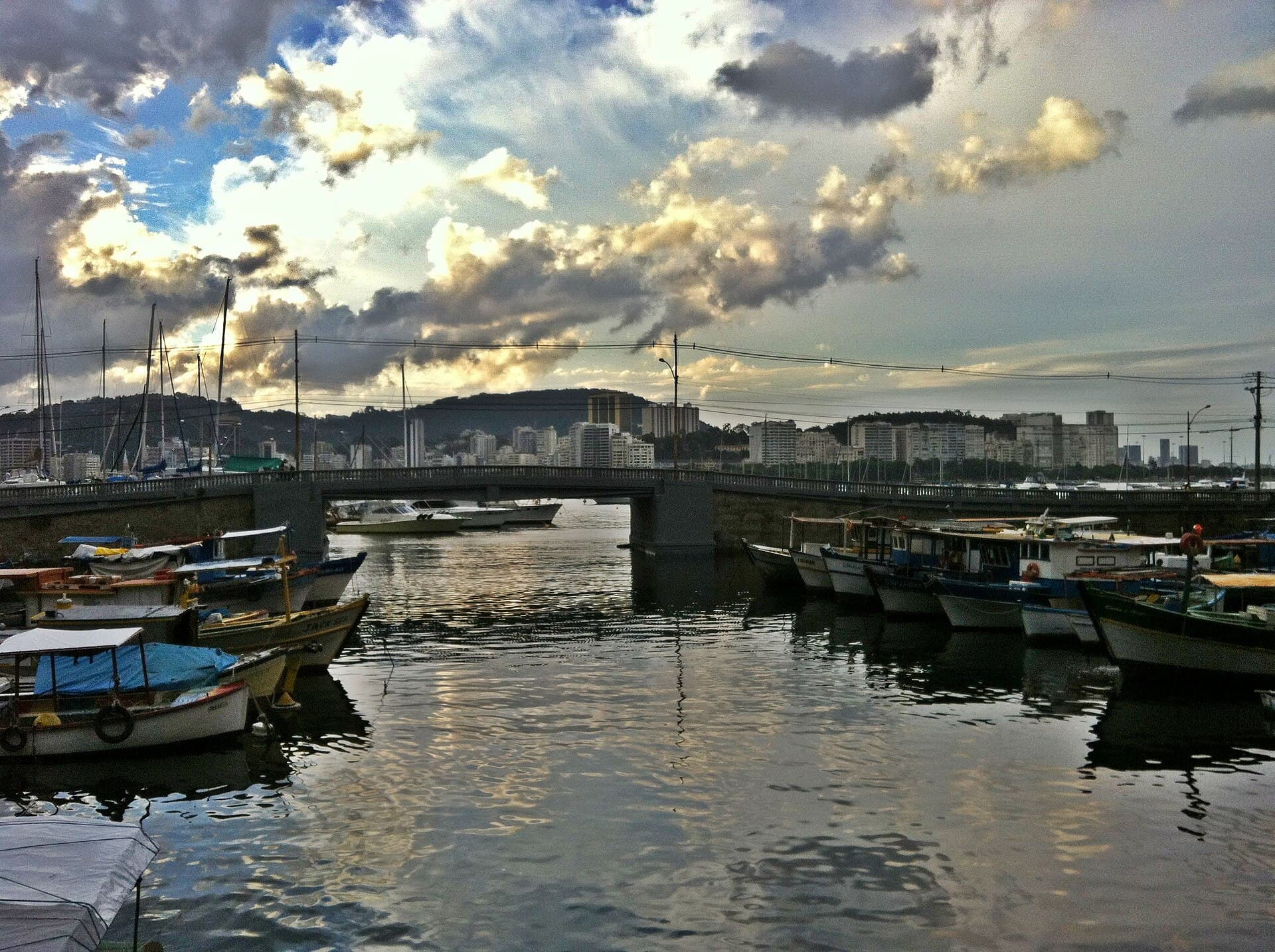 UrcaUrca is a quiet residential district of nearly 7,000 people squeezed between Sug11 minutes walk
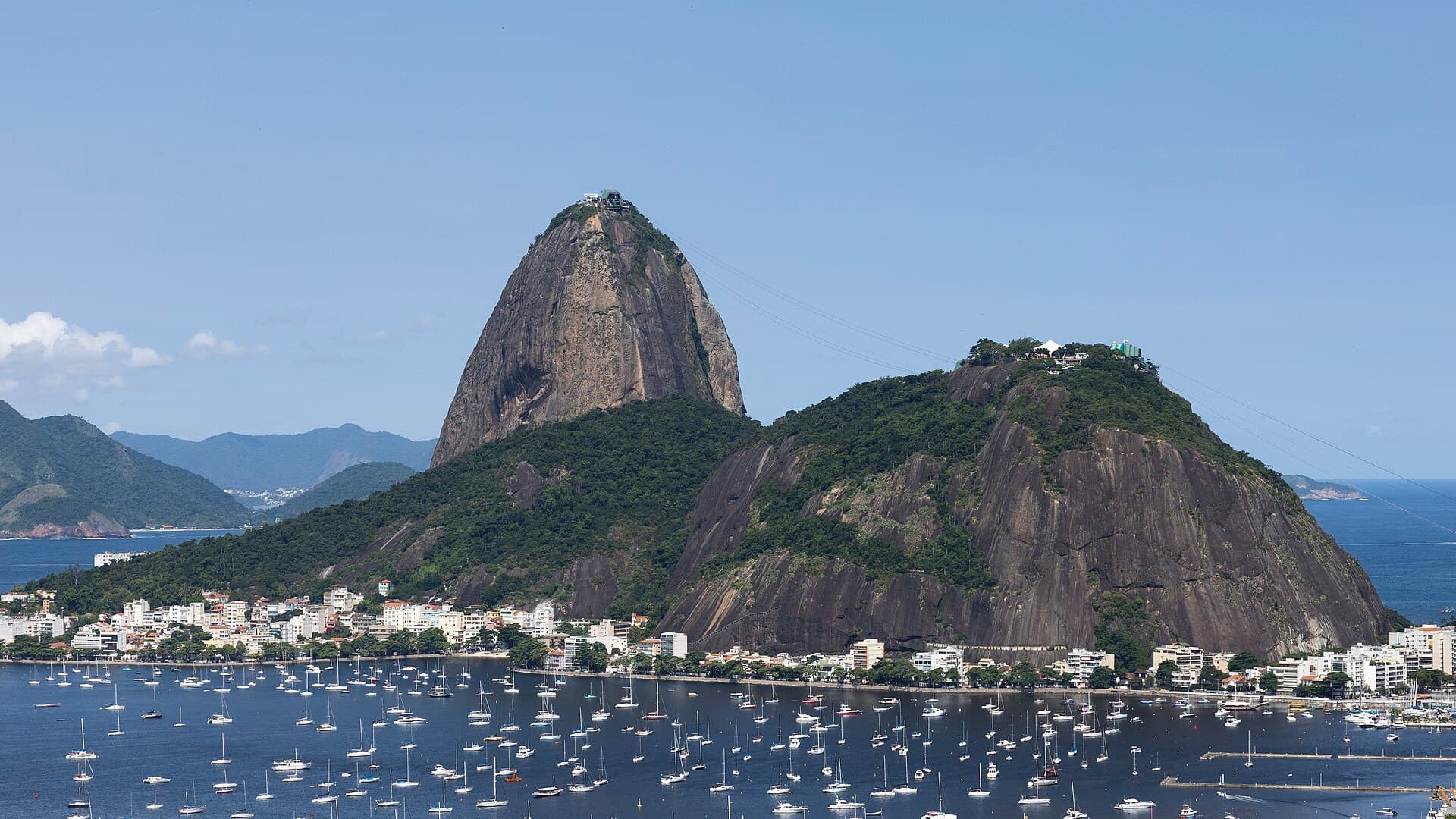 Sugarloaf MountainSugarloaf Mountain, Pão de Açúcar in Portuguese, is a granite peak that rises 3916 minutes walk4.8
 Parque Estadual da ChacrinhaChacrinha Park is a small nature reserve in the middle of Copacabana, one of Rio17 minutes walk4.6
It is the quieter eastern end of the same arc, by the Pedra do Leme and its fort.