
Robert Adam's facade
Three Palladian arches in Bath stone with a small dome at each end, seen whole only from the south bank.
Diego Delso — CC BY-SA 4.0 · NotFromUtrecht — CC BY-SA 3.0 · Photograph by Mike Peel (www.mikepeel.net). — CC BY-SA 4.0 · Photograph by Mike Peel (www.mikepeel.net). — CC BY-SA 4.0
Only four bridges in the world carry shops along both sides from end to end: the Ponte Vecchio in Florence, the Rialto in Venice, the Krämerbrücke in Erfurt, and this modest one in Bath. Pulteney Bridge differs from its siblings in one way: cross it without paying attention and you will not realise you are on a bridge at all. You are simply walking a short street of honey-coloured stone between shopfronts and small tea rooms, the river entirely hidden behind the walls. That is the fact that should shape your visit. The famous view is not from the bridge but of it, from the south bank. Stand on Grand Parade, or drop down into Parade Gardens below it, and you see Robert Adam's three Palladian arches, a little leaded dome at each end, and the horseshoe weir curling underneath. The weir is a relative newcomer, built between 1968 and 1972 for flood control, and it is the spot the 2012 film of Les Misérables used for Javert's final scene. The bridge itself went up between 1769 and 1774 to join the city to the Pulteney family's land across the Avon, and it is Grade I listed. Two plain caveats. First, it is not pedestrianised: buses and taxis still cross, and the pavements are narrow, so keep a hand on the pushchair and do not let small children run ahead. Second, only the south face is the elegant one; the north side is a jumble of shop backs added later, and not worth walking round for. From beneath the bridge, beside the weir, river boats run to Bathampton and back in about an hour, 15 pounds for adults and 5 for children, no booking, pay on board, most days of the year when the river allows. In July and August the gardens and pavements fill up, but the photograph is always available because nobody can stand in front of a river. Bath Spa station is about ten minutes on foot, the Roman Baths five, so treat the bridge as a stop on your walk rather than a destination in itself.
Three Palladian arches in Bath stone with a small dome at each end, seen whole only from the south bank.
The horseshoe weir of 1968-72 is where Javert meets his end in the 2012 film, and its roar fills the gardens below.
An hour on the Avon to Bathampton and back, no booking needed, a welcome sit-down for children tired of walking.
Bridge Street, Bath BA2 4AT
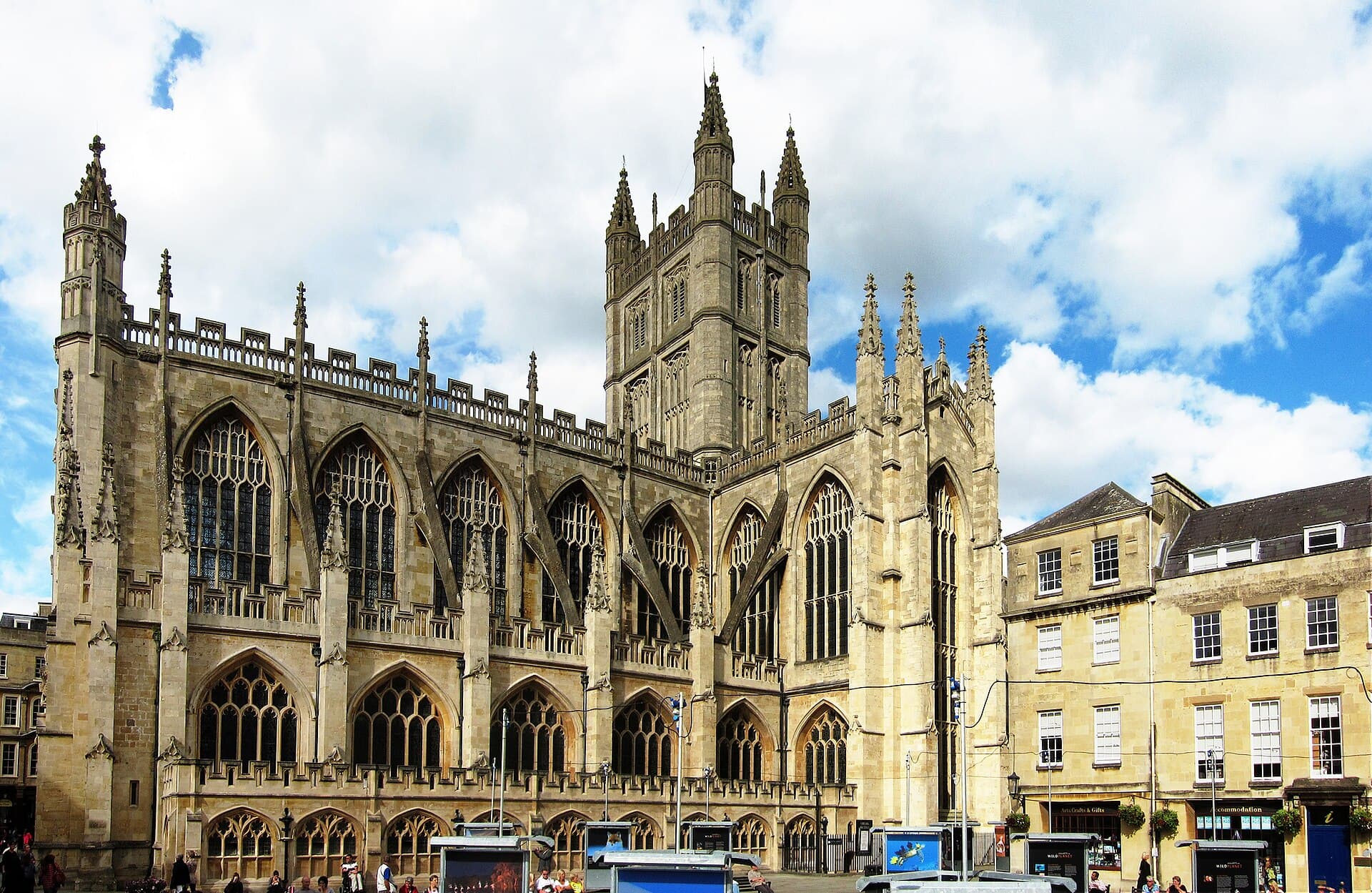 Bath AbbeyCarved angels climb stone ladders up the west front of Bath Abbey, and a few of 3 minutes walk4.5
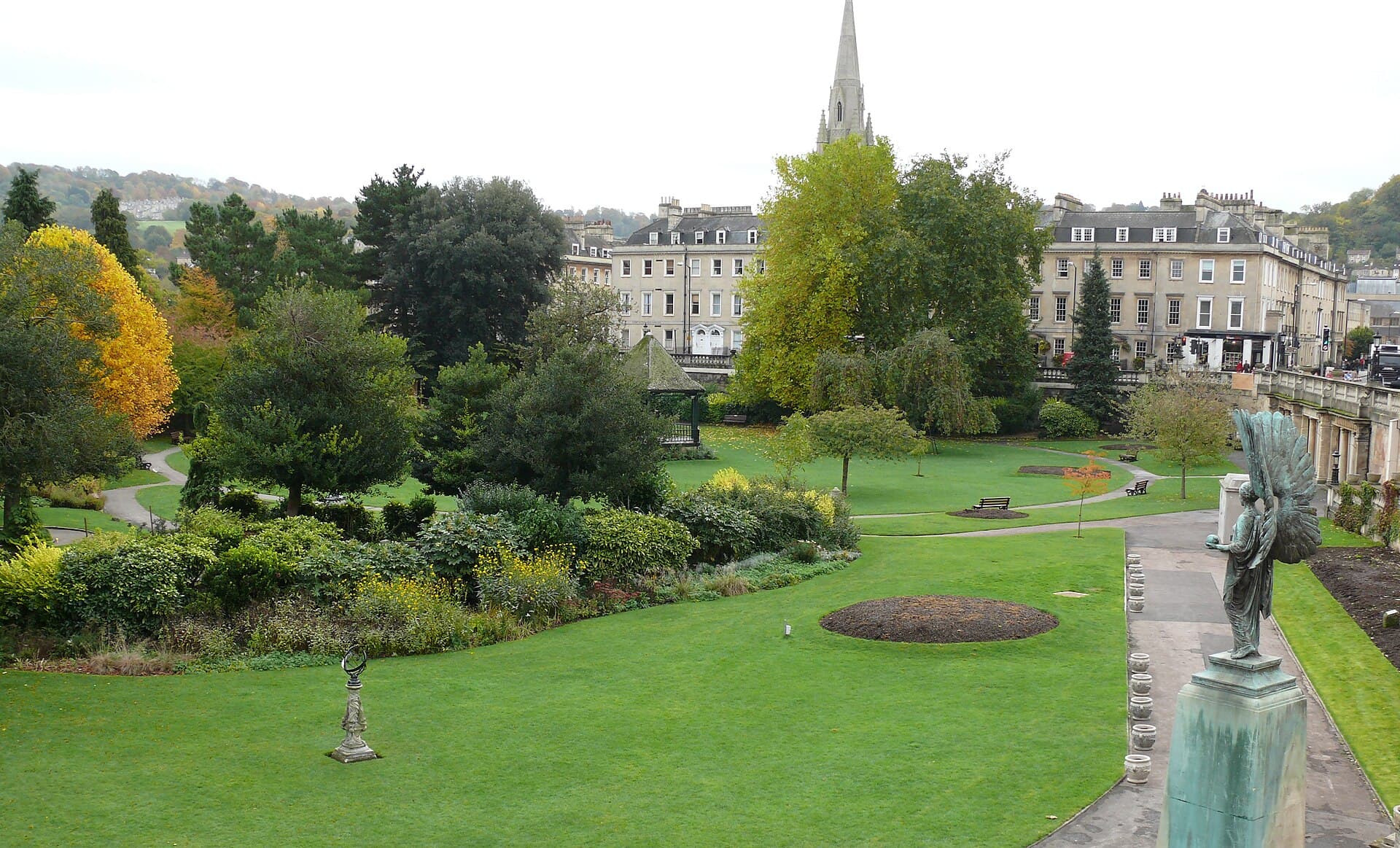 Parade GardensFor well over a century this sunken garden charged a small toll to anyone who wa3 minutes walk4.6
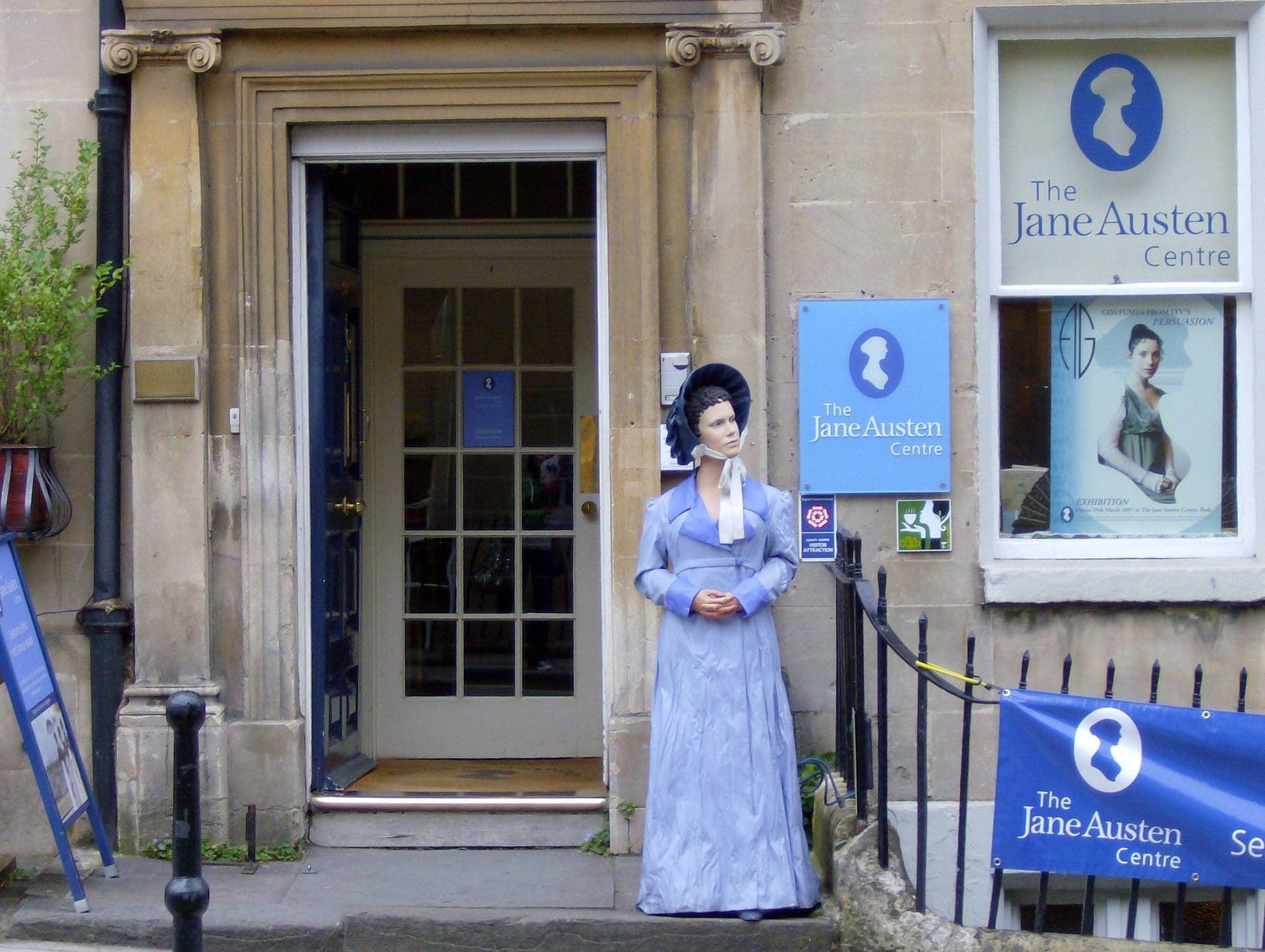 The Jane Austen CentreJane Austen never lived here. She lodged for a few months in 1805 at number 25, 5 minutes walk4.4
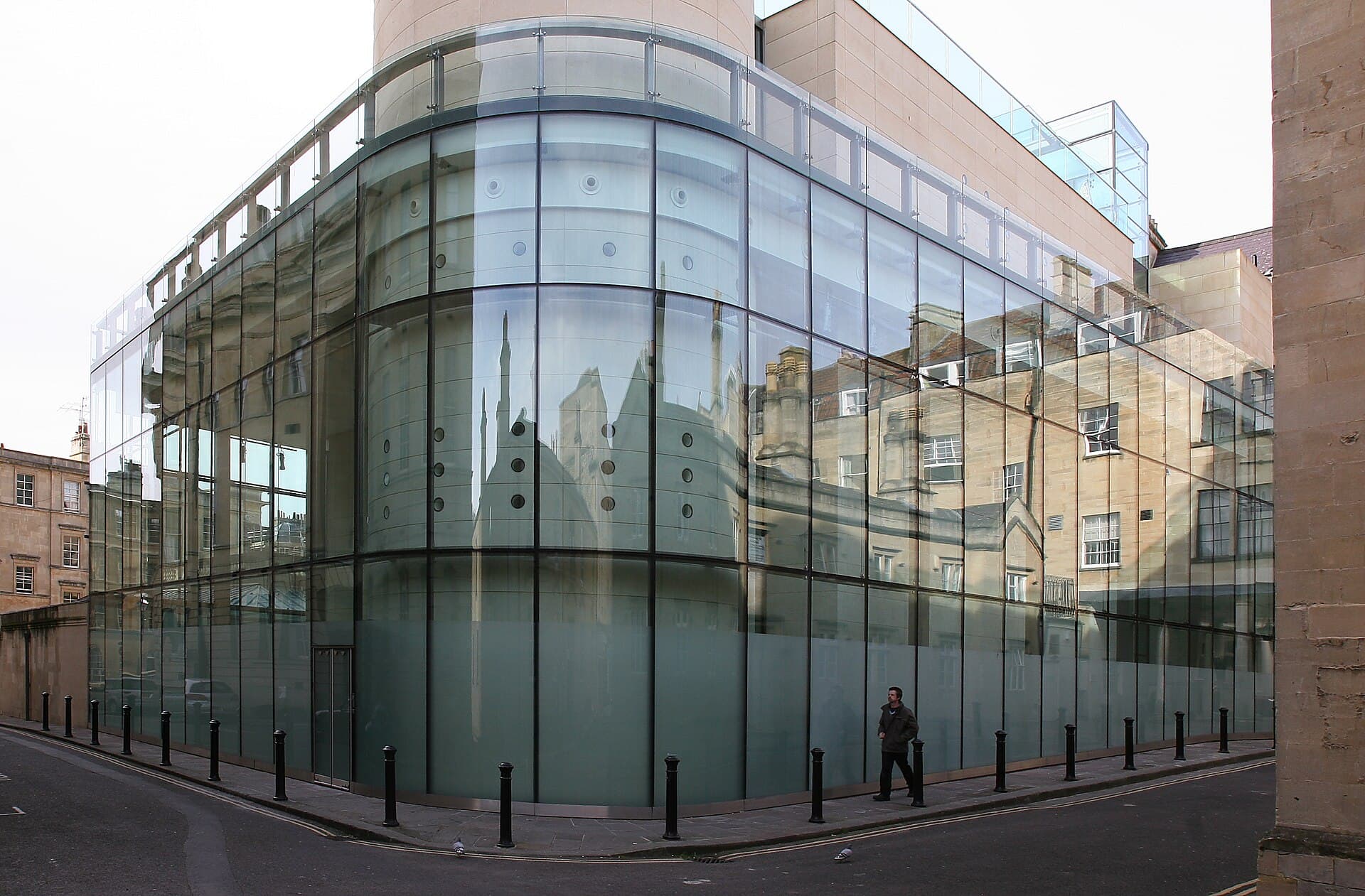 Thermae Bath SpaTwo minutes away at the Roman Baths you look at the hot water and are forbidden 5 minutes walk4.3
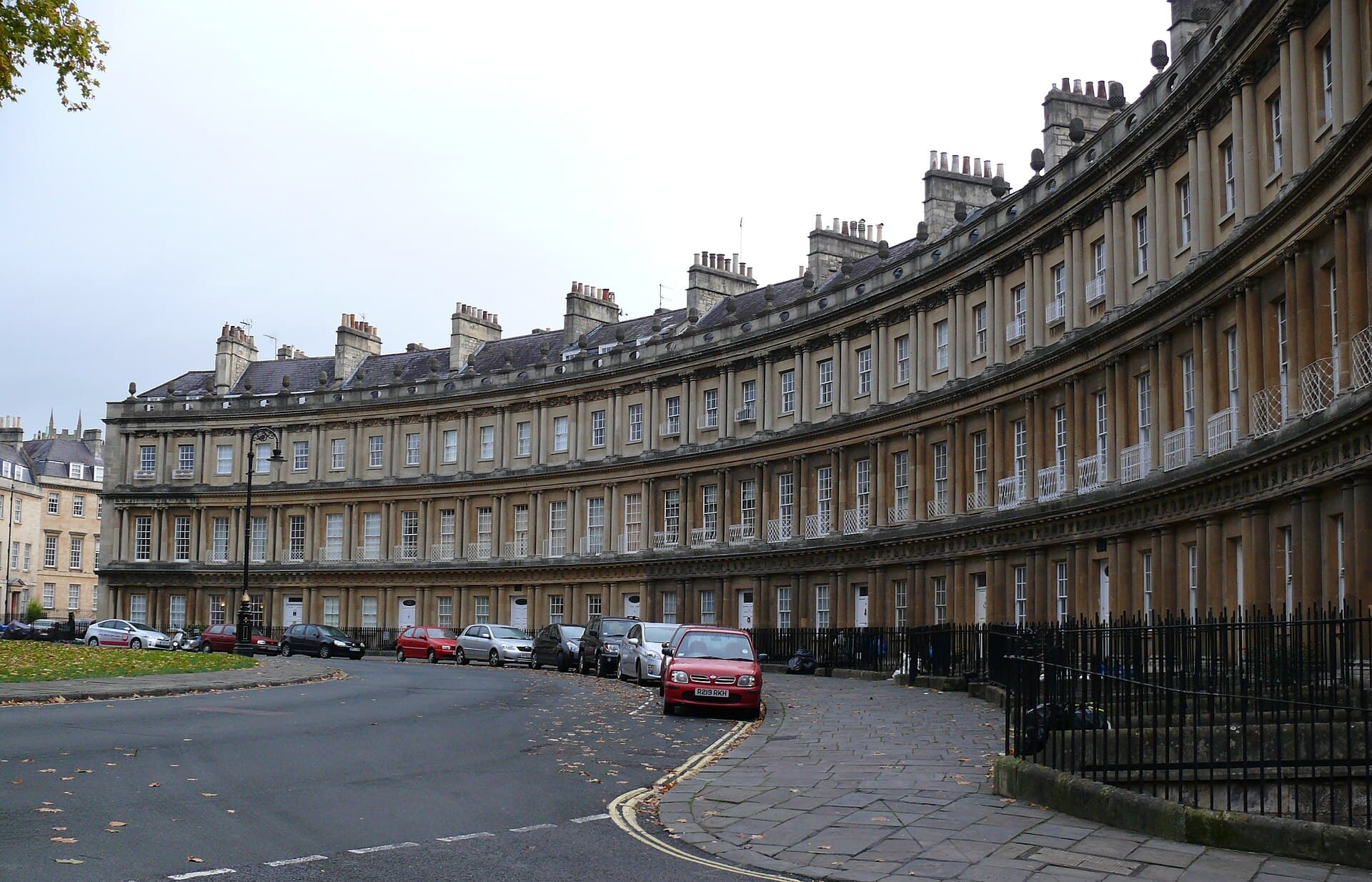 The Circus, BathThe diameter of this ring of stone is, give or take a few feet, that of Stonehen7 minutes walk4.4
Look at it in passing, but from the right spot. Walking across shows you nothing because the shops hide the river, so pause on Grand Parade for the photograph and, if you have children, go down to the gardens or take the boat. More than half an hour here is overdoing it.
The Ponte Vecchio is longer, older, far more famous and far more crowded, and its shops sell jewellery. Pulteney is smaller and calmer, its shops are tea rooms and gifts, and its real advantage is that the view from the bank with the weir beneath is prettier than its Florentine counterpart.