
The vaulted passage
Original Roman stone beneath the streets.
Raimond Spekking — CC BY-SA 4.0 · Raimond Spekking — CC BY-SA 4.0 · Raimond Spekking — CC BY-SA 4.0
Beneath the old streets of Cologne runs a Roman stone passage still standing after eighteen centuries: the main sewer the Romans built in the first or second century AD to serve Colonia Claudia Ara Agrippinensium — the settlement that gave the city its present name. The passage is built of stone, wide enough for a person to walk almost upright, with a vaulted roof and a floor pitched at a calculated gradient to move the water. What is striking is not its size but the quality of its execution: the gradients and levels were worked out precisely enough that the system runs on gravity alone, and part of it stayed in genuine service for centuries after the Romans left. The section open to visitors is short — around a hundred metres beneath the city centre — entered by a narrow stair. The visit is very brief, but it is about as close as you can get to touching Cologne's Roman layer directly. The whole city is built over a major Roman settlement, and the nearby Romano-Germanic Museum explains the full context.
Original Roman stone beneath the streets.
The whole city sits on a Roman settlement.
Kleine Budengasse, 50667 Cologne
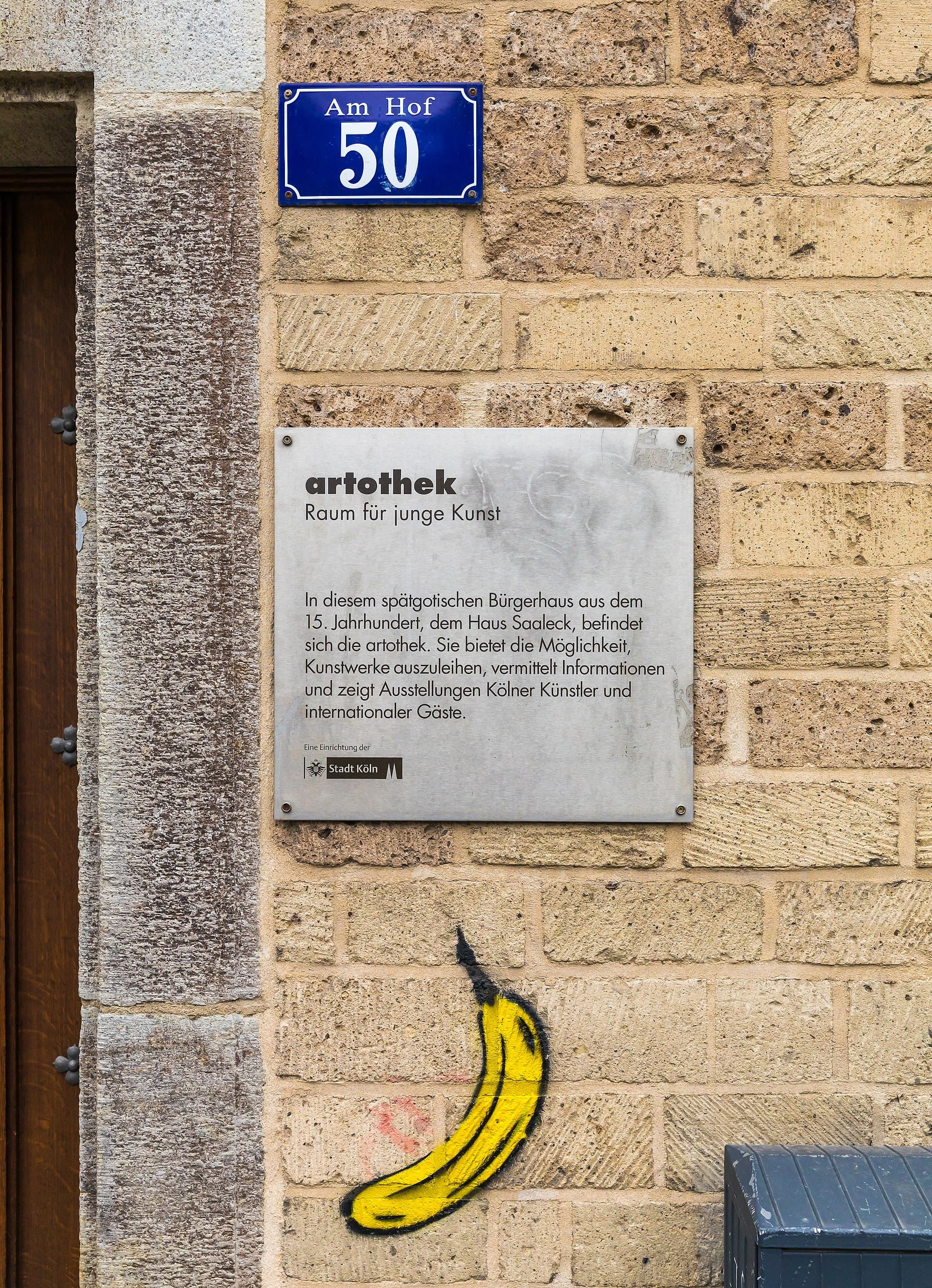 The Artothek — art lending libraryA municipal art institution in central Cologne working on an unusual principle: 1 minute walk4.6
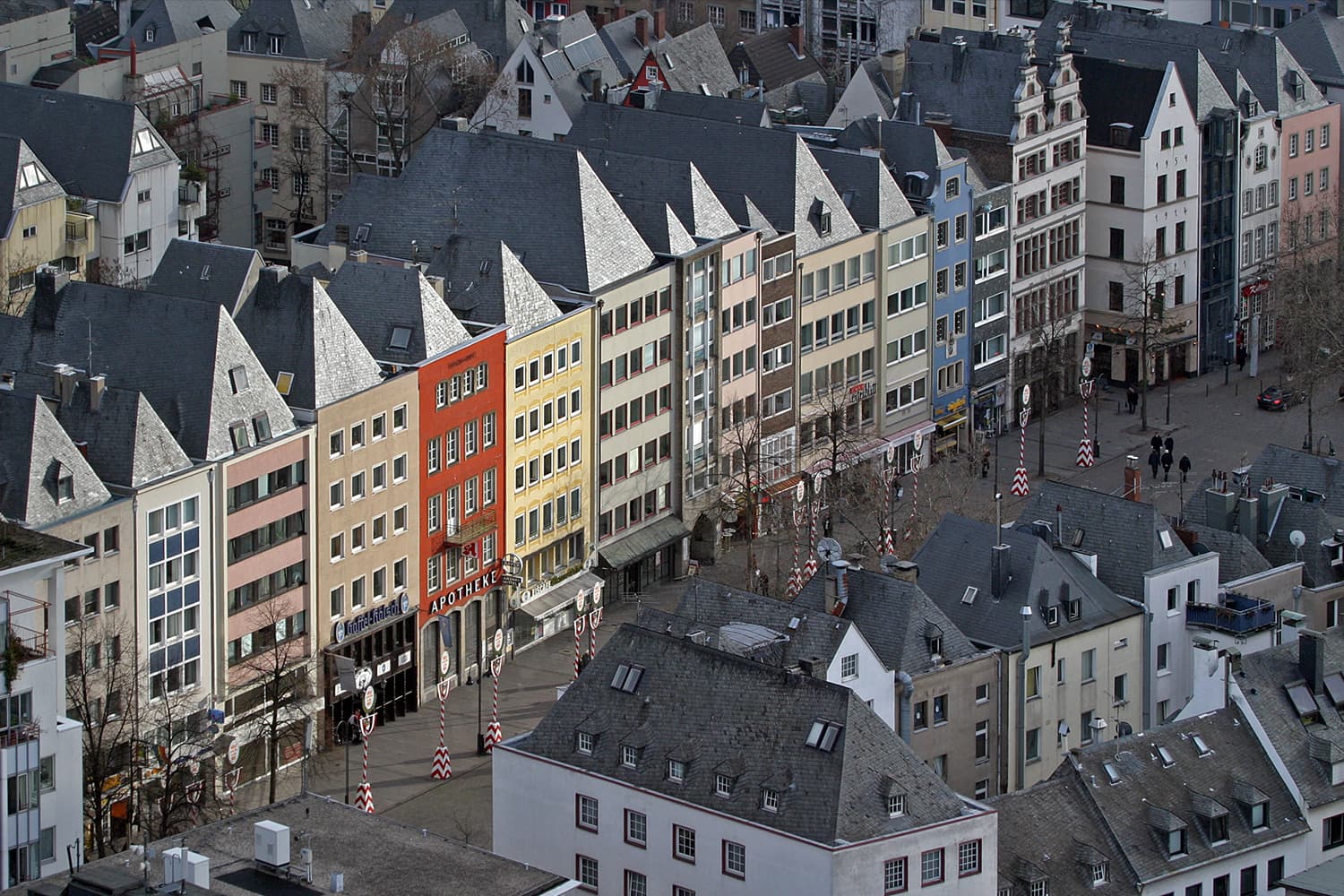 Alter MarktThe Alter Markt is Cologne's oldest square and was the city's trading centre fro2 minutes walk4.4
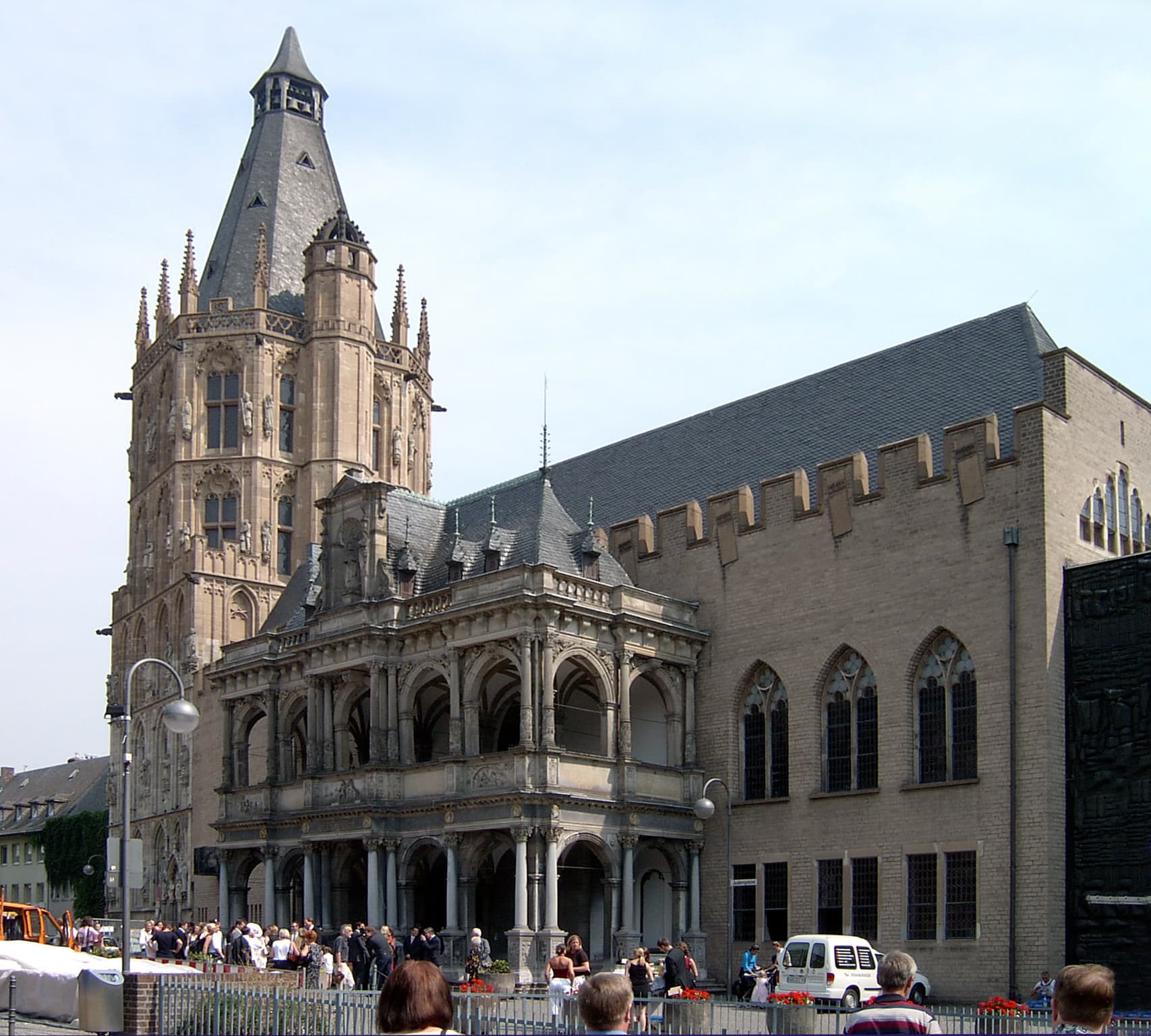 Cologne Historic City HallCologne's Rathaus is Germany's oldest working city hall: documented since 1135, 2 minutes walk4.3
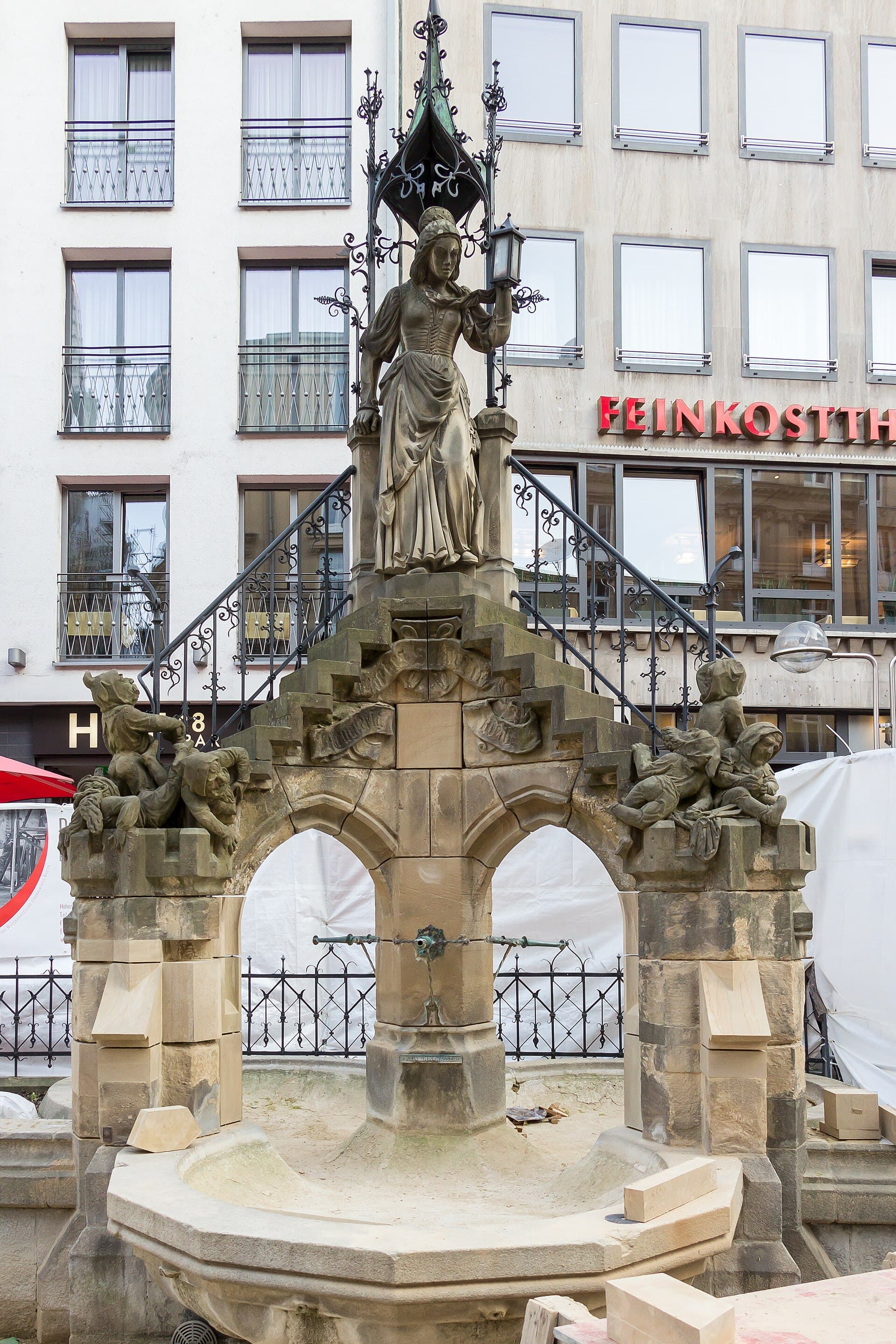 Heinzelmännchen FountainThe Heinzelmännchen Fountain is a small stone fountain near the cathedral that t2 minutes walk4.4
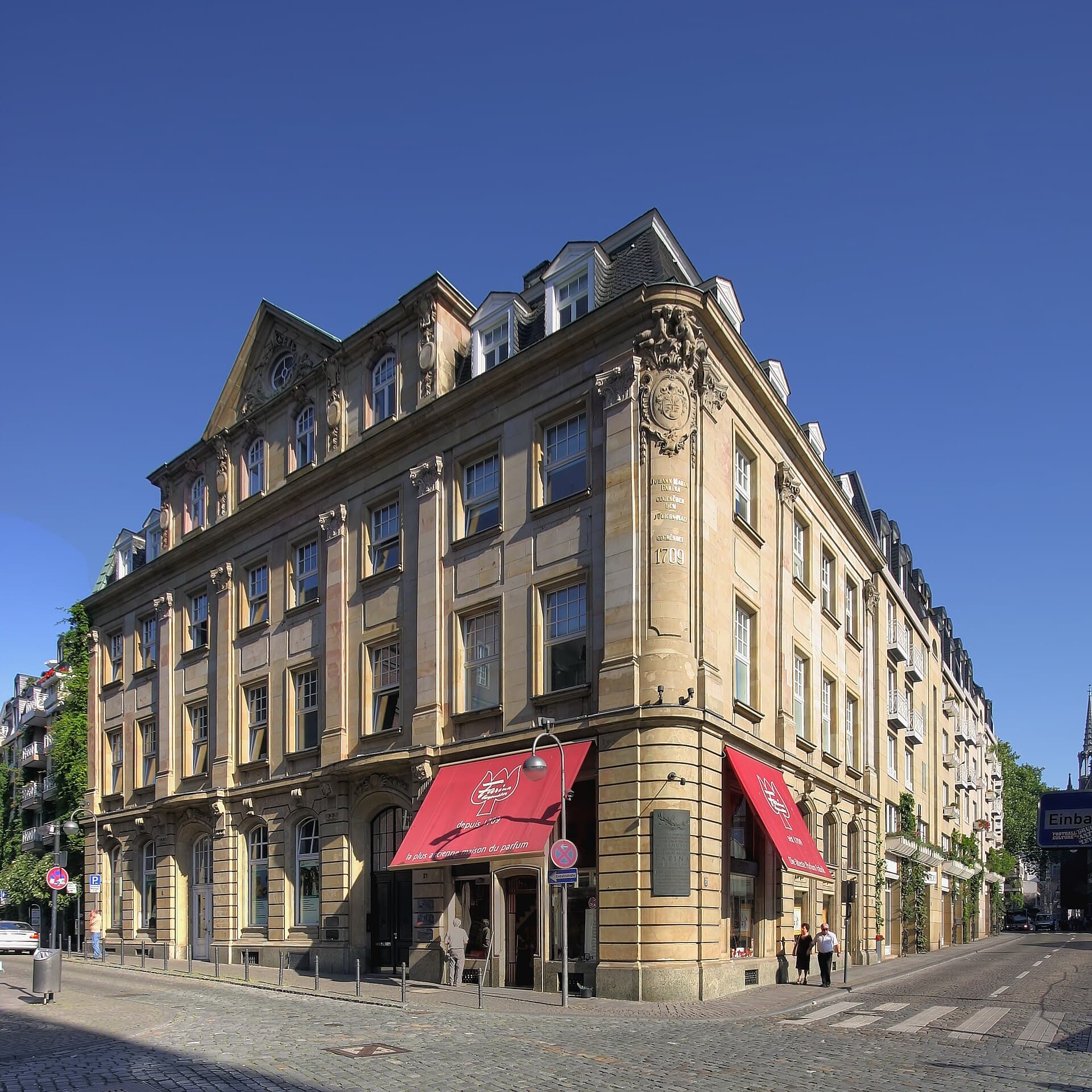 Farina Fragrance MuseumThe Farina Fragrance Museum stands where modern perfume was born. In 1709 the It2 minutes walk4.5
Colonia Claudia Ara Agrippinensium — named in AD 50 for Agrippina the Younger, wife of the emperor Claudius, who was born here and asked that the settlement be raised to the rank of colonia, a Roman town with full rights. The name shortened across the centuries to Köln in German and Cologne in other languages — so the city's name today is simply the Latin word for colony.