
The old kitchen
Blackened flues and copper vessels left as they were.
Janmad — CC BY-SA 2.0 · Alexxx1979 — CC BY-SA 4.0 · Alexxx1979 — CC BY-SA 4.0 · Alexxx1979 — CC BY-SA 4.0
**The largest, oldest and highest of the Meteora monasteries** — on a summit of about **613 m**, and also known as the Monastery of the Transfiguration of the Saviour. It was founded in the 14th century by **Athanasios the Meteorite**, the first man to climb this rock and settle on it, and the one who gave it the name "meteoro". It was enlarged after him by **Ioasaph**, who before taking vows was a Serbian prince of a ruling house — he gave up his throne and came up here. It is the only one that feels like a **full complex** rather than a small monastery: a domed main church with 16th-century frescoes, an **old kitchen** with its blackened flues and copper vessels, a huge **monks' refectory** turned into a museum, and the **rope house**, where the original net and windlass people were hauled up in are displayed. ⚠ There is also an **ossuary**, where the skulls of dead monks are ranged on shelves — an old Orthodox practice, but be ready for it. ⚠ And the climb is about **300 steps**, the hardest of the six monasteries.
Blackened flues and copper vessels left as they were.
The original net and windlass the monks were hauled up in.
A dome and 16th-century frescoes with their colour preserved.
Meteora, 42200 Kalabaka, Trikala, Greece
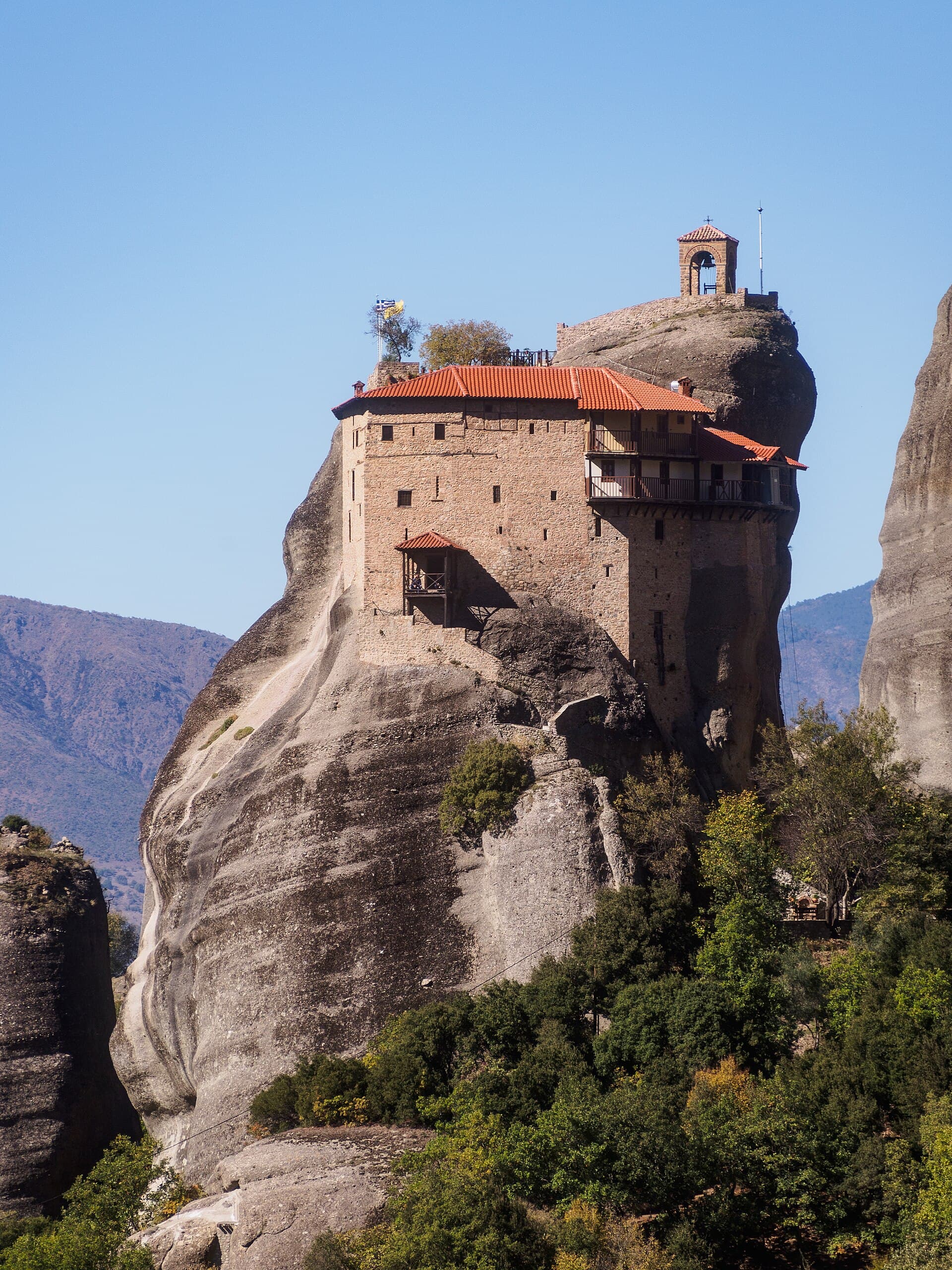 The Monastery of St Nicholas AnapafsasThe smallest of the Meteora monasteries and the first on the way up from the vil4 minutes walk4.6
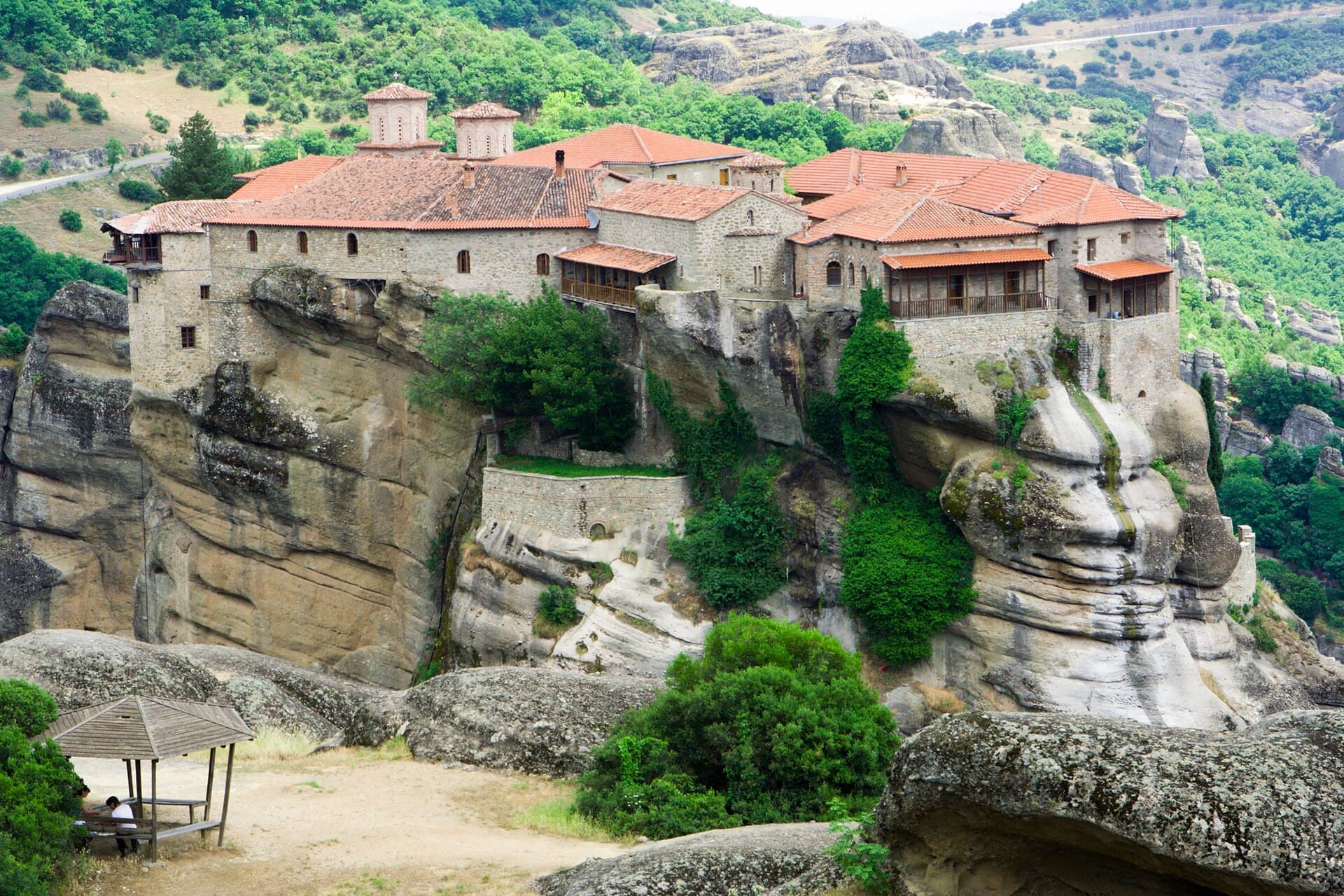 Varlaam Monastery**The second largest of the Meteora monasteries, and the best for frescoes** — a4 minutes walk4.9
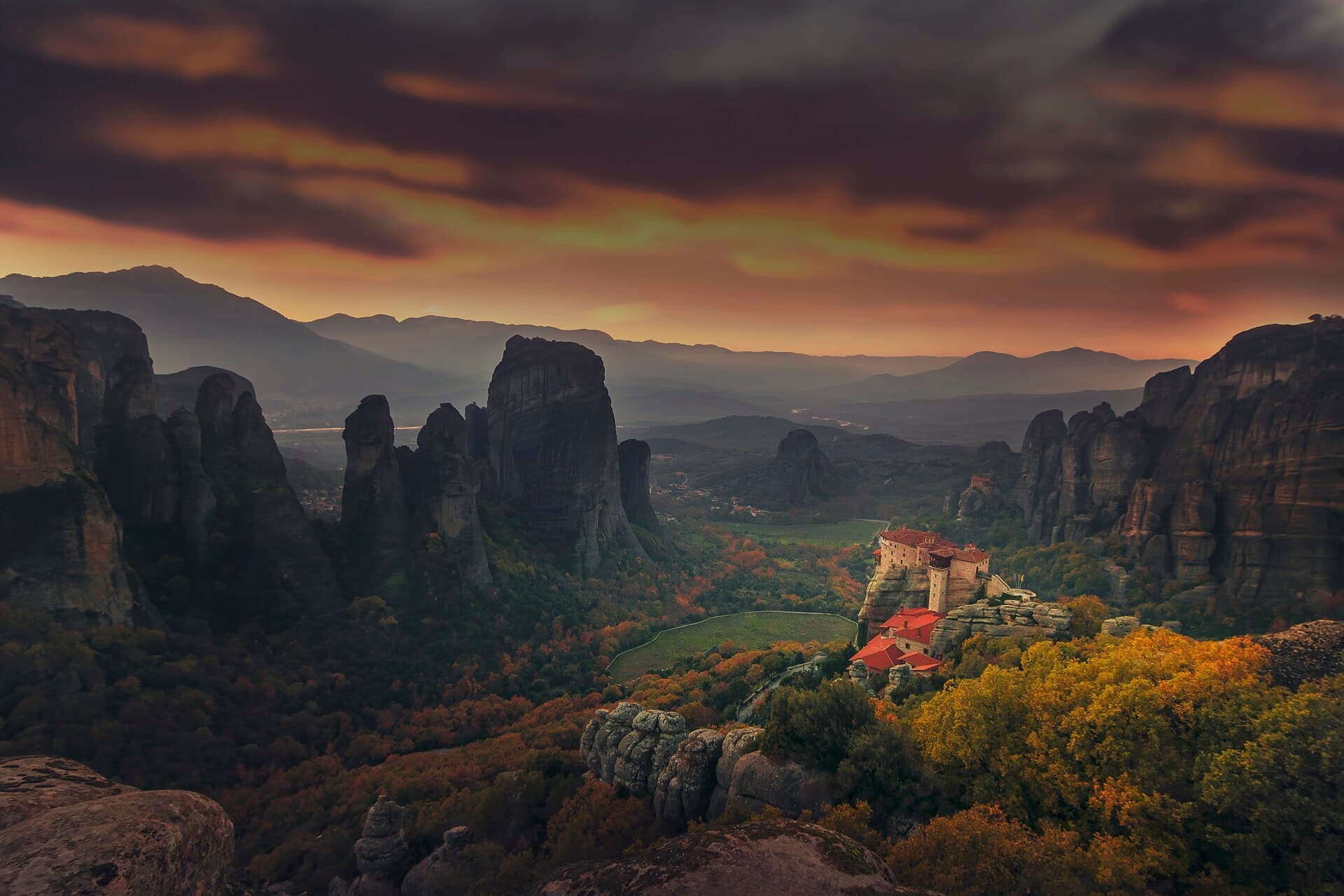
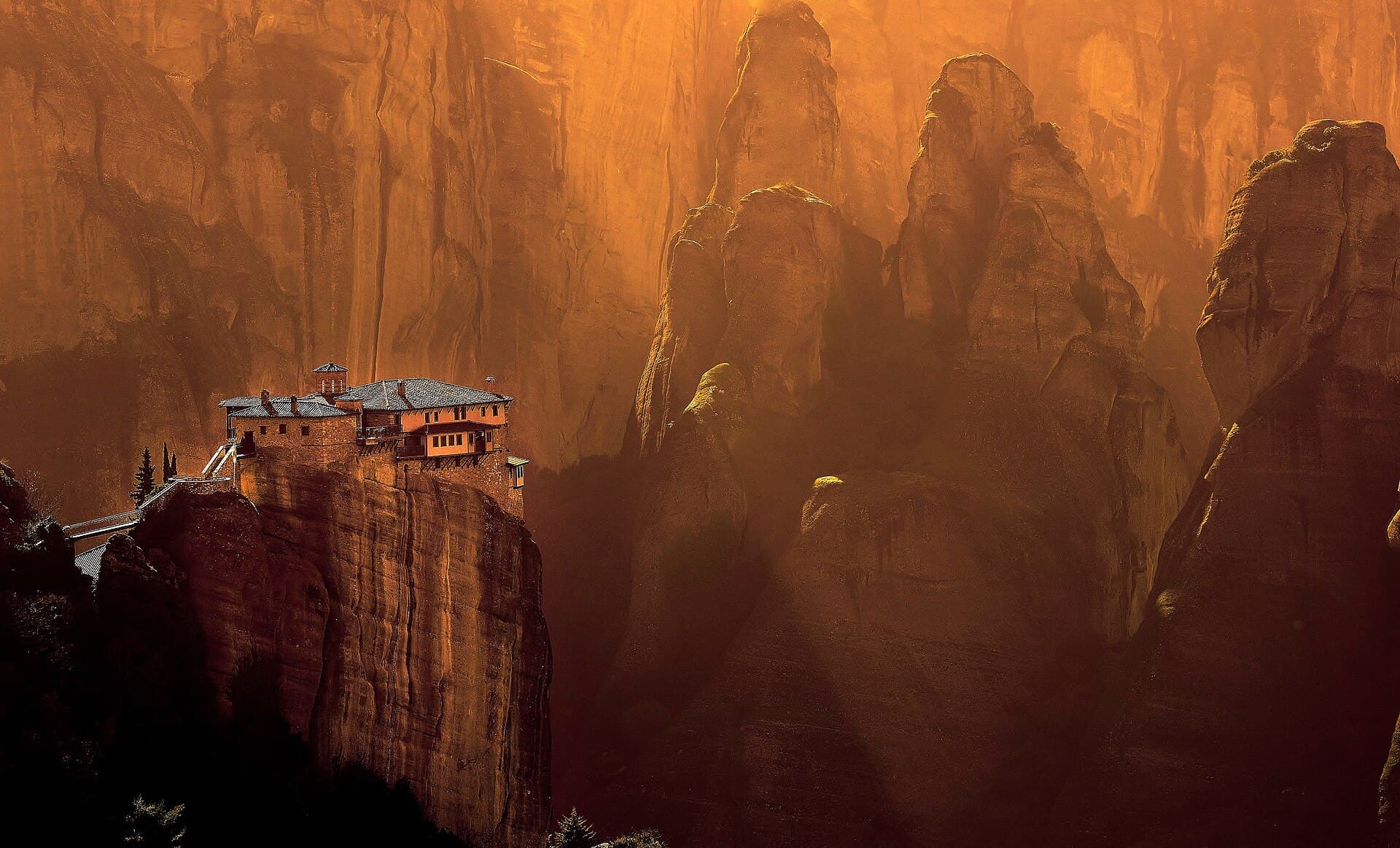 Roussanou Monastery**The monastery in every photograph of Meteora** — because it sits on a **narrow9 minutes walk4.7
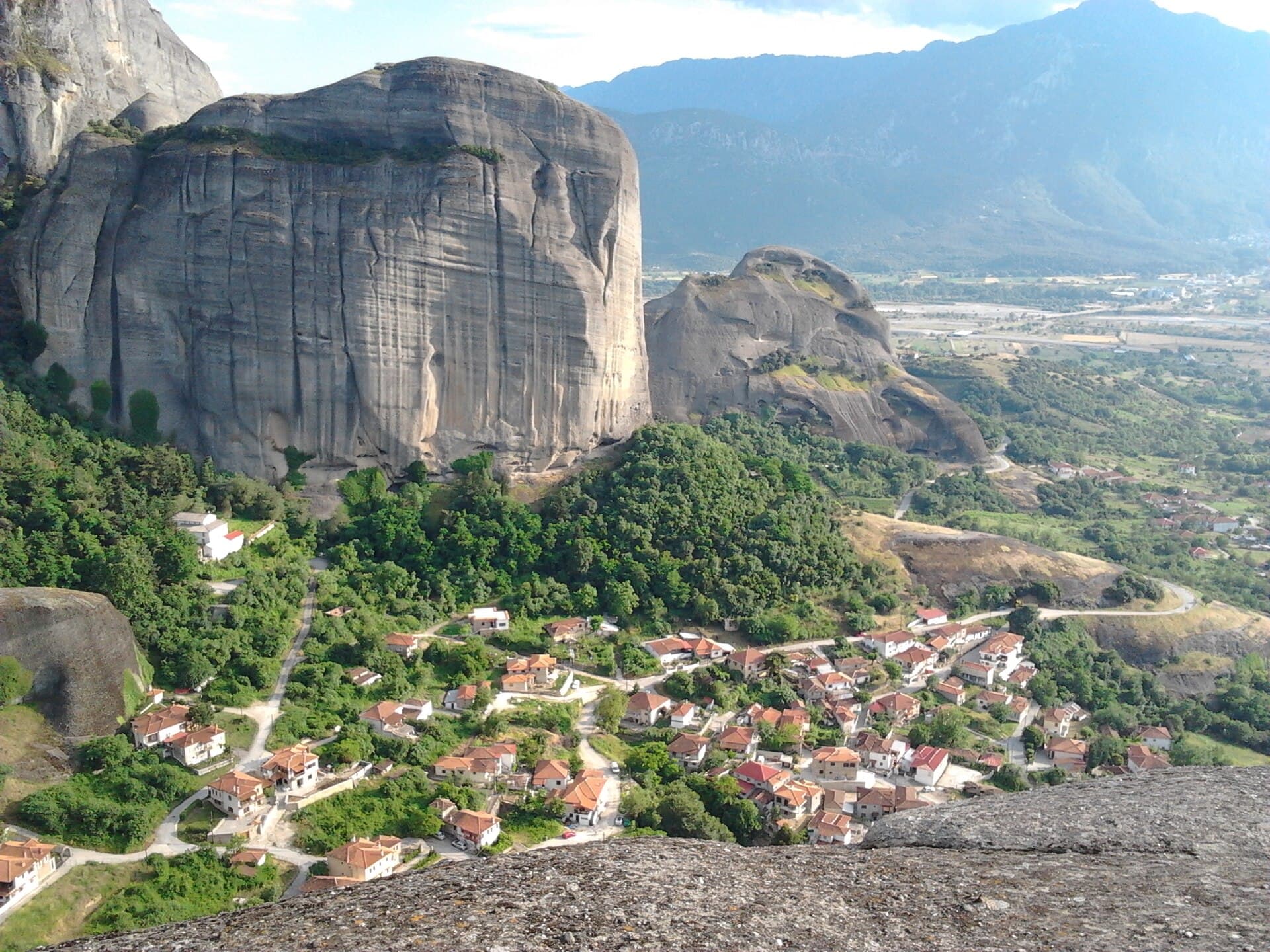 Kastraki**The village that sits directly beneath the rocks** — the nearest inhabited pla15 minutes walk
 The Meteora MonasteriesMeteora is suspended in air literally and by name: giant sandstone towers geolog19 minutes walk4.8
**Yes, relatively hard — and within this monastery there is no alternative.** The sequence is: first a short flight down from the car park over a bridge, then **about 300 stone steps** cut into the rock, some steep and uneven, with stretches in full sun. For a regular walker: ten to fifteen minutes with pauses. ⚠ For anyone with **a knee, heart or breathing problem**, or carrying **a small child** on a hot day, this is not the place. **The right alternative is St Stephen's** — entered over a **level bridge with almost no steps**, the best choice for anyone who needs it, with a church, a small museum and an excellent view over Kalambaka. And for everyone: **water, the handrail and closed shoes**, and climb in the morning rather than at midday.
**An old Orthodox monastic practice, not a spectacle.** In many Orthodox monasteries — and on Mount Athos especially — a monk is buried at death, and **his bones are exhumed years later**, washed, and the skull placed in a dedicated building alongside those of his predecessors, often inscribed with his name and date. The reason is both practical and spiritual: **space on a rock summit is extremely limited** and cannot support an expanding cemetery, and the spiritual idea is that a monk confronts his own mortality daily and does not forget it. ⚠ **As a visitor**: this is a place for respect rather than curiosity — no photography, no raised voices, and anyone who would rather not see it simply walks on to the next room. With children, **explain before you go in** or skip it; it is the surprise that upsets, not the sight.