
The Katelanos frescoes
Preserved colour and precise faces over the walls and dome.
Dido3 — CC BY-SA 3.0 · Berthold Werner — CC BY-SA 3.0 · Berthold Werner — CC BY-SA 3.0 · Holger Uwe Schmitt — CC BY-SA 4.0
**The second largest of the Meteora monasteries, and the best for frescoes** — and the immediate neighbour of Great Meteoron, so the two are done in one morning. It carries the name of **Varlaam**, a hermit who climbed this rock in **1350**, lived on it alone and built a small church, after which it stood empty for two full centuries. In **1541** the **Apsaras** brothers from Ioannina climbed it and rebuilt everything — and the account has them completing the main church in **twenty days**, after spending years hauling building material to the top by rope. Its frescoes are the work of **Frangos Katelanos** (1548) and are among the finest surviving late Byzantine painting in Greece — preserved colour and precise faces covering the walls and the whole dome. There is also a **huge wooden barrel** that stored rainwater, its capacity reckoned in tens of tonnes — because there is no water on top of a rock. ⚠ The climb is about **195 steps**, lighter than its neighbour's.
Preserved colour and precise faces over the walls and dome.
A wooden rainwater cistern — there is no water on a rock summit.
The house from which people and supplies were hauled by rope.
Meteora, 42200 Kalabaka, Trikala, Greece
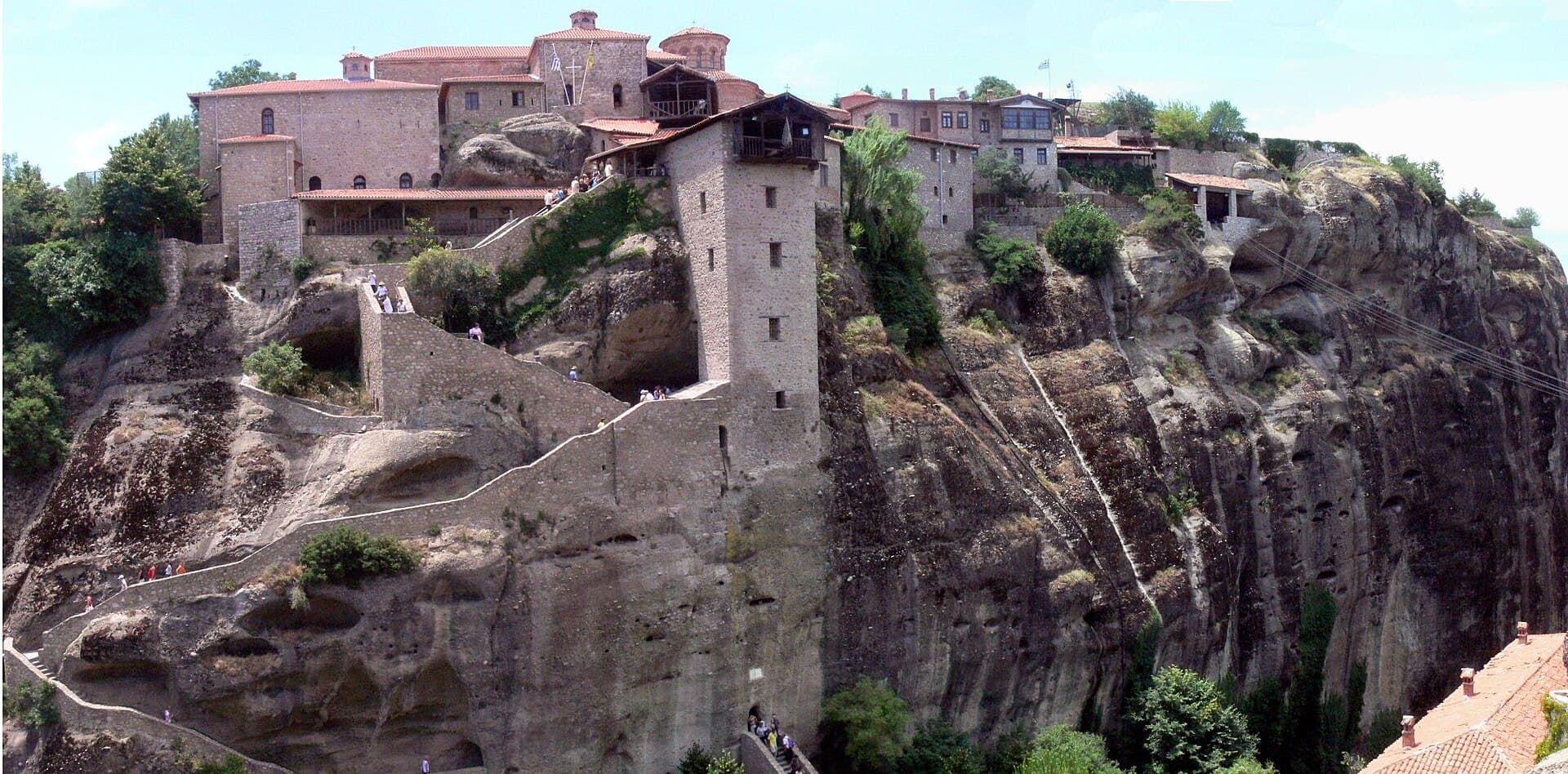 Great Meteoron Monastery**The largest, oldest and highest of the Meteora monasteries** — on a summit of 4 minutes walk4.7
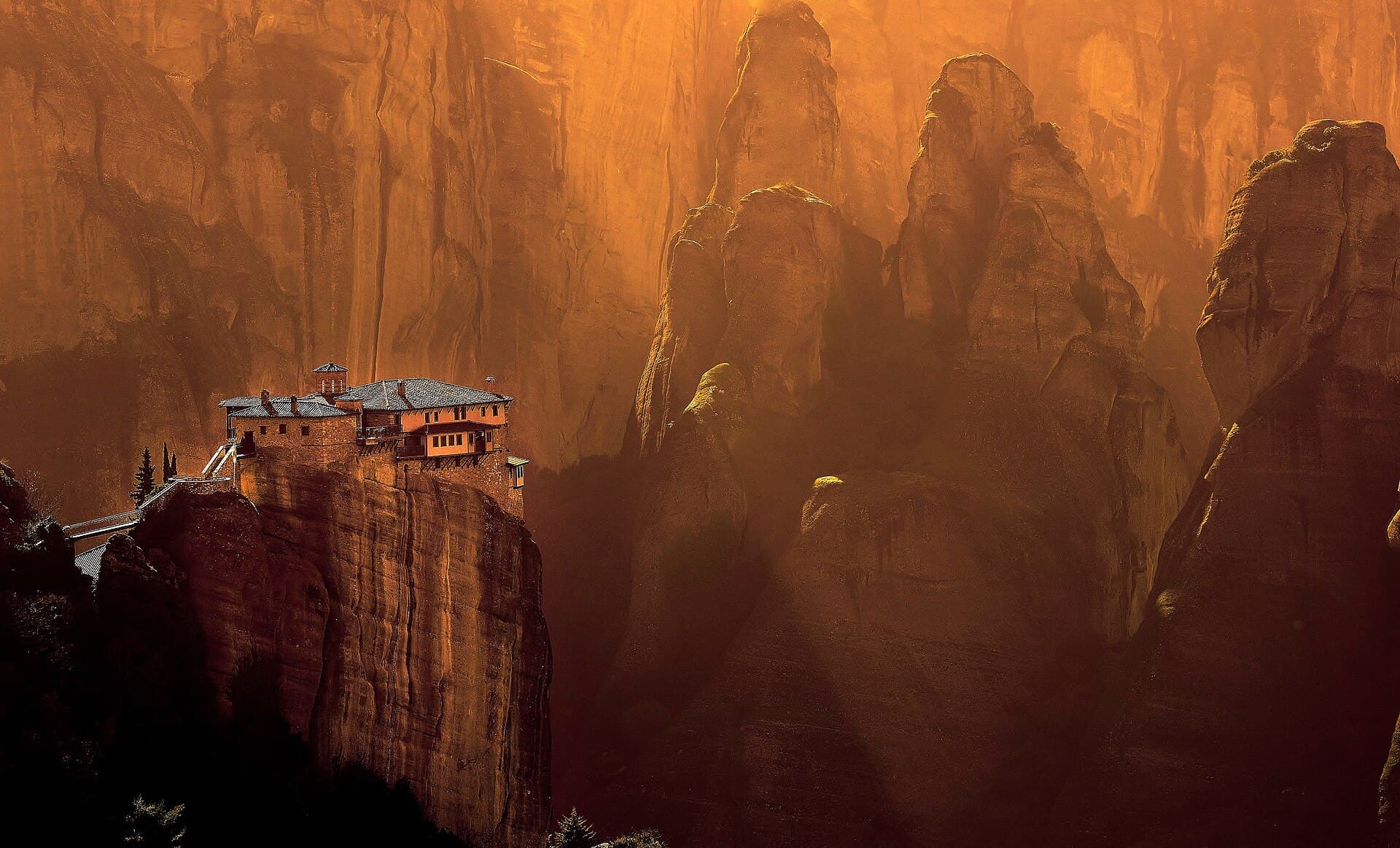 Roussanou Monastery**The monastery in every photograph of Meteora** — because it sits on a **narrow5 minutes walk4.7
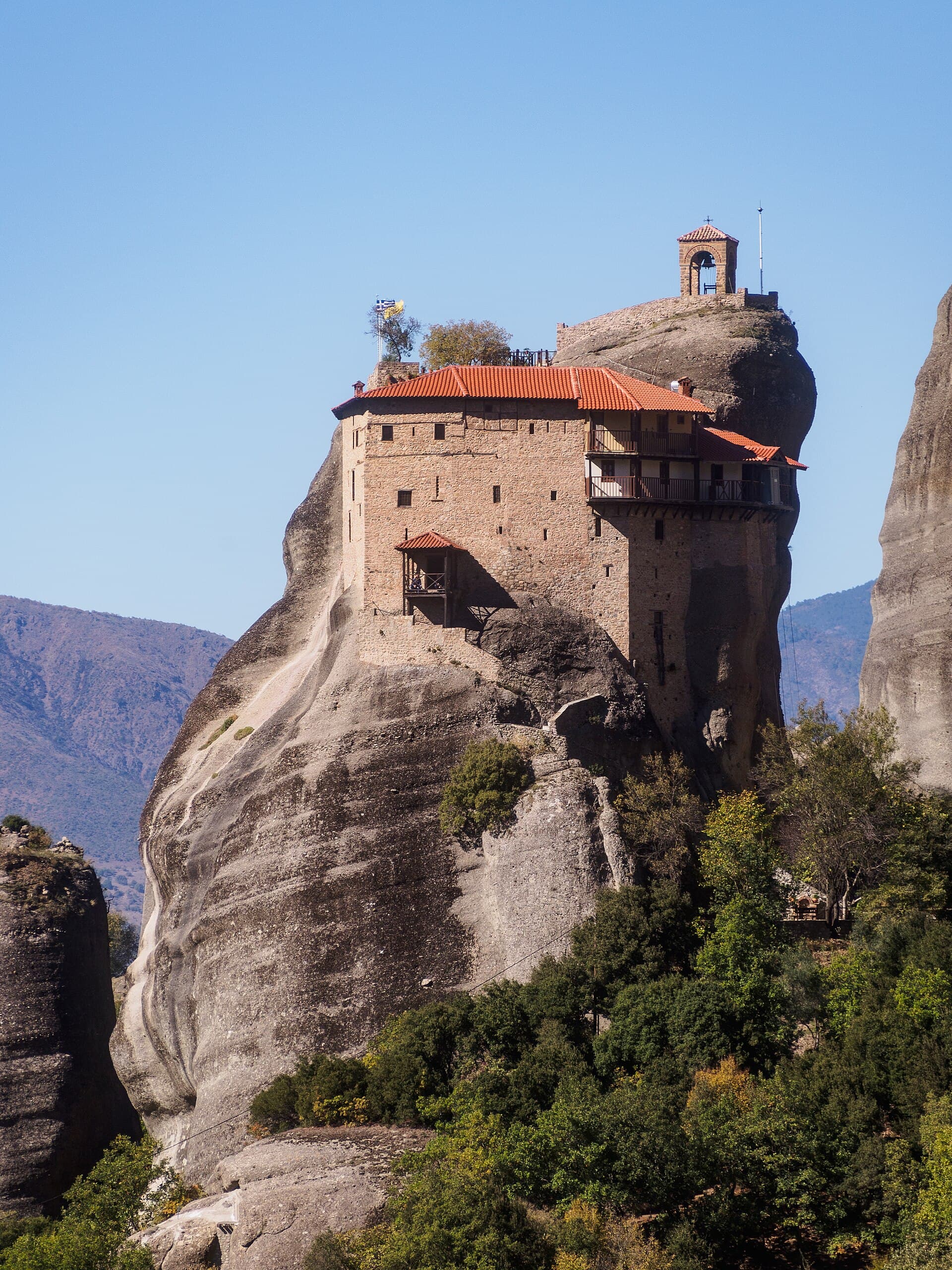 The Monastery of St Nicholas AnapafsasThe smallest of the Meteora monasteries and the first on the way up from the vil6 minutes walk4.6
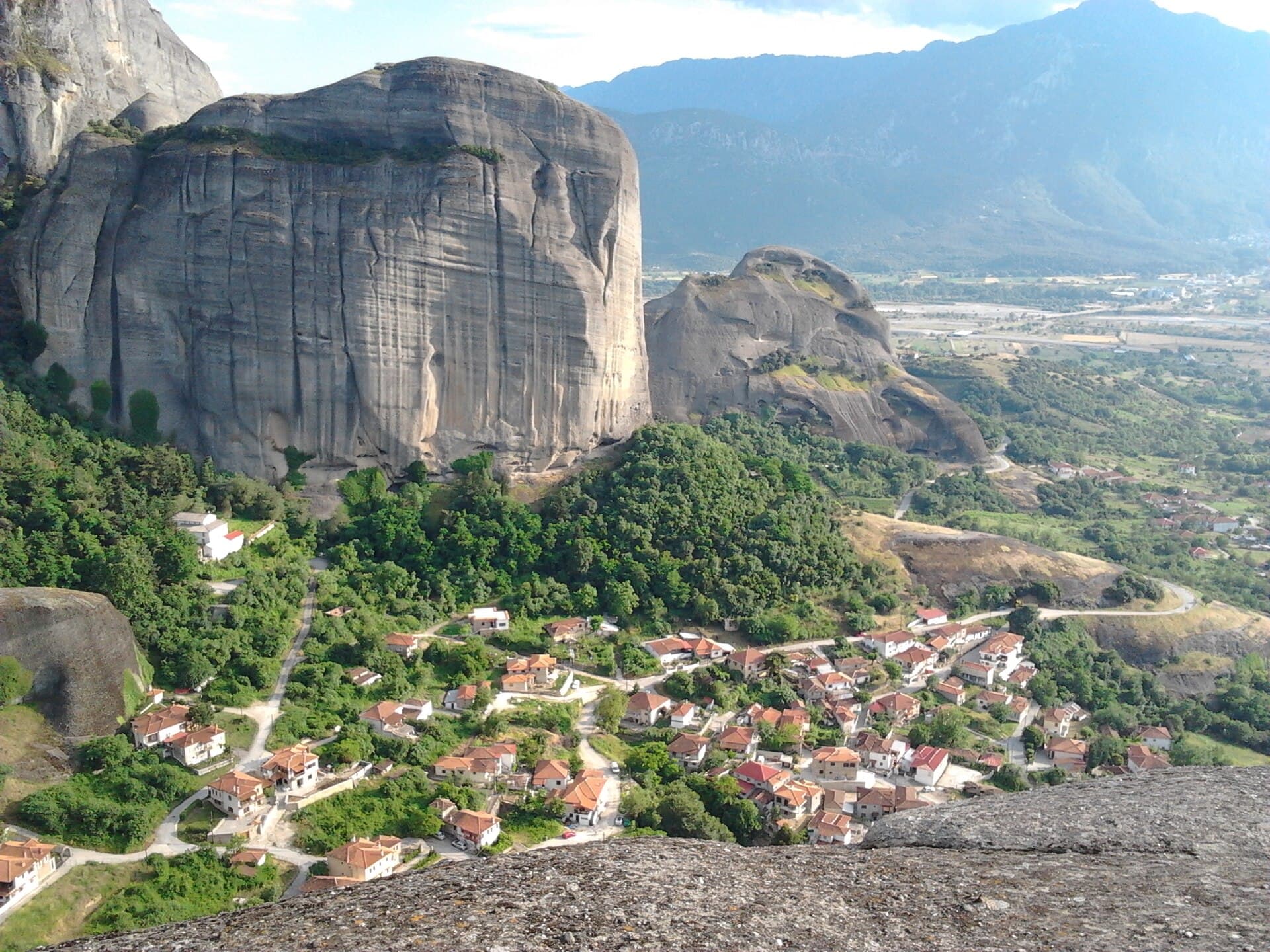 Kastraki**The village that sits directly beneath the rocks** — the nearest inhabited pla17 minutes walk
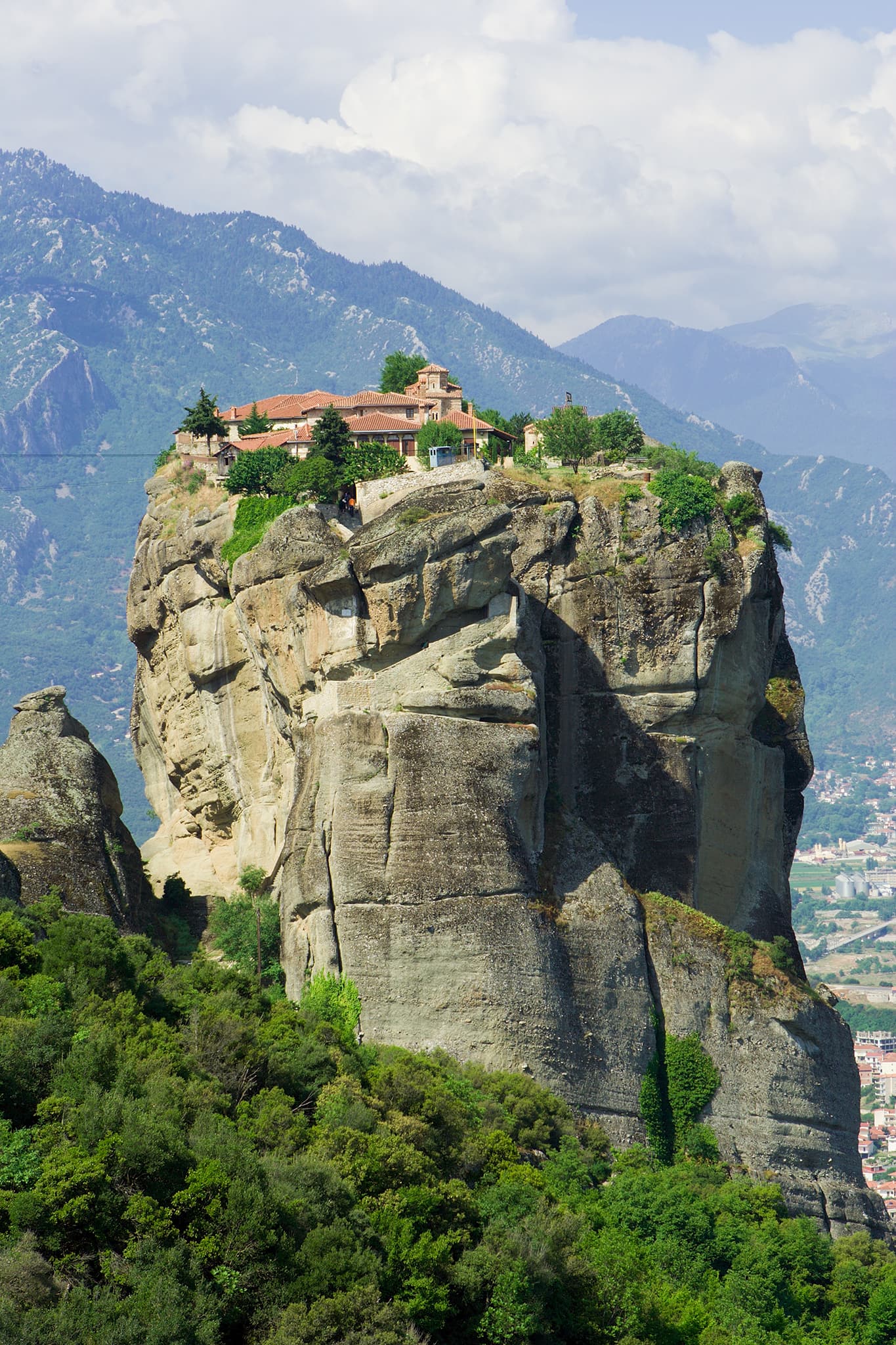 Holy Trinity Monastery**The most dramatically sited of the Meteora monasteries** — standing alone on a18 minutes walk4.7
**By rope, and with patience measured in years.** The method was a **wooden windlass** — a hand-turned winch — fixed in a house on the edge of the summit, with a thick rope hanging from it ending in a **net** or basket. Stone, timber and lime went into it — and people too — and the wheel was turned to raise them. The accounts of Varlaam specifically say the Apsaras brothers spent **years hauling material** before they began building, and then finished the church in **twenty days** once everything was on top. ⚠ And a famous Meteora anecdote: asked **when the rope was replaced**, a monk answered **«when it breaks»**. You can still see the house, the windlass and the net in place here and at Great Meteoron.
**For two reasons, one religious and one physical.** First, the church is **a working place of prayer**, not an exhibition hall, and photographing in it — especially with flash or noise — cuts across worshippers and monks. Second, **flash genuinely damages frescoes**: the pigments are five centuries old, and repeated exposure to strong light accelerates their fading, which is the standard reason in museums everywhere, not just at Meteora. ⚠ The rule applies **inside the churches only** — the courtyards, the views and the buildings from outside are all allowed, and those are the better photographs anyway. A practical suggestion: spend **two minutes looking at the dome without a phone**; the frescoes here deserve it more than any picture you will take.