The hall ceiling
Broad red and green bands with flowers.
Arina Pan — CC BY-SA 4.0 · Arina Pan — CC BY-SA 4.0 · Arina Pan — CC BY-SA 4.0 · Arina Pan — CC BY-SA 4.0 · Arina Pan — CC BY-SA 4.0
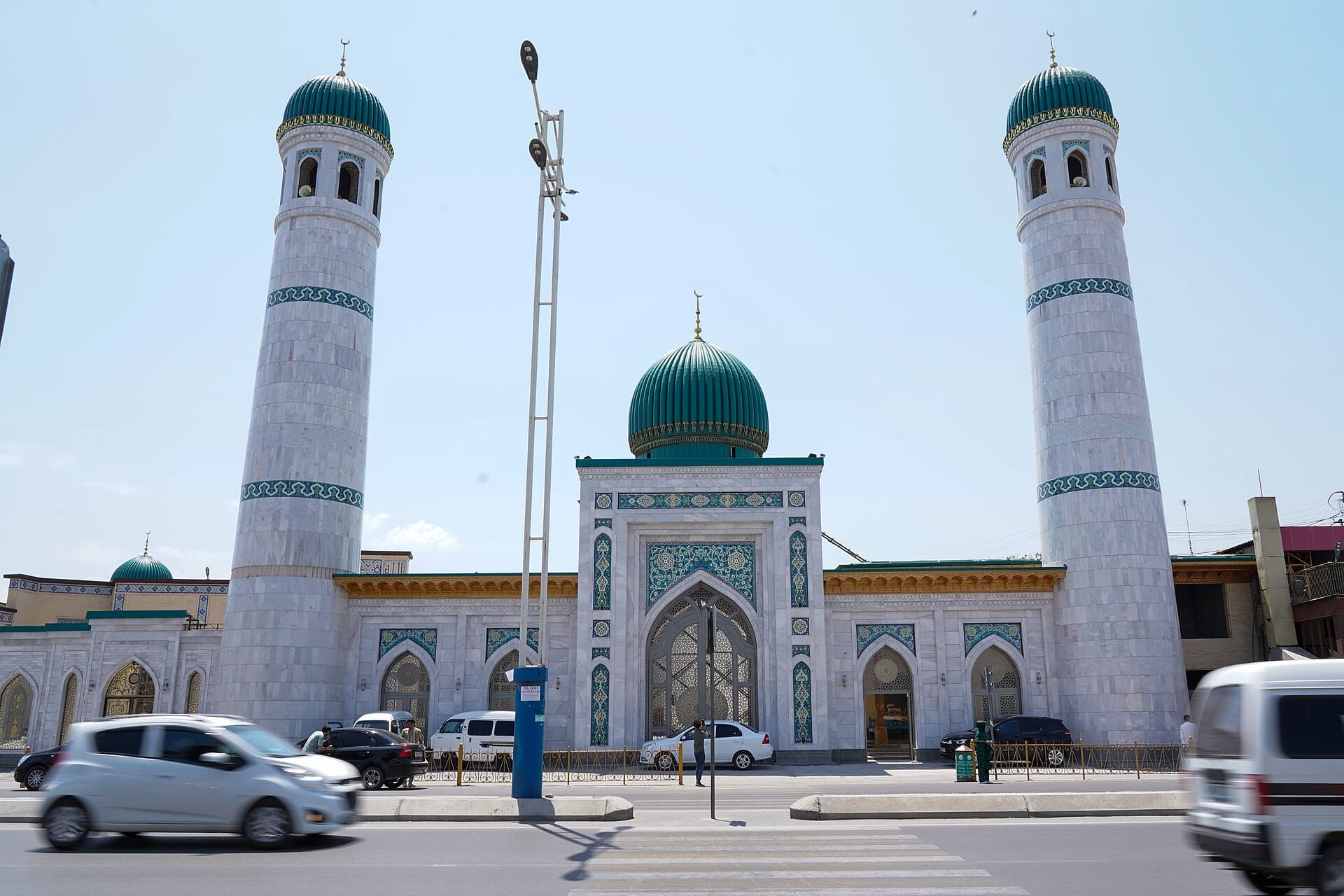
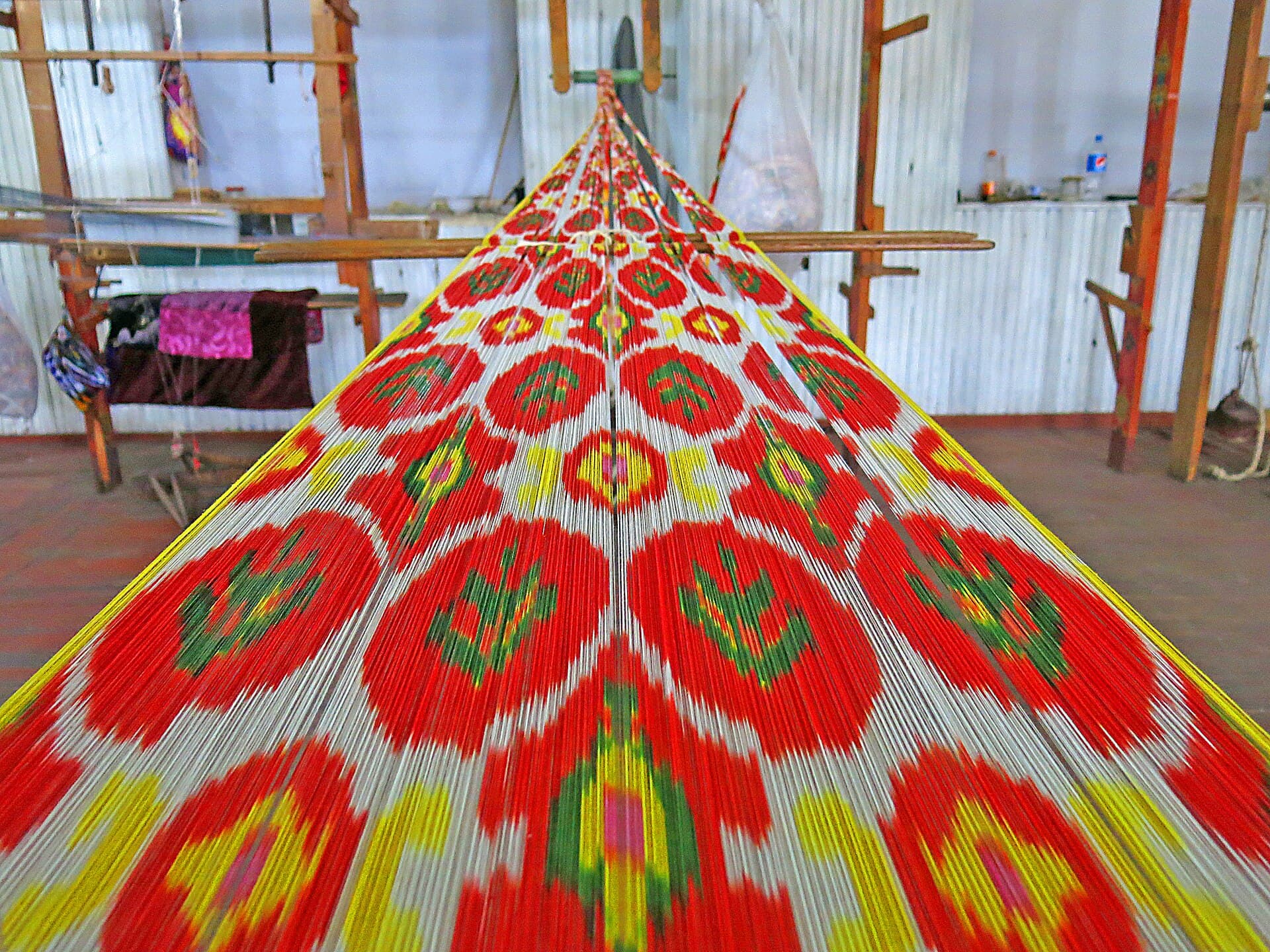
The Said Ahmad Khoja Madrasa is a single-storey brick madrasa with its own mosque in Margilan, usually dated to the late 19th century and on Uzbekistan's national heritage list. Behind plain outer walls, pointed-arched cells line a courtyard about 30 metres across, shaded by old plane trees and crossed by a water channel. Since 2007 the cells have held craft workshops. Local accounts call its founder, Said Ahmad Khoja, a learned entrepreneur who also built cotton gins, and date the madrasa to 1907–1909 and its closure under Soviet rule to 1928. It became a prison until 1942, then communal housing, and in 1986–1992 Margilan's museum of literature and art. It was restored in 1985 and again for the city's 2,000th anniversary in 2007. The highlight is the mosque on the courtyard's west side. Its 14-by-7-metre hall has a ceiling painted in broad red and green bands with flowers and twining shoots, while the columned aiwan is painted in another style; few Fergana Valley mosques have both ceilings so fully decorated. A double timber frame braces the walls against earthquakes, and the hall ceiling hangs from wooden trusses, a Russian-influenced method that needs no columns. In the cells, ikat master Rasuljon Mirzaahmedov's workshop shows threads tied, dyed and woven, and another prints cloth with carved woodblocks. It lies about 580 metres south of the Khonakhan Mosque and 780 metres south-east of the Yodgorlik Silk Factory as the crow flies; the three make an easy half-day. Margilan, about 20 minutes by taxi from Fergana, has a station on the Andijan–Tashkent railway.
Broad red and green bands with flowers.
Threads tied, dyed and woven by hand.
Old plane trees and a water channel.
Said Ahmad Khoja Eshon Street, Iqbol quarter, Margilan
A visitor guide updated in July 2025 suggests roughly Monday to Saturday, 10:00 to 17:00, so avoid Sundays. Thursday is the best day to come: Margilan's Kumtepa bazaar, 5 km west of the centre and known for its ikat stalls, trades only on Thursdays and Sundays and winds down by mid-afternoon.
Bundles of warp thread are tied off in a pattern and dyed before weaving, so the design is in the threads before the cloth exists, unlike tie-dye, which colours cloth already woven. Uzbeks call the technique abrbandi, from Persian abr, cloud, and band, binding, and the master who ties and dyes the threads is the abrband.