Silk cocoons
Boiled and reeled.
Enric — CC BY-SA 4.0 · Enric — CC BY-SA 4.0 · Adam Jones from Kelowna, BC, Canada — CC BY-SA 2.0 · Alpasli — CC BY-SA 4.0 · Peretz Partensky from San Francisco, USA — CC BY-SA 2.0 · Alpasli — CC BY-SA 4.0 · Adam Jones from Kelowna, BC, Canada — CC BY-SA 2.0 · upyernoz from Haverford, USA — CC BY 2.0
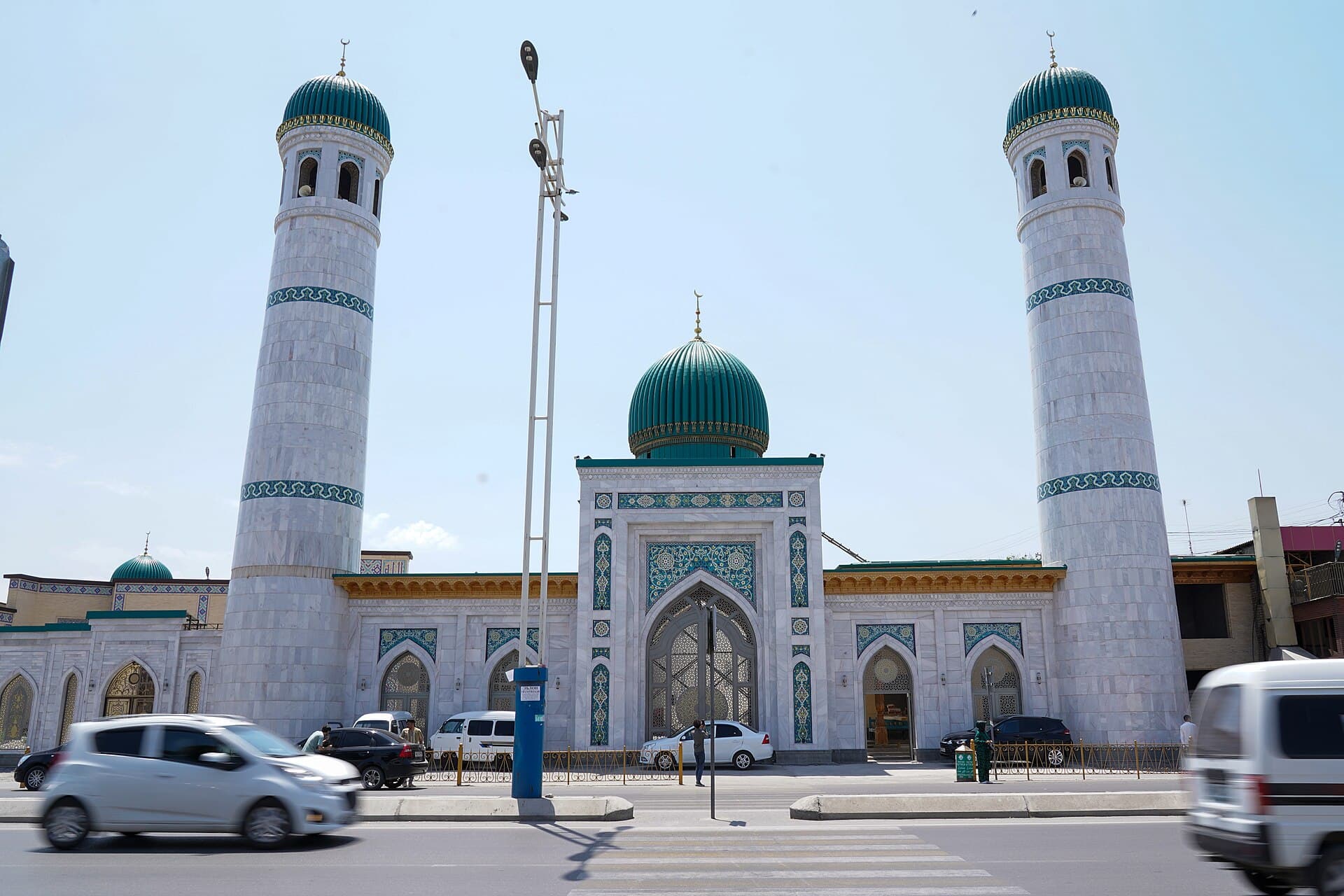
A silk workshop in Margilan, Uzbekistan's silk capital, where silk is still made by hand in the traditional way; its name means «keepsake». Founded in 1972 and state-owned from 1982 to 1993, it took its present name and was privatised in 2000, and is now the largest of its kind in Uzbekistan. Visitors see the whole journey of silk: sorting and boiling the silkworm cocoons, reeling the thread, spinning and dyeing it, then weaving colourful ikat, known as «atlas», on traditional wooden looms. It also weaves «adras», a silk-and-cotton blend, since the Fergana Valley is cotton country too. About 450 people work here, some 60% of them women, producing around 6,000 m of fabric a month, part of it for export; some of the silk is also knotted into carpets. The tour ends in a showroom selling fabric and scarves. In 2017 UNESCO listed the Margilan Crafts Development Centre as a good practice for safeguarding atlas and adras weaving. The tour costs about 30,000 som, and it is open from 8 am to 5 pm, closed on Sundays and public holidays, per visitor guides. Margilan's two-minaret Khonakhan Mosque is close by.
Boiled and reeled.
Wooden and traditional.
Fabric and scarves.
Margilan, Fergana Valley
Every stage of silk-making, from boiling cocoons and reeling thread to dyeing and weaving ikat on traditional looms; the tour costs about 30,000 som, per visitor guides.