
The cloister
Dense Gothic carving around an inner garden.
Querubin Saldaña Sanchez — CC BY-SA 3.0 · Romylo — CC BY-SA 4.0 · Tibor Kovacs — CC BY 2.0 · D.Rovchak — CC BY-SA 4.0
**A monastery the Catholic Monarchs built to be their tomb — with prisoners' shackles hanging on its outer wall since the 15th century** — in the west of the old city. Building began in **1477** at the order of **Isabella and Ferdinand** after their victory at Toro, **to serve as their mausoleum**. ⚠ **Then they took Granada in 1492 and changed their minds**, and were buried there — **leaving the monastery without its tombs**. ⚠ **Iron shackles hang on its outer façade**: **the fetters of Christian captives freed from Granada**, hung there as a monument of victory — **and still in place**. ✅ **Its cloister is among the finest in Spain**: **Isabelline Gothic** densely carved, ⚠ **and its upper storey is roofed in Mudéjar coffered woodwork** — **Gothic and Islamic in one building**. ✅ **The royal monogram, the eagle, the yoke and the arrows** are carved everywhere.
Dense Gothic carving around an inner garden.
Iron fetters on the outer wall since the 15th century.
Mudéjar woodwork on the cloister's upper floor.
Calle Reyes Catolicos 17, 45002 Toledo, Spain
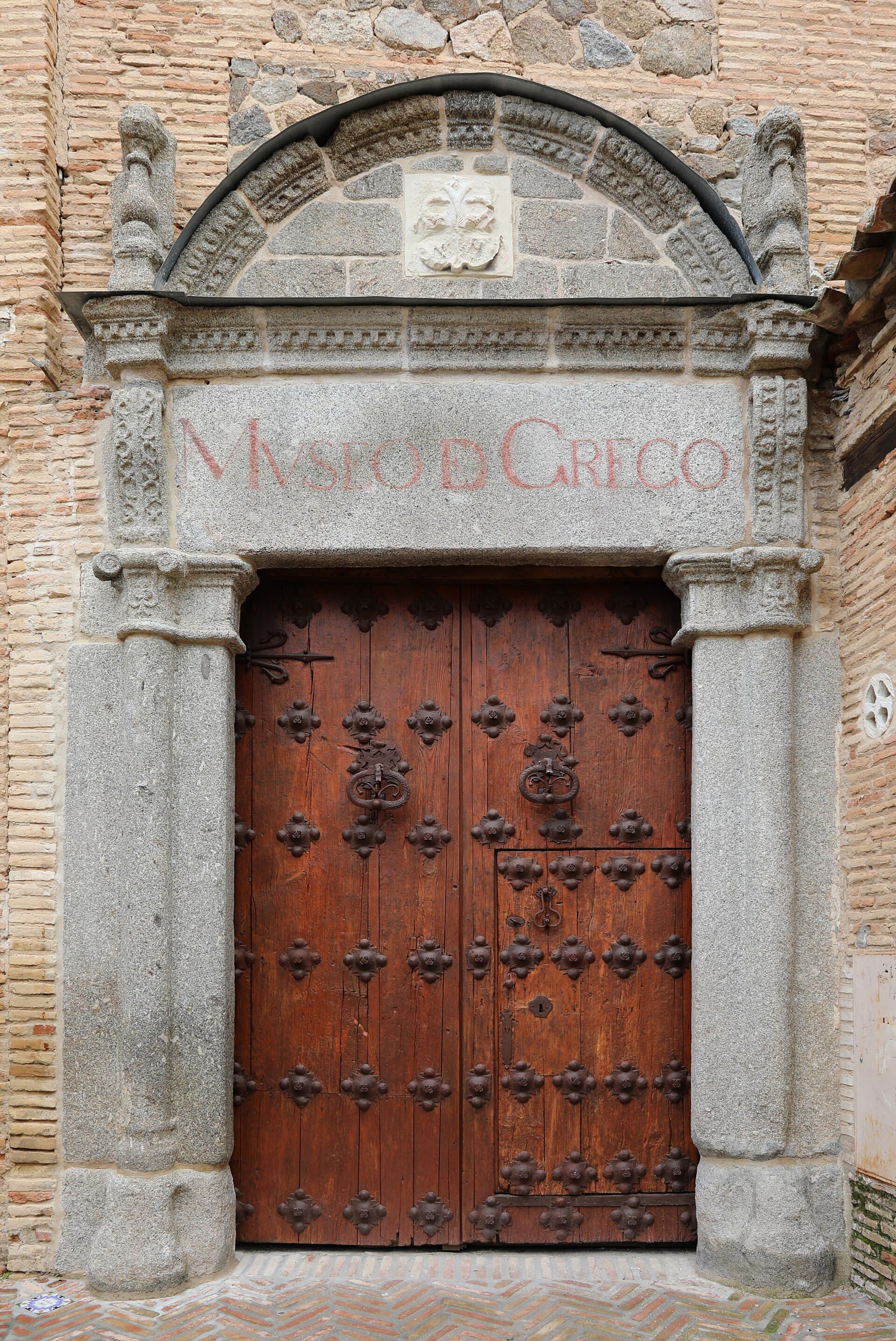 El Greco Museum**A museum to the painter who made Toledo his subject, in a 16th-century house w3 minutes walk4.3
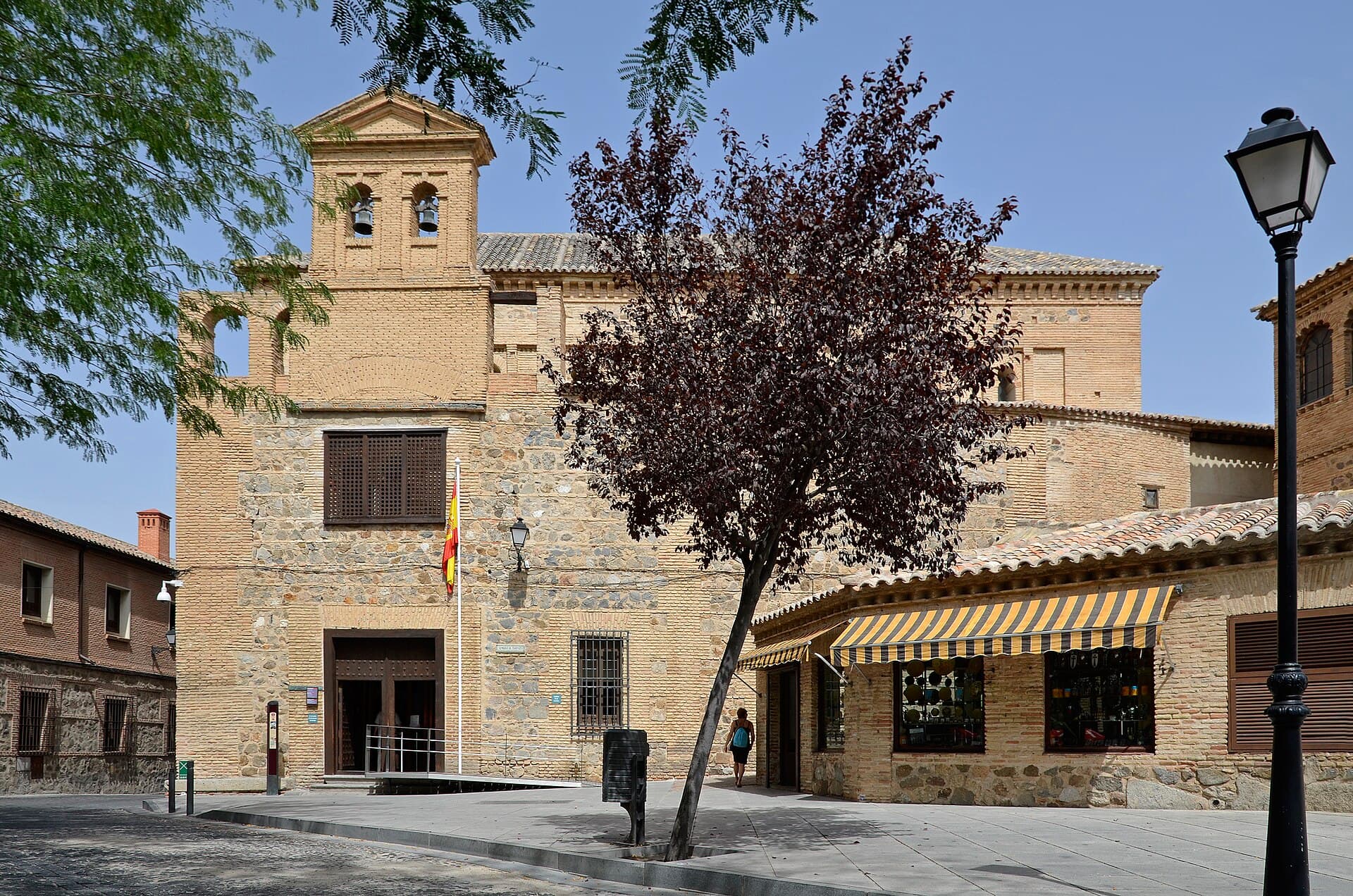 Synagogue of El Tránsito**A 14th-century synagogue decorated in Islamic-style plasterwork, with Hebrew a4 minutes walk4.4
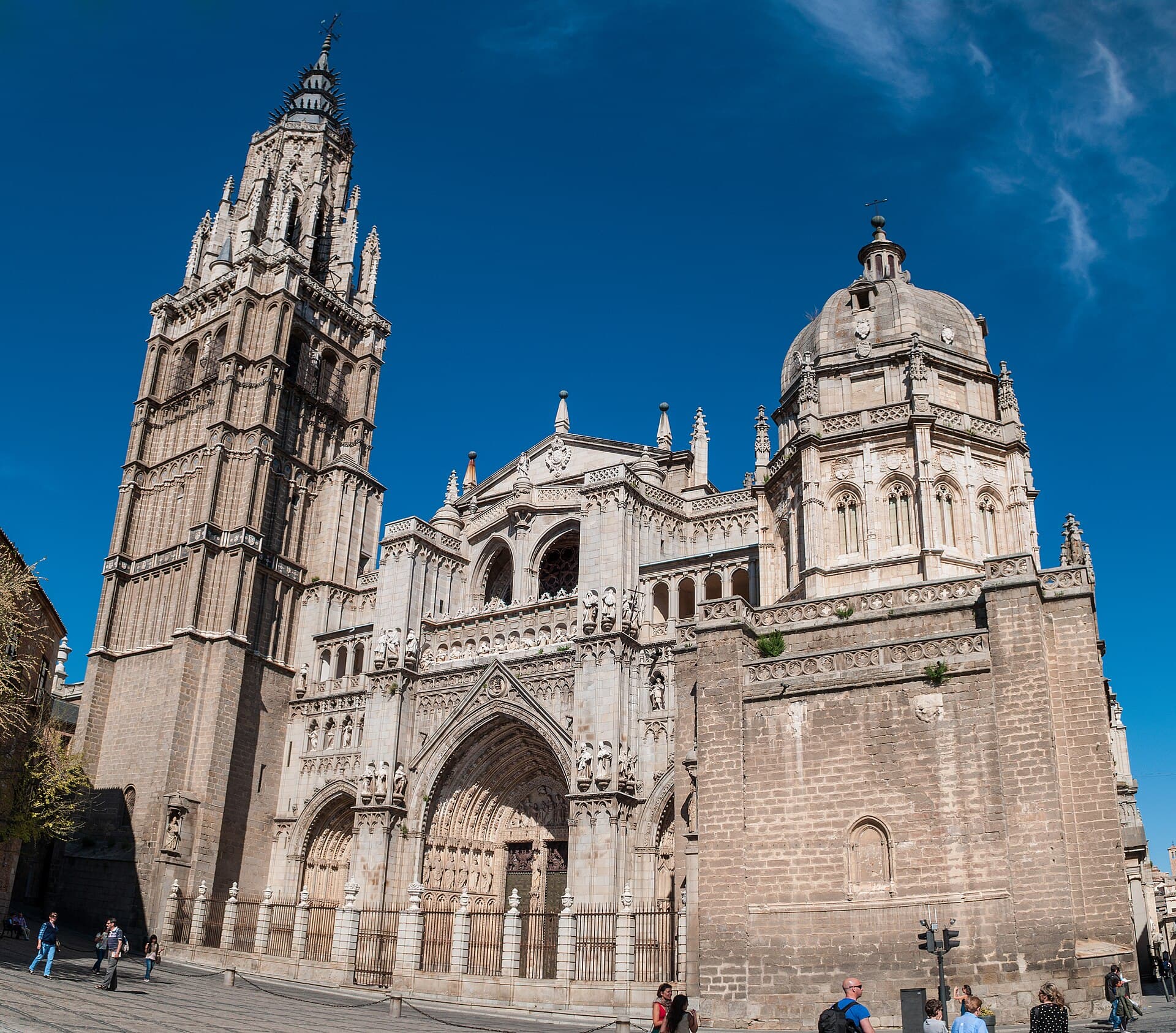 Toledo Cathedral**Spain's greatest Gothic cathedral, built over Toledo's main mosque — with a ho8 minutes walk4.8
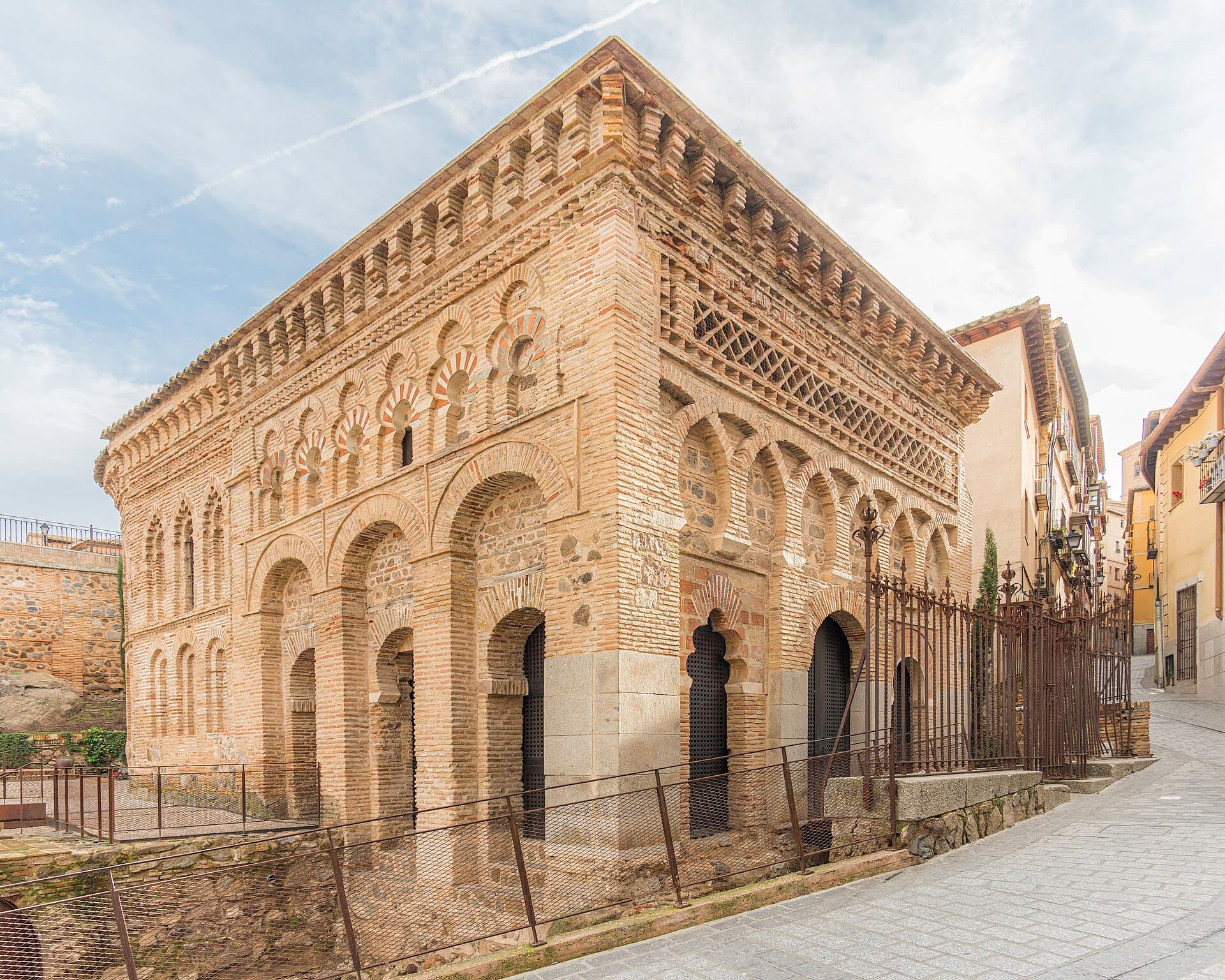 Mosque of Bab al-Mardum**The oldest Islamic building standing in Toledo — a small mosque of the year 999 minutes walk4.1
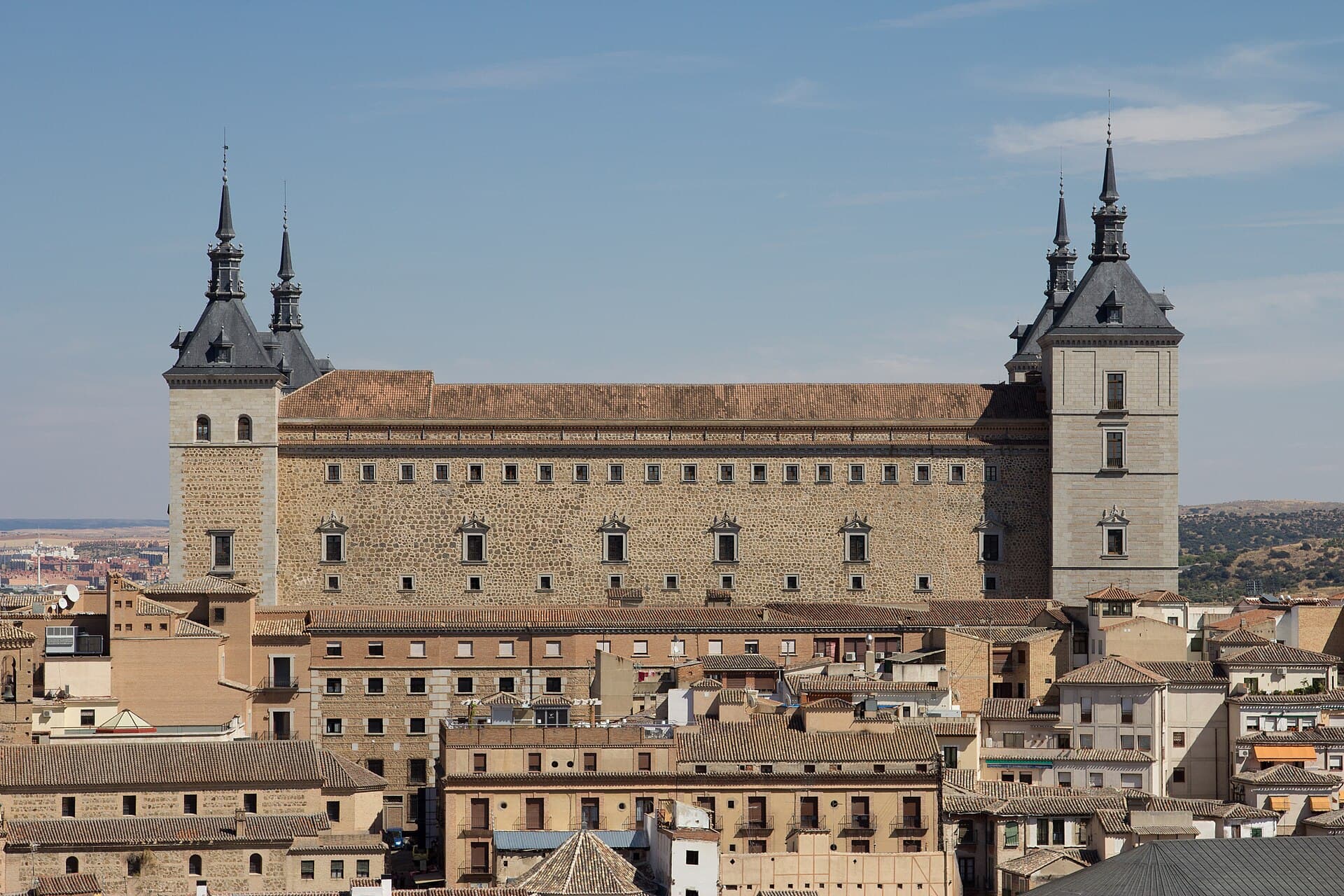 Alcázar of Toledo**A massive square fortress on Toledo's highest point, today the Spanish Army Mu12 minutes walk4.7
**A late-15th-century Spanish style joining late Gothic to Mudéjar ornament and royal symbolism — and you know it by its density.** ✅ **The name**: from **Queen Isabella I**, in whose reign it flourished (about 1474–1505). ✅ **What marks it visually**: **(1) density of ornament** — **surfaces entirely covered** in fine stone carving with no empty ground; **its clearest sign**. **(2) Political symbols** — **the yoke and the arrows** (Isabella's and Ferdinand's devices), **the eagle**, **the letters F and Y**, **and heraldry** — **carved everywhere**; ⚠ **so the building is a political statement, not only a religious one**. **(3) Mudéjar elements** — **coffered wooden ceilings, multifoil arches and plasterwork** — **set inside a Gothic structure**. **(4) Flattened arches** tending to a low curve. ✅ **Examples**: **this monastery**, **the Colegio de San Gregorio in Valladolid**, **and the façade of Salamanca University** (⚠ which is Plateresque, the following phase). ⚠ **The difference from Plateresque**: Plateresque is slightly later **and its ornament is Italian Renaissance** rather than Gothic — **but the density is the same**.