
Verona's pink marble
The local stone the whole city is built from, giving it its colour.
H. Zell — CC BY-SA 3.0 · Patafisik — CC BY-SA 4.0 · Pabliten 21 — CC BY-SA 4.0 · Dimitris Kamaras from Athens, Greece — CC BY 2.0
An external stone staircase in the Mercato Vecchio courtyard in central Verona, dating from the fifteenth century. The name comes from the building it serves: the Palazzo della Ragione was Verona's seat of justice, and the stair was the formal entrance to its halls. The stair is itself a work of architecture rather than a means of climbing: built of the local pink marble — the stone the whole of Verona is built from, which gives the city its distinctive colour — with arches and a carved balustrade, rising along the courtyard's side theatrically. The courtyard around it is enclosed by buildings of different layers: Romanesque arches, Gothic and Renaissance fronts, and it is among the finest spaces in Verona and one of the least crowded, despite sitting between the Piazza delle Erbe and the Piazza dei Signori. Entering the courtyard and seeing the stair are free. The building itself holds an art gallery on a separate ticket, and the neighbouring Lamberti tower is climbed by lift or stairs for the view over the city. This is a few minutes on your route between Verona's two best-known squares.
The local stone the whole city is built from, giving it its colour.
The stair was the formal way into the Palazzo della Ragione's halls.
Romanesque arches with Gothic and Renaissance fronts around one space.
Mercato Vecchio courtyard, central Verona
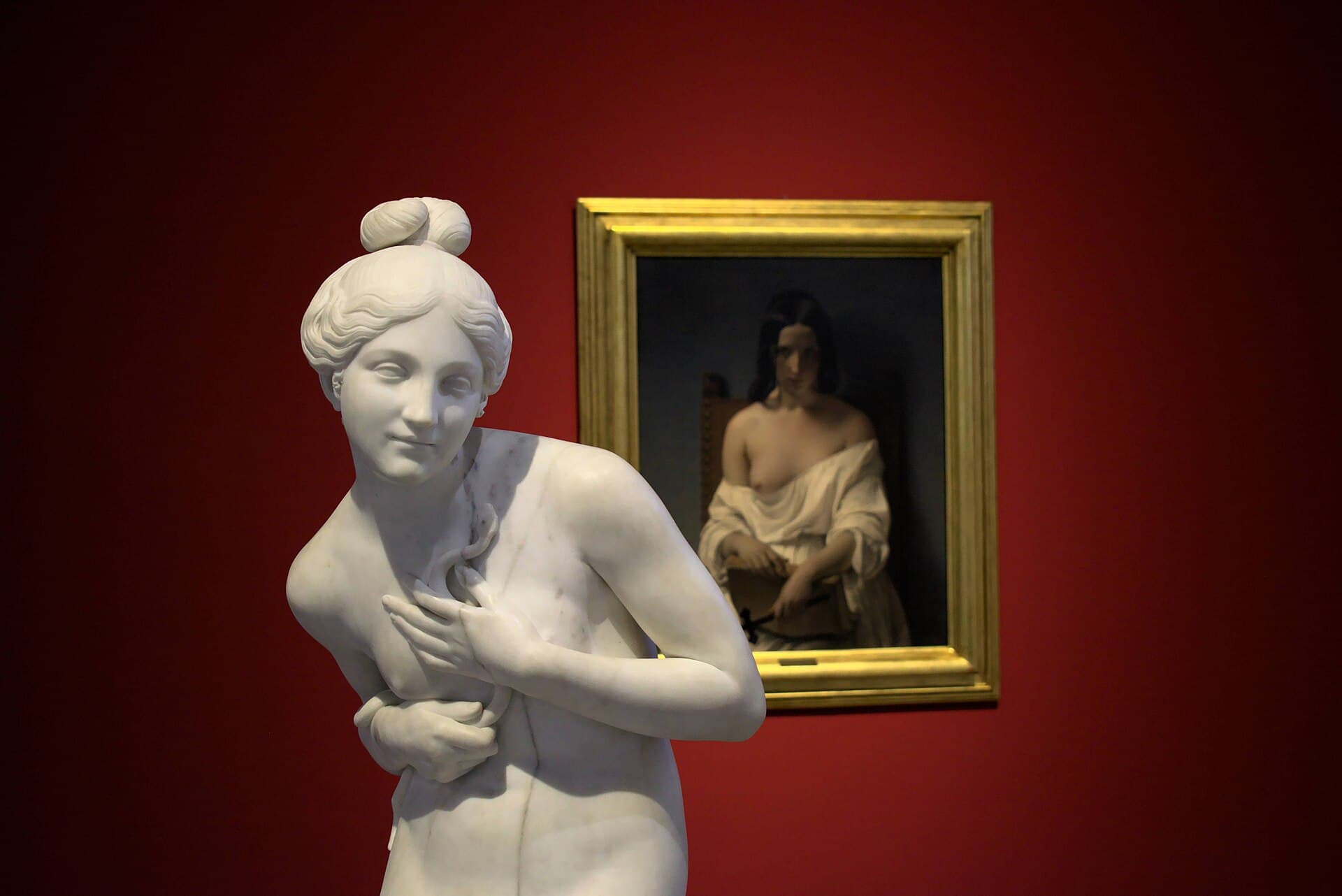 Galleria Achille FortiA gallery of modern art inside the Palazzo della Ragione in the heart of Verona,1 minute walk4.2
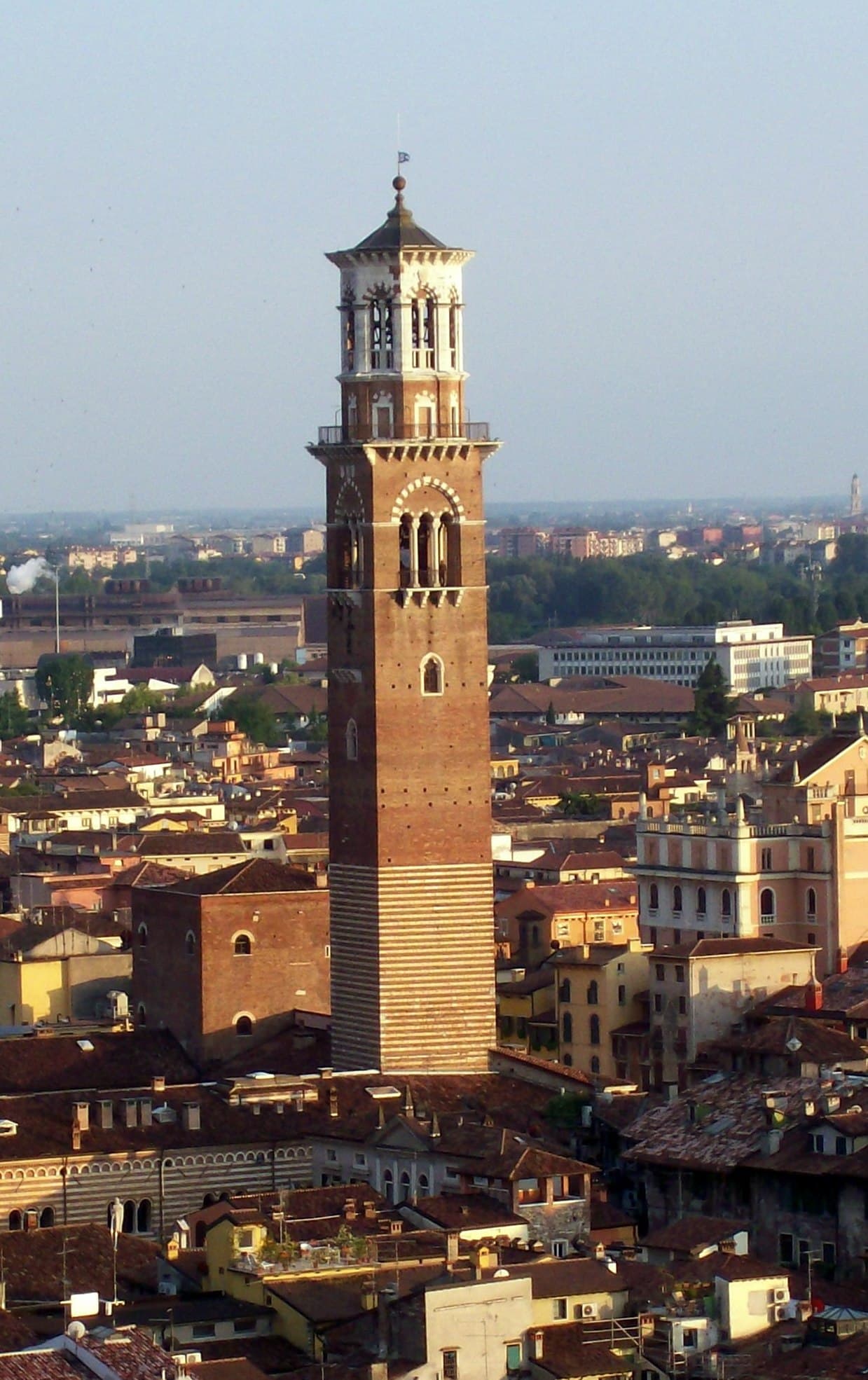 Torre dei LambertiThe Lamberti tower is Verona's highest point: eighty-four metres grown across ce1 minute walk4.4
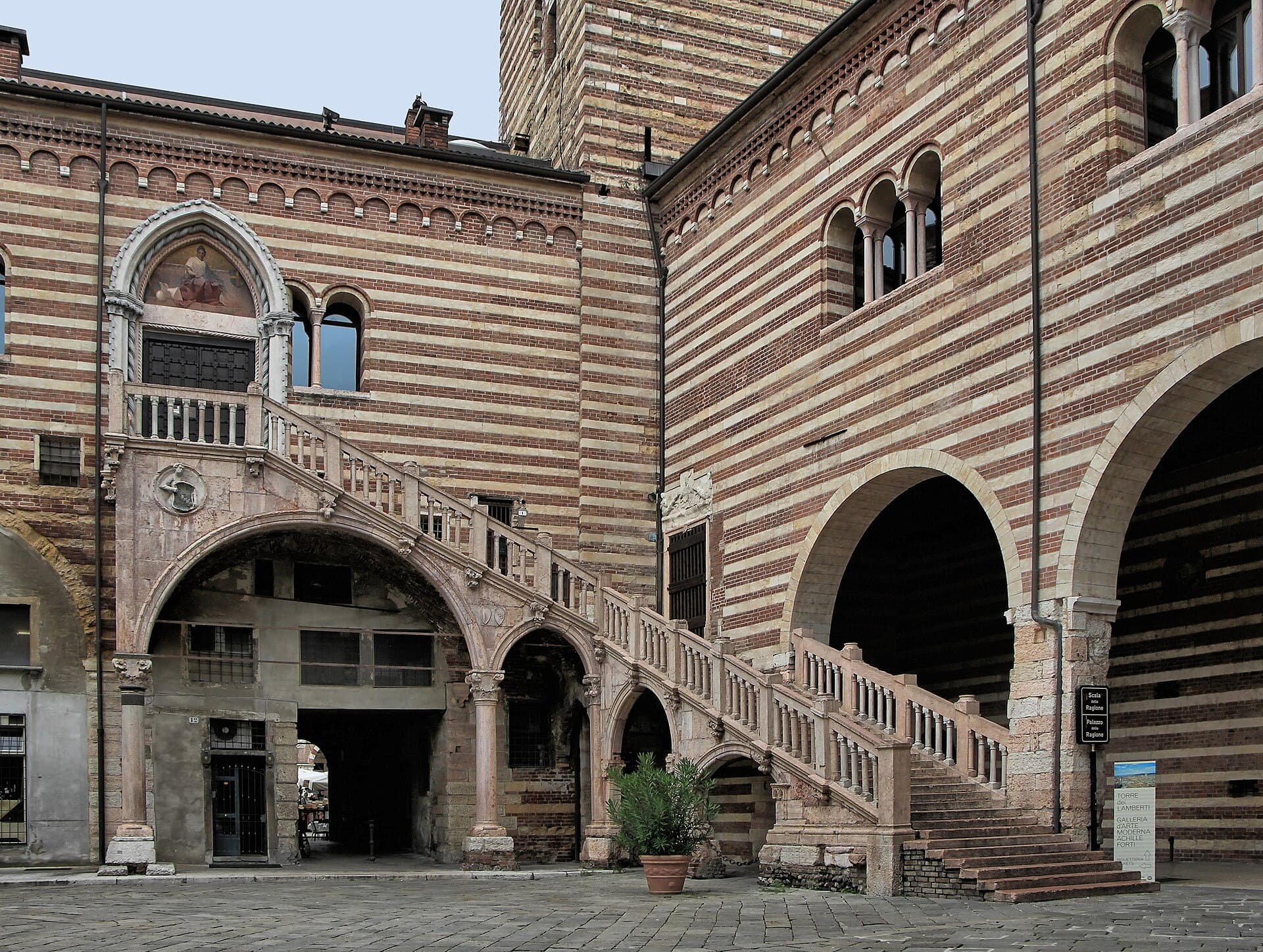 Palazzo della RagioneA complex of twelfth-century buildings between Piazza delle Erbe and Piazza dei 1 minute walk4.4
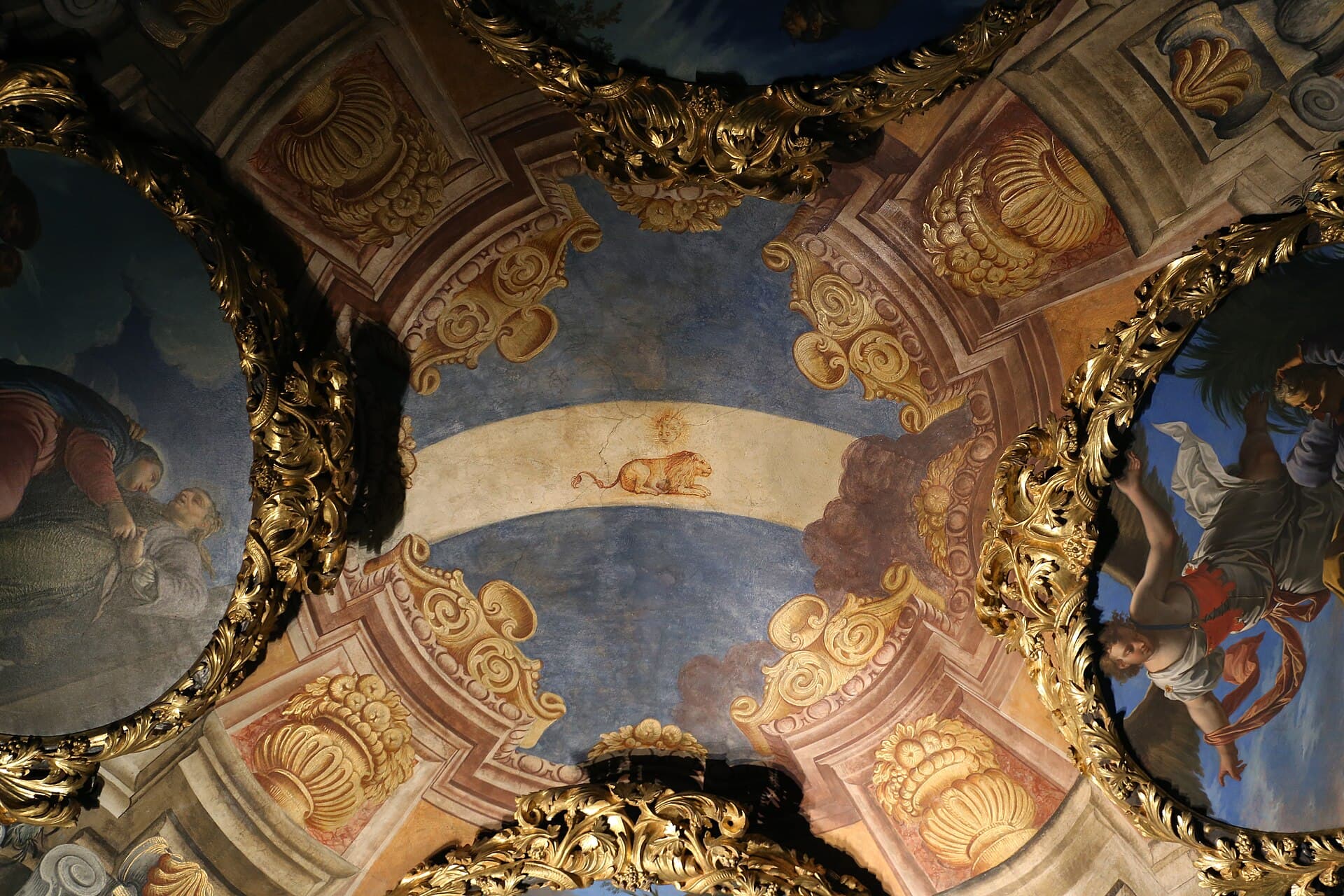 Cappella dei Notai (Chapel of the Notaries)A few steps above the vegetable market, behind a door nobody notices, hides one 1 minute walk4.4
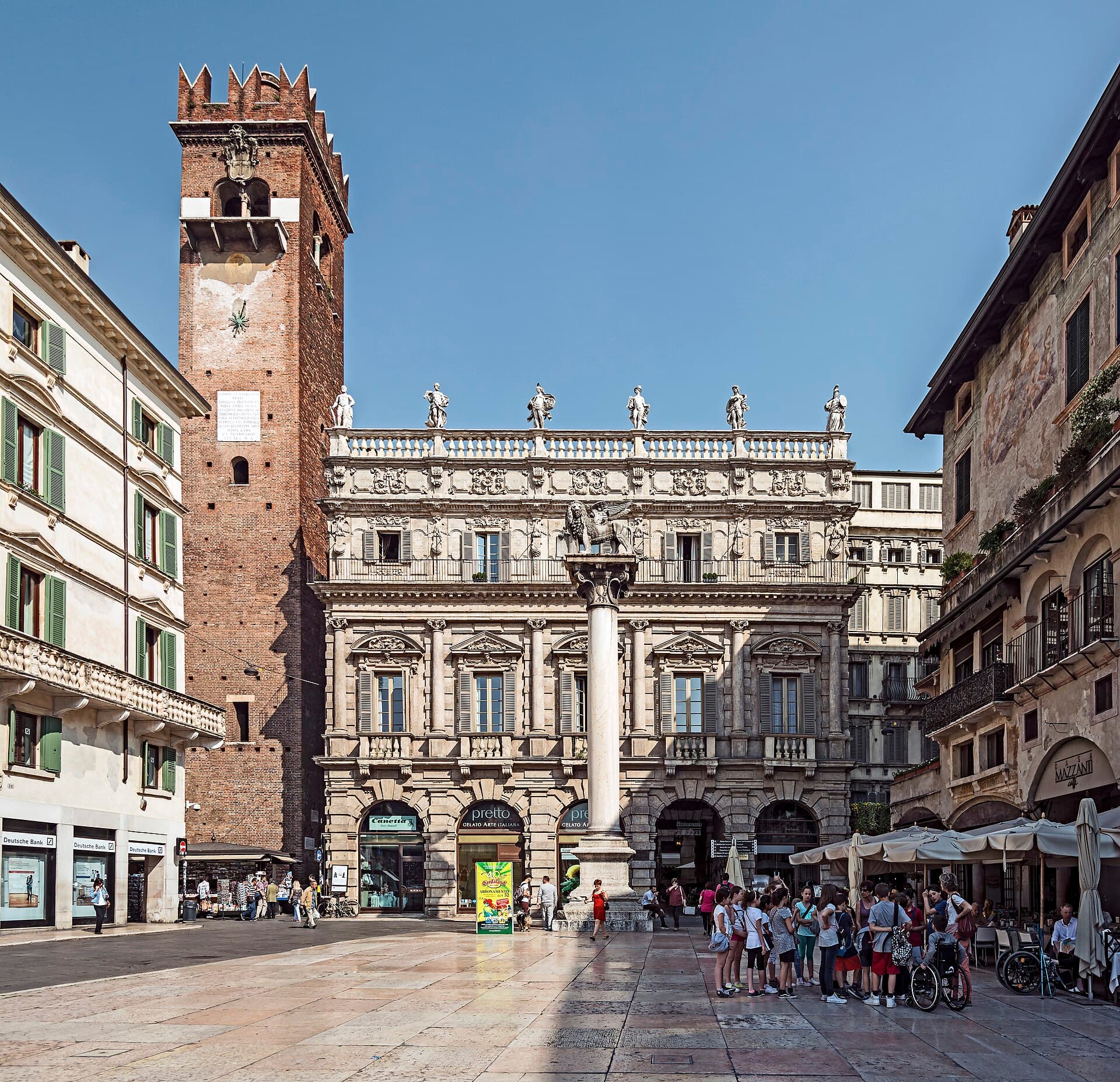 Piazza delle ErbePiazza delle Erbe is Verona's Roman forum that never stopped working — two thous1 minute walk4.8
Yes if the weather is clear. It is the highest point in central Verona and gives a view over the city's roofs, the Roman arena, the Adige and the hills. It has a lift for anyone not wanting the stairs, and the ticket is covered by the VeronaCard. Queues are usually short compared with towers in other cities.
Piazza delle Erbe was the Roman forum and then the city market, today crowded with stalls and cafés, its buildings painted with frescoes. Piazza dei Signori beside it is smaller, quieter and more formal, the seat of government, holding the statue of Dante, who lived in Verona in exile.