
Two thousand years of market
The Roman forum still selling fruit — continuity without equal.
Didier Descouens — CC BY-SA 4.0 · Gianfranco z — CC BY-SA 4.0 · Falk2 — CC BY-SA 4.0 · Falk2 — CC BY-SA 4.0
Piazza delle Erbe is Verona's Roman forum that never stopped working — two thousand years as the city's market, council and heart, from Rome to this afternoon: the vendors' umbrellas in the middle as ever, life circling the Madonna Verona fountain, whose torso is a genuine fourth-century Roman statue re-crowned in the Middle Ages. Around it the city reads in layers: the Lamberti tower soaring; palaces with painted fresco fronts — the Mazzanti houses survive from when all Verona was "the painted city"; Baroque Palazzo Maffei with its rooftop gods; and the Venetian lion of St Mark on its column, witness to centuries under Venice. It is Verona's living room: morning coffee beneath the umbrellas, an evening drink in its café ring, and dozens of crossings between — every route in the city passes here.
The Roman forum still selling fruit — continuity without equal.
Relics of the painted city on the Mazzanti houses.
Roman of body, medieval of crown — the city's fittest emblem.
Piazza delle Erbe, 37121 Verona
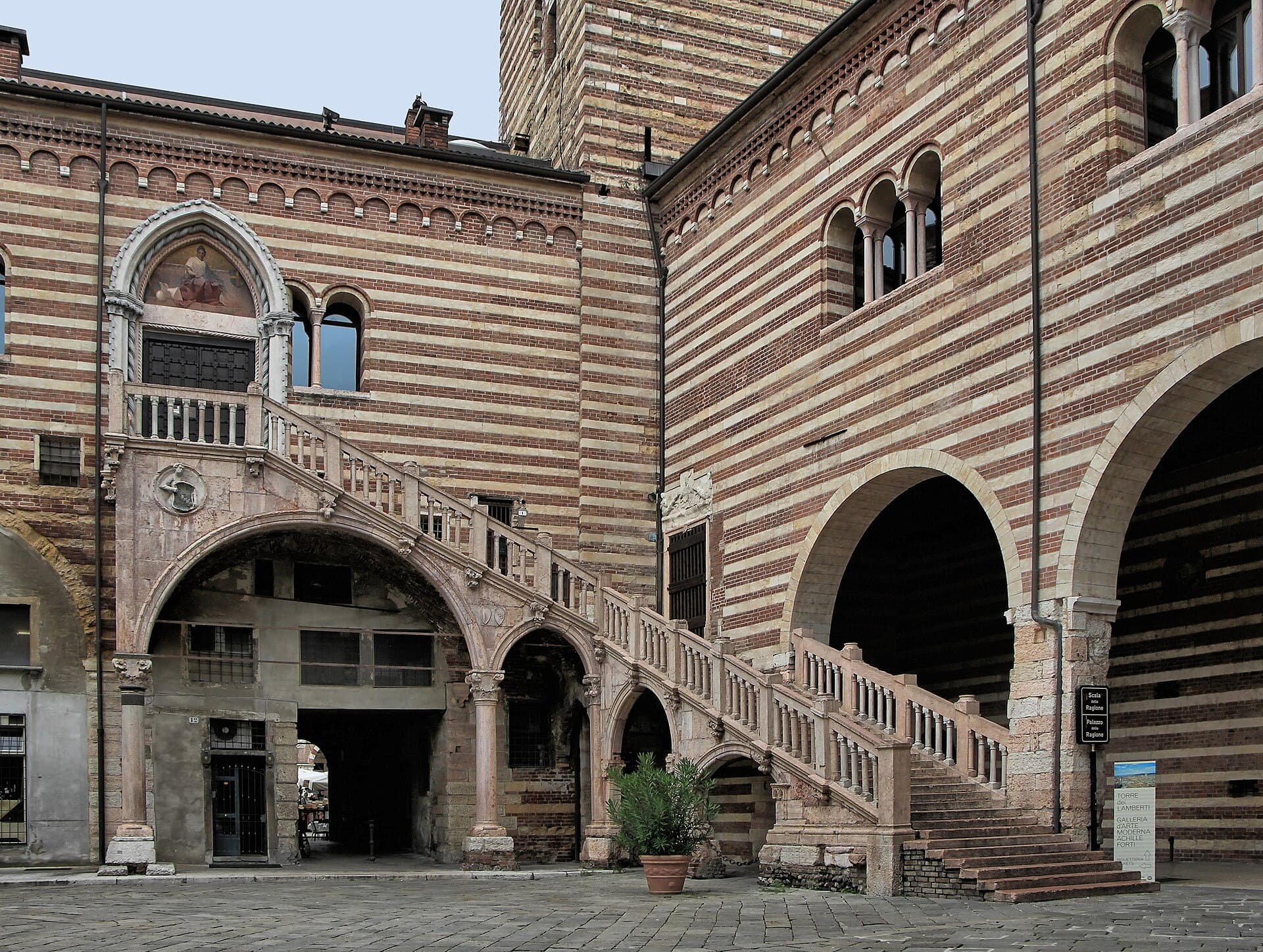 Palazzo della RagioneA complex of twelfth-century buildings between Piazza delle Erbe and Piazza dei 1 minute walk4.4
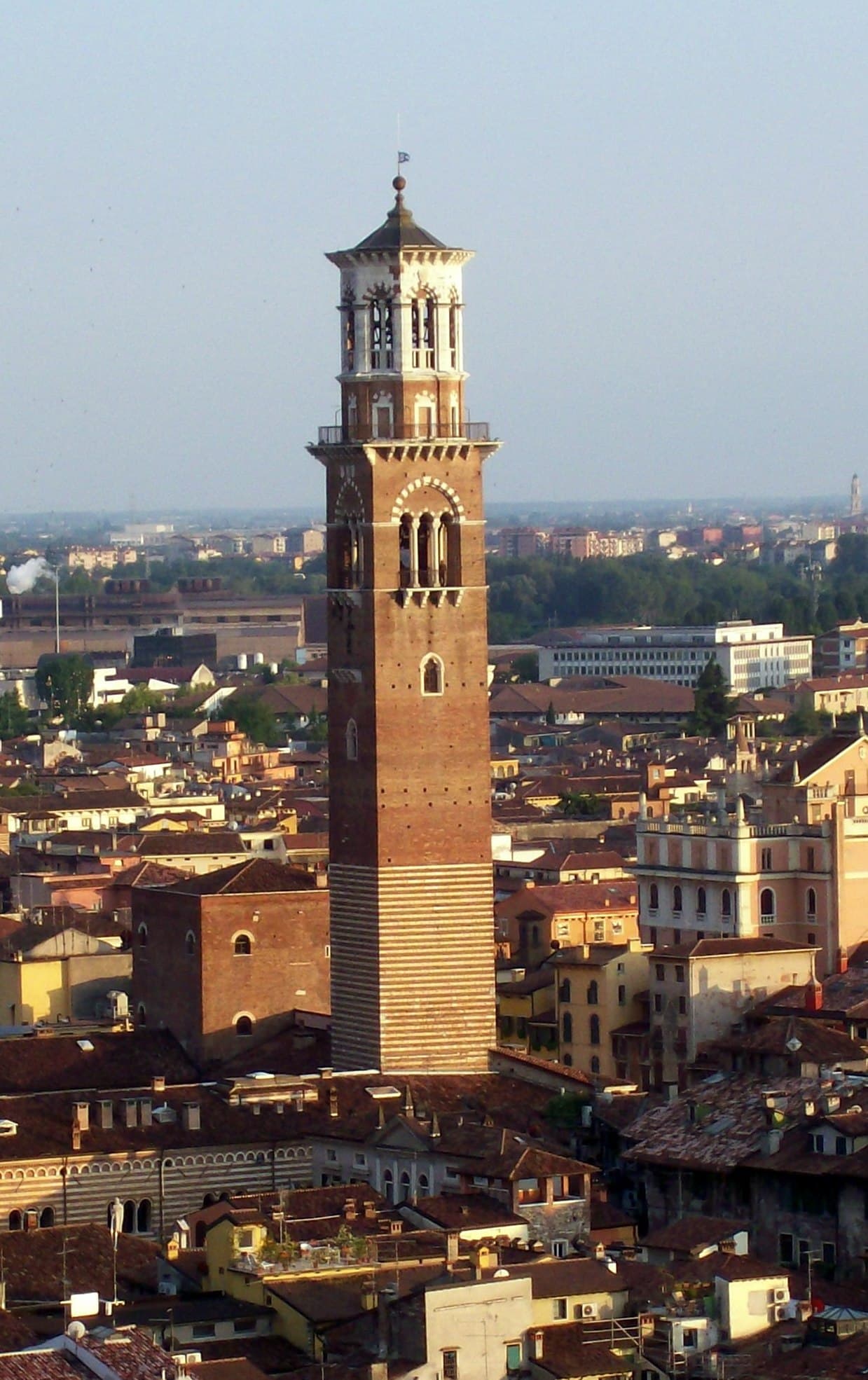 Torre dei LambertiThe Lamberti tower is Verona's highest point: eighty-four metres grown across ce1 minute walk4.4
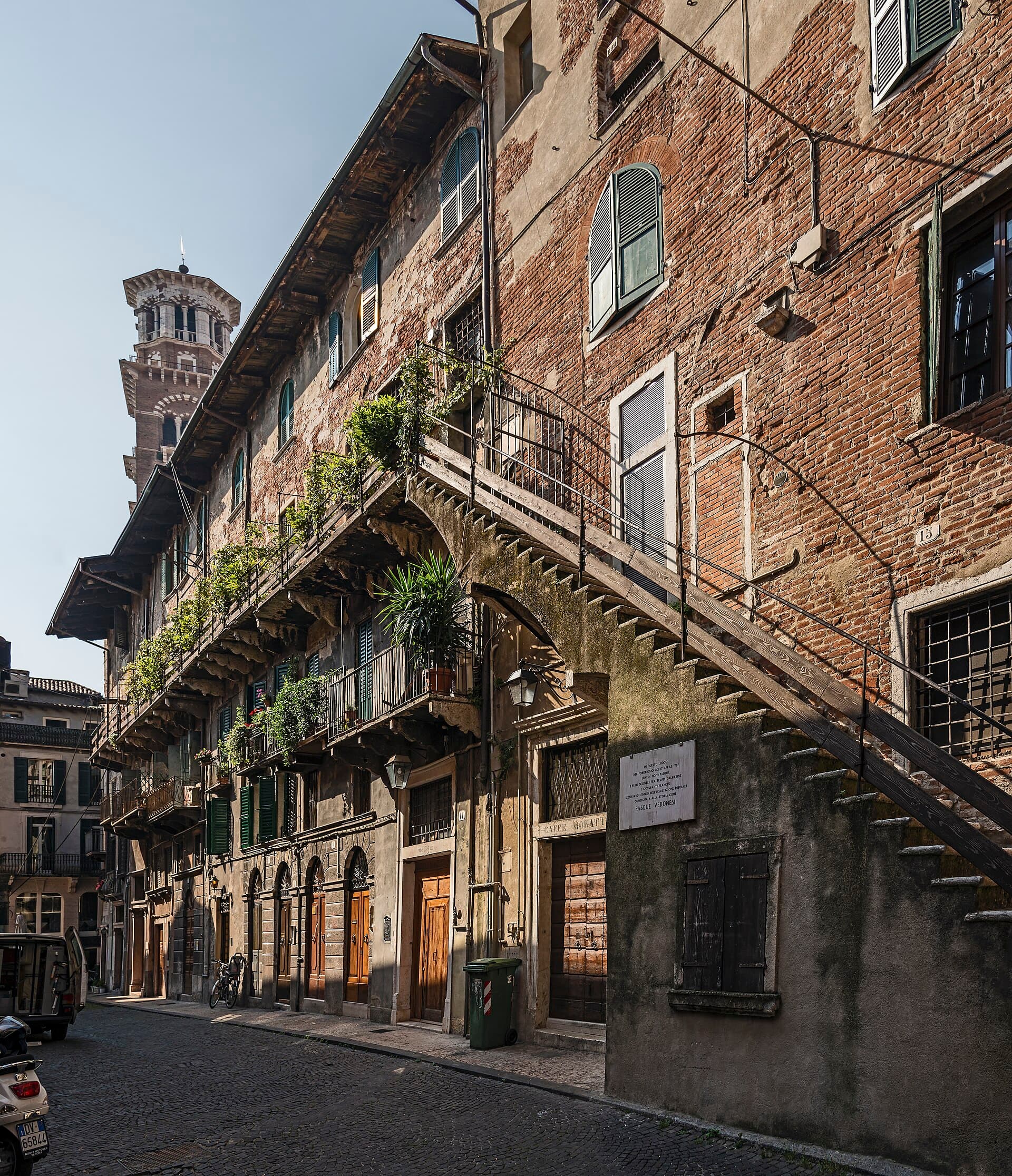 Case MazzantiA group of buildings on the Piazza delle Erbe in central Verona whose fronts are1 minute walk4.5
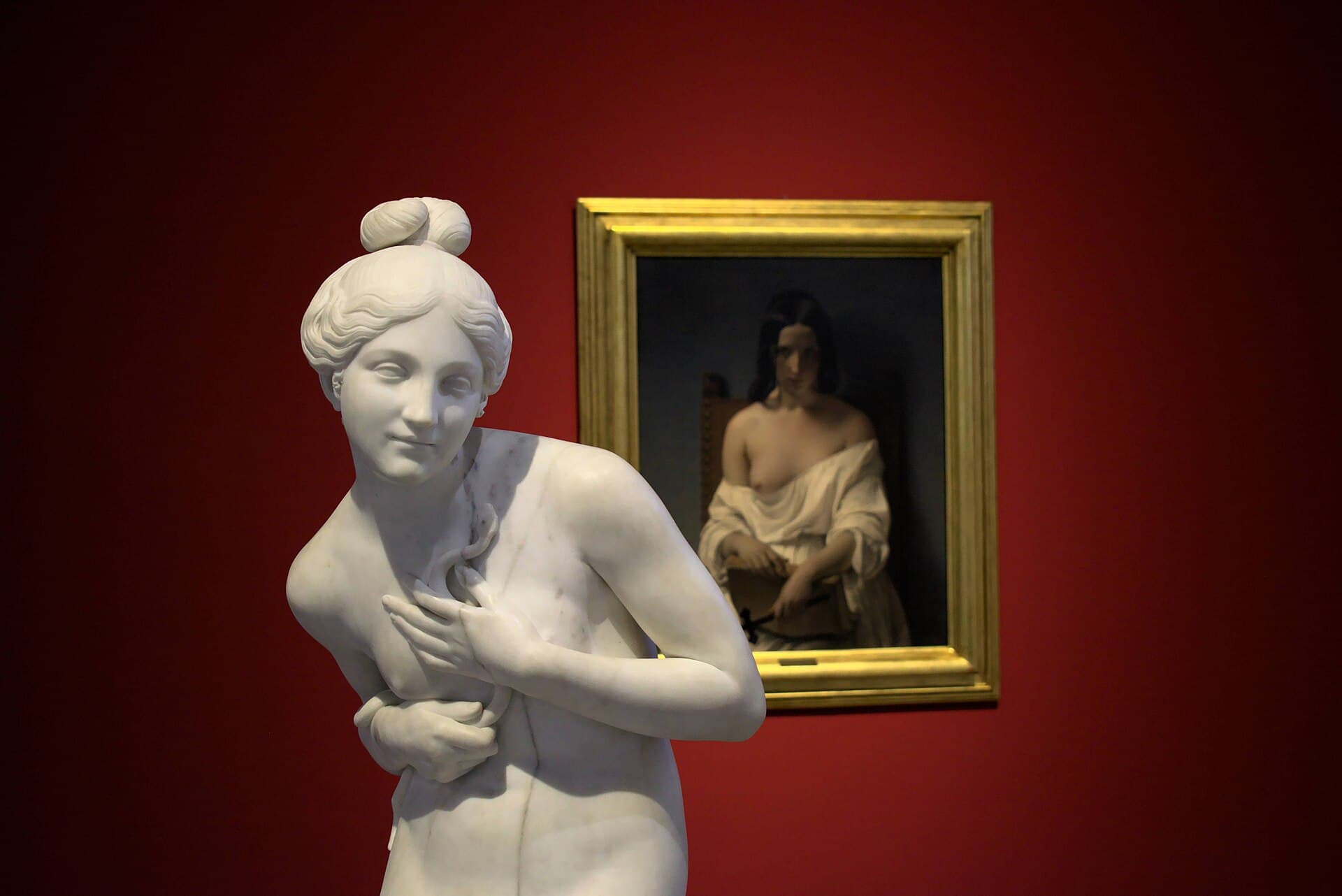 Galleria Achille FortiA gallery of modern art inside the Palazzo della Ragione in the heart of Verona,1 minute walk4.2
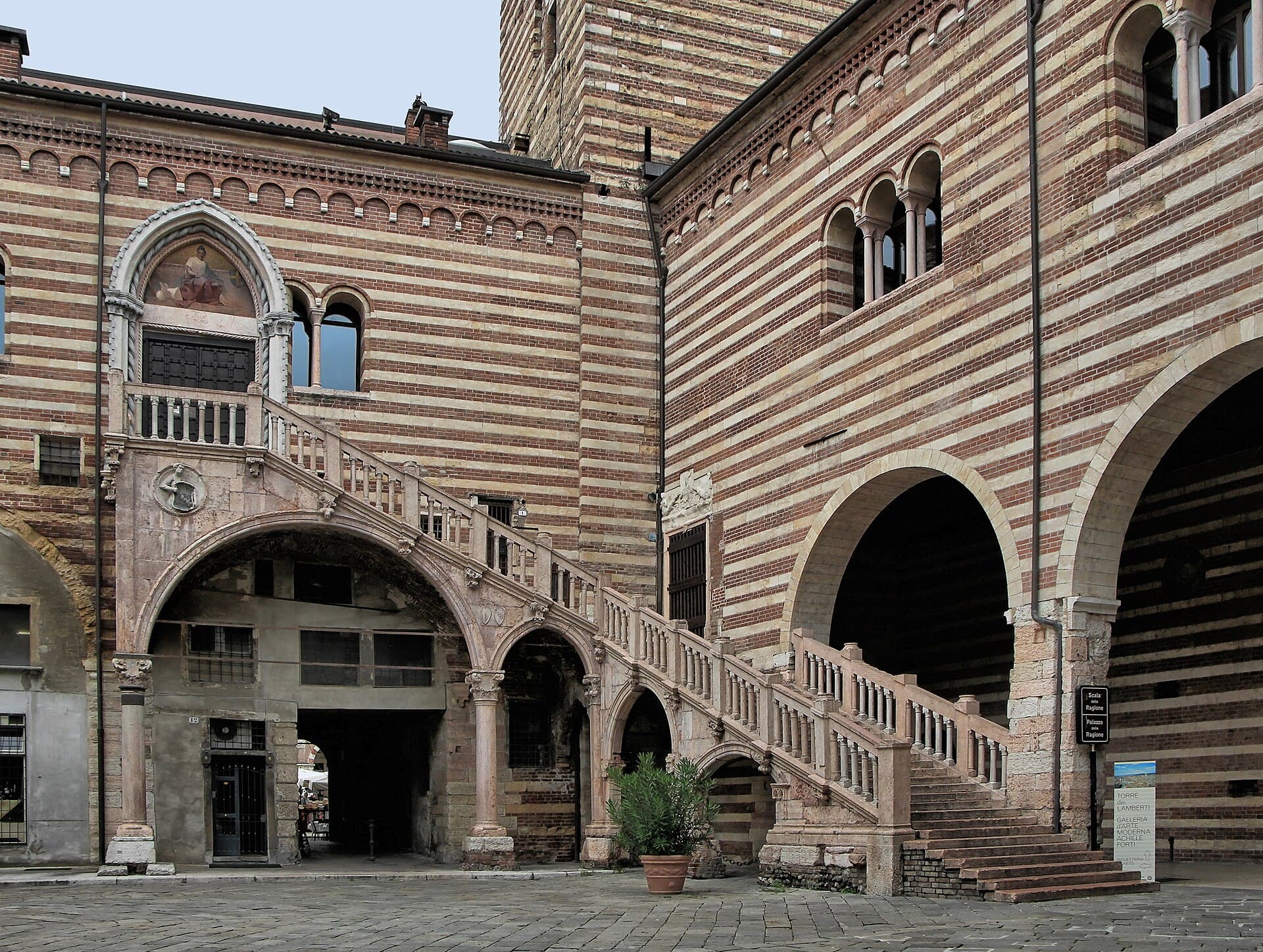 Scala della RagioneAn external stone staircase in the Mercato Vecchio courtyard in central Verona, 1 minute walk4.6
A real whale rib hung under the arch by some merchant centuries ago — likely advertising exotic Eastern goods — and legend says it will fall on the first entirely honest soul to pass beneath: it has not fallen yet, popes and kings included, and Verona enjoys the inference.
Leave the square's tables to the scene and slip into the lanes: arcaded Via Sottoriva with its ancient osterie, or the alleys past the cathedral — Verona's rule: every fifty metres from the square improves the plate and lightens the bill.
Erbe for life, market and clamour; Signori beyond the arch for state, marble and gravity — Dante standing centre amid the palaces of rule. One visit inevitably threads both, and comparing them is Verona's first pleasure.