
The Giralda
The Almohad minaret, the Kutubiyya's sister — Spain's loveliest tower and view.
PEPE GADEIRAS — CC BY-SA 4.0 · AnonymousUnknown author — Public domain · Holger Uwe Schmitt — CC BY-SA 4.0 · Holger Uwe Schmitt — CC BY-SA 4.0
Seville's cathedral is the world's largest Gothic cathedral — and its story begins as a mosque: here stood the Almohads' great congregational mosque (1198), and when Sevillians resolved to build their church they spoke the immortal line: "let us build such that those who come after think us mad" — the Gothic swallowed the mosque, keeping two jewels. First the Giralda: the Almohad minaret, elder sister of Marrakesh's Kutubiyya and Rabat's Hassan, become the bell tower — climbed by ramps, not stairs (built so the muezzin could ride up), to the city's greatest view. Second, the Court of the Oranges with its fountains and light, remaining as it was when worshippers made ablutions for eight hundred years. Within the vastness: Columbus's tomb borne by Spain's four kingdoms, and the Christian world's largest golden altarpiece. For our readers this is a first-rank Andalusi station — minaret and court alone justify the journey.
The Almohad minaret, the Kutubiyya's sister — Spain's loveliest tower and view.
The mosque's ablution court surviving with fountains and trees.
The coffin on the four kingdoms' shoulders — history carried.
The world's largest — a thousand gilded carved figures.
Avenida de la Constitución, 41004 Seville
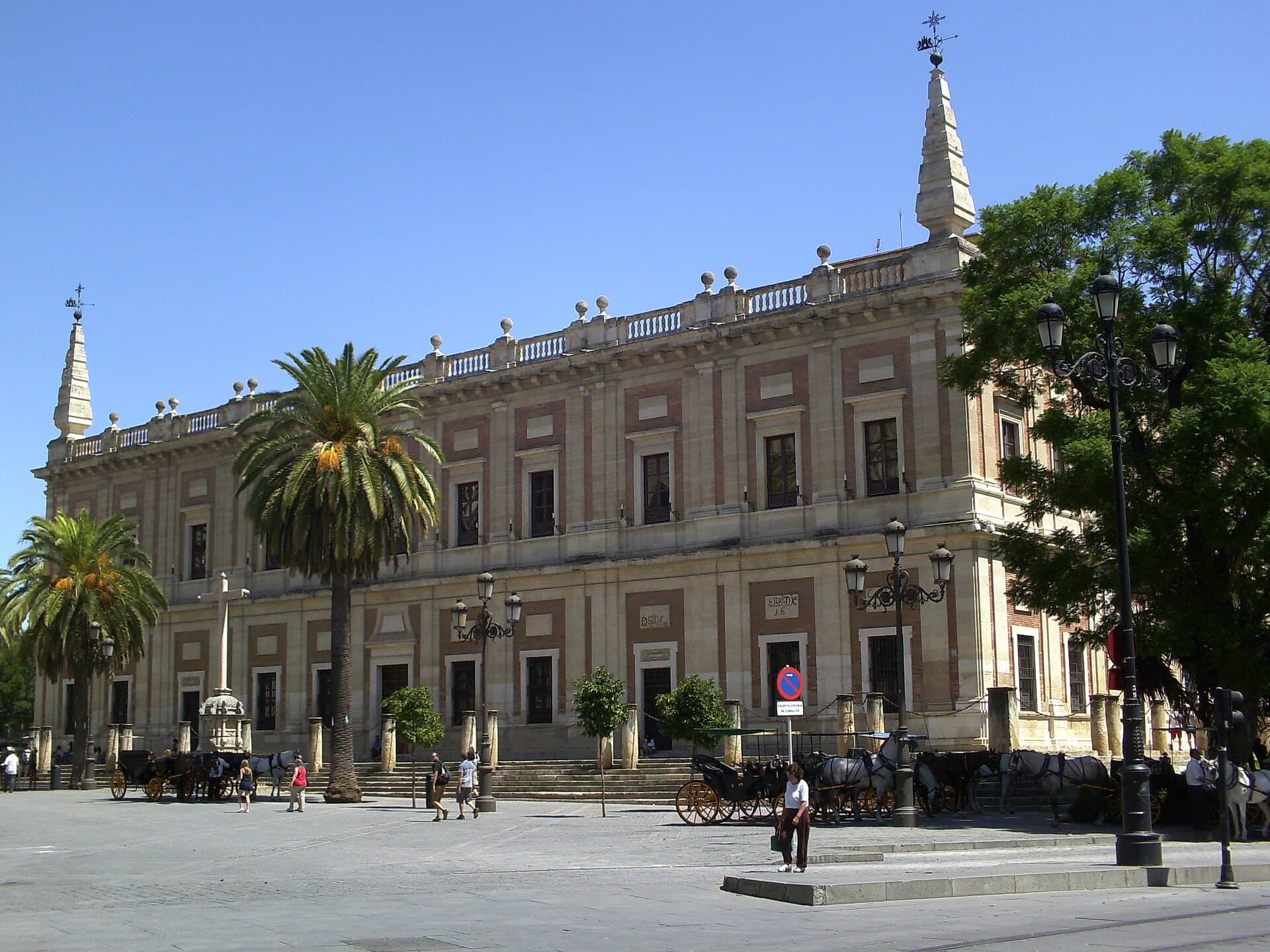 General Archive of the IndiesA sixteenth-century building between the cathedral and the Alcázar, built origin1 minute walk4.3
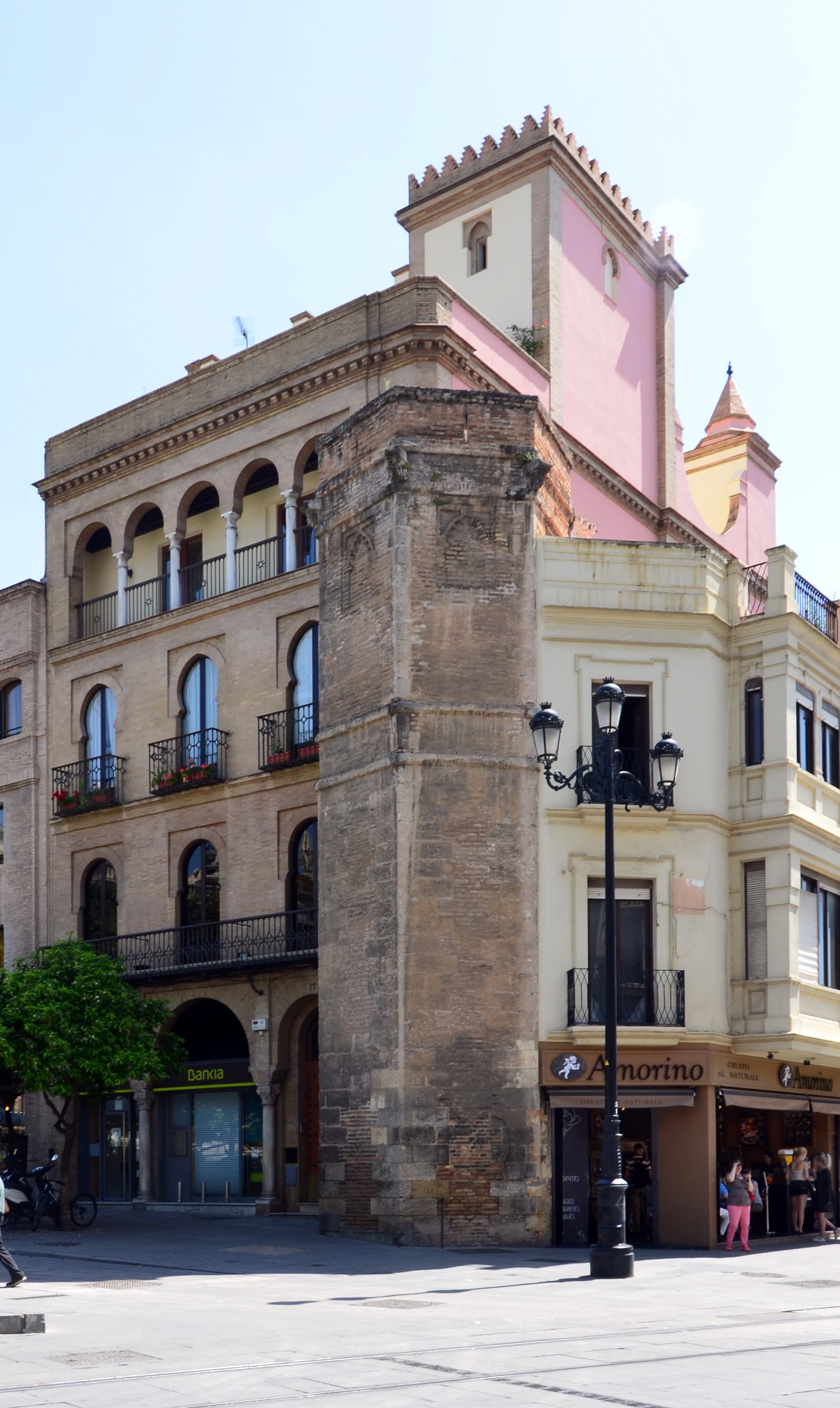 Torre de Abd el AzizAn octagonal Almohad tower on the Avenida de la Constitución in central Seville,2 minutes walk4.3
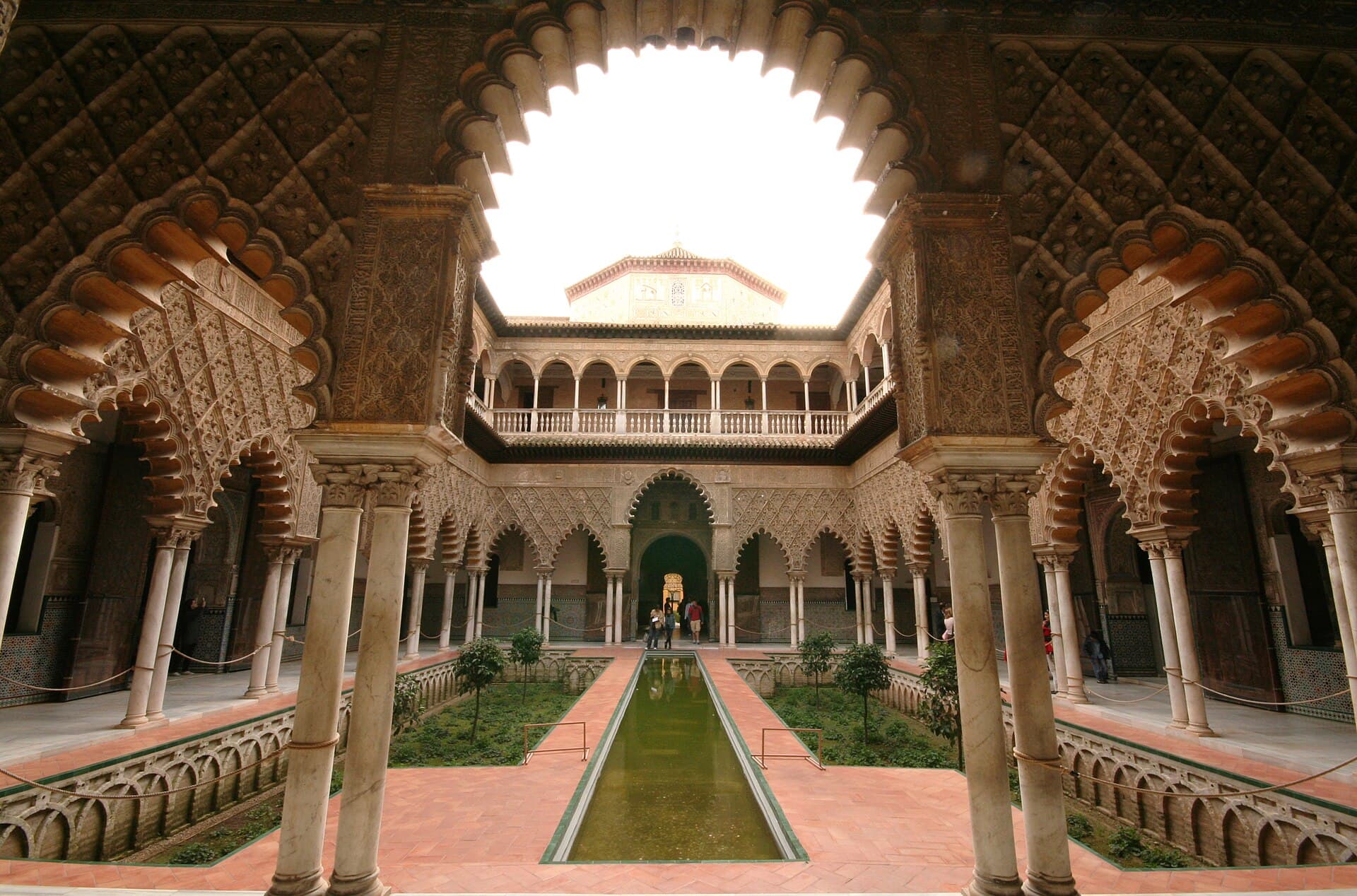 Royal Alcázar of SevilleSeville's Alcázar is Europe's oldest royal palace still in use — and its soul is3 minutes walk4.6
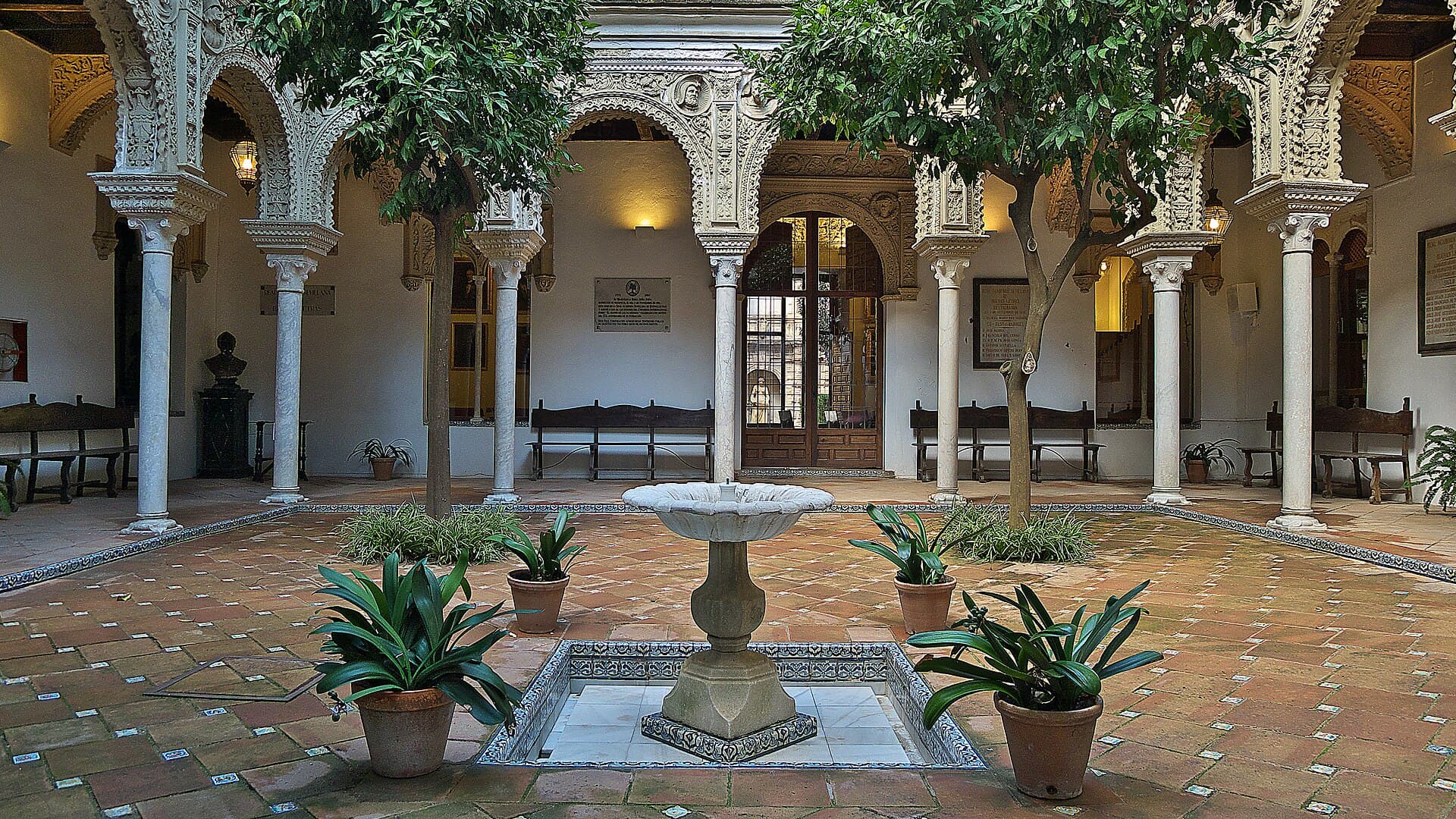 Royal Academy of Fine ArtsSeville's academy of fine arts, an institution going back to the eighteenth cent3 minutes walk4.8
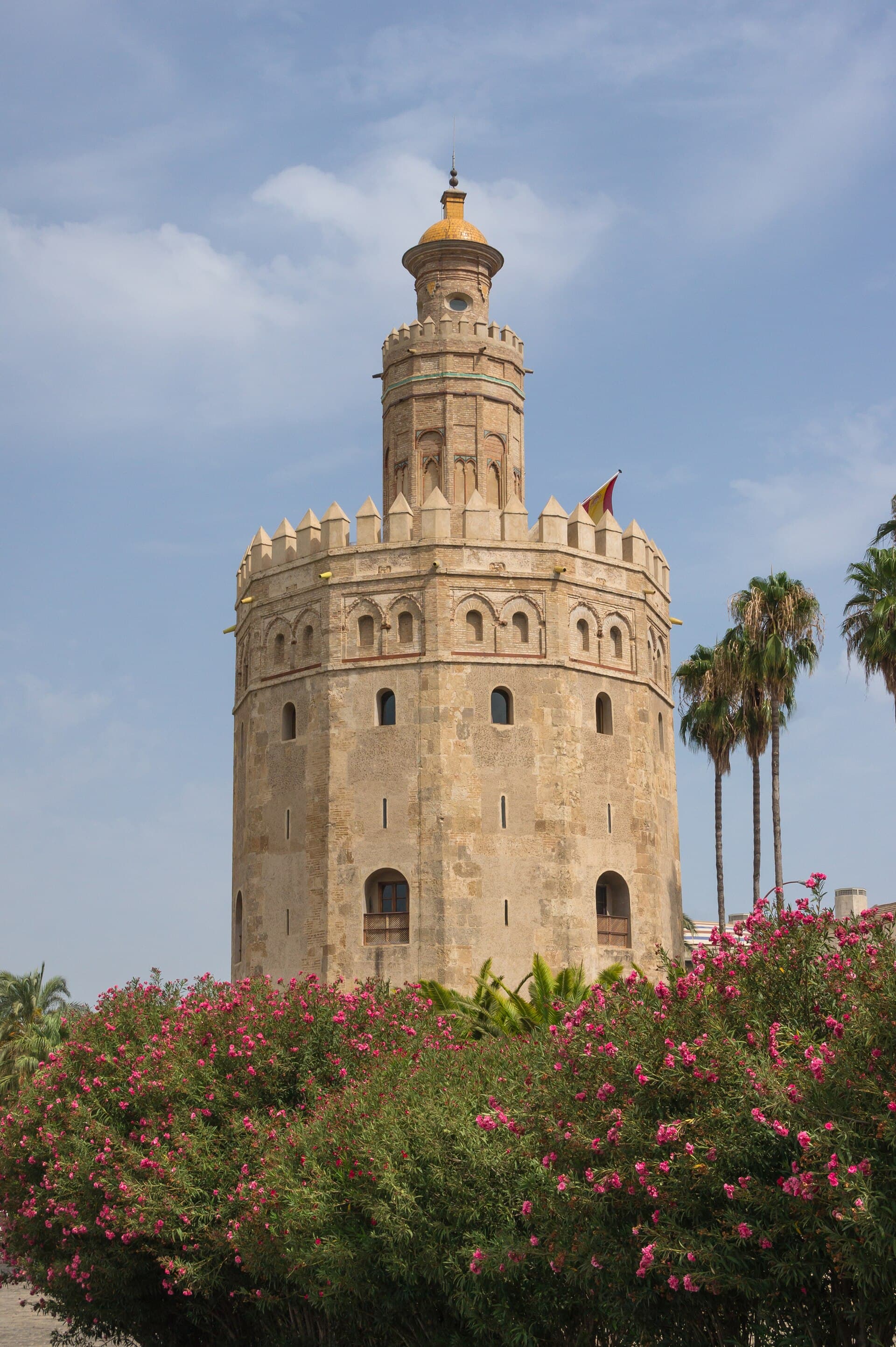 Torre del OroThe Tower of Gold has guarded Seville's river for eight hundred years — Almohad-6 minutes walk4.6
The Giralda (its Almohad storeys up to the Renaissance belfry) and the complete Court of the Oranges with the muqarnas Door of Forgiveness — roughly the outer third. The interior is wholly Gothic, yet the mosque's qibla and proportions remain legible in the cathedral's plan today.
The Alcázar one booked morning, the cathedral another — middays for shaded Santa Cruz between. The compressed single day: cathedral early, Alcázar at noon on tight pre-booking — leaving exhausted and dazzled.