
Twelve Almohad sides
The tower's singular geometry on the Guadalquivir since 1220.
Jebulon — CC0 · Benjamin Smith — CC BY-SA 4.0 · kallerna — CC BY-SA 4.0 · Thomas Dahlstrøm Nielsen — CC BY-SA 4.0
The Tower of Gold has guarded Seville's river for eight hundred years — Almohad-built (1220), twelve-sided on the Guadalquivir, the city wall's final link, with a great chain once stretching across the river to close it against fleets: that chain broke before Castile's ships in 1248, and Seville fell. The name comes from its old gleam: golden plaster or shining tile by rival accounts — restoration settled it: lime mortar glowing gold at sunset. In the age of American treasure the silver convoys moored beside it, making the tower the fleet's strong-room and the city's symbol of wealth. Today a small naval museum fills its floors and the upper terrace gives a fine river view — but its greatest value is as a scene: the riverside pause, the shot from Triana bridge, the promenade beginning at its feet. Three euros and half an hour serve it — and sunset from its bank is a Sevillian rite.
The tower's singular geometry on the Guadalquivir since 1220.
Triana, its bridge and the river from the old guardian's top.
Seville's riverside walk starts at its feet — the golden sunset stroll.
Paseo de Cristóbal Colón, 41001 Seville
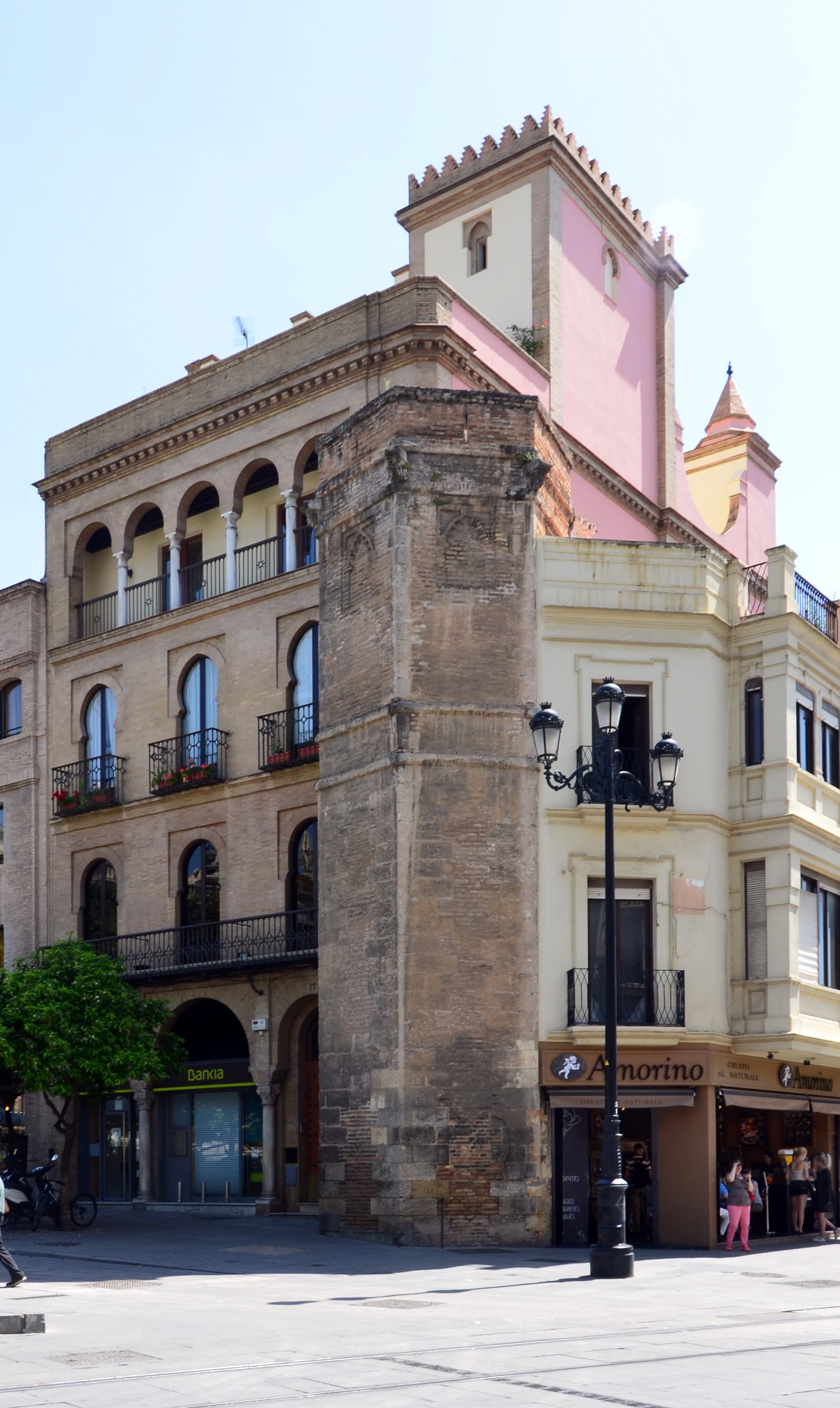 Torre de Abd el AzizAn octagonal Almohad tower on the Avenida de la Constitución in central Seville,4 minutes walk4.3
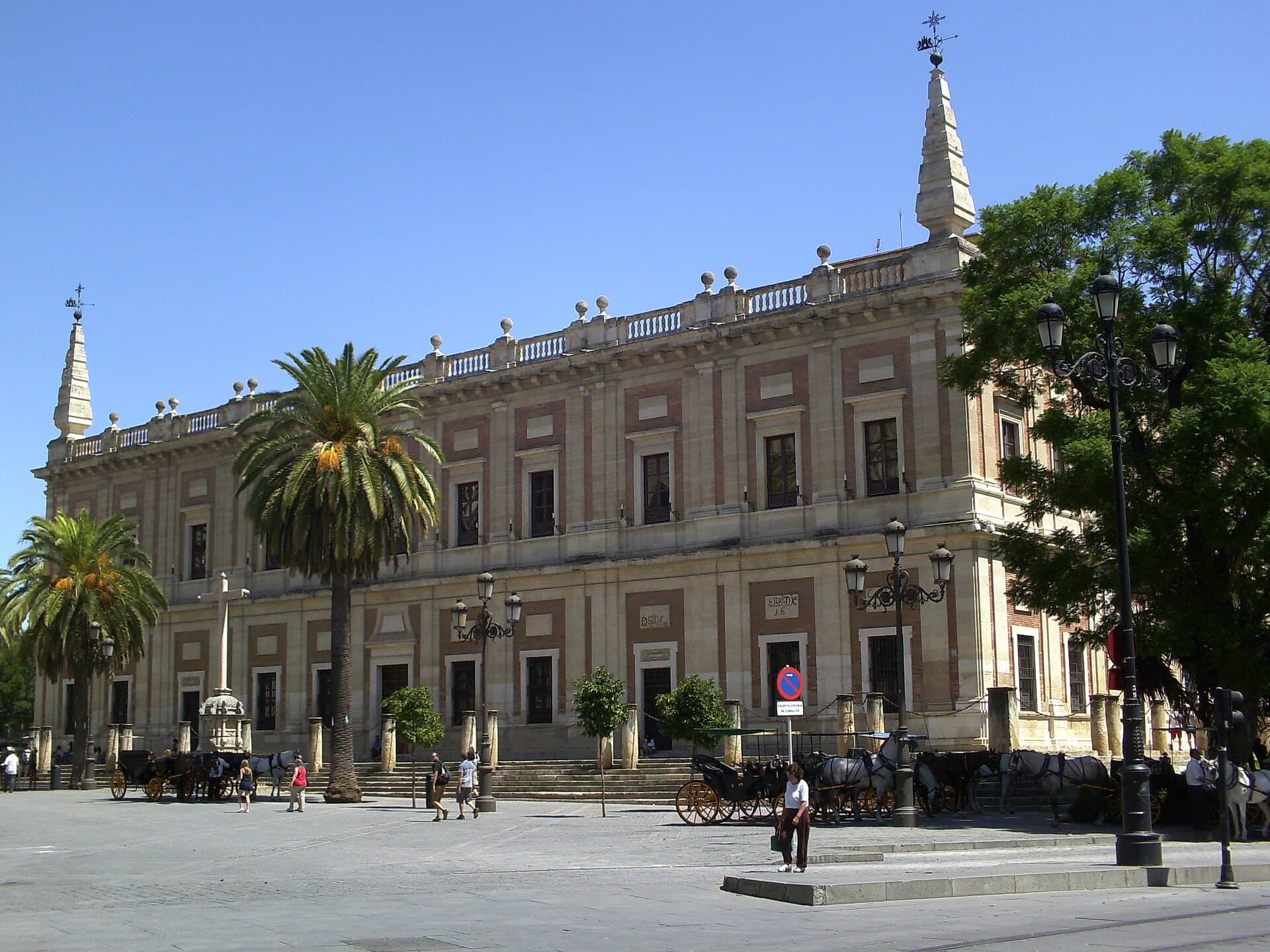 General Archive of the IndiesA sixteenth-century building between the cathedral and the Alcázar, built origin5 minutes walk4.3
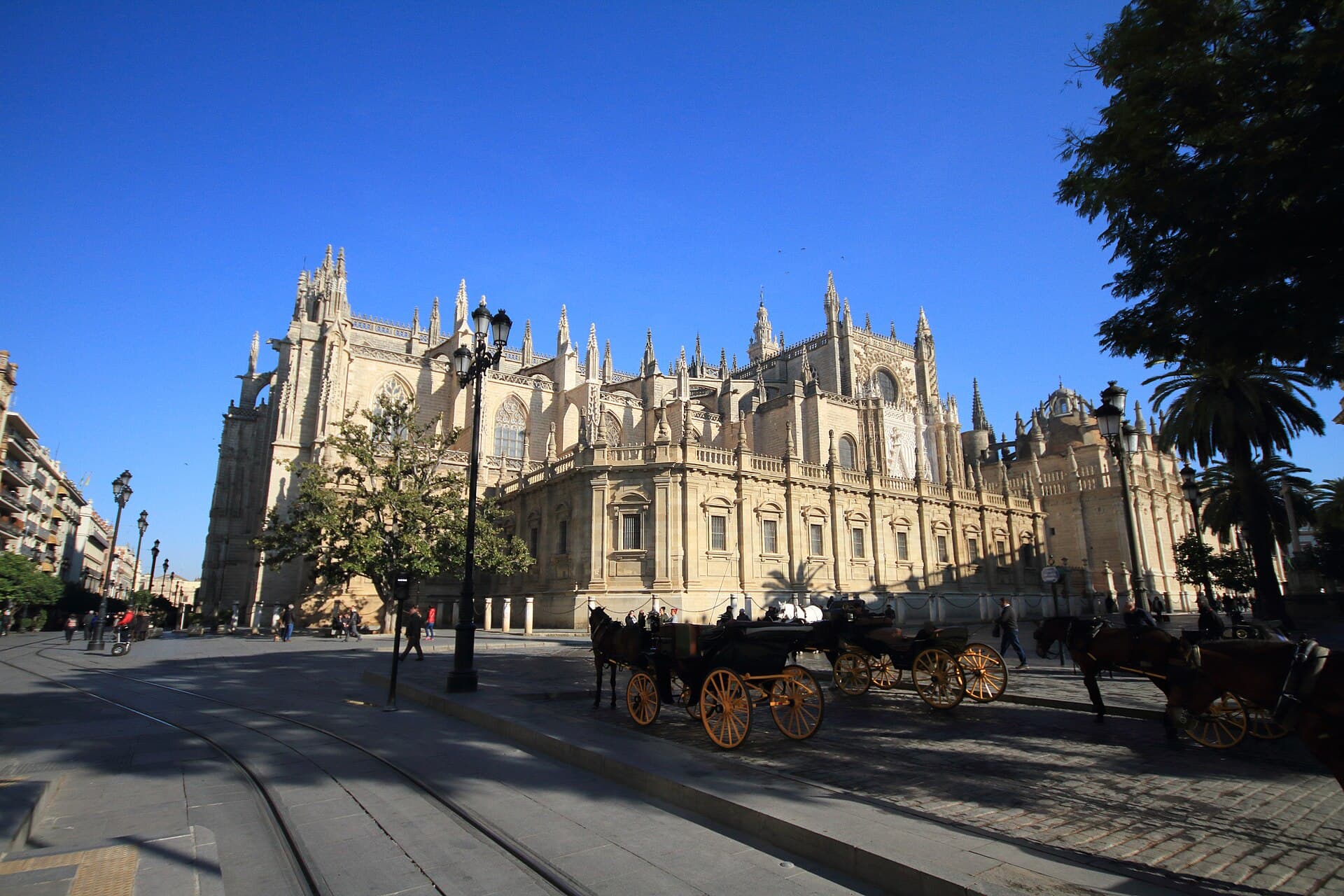 Seville Cathedral & the GiraldaSeville's cathedral is the world's largest Gothic cathedral — and its story begi6 minutes walk4.9
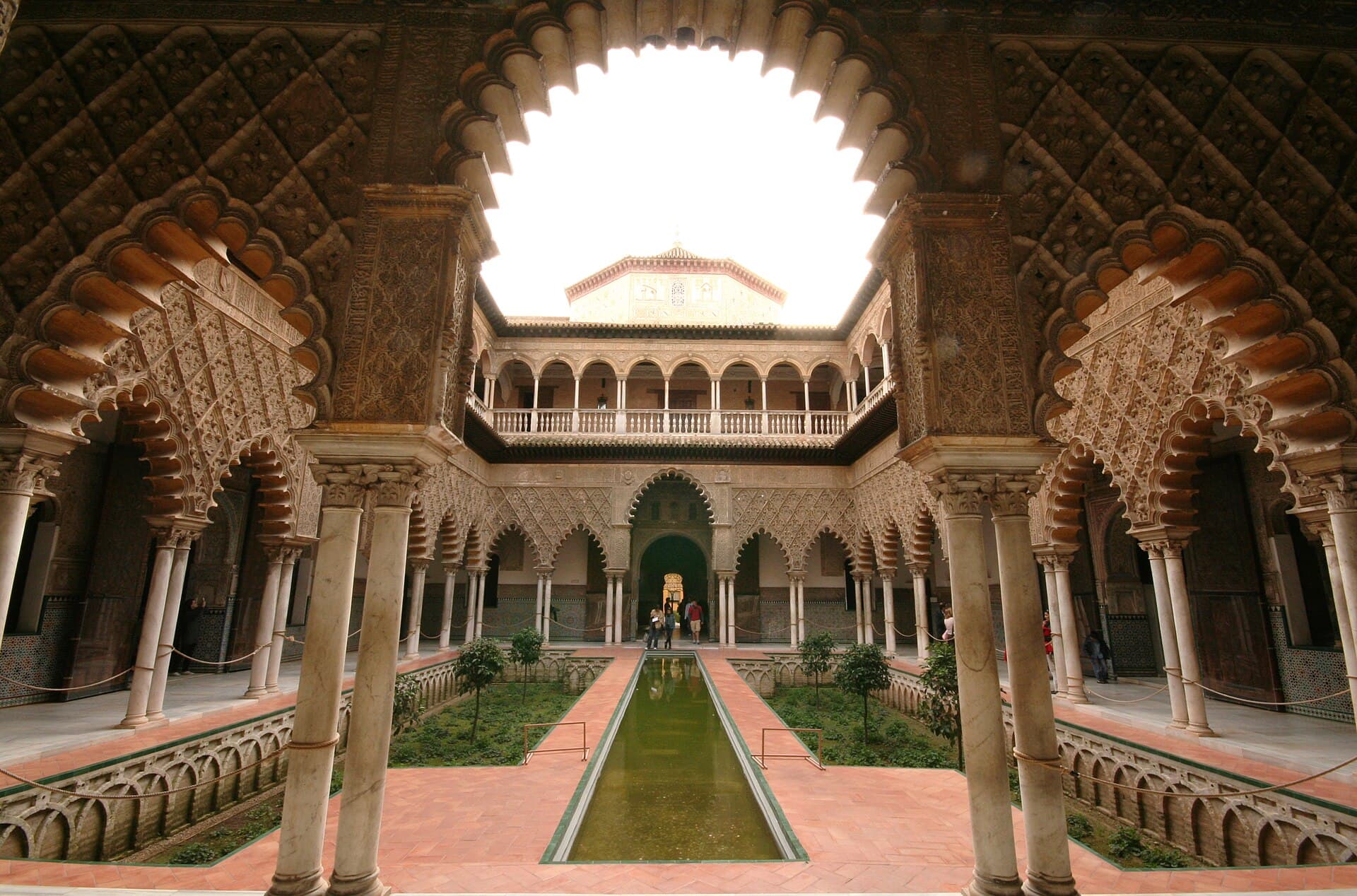 Royal Alcázar of SevilleSeville's Alcázar is Europe's oldest royal palace still in use — and its soul is6 minutes walk4.6
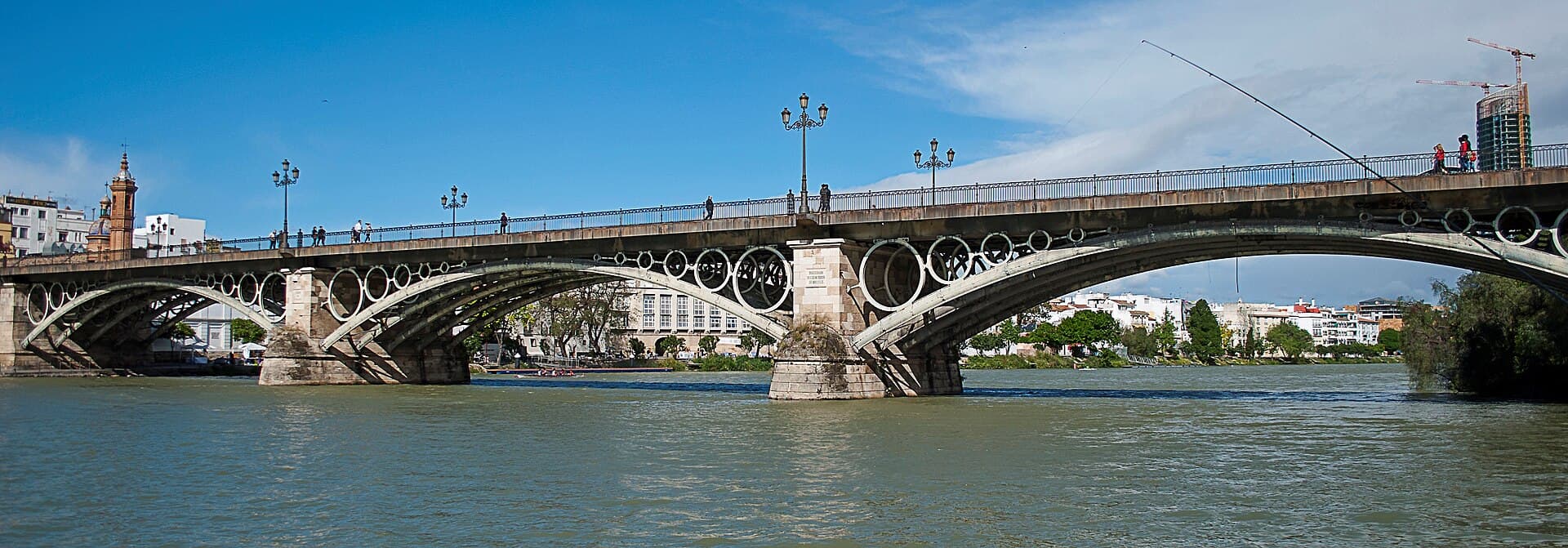 Triana BridgeThe iron bridge linking the historic centre with the Triana district across the 9 minutes walk4.6
Its lesser twin the Tower of Silver survives octagonal among nearby houses, and the chain ran to a vanished third on Triana's bank. Its great Almohad sisters: the Giralda here, Kutubiyya and Hassan in Morocco — one architectural family on both shores.
River cruises leave from its quay (a lovely hour), the historic bullring neighbours it, and the Isabel II bridge crosses to Triana's ceramics and lanes — it is the key to Seville's whole riverbank.