
The pagoda
On the temple axis.
jetsun — CC BY-SA 3.0 · Hyppolyte de Saint-Rambert — CC BY-SA 4.0 · そらみみ — CC BY-SA 3.0 · Chris Gladis from Kyoto, Japan — CC BY 2.0 · Hyppolyte de Saint-Rambert — CC BY-SA 4.0 · Hyppolyte de Saint-Rambert — CC BY-SA 4.0 · Laitche — CC BY-SA 4.0 · Dokudami — CC BY-SA 4.0
A Buddhist temple in Tennōji whose name means «Temple of the Four Heavenly Kings», sometimes regarded as the first Buddhist temple and the oldest state-administered temple in Japan. Prince Shōtoku commissioned it in the 6th century as part of a national project to spread Buddhism, inviting three carpenters from the Korean kingdom of Baekje to lead the building. Its buildings have been rebuilt many times over the centuries, most recently in 1963. The main buildings stand in a straight line from south to north (the middle gate, the five-storey pagoda, the Golden Hall and the Lecture Hall) inside a roofed corridor, one of the oldest temple layouts in Japan. The Golden Hall holds a Buddha statue, and gardens and ponds with turtles surround the temple, with a large stone torii at the west entrance, per visitor guides. The outer grounds are free; the central precinct costs about 500 yen and opens 8:30-16:30 (16:00 in winter), per visitor guides.
On the temple axis.
Around the halls.
In the garden.
Tennōji ward
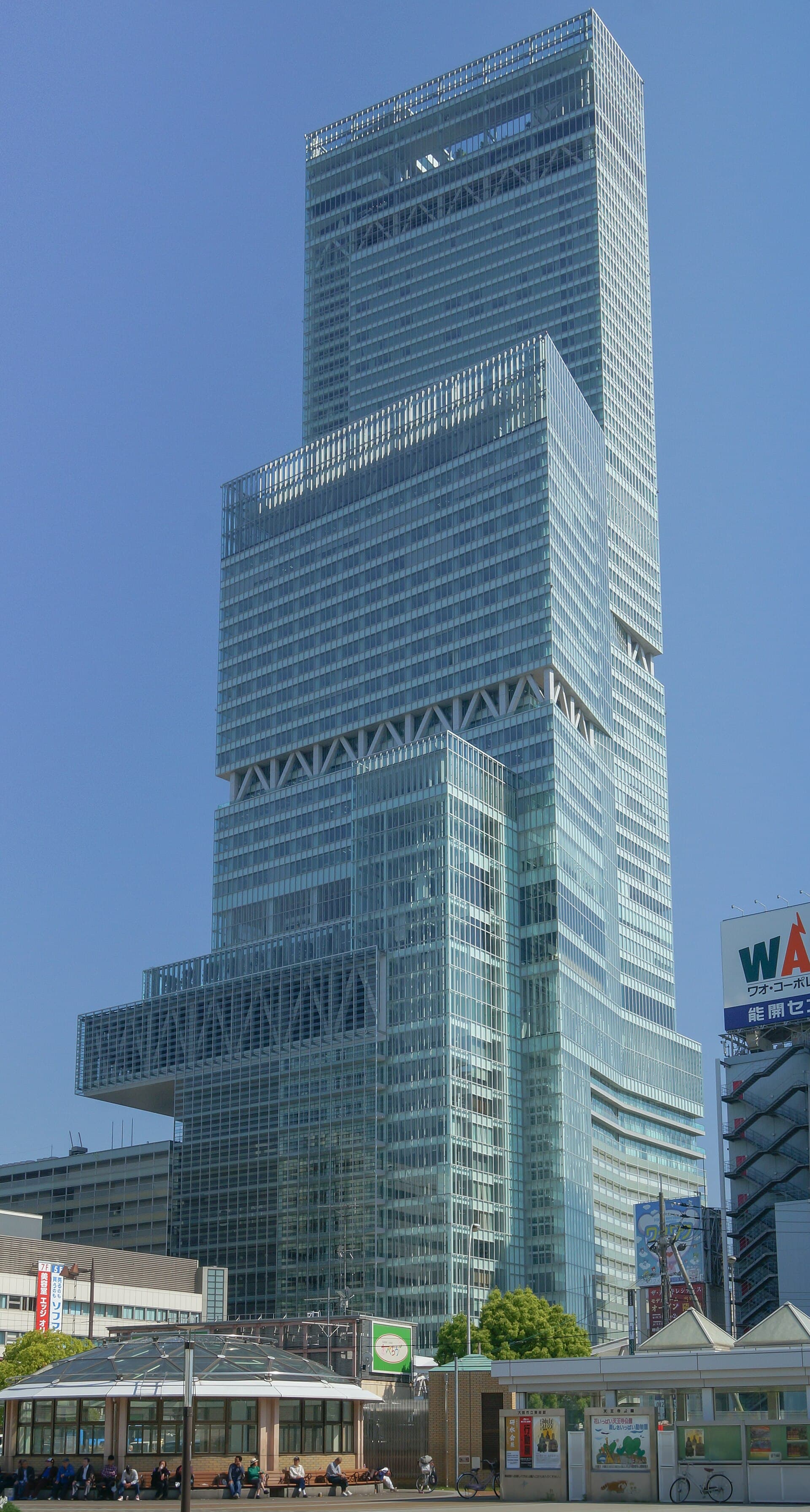 Abeno Harukas and Harukas 300A skyscraper in Abeno by Tennōji Station, 300 metres tall with 62 floors, Japan'12 minutes walk4.7
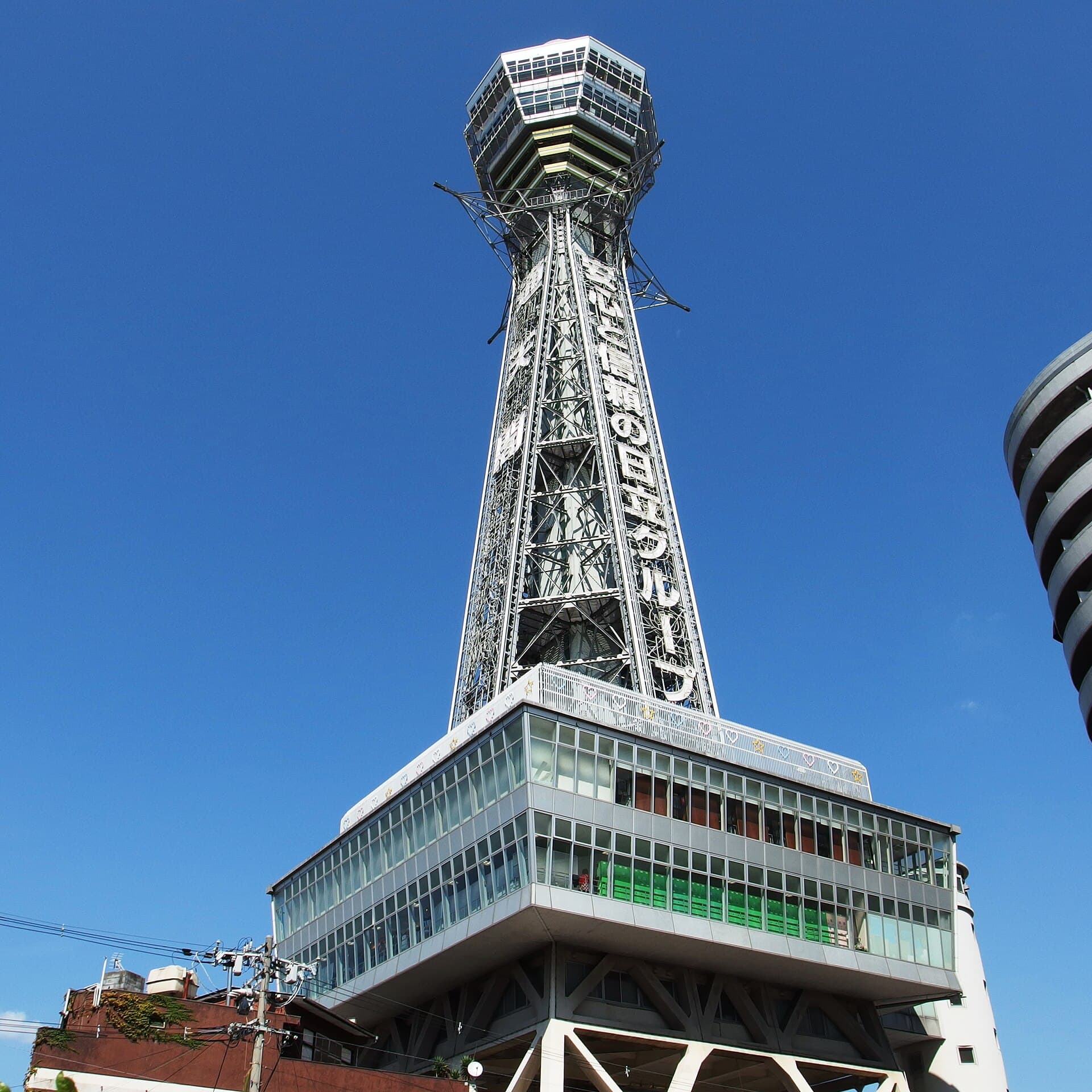 Tsūtenkaku Tower and ShinsekaiA tower and Osaka landmark in the Shinsekai district, its name meaning «Tower Re12 minutes walk4.0
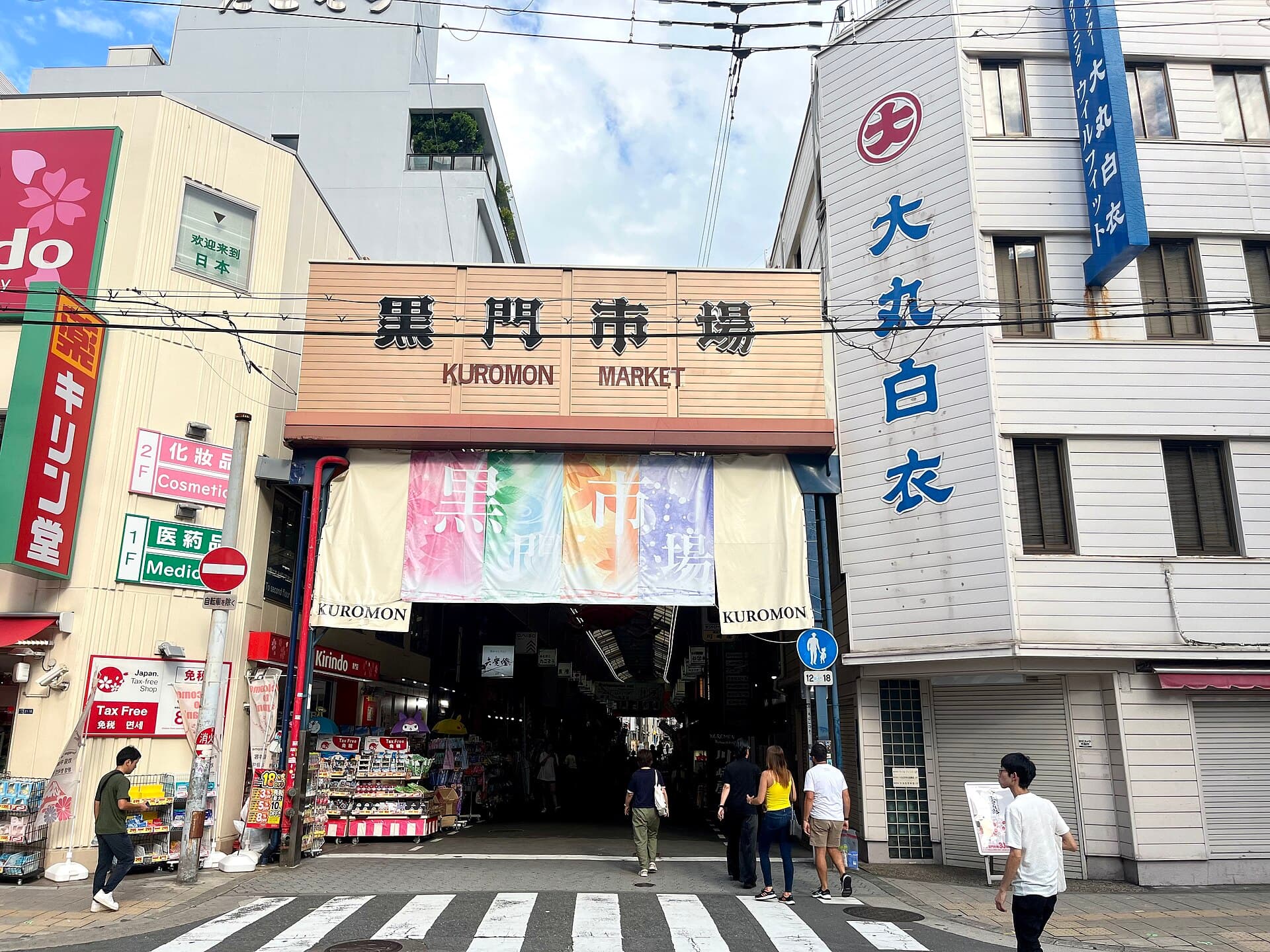 Kuromon MarketA popular covered market in Nipponbashi near Namba, known locally as «Osaka's ki19 minutes walk4.2
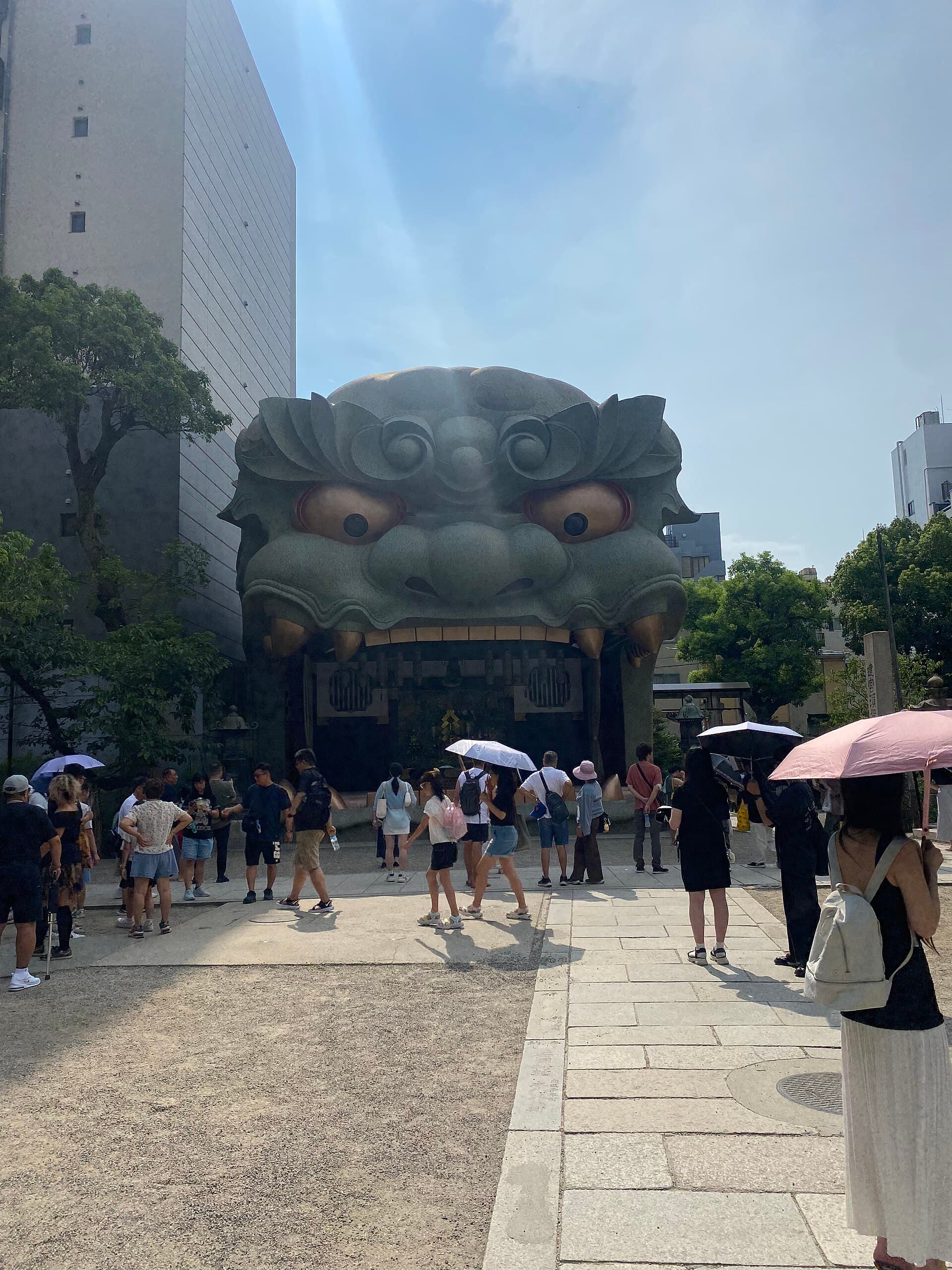 Namba Yasaka Shrine and its Lion HeadA small Shinto shrine near Namba, famous for one extraordinary building: a stage25 minutes walk4.4
It is sometimes regarded as Japan's first Buddhist temple, commissioned by Prince Shōtoku in the 6th century, with its buildings aligned in one of the oldest temple layouts.