
The frieze of heads
Seventy-one individual fifteenth-century faces, free from the street.
SchiDD — CC BY-SA 4.0 · Bernard Gagnon — CC BY-SA 4.0 · lienyuan lee — CC BY 3.0 · Jean-Auguste Brutails — Public domain
UNESCO-listed, and not for beauty alone but for **how it was built**: this cathedral is made **of stone only** — no timber, no brick and no mortar in its structure. Its dome and roof are assembled from **interlocking stone slabs** held by carved grooves and tongues, like joinery translated into stone. The technique has no known parallel in fifteenth-century Europe, and it is the reason for the listing. Construction took over **a hundred years** (1431-1536) under successive architects: Italians began it in Gothic, then **Juraj Dalmatinac** took over, turned it Renaissance, and devised the slab system. Its best-known external feature is the **frieze of heads**: **seventy-one** carved heads running round the rear apse — not saints or symbols but the **faces of Šibenik''s inhabitants** in the fifteenth century, men, women and children, with clear individual features. They are thought to be those who funded the building, and it is also said that Dalmatinac carved in those who refused to pay. Note: it survived earthquakes and the shelling of 1991, after which its dome was restored.
Seventy-one individual fifteenth-century faces, free from the street.
Interlocking slabs holding each other, with no European parallel.
A wholly carved chamber below floor level, Dalmatinac''s finest work.
Trg Republike Hrvatske 1, Šibenik
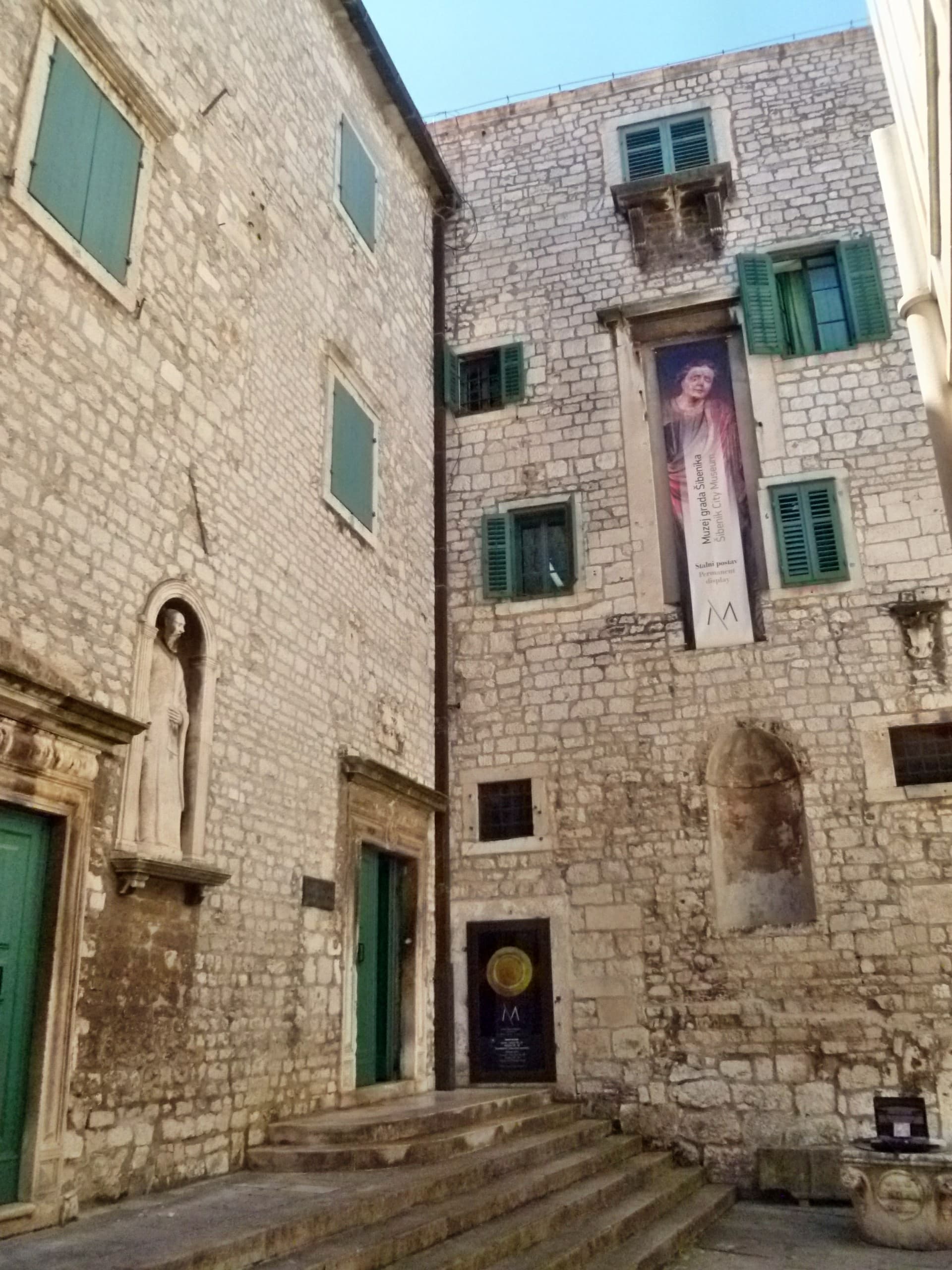 Šibenik City MuseumThe regional museum for Šibenik and its surroundings, occupying the **Venetian g1 minute walk4.7
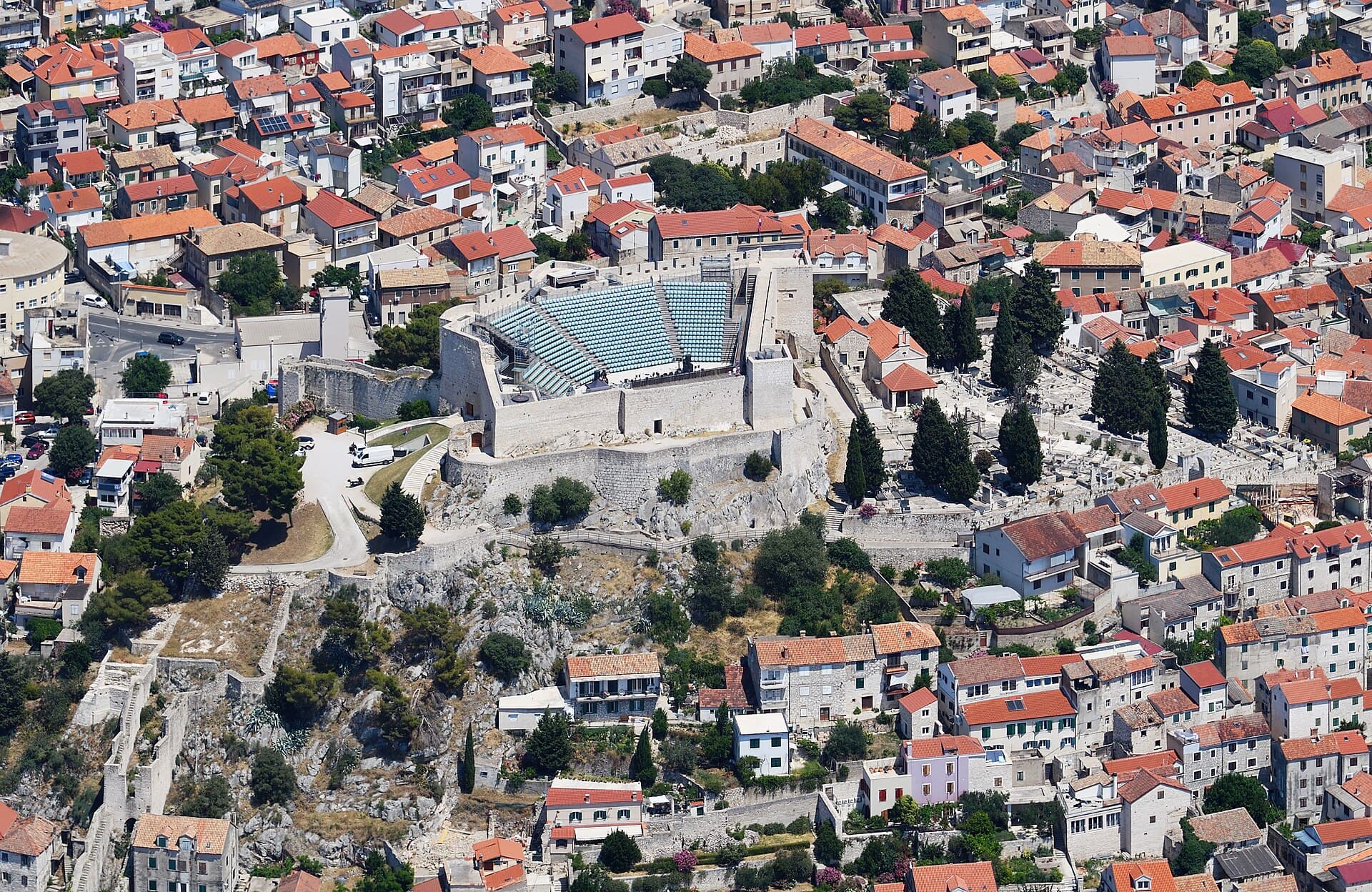 St Michael''s FortressThe oldest and highest of Šibenik''s four fortresses, standing on a rock directl3 minutes walk4.5
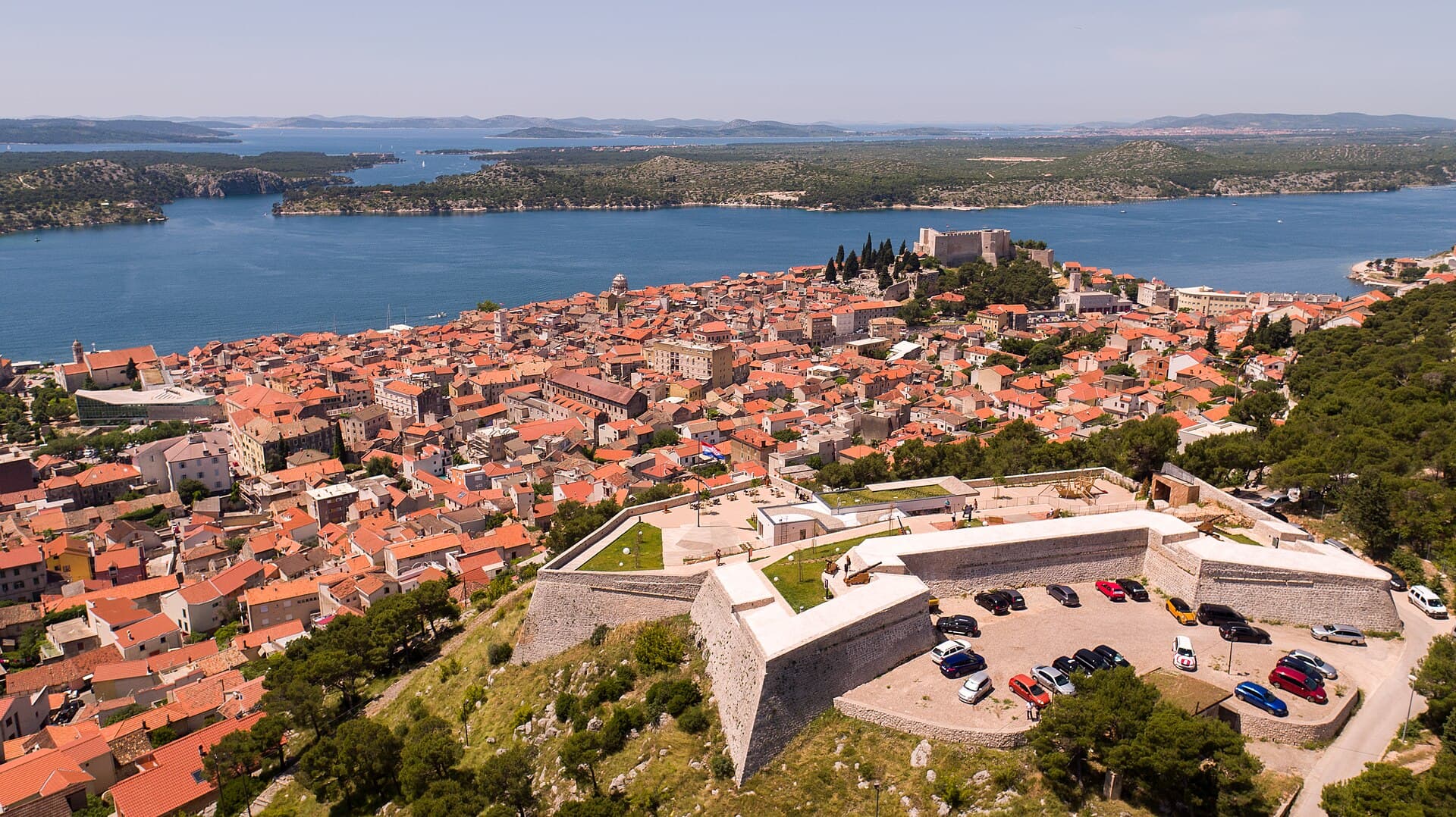 Barone FortressA fortress on the hill east of the city, built in its entirety in **two months**8 minutes walk4.7
Not its size or its ornament — both modest by European cathedral standards — but its **structural solution**. In the fifteenth century roofs were built as timber frames covered in tile, or as stone vaults set in mortar. Here **Juraj Dalmatinac** designed stone slabs cut with grooves and tongues so they interlock like joinery, and the dome, roof and walls were assembled from those slabs **with no binding material at all**. The result is a building standing on compression and interlock alone. UNESCO describes it as a rare exchange between northern, Italian and Dalmatian building traditions, and it is also why it survived earthquakes. ⚠ The technique was never repeated — no second building was ever raised with it.