
The guild towers
Nine towers still carrying their trades' names.
Paszczur01 — CC BY-SA 3.0 ro · Yamen — CC BY-SA 4.0 · Yamen — CC BY-SA 4.0 · Yamen — CC BY-SA 4.0
Sighișoara Citadel is on the World Heritage list, and its precise description is what makes it exceptional: **the last inhabited medieval citadel in Eastern Europe**. It is not an archaeological site or an open-air museum — it is a district where people live inside the walls, and have for eight centuries. Saxon settlers founded it in the twelfth century on a hill above the Târnava river. It reached its height in the fifteenth and sixteenth centuries when nineteen craft guilds worked there, and **each guild built a tower and took responsibility for defending it** — of the fourteen original towers nine survive, each still carrying its trade's name: the tinsmiths, the blacksmiths, the tanners, the butchers, the tailors. Within the walls are narrow cobbled streets and houses painted yellow, green and pink, a small square, and a church on the hilltop reached by a covered stair. Walking the citadel is **free and always open**; what you pay for is entry to the towers and museums. **About 70 km from Sibiu, an hour and a quarter by car.**
Nine towers still carrying their trades' names.
Painted houses lived in inside the walls.
Cetatea Sighișoara, Sighișoara
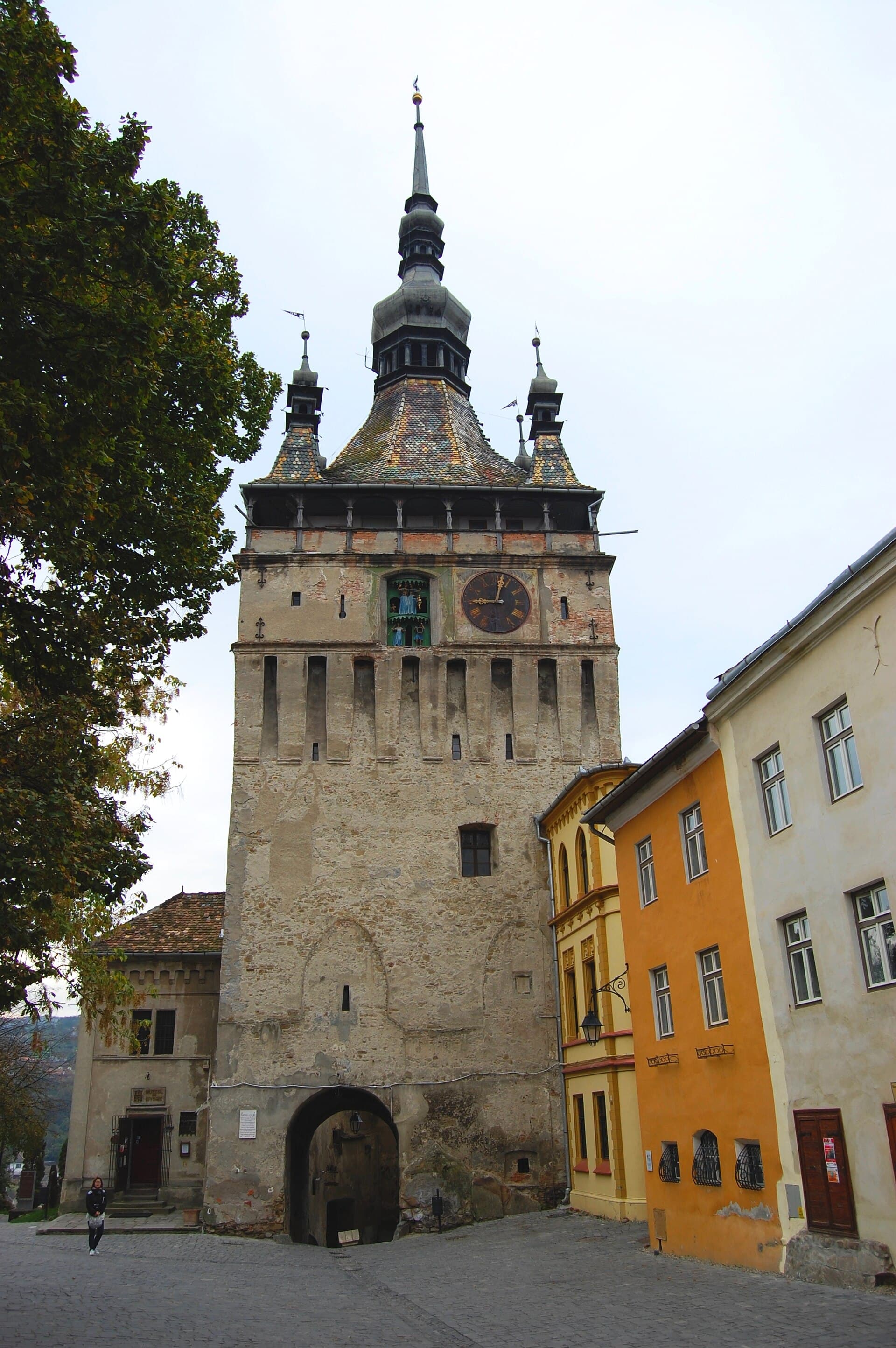 The Clock Tower of SighișoaraThe Clock Tower is the image of Sighișoara: sixty-four metres tall under a roof 1 minute walk4.8
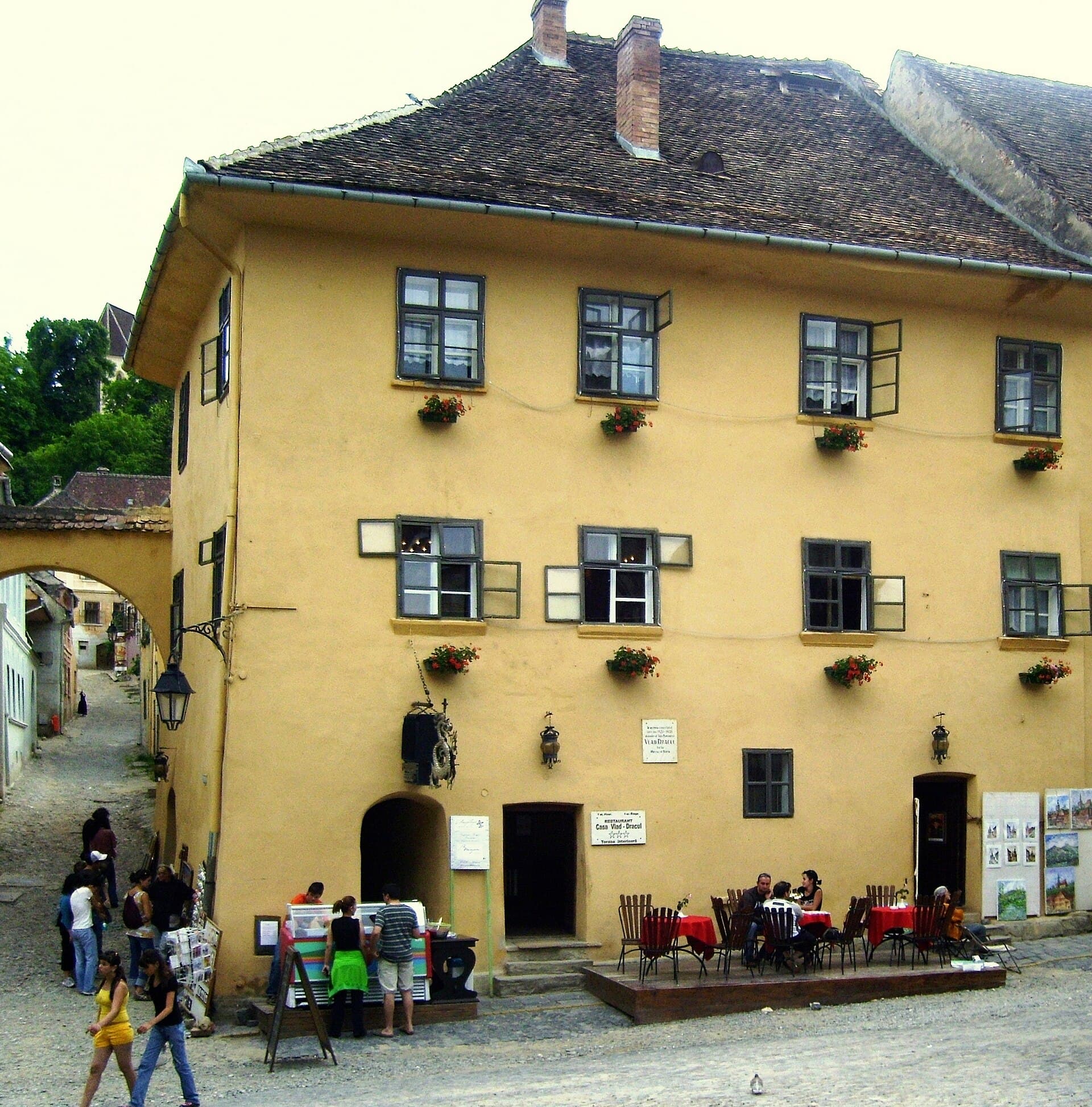 The Vlad Dracul HouseA yellow three-storey house on the corner of the citadel square, with a plaque s1 minute walk3.7
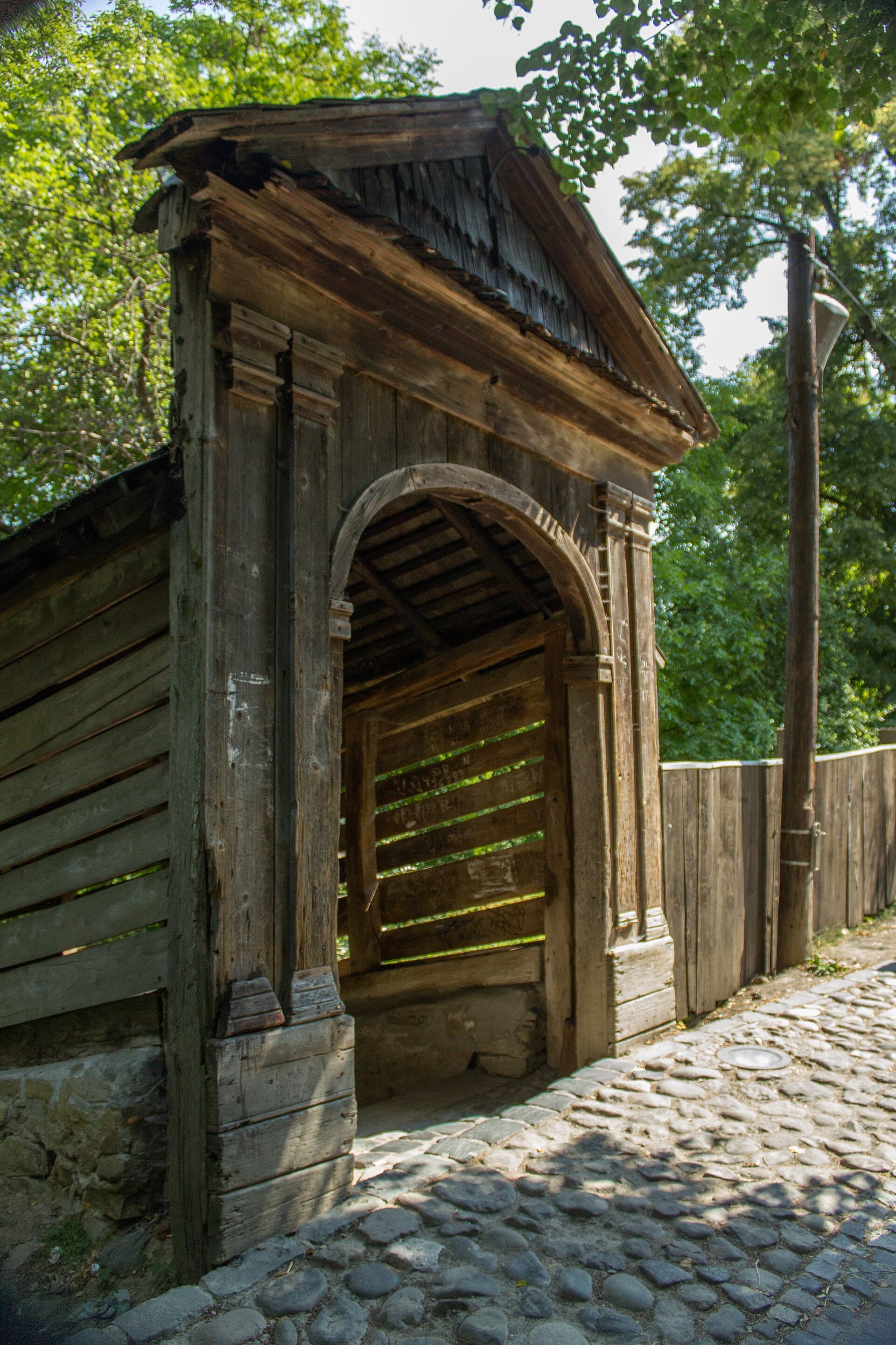 The Covered StairwayThe Scholars' Stairs are a long timber tunnel climbing from the heart of the cit2 minutes walk4.8
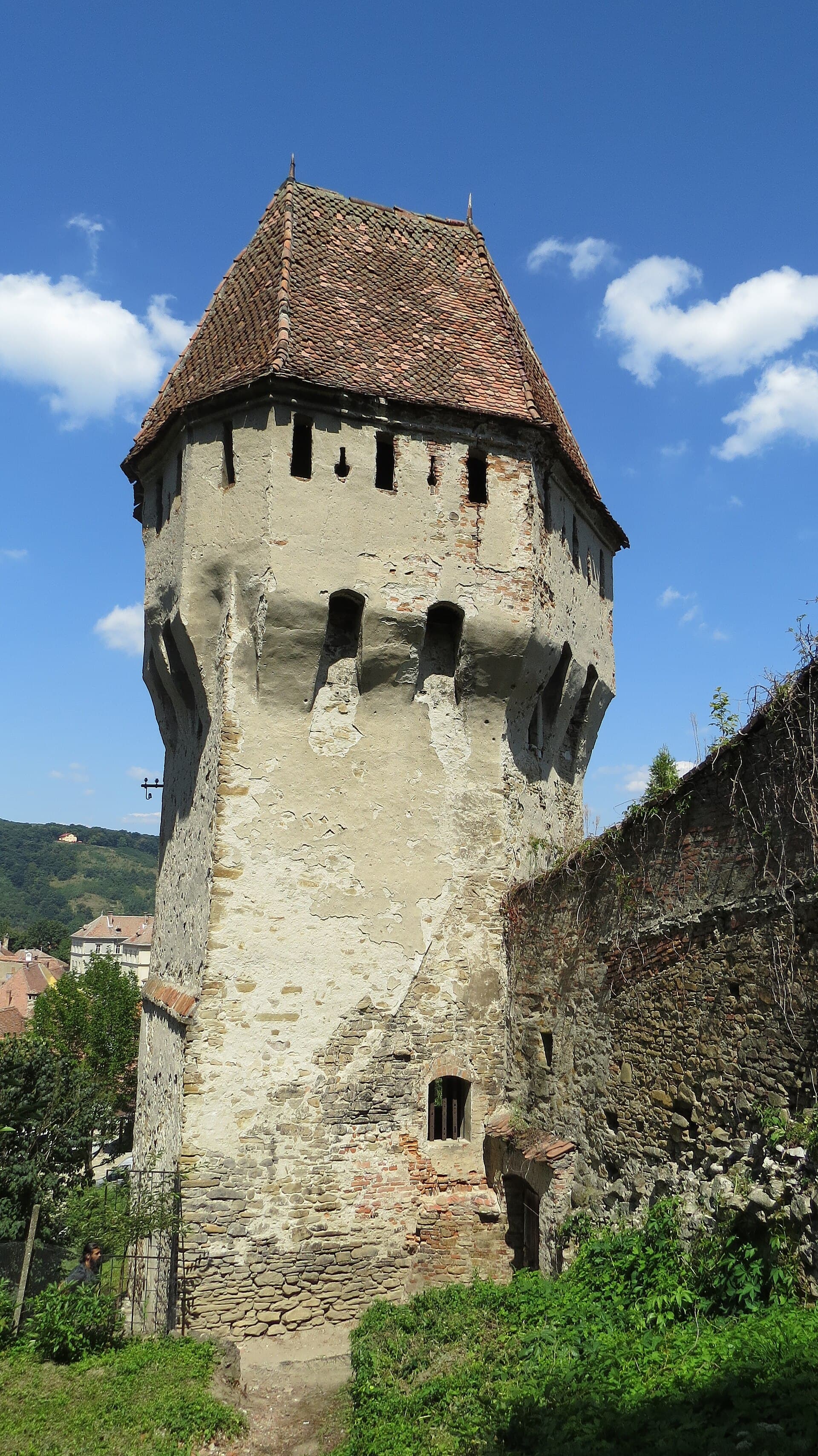 The Tinsmiths' TowerThe Tinsmiths' Tower is one of the nine surviving towers of Sighișoara's walls, 3 minutes walk4.5
By train it is easier than by car if you have no car: direct services from Brașov (about two and a half hours), from Cluj, and from Bucharest (about five). The station is below the hill and the citadel is a ten-minute walk up. From Sibiu it is easiest by car, an hour and a quarter. One day is enough to see everything inside the walls. But **a night inside the citadel genuinely earns itself**: the coaches leave at dusk, and the cobbled streets and yellow lamps are then yours alone — a completely different place from the crowded daytime.