
The open gallery
All the citadel roofs from above.
h_laca — CC BY 3.0 · Txllxt TxllxT — CC BY-SA 4.0 · Txllxt TxllxT — CC BY-SA 4.0 · Jocelyn Erskine-Kellie from London, UK — CC BY-SA 4.0
The Clock Tower is the image of Sighișoara: sixty-four metres tall under a roof of coloured tile with four small turrets at its corners, standing over the citadel's main gate since the fourteenth century. It housed the town council, which is why it is so much larger than the rest — the one tower built not by a guild but by the town itself. It was restored to its present form after the fire of 1676. The clock is what people stop to see: a seventeenth-century mechanism that turns **wooden figures** representing the days of the week and their Roman gods, so the figure on show changes at midnight. The tower has two faces with two different sets of figures, one towards the citadel and one towards the lower town. Inside is the **town history museum** on several narrow floors joined by a wooden stair, ending at an open gallery looking over all the citadel roofs. **The stair is narrow and steep** and does not suit anyone who finds that difficult.
All the citadel roofs from above.
Its workings exposed inside the tower.
Piața Muzeului 1, Sighișoara
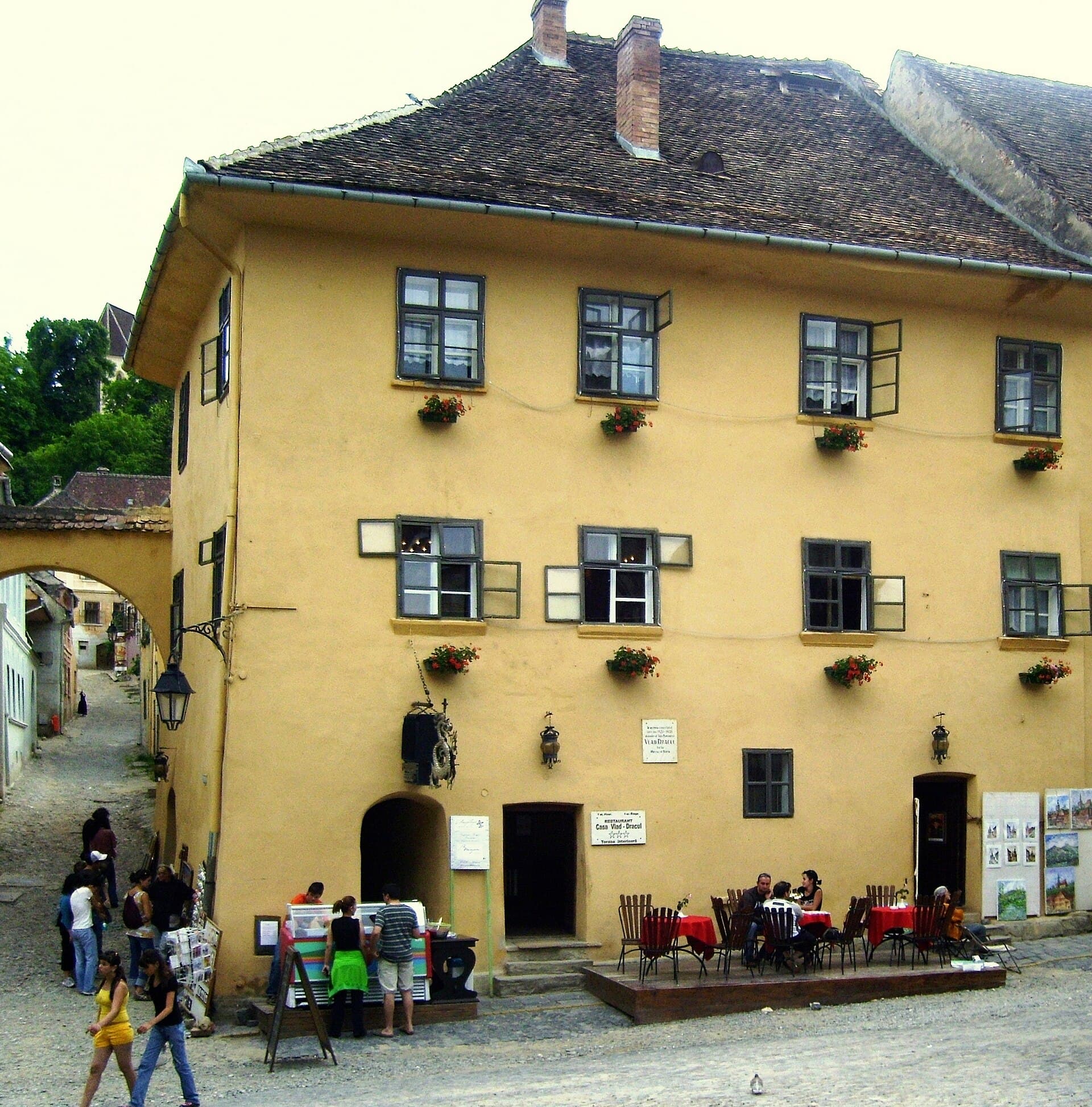 The Vlad Dracul HouseA yellow three-storey house on the corner of the citadel square, with a plaque s1 minute walk3.7
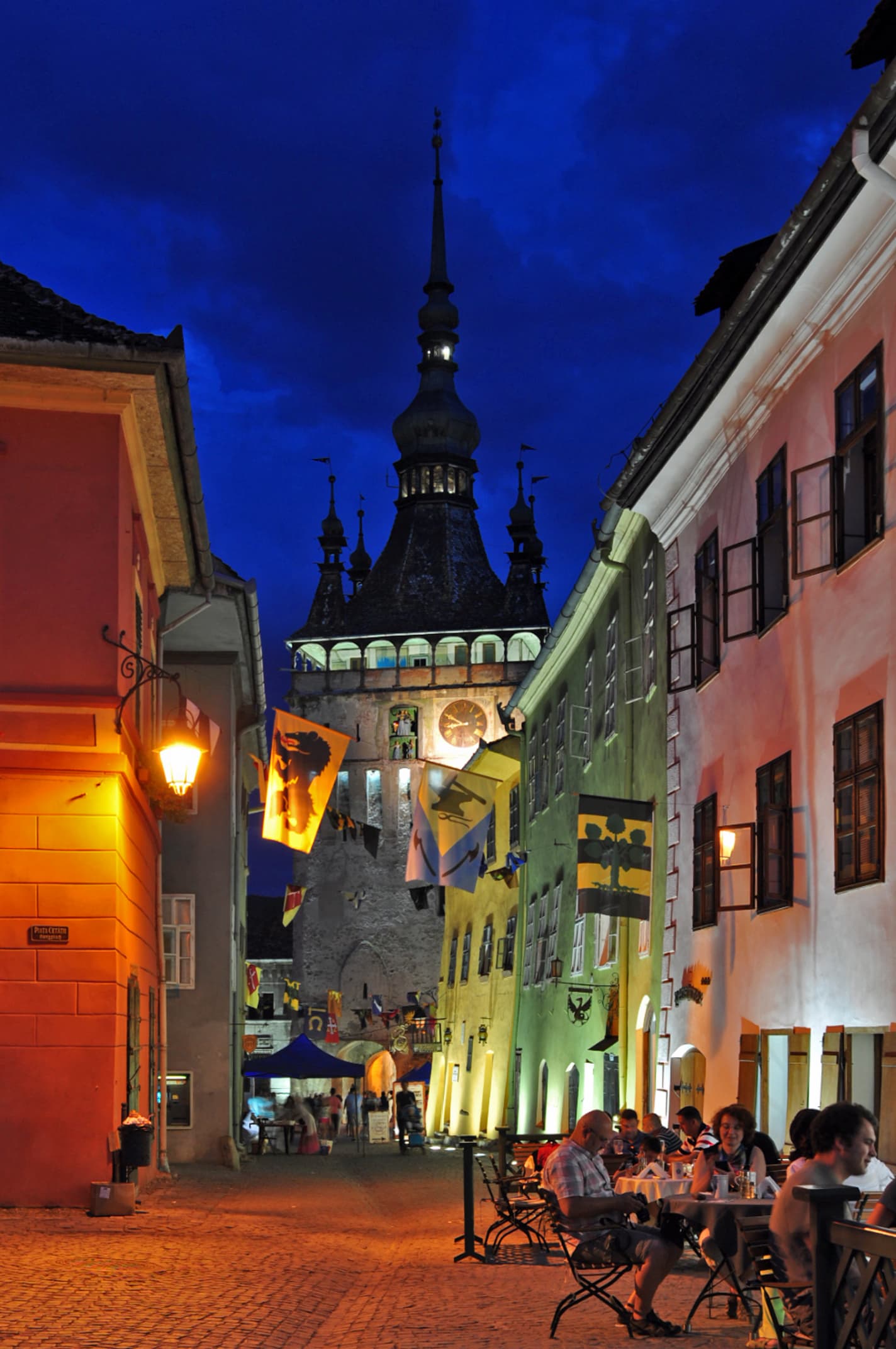 Sighișoara CitadelSighișoara Citadel is on the World Heritage list, and its precise description is1 minute walk4.7
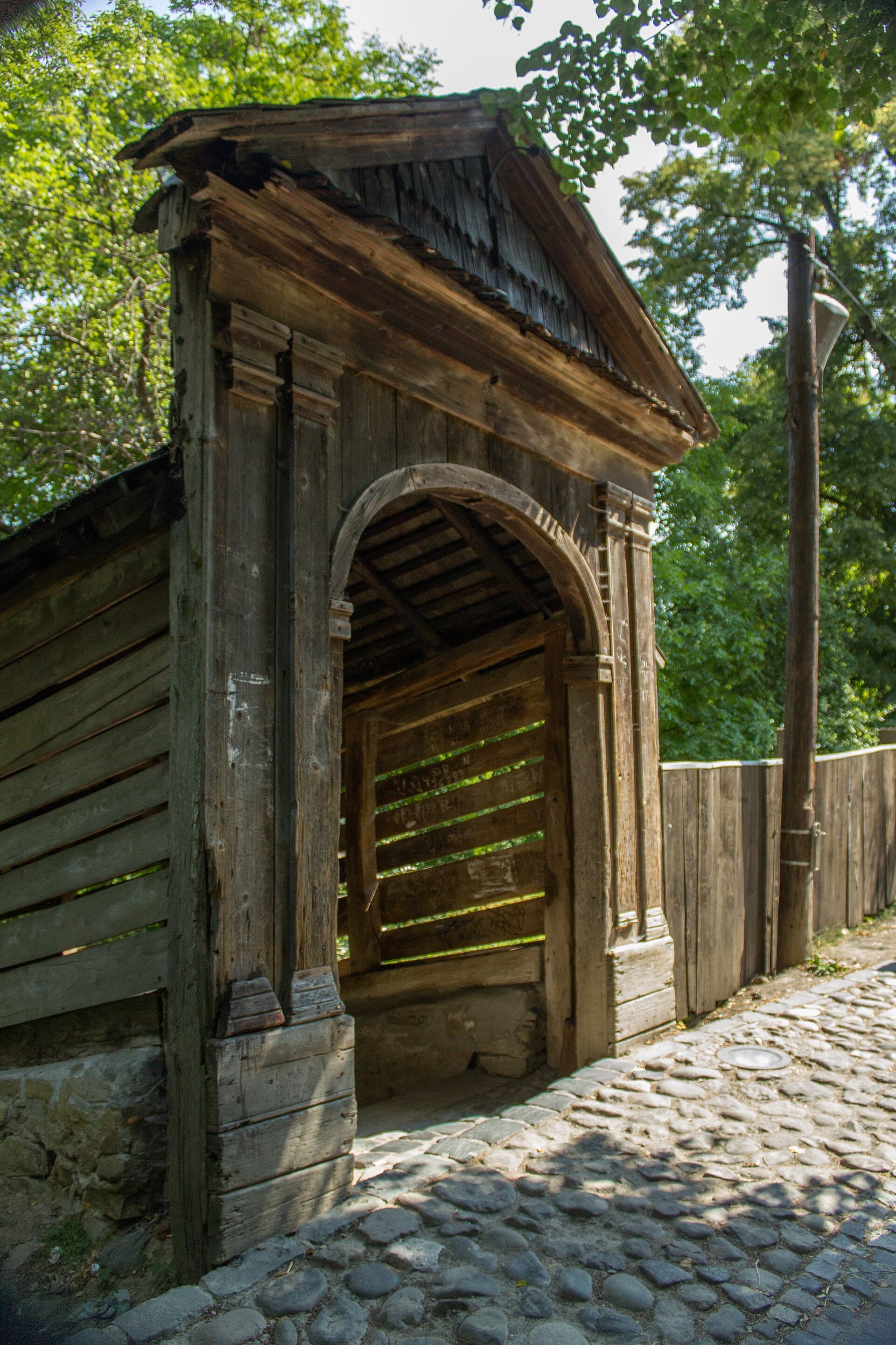 The Covered StairwayThe Scholars' Stairs are a long timber tunnel climbing from the heart of the cit2 minutes walk4.8
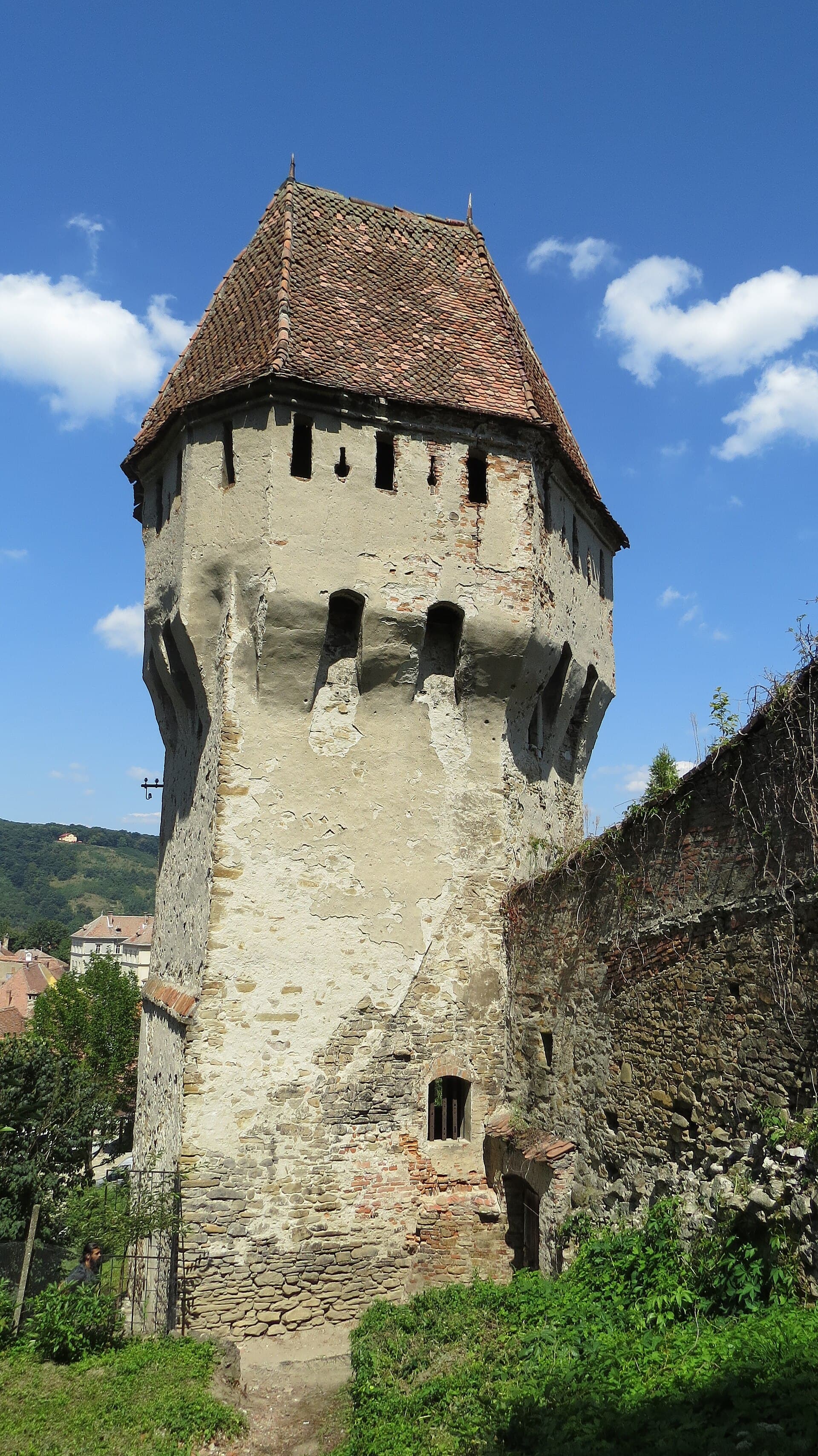 The Tinsmiths' TowerThe Tinsmiths' Tower is one of the nine surviving towers of Sighișoara's walls, 2 minutes walk4.5
Walking the citadel itself is entirely free — the streets, the squares and the walls from outside. Tickets are separate for three places mainly: the **Clock Tower** and its history museum, the **Vlad Dracul House**, and the small torture museum. There is usually no official combined ticket covering everything, though the Clock Tower sometimes sells one taking in its subsidiary displays — ask at the window. The church on the hill and the covered stair are free or take a nominal charge.