
The golden mosaics
More than eight thousand square metres of gold across domes and walls.
Nino Barbieri — CC BY-SA 2.5 · Another Believer — CC BY-SA 4.0 · Michael_Burgholzer — CC BY-SA 4.0 · Michael_Burgholzer — CC BY-SA 4.0
St Mark's is Venice's most famous building and its strangest: a church of Byzantine domes and golden mosaic that looks imported from Istanbul rather than Italy — which is precisely its history. Venice built it in the Eastern manner because its wealth and identity came from Eastern trade, and dressed it in columns, marble and treasures its ships carried home from Constantinople. The interior is covered in more than eight thousand square metres of gold mosaic that ignites when the light comes in — best seen towards midday, when it is fully lit. The church was built to hold the relics of St Mark, smuggled out of Alexandria by two Venetian merchants in 828 in a famous tale. The climb to the loggia over the entrance earns its small extra fee: the original bronze horses brought from Constantinople, and a view over the whole square.
More than eight thousand square metres of gold across domes and walls.
The original bronze horses upstairs, spoils of 1204.
The golden altarpiece set with thousands of gems — medieval goldsmithing at its peak.
The whole of St Mark's Square seen from above the doorway.
Piazza San Marco, 30124 Venice
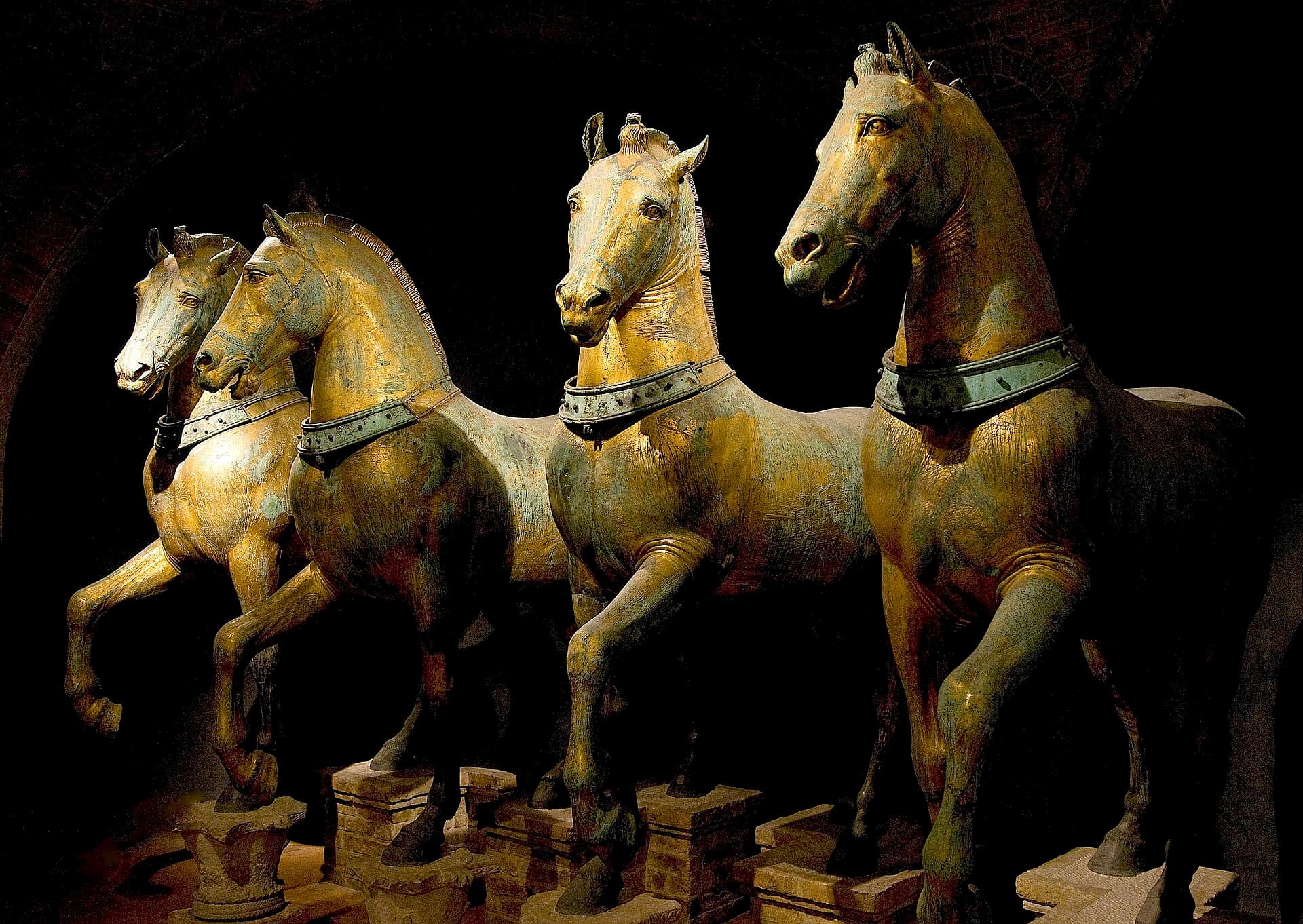 Museo di San MarcoThe four horses you see from the square, above the main door, are replicas. The 1 minute walk4.8
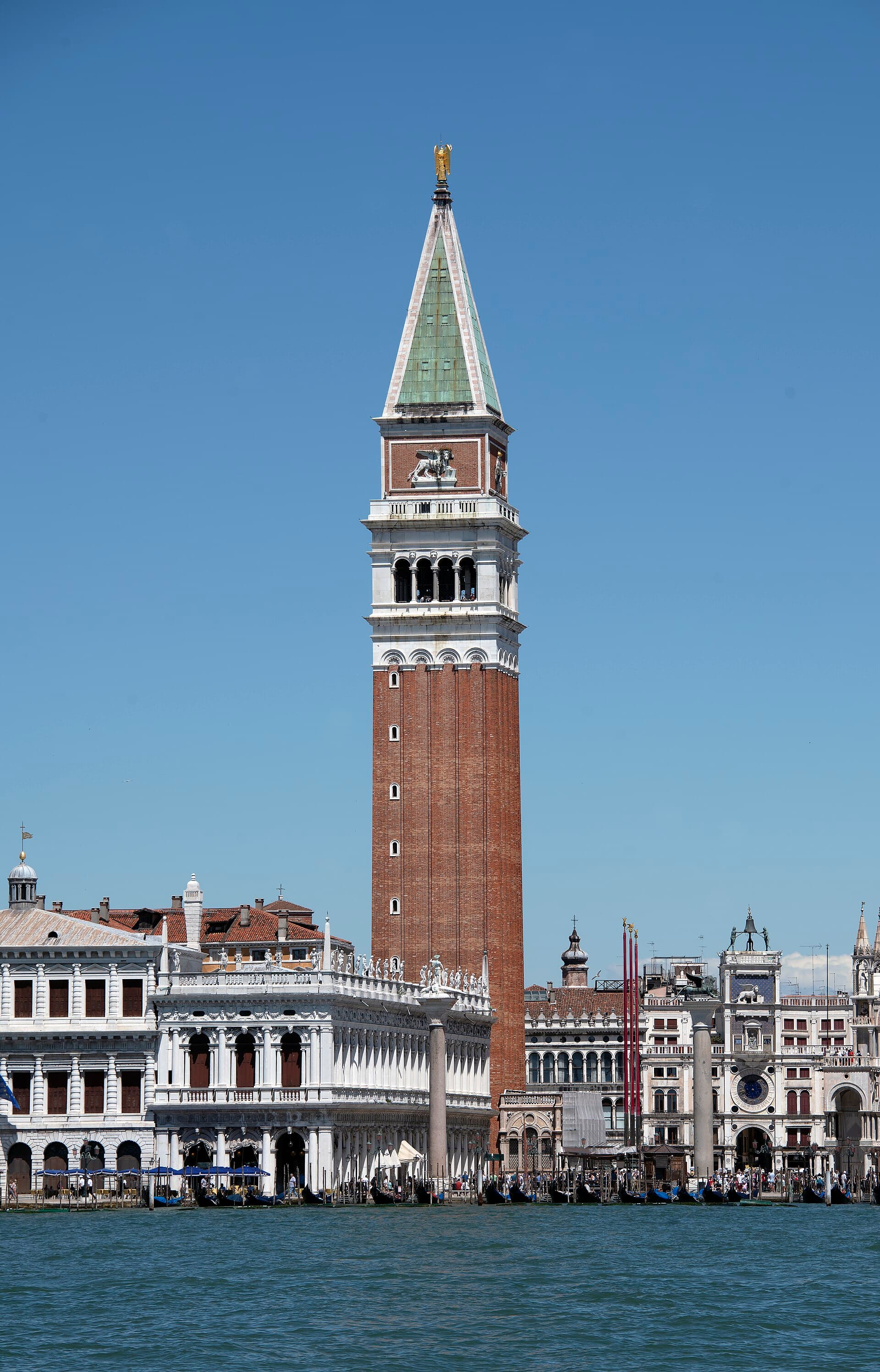 St Mark's CampanileThe Campanile is Venice's tallest structure — about 99 metres of red brick crown1 minute walk4.8
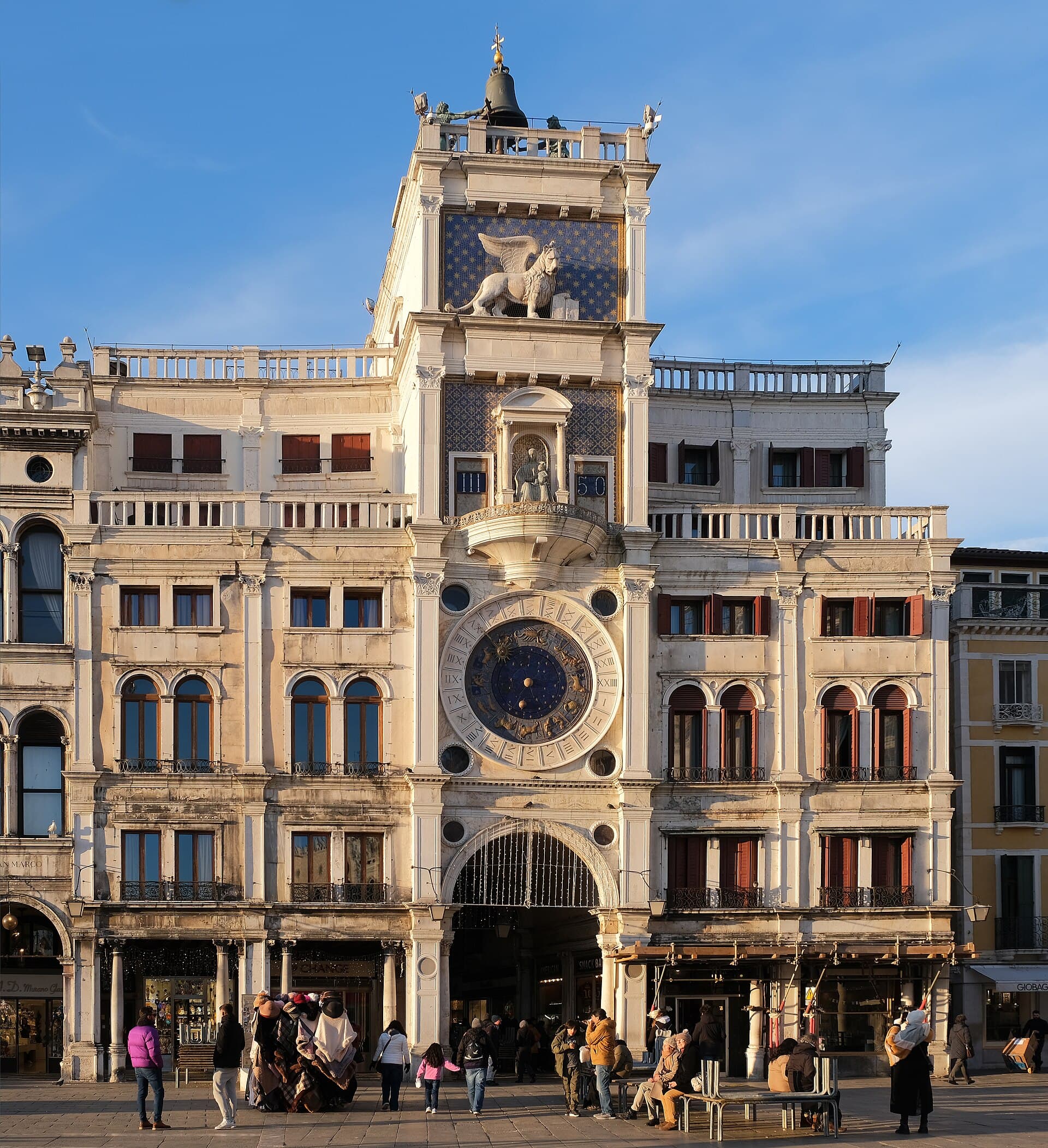 St Mark's ClocktowerThe Clocktower stands over the gateway joining St Mark's Square to the Merceria 1 minute walk4.8
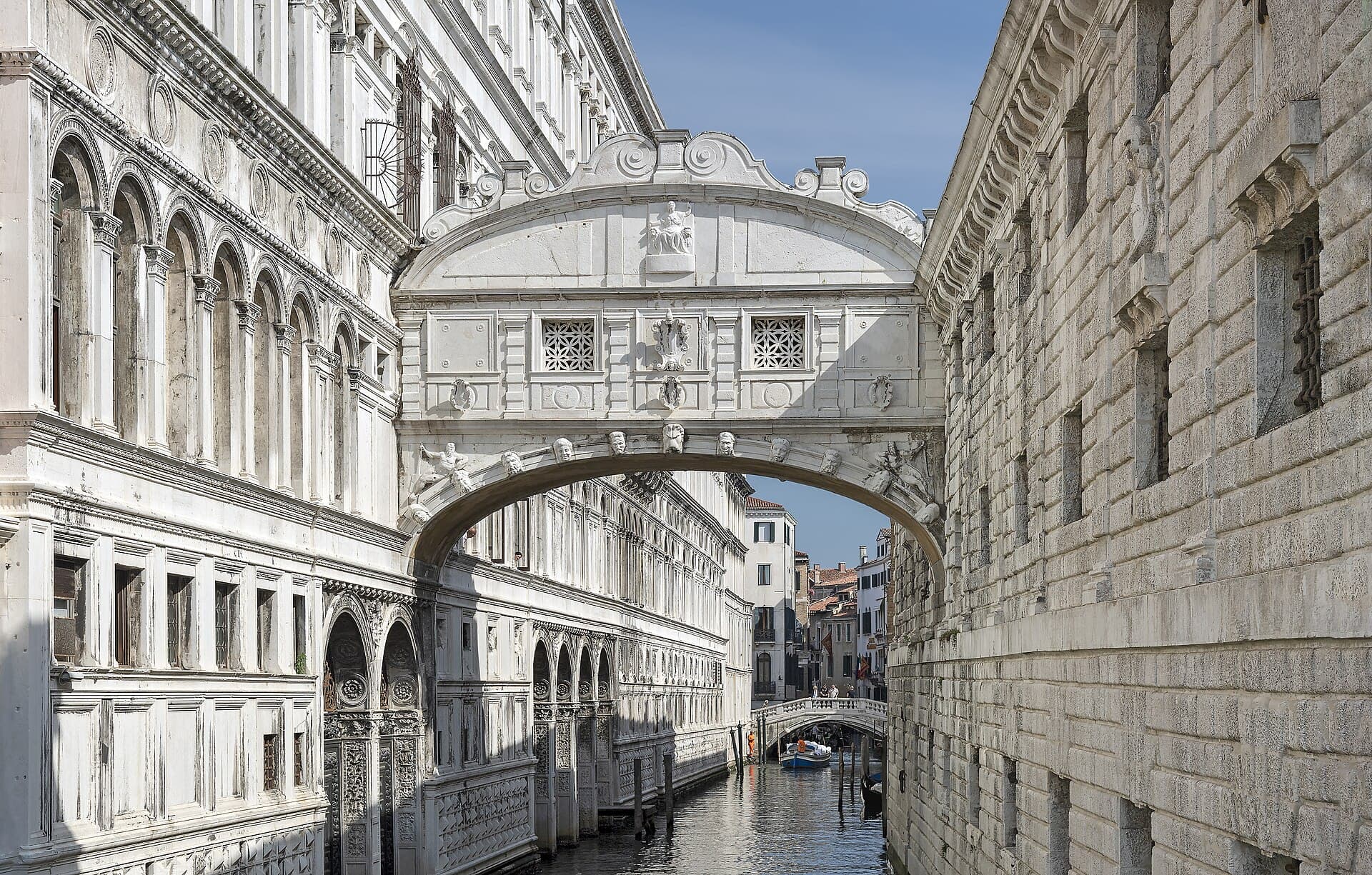 Bridge of SighsThe Bridge of Sighs is a small covered bridge of white marble crossing the canal1 minute walk4.7
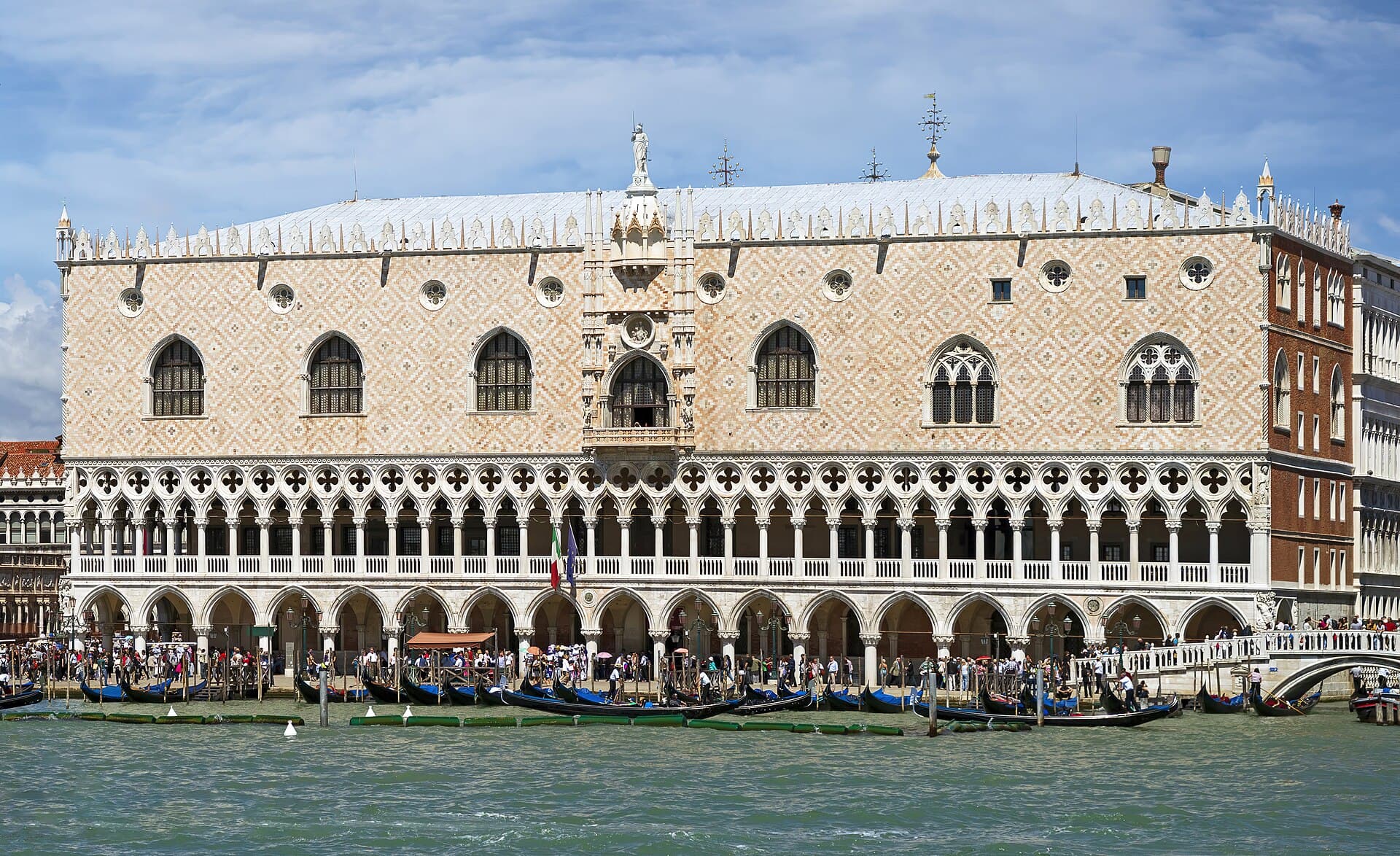 Doge's PalaceThe Doge's Palace was the seat of the Venetian Republic for centuries: the Doge 1 minute walk4.8
Book a timed entry online from the official site for a small fee — it can save an hour. Or arrive fifteen minutes before opening, or in the quieter final hour.
The main route passes through the centre and shows the mosaics. But the three extras — loggia, Pala d'Oro, treasury — are each a small fee and all worthwhile; take the loggia if you choose one.
The relics of St Mark, evangelist and founder of the Alexandrian church, were smuggled from there to Venice in 828 — hidden, the story says, under pork so customs would not search. The whole church was built around them, and Mark's winged lion became the city's emblem.