
Alternating stone and brick
The Byzantine technique giving the wall its red lines.
Elisa Triolo — CC BY-SA 2.0 · Falk2 — CC BY-SA 4.0 · Falk2 — CC BY-SA 4.0 · Pedro from Maia (Porto), Portugal — CC BY 2.0
The upper section of Thessaloniki's Byzantine walls, ringing the summit of the Upper Town and forming with it the best viewpoint over the city and its gulf. Thessaloniki's walls were originally Roman, then rebuilt and extended in the fourth and fifth centuries AD, and continued to be repaired into the Ottoman period. Their original length was about eight kilometres, of which roughly half survives, and these upper stretches are the most complete. The wall here is built in alternating courses of stone and brick — the distinctive Byzantine technique that gives the wall its horizontal red lines. At its eastern end stands the round Trigonio tower, added in the fifteenth century to withstand artillery. The district inside the walls — Ano Poli, the Upper Town — survived the fire of 1917 that destroyed central Thessaloniki, so it keeps Ottoman timber houses and narrow lanes found nowhere else in the city. An open area, free to walk.
The Byzantine technique giving the wall its red lines.
A round tower added in the fifteenth century to withstand artillery.
The Upper Town survived 1917, keeping its Ottoman houses.
The Upper Town, the highest point of Thessaloniki
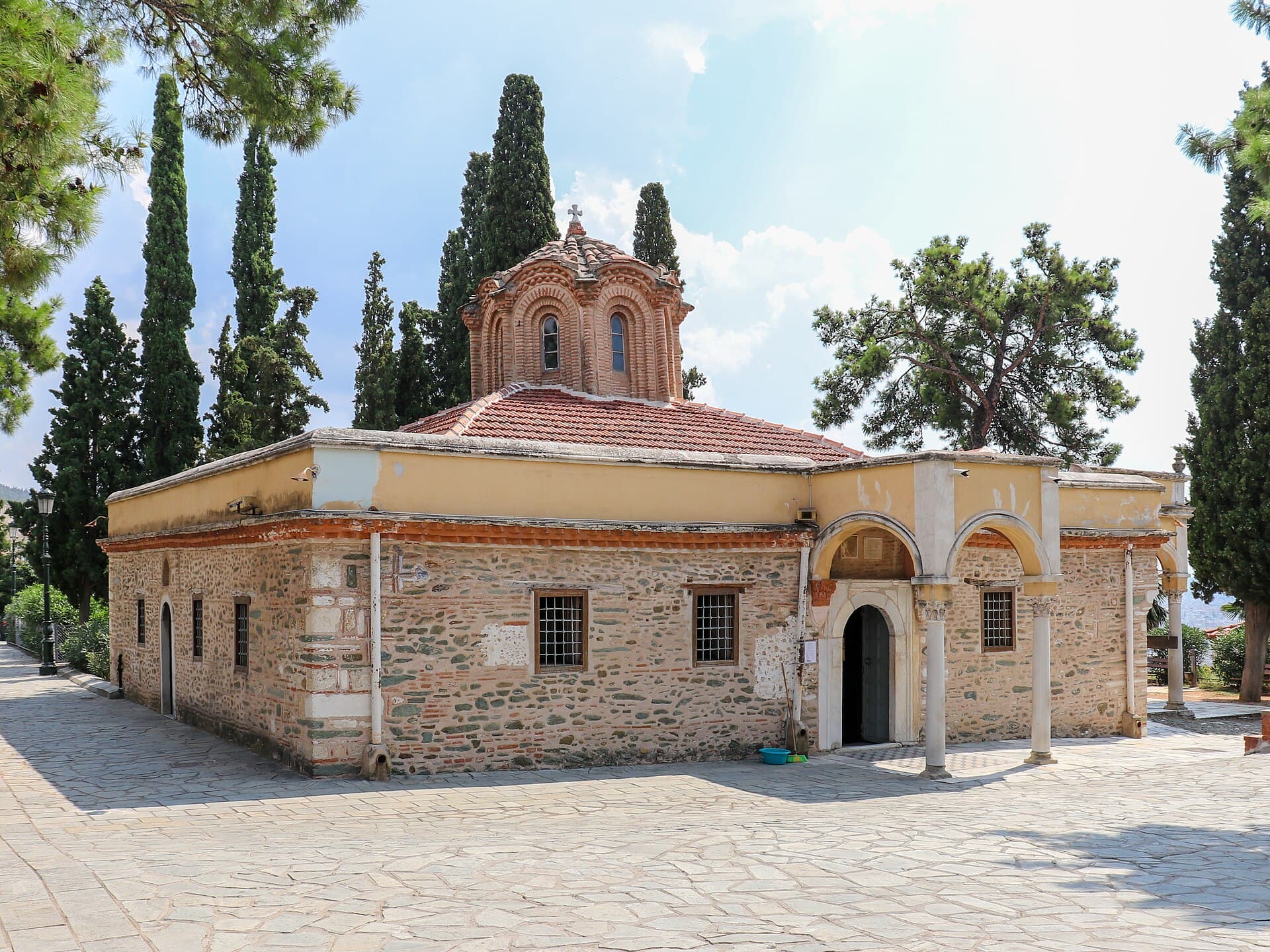 Vlatades MonasteryThe only Byzantine monastery still working in Thessaloniki, out of more than twe1 minute walk4.8
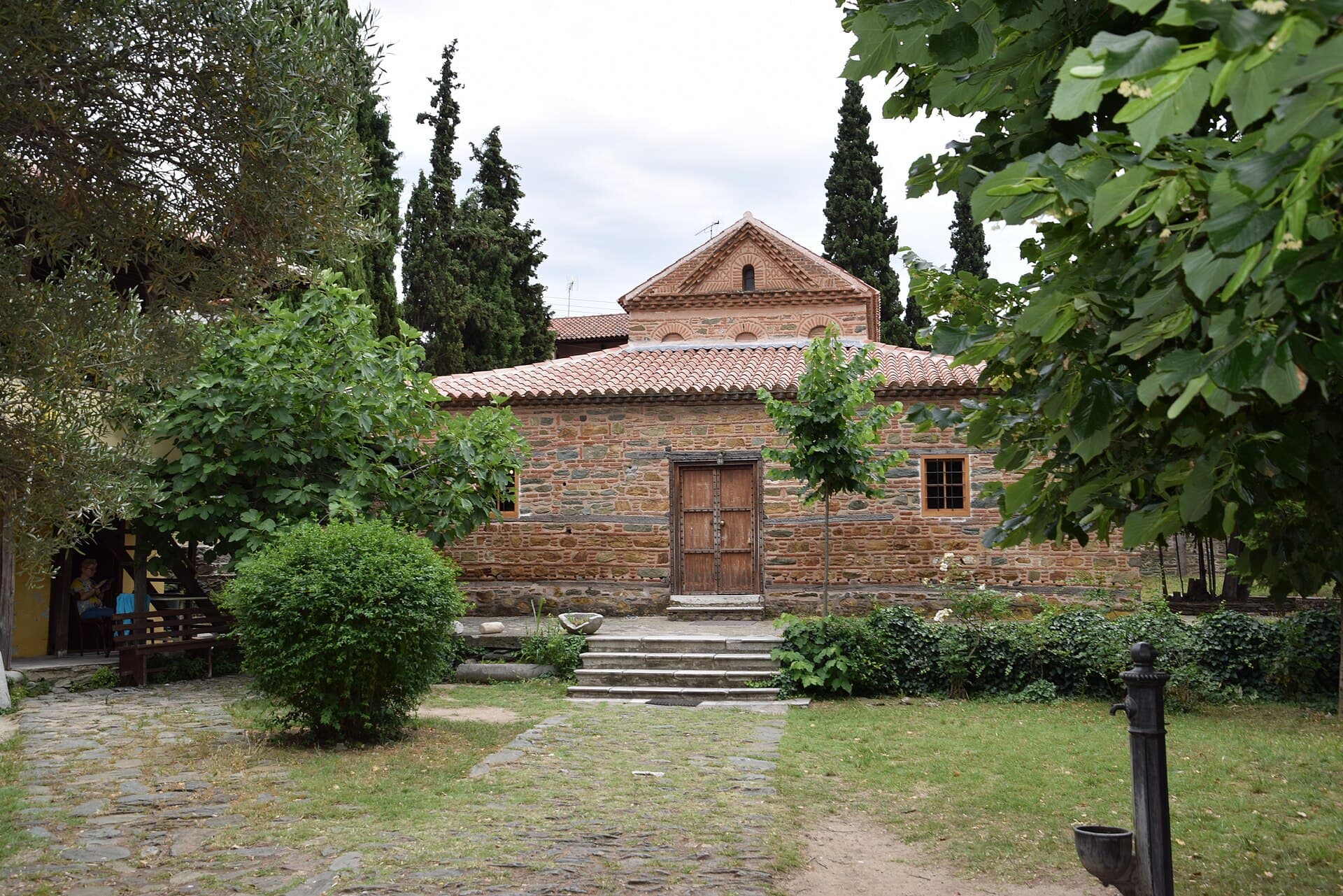 Church of Saint Nicholas OrphanosA small, plain-looking church in a quiet lane of the **upper town**, giving noth7 minutes walk4.7
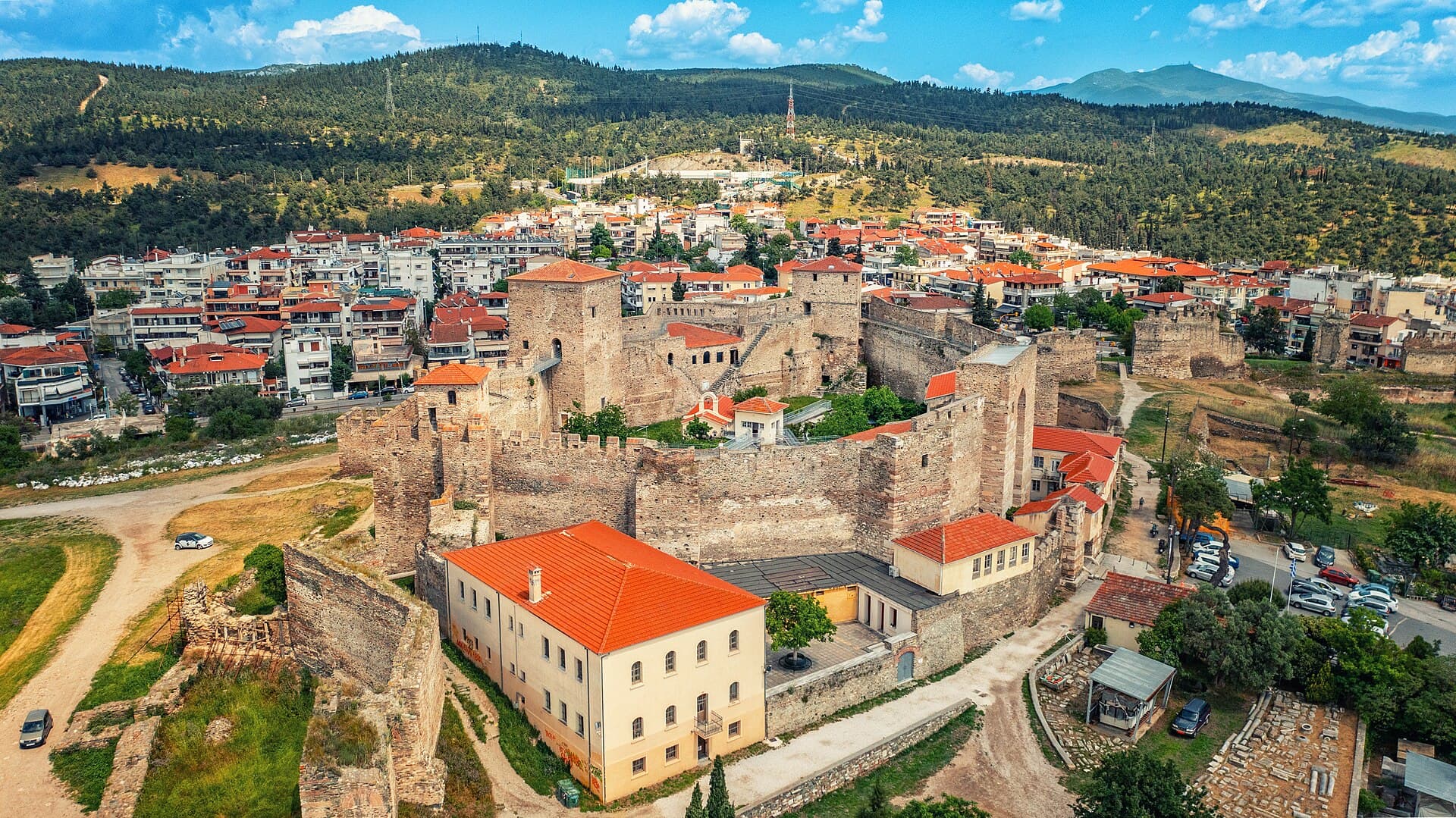 Ano Poli & the HeptapyrgionAno Poli is the Thessaloniki that survived: the Great Fire (1917) ate the lower 8 minutes walk4.7
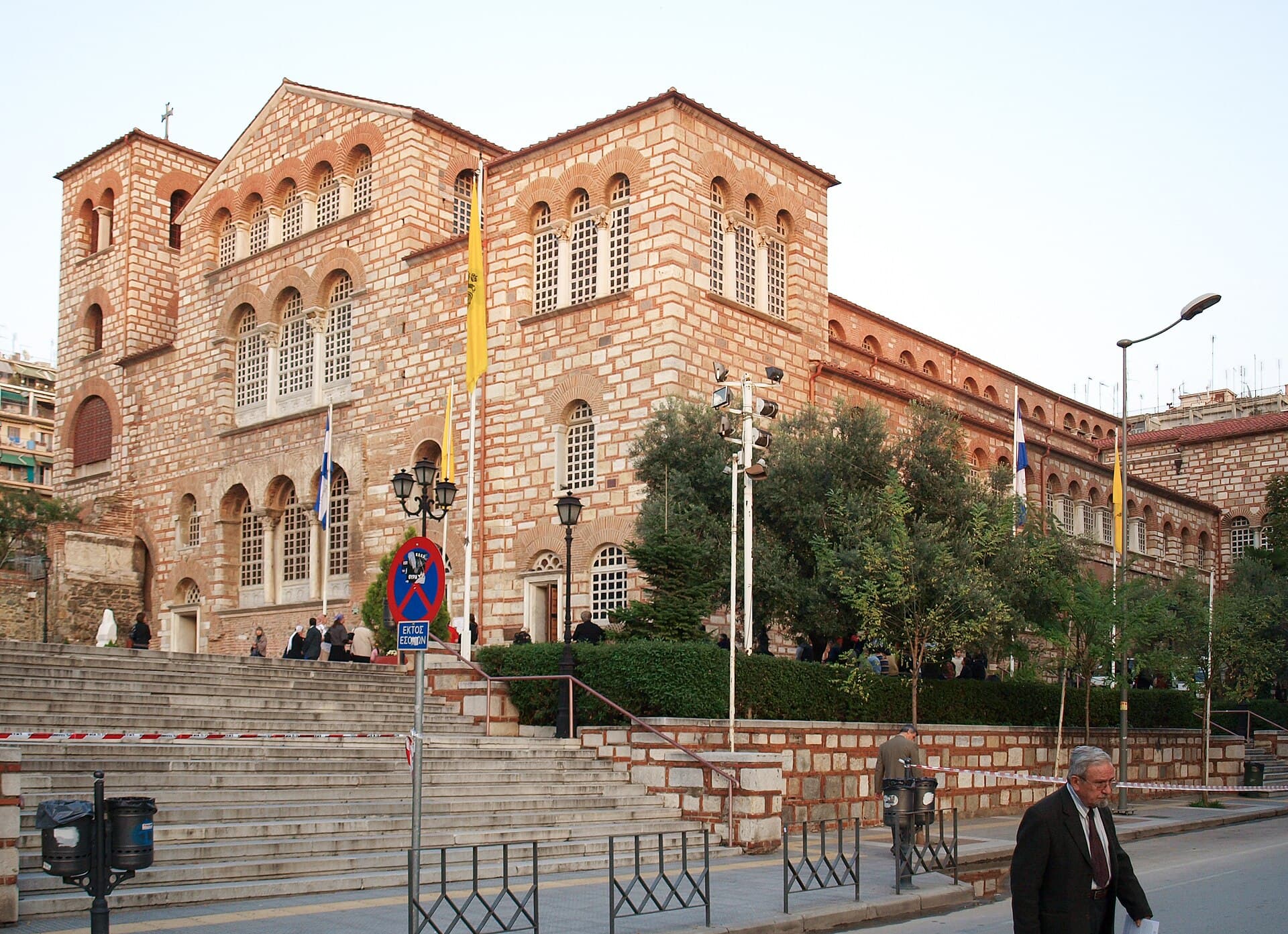 The Basilica of Saint Demetrius & its CryptAgios Dimitrios is the city's mother church: Greece's largest, over the grave of9 minutes walk4.8
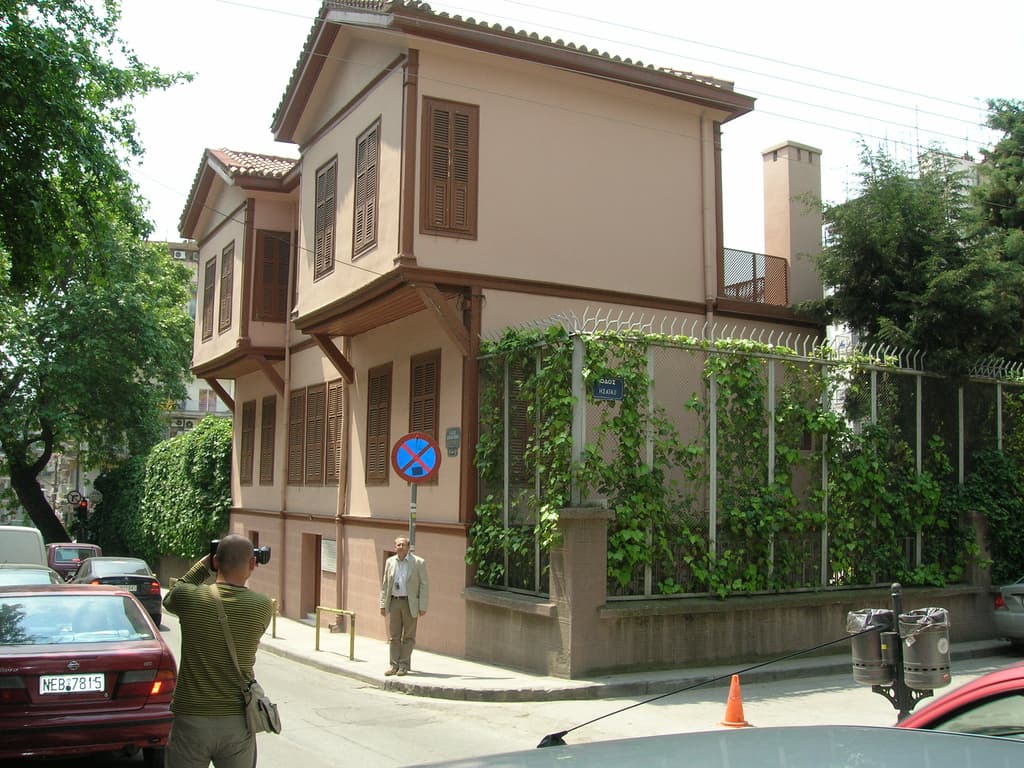 Atatürk Museum (his birthplace)A three-storey pink house in a quiet part of Thessaloniki, where **Mustafa Kemal10 minutes walk4.6
A huge fire that broke out in August 1917 and burned for thirty-two hours, destroying about a third of the city and leaving more than seventy thousand people homeless — most of them from the Sephardic Jewish community that made up a large share of Thessaloniki's population. The government forbade unplanned rebuilding and commissioned the French architect Ernest Hébrard to plan a new centre of wide streets and axes opening to the sea, which is the centre standing today.
The small church of Hosios David with its fifth-century mosaic, the Vlatadon monastery, and Ottoman timber houses with projecting balconies over narrow lanes. And the Trigonio tower for the view. Walking down towards the lower city passes several Byzantine churches on the World Heritage list and ends at Agios Dimitrios, the city's patron saint.