
Harem courtyard
Five iwans.
Bgag — CC0 · Davide Mauro — CC BY-SA 4.0 · Iaa2023 — CC BY-SA 4.0 · Panpanchik — CC BY-SA 4.0 · Jean-Pierre Dalbéra from Paris, France — CC BY 2.0 · Aza Olimjonovv — CC BY-SA 4.0 · Fulvio Spada from Torino, Italy — CC BY-SA 2.0 · Faqscl — CC BY-SA 3.0
A palace in Khiva's Itchan Kala whose name means «stone house», built between 1830 and 1841 for the ruler of the Khiva Khanate, Allah Kuli Bahadur Khan, with more than 260 rooms around three courtyards. The first part built was the harem to the north, around a rectangular courtyard overlooked by five iwans, each on a carved wooden pillar: four for the khan's four wives and the fifth, the largest, for the khan himself. Each apartment has a high loggia open for summer and an adjoining room for winter. The other two courtyards are the Ishrat Hovli, the audience hall (1830-1832), in the southeast, and the Arz Hovli, the court of justice (1837-1838), in the southwest. The walls are covered throughout in blue and white tilework by the craftsman Abdullah Jinn, and the wooden ceilings are painted in reds and yellows. Entry is included in the Itchan Kala combined ticket, per visitor guides. It is one of Khiva's loveliest buildings, quietest in the morning before the tour groups.
Five iwans.
On every wall.
Red and yellow.
East Itchan Kala, near the east gate, Khiva
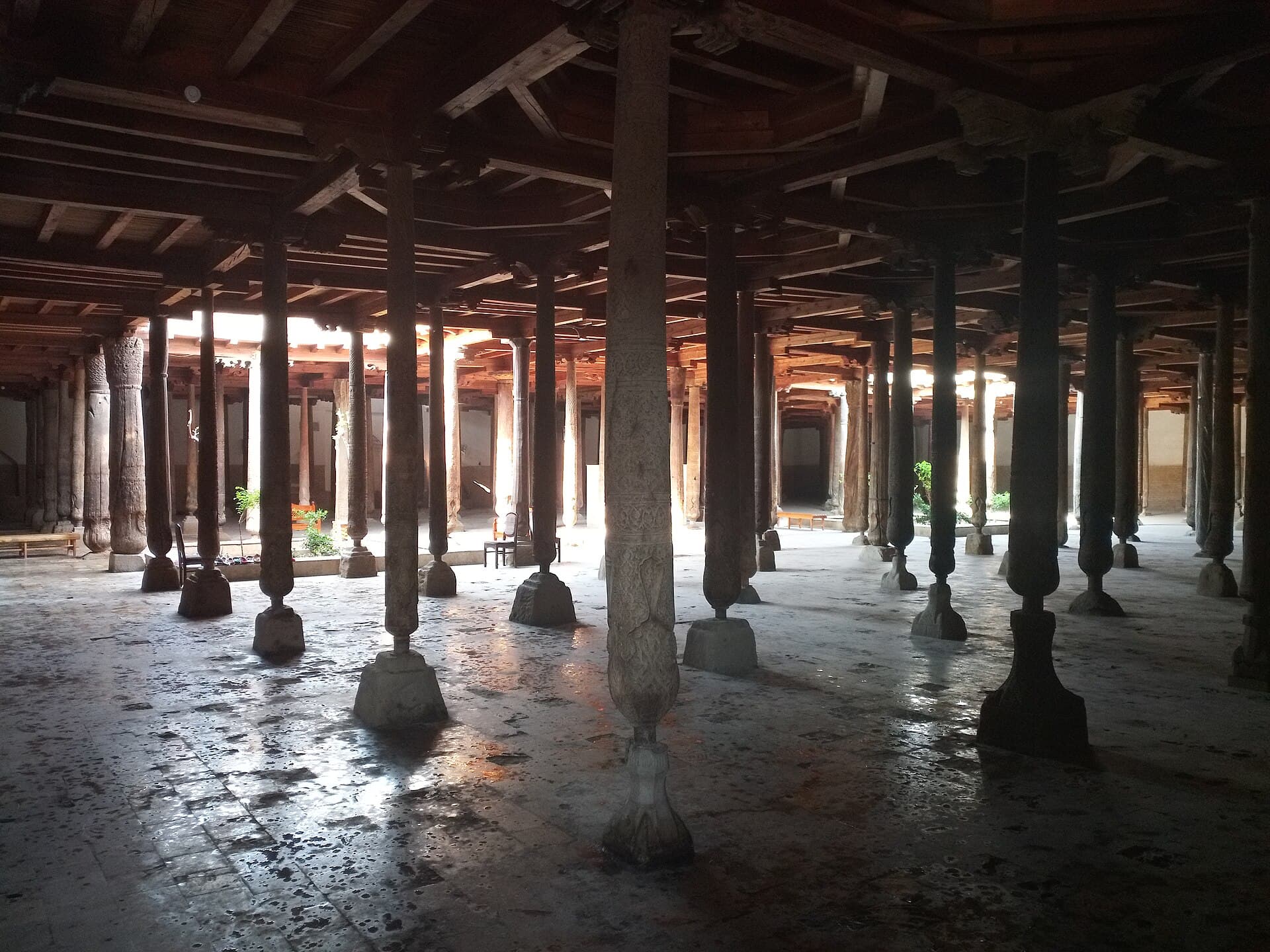 Juma Mosque, KhivaOne of Itchan Kala's principal monuments, in its middle on the road between the 2 minutes walk4.6
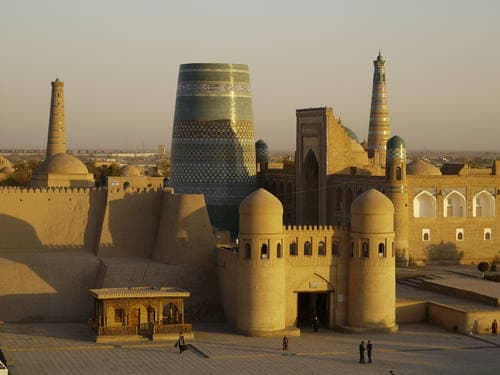 Itchan Kala, Khiva's walled cityThe walled inner town of Khiva, a World Heritage Site since 1990. It holds more 3 minutes walk4.8
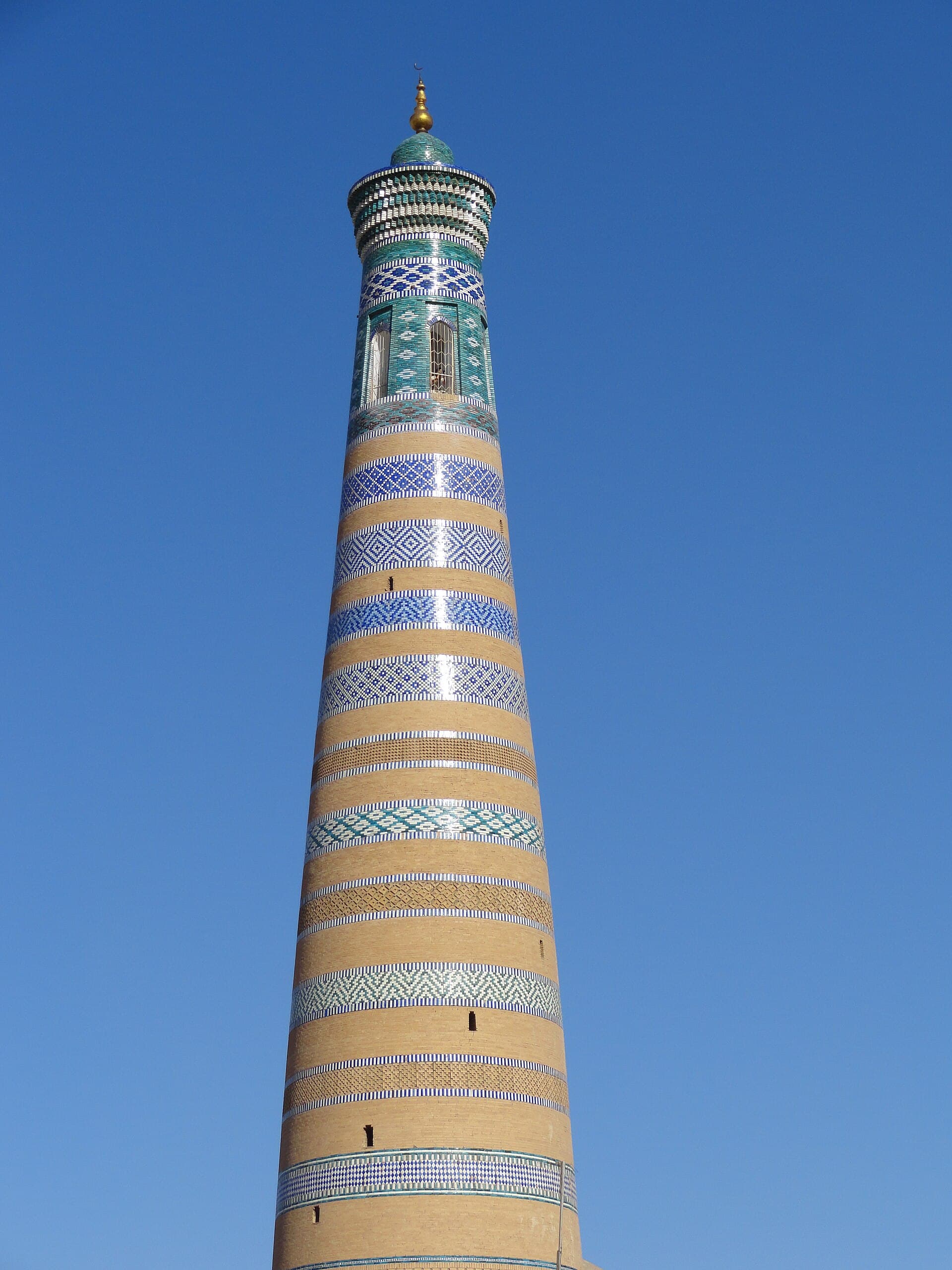 Islam Khoja MinaretKhiva's tallest minaret, about 57 metres including its base, built in 1908-1910 3 minutes walk4.7
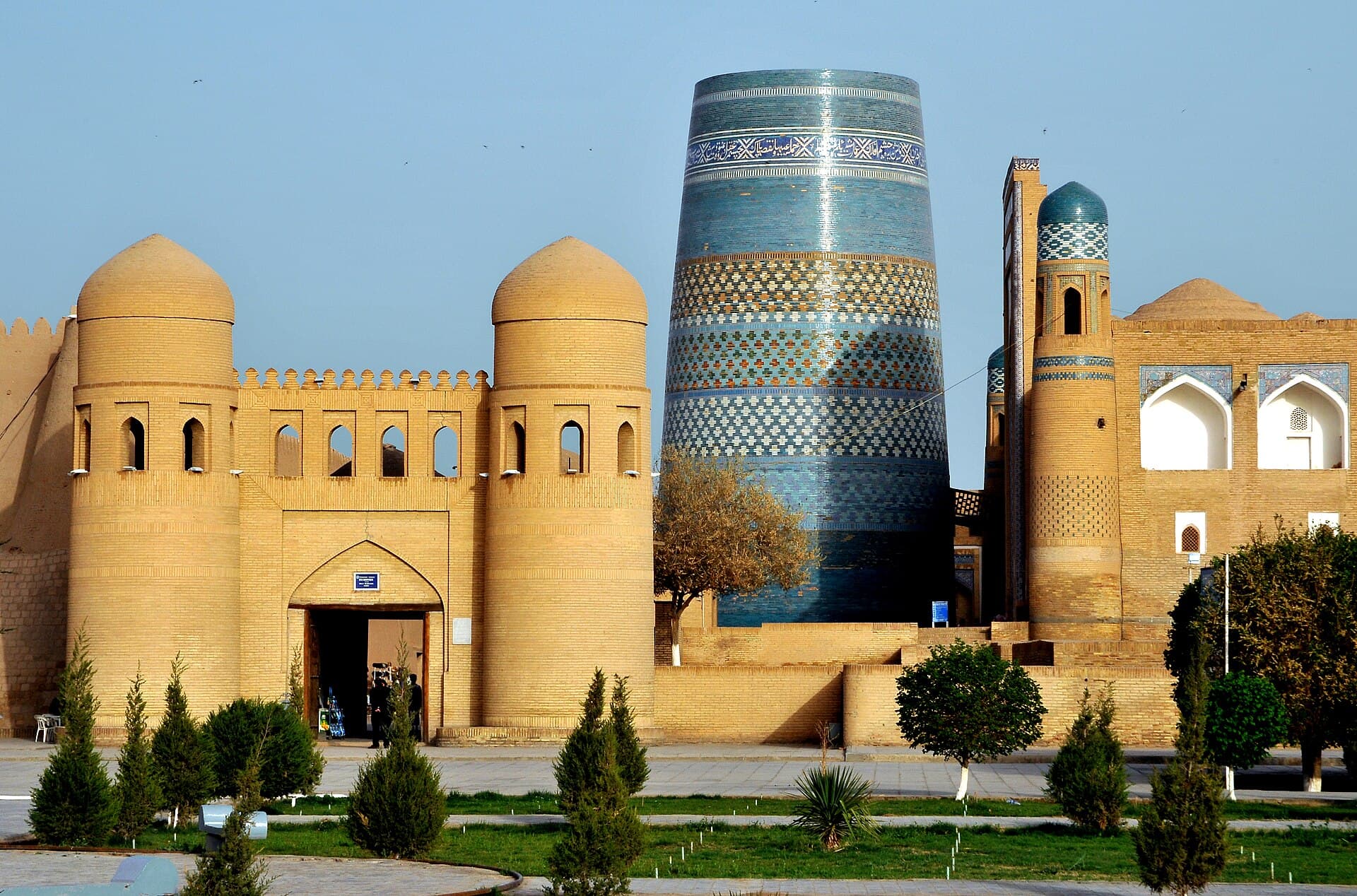 Kalta Minor minaretAn unfinished minaret in Khiva's Itchan Kala, in front of the Muhammad Amin Khan4 minutes walk4.9
The harem courtyard with five iwans on carved pillars, walls covered entirely in blue and white tiles, and painted wooden ceilings.