
The Crown Jewels
A moving walkway carries you past the crowns and a sceptre holding the largest clear cut diamond on earth; in the first hour after opening there is almost no queue.
Bob Collowan — CC BY-SA 3.0 · Oleg Yunakov — CC BY-SA 4.0 · Oleg Yunakov — CC BY-SA 4.0 · Oleg Yunakov — CC BY-SA 4.0
William the Conqueror raised it after 1078 not to protect London but to intimidate it, and for nine centuries it has carried more meaning than any other building in the city: royal palace, prison, mint, armoury and execution ground all at once. Anne Boleyn lost her head here, two young princes were lodged in what is now called the Bloody Tower and never seen again, and the Crown Jewels that are still used at coronations are kept inside. The name suggests a single tower; what you get is a full castle with two rings of walls, a moat and more than twenty towers, and you need three hours at least to walk it without rushing. Go to the jewels first, without hesitation. In the Jewel House a moving walkway carries you past the crowns and the sceptre holding the largest clear cut diamond in the world; in the first hour after opening you glide through with almost no wait, while after 11:00 in summer the queue can stretch to three quarters of an hour. Then the White Tower at the heart of it all, the oldest part of the castle, with the Royal Armouries display including Henry VIII's enormous armour and the Norman Chapel of St John, almost unchanged in nearly a thousand years. The free tours led by the Yeoman Warders in their dark blue and red uniforms leave every 45 minutes, the first at 10:00 (10:45 on Sundays and Mondays) and the last at 15:15; they are first-rate storytellers who never bore, and a tour runs about an hour. And do not miss the ravens: at least six live here on official duty, because legend says the kingdom falls if they leave. Adults pay GBP 37 without the optional donation, children aged 5 to 15 pay 18.50 and under-fives go free. Book a timed slot on the official website; walk-up tickets exist at the ticket office, but in July and August the morning slots sell out days ahead. The castle opens daily, from 09:00 Tuesday to Saturday and from 10:00 on Sunday and Monday, closing at 17:30 from March to October (last entry 16:30) and at 16:30 in winter when it is dark before four, with a full shutdown on 24 to 26 December and 1 January. The nearest station is Tower Hill on the Circle and District lines, five minutes on foot. For families: children over six are captivated by the guards, the ravens and the armour, but the ground is cobbled and the towers and wall walk are reached by narrow spiral stairs that no pushchair can manage, so a buggy only earns its keep in the courtyards and on the ground floor of the Jewel House. There is no prayer room inside the castle; the East London Mosque on Whitechapel Road is around a 20 to 25-minute walk. Anyone who would rather not pay can see the full circuit of walls for free from Tower Hill and the riverside path, with Tower Bridge behind, which is the best photograph of the place anyway. The nightly Ceremony of the Keys needs a separate ticket released on the official site in batches months in advance, and they go quickly.
A moving walkway carries you past the crowns and a sceptre holding the largest clear cut diamond on earth; in the first hour after opening there is almost no queue.
A free tour every 45 minutes, led by a warder who tells the prison and execution stories with a wit you do not expect from this place.
The oldest part of the castle, holding Henry VIII's armour and a Norman chapel unchanged for nearly a thousand years.
Tower Hill, London EC3N 4AB
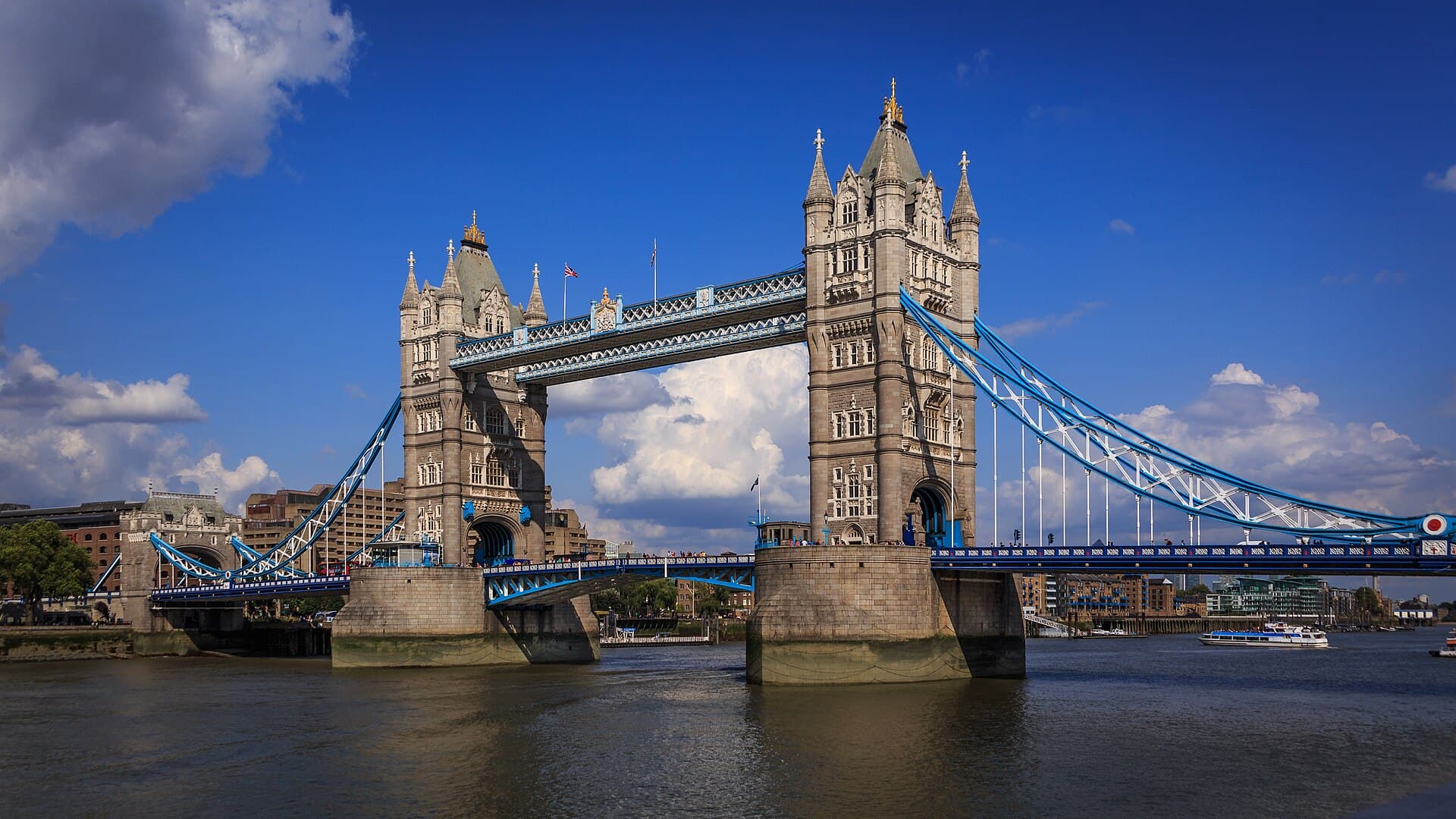 Tower BridgeA good many of the tourists photographing it believe it is London Bridge. It is 4 minutes walk4.9
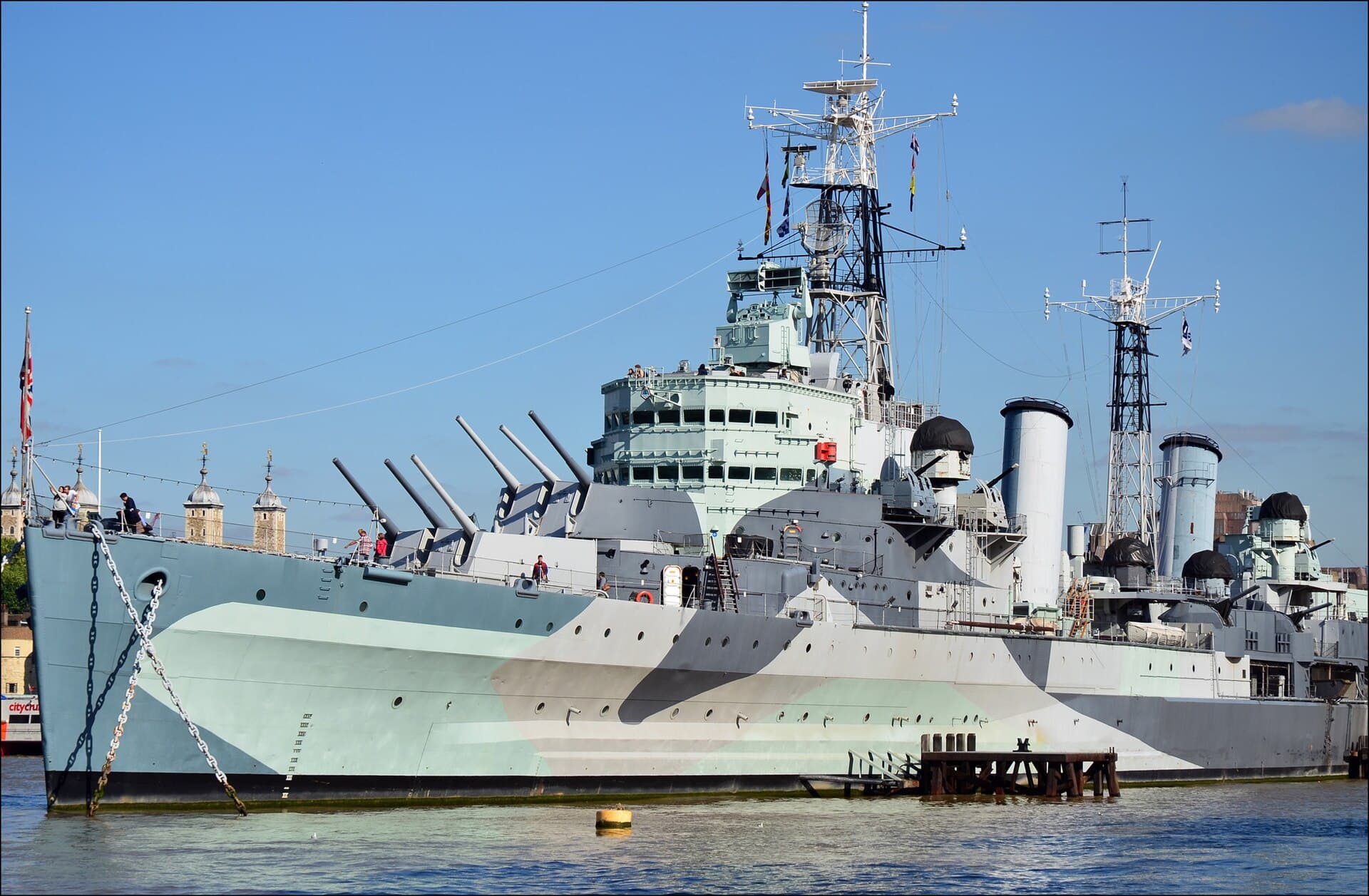 HMS BelfastThe forward guns of this cruiser moored on the Thames are trained, deliberately,5 minutes walk4.6
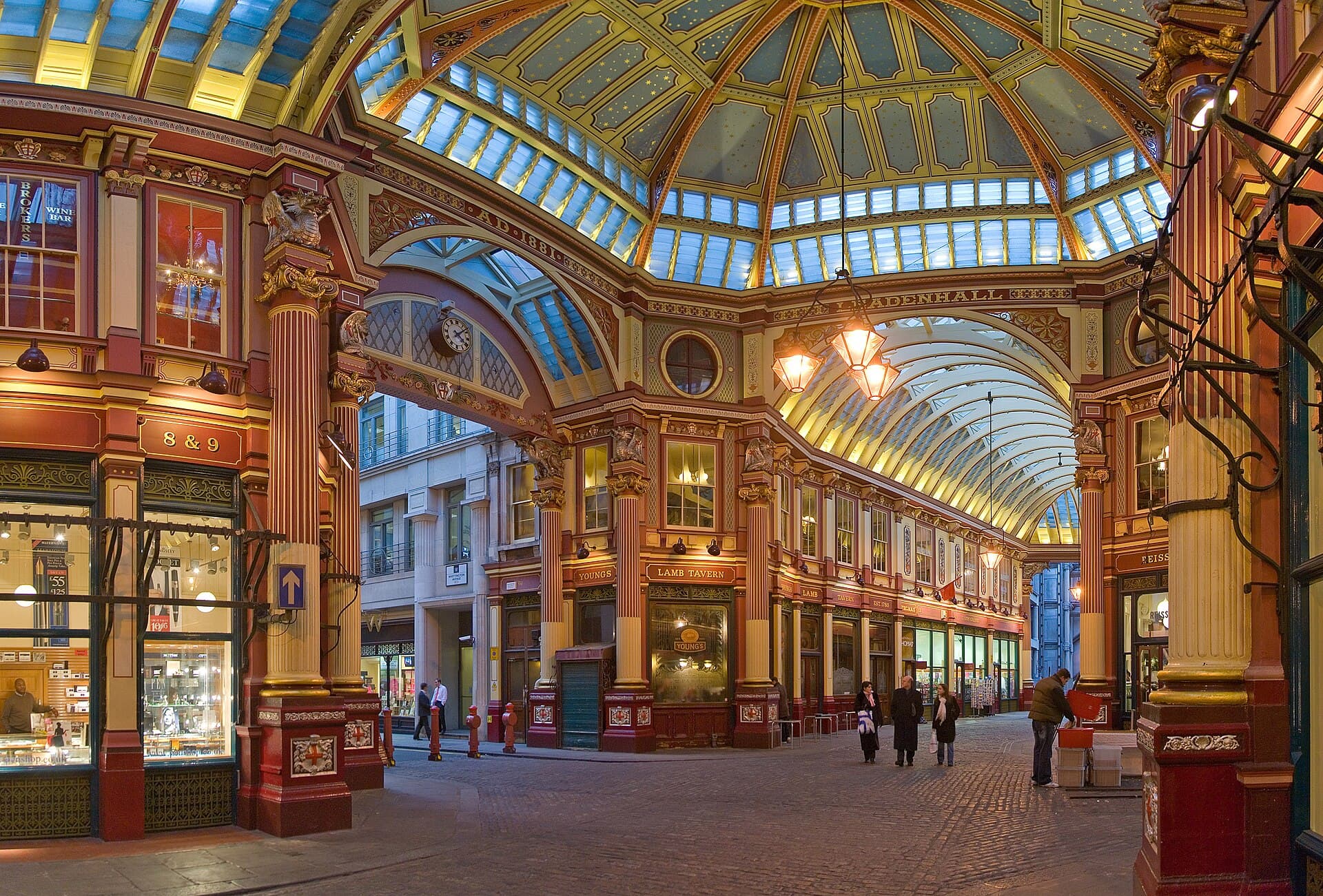 Leadenhall MarketStep out of the glass towers of the City and into a Victorian arcade of wrought 9 minutes walk4.5
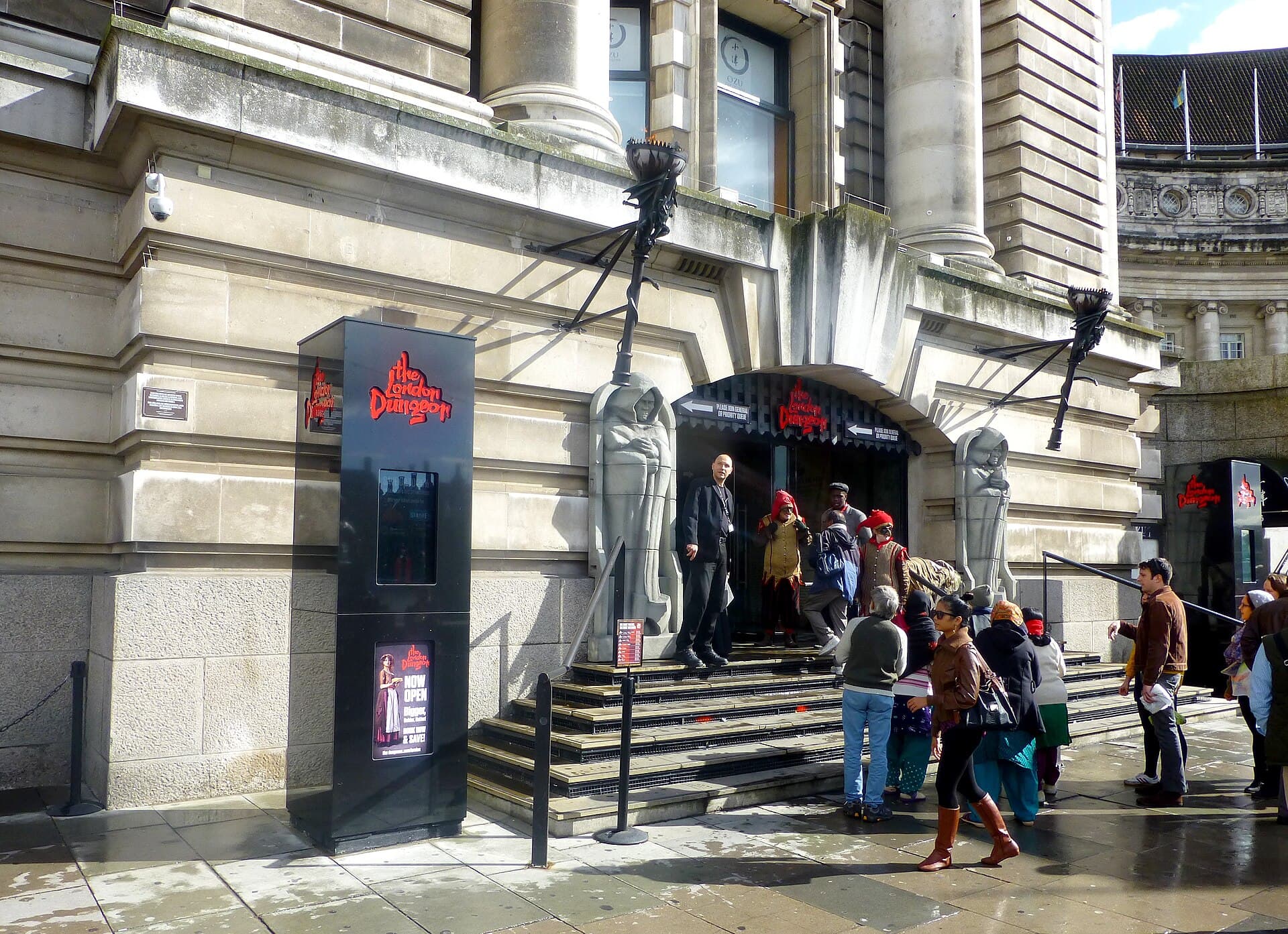 The London DungeonIn the basement of County Hall, a few steps from the London Eye queue, an actor 9 minutes walk4.4
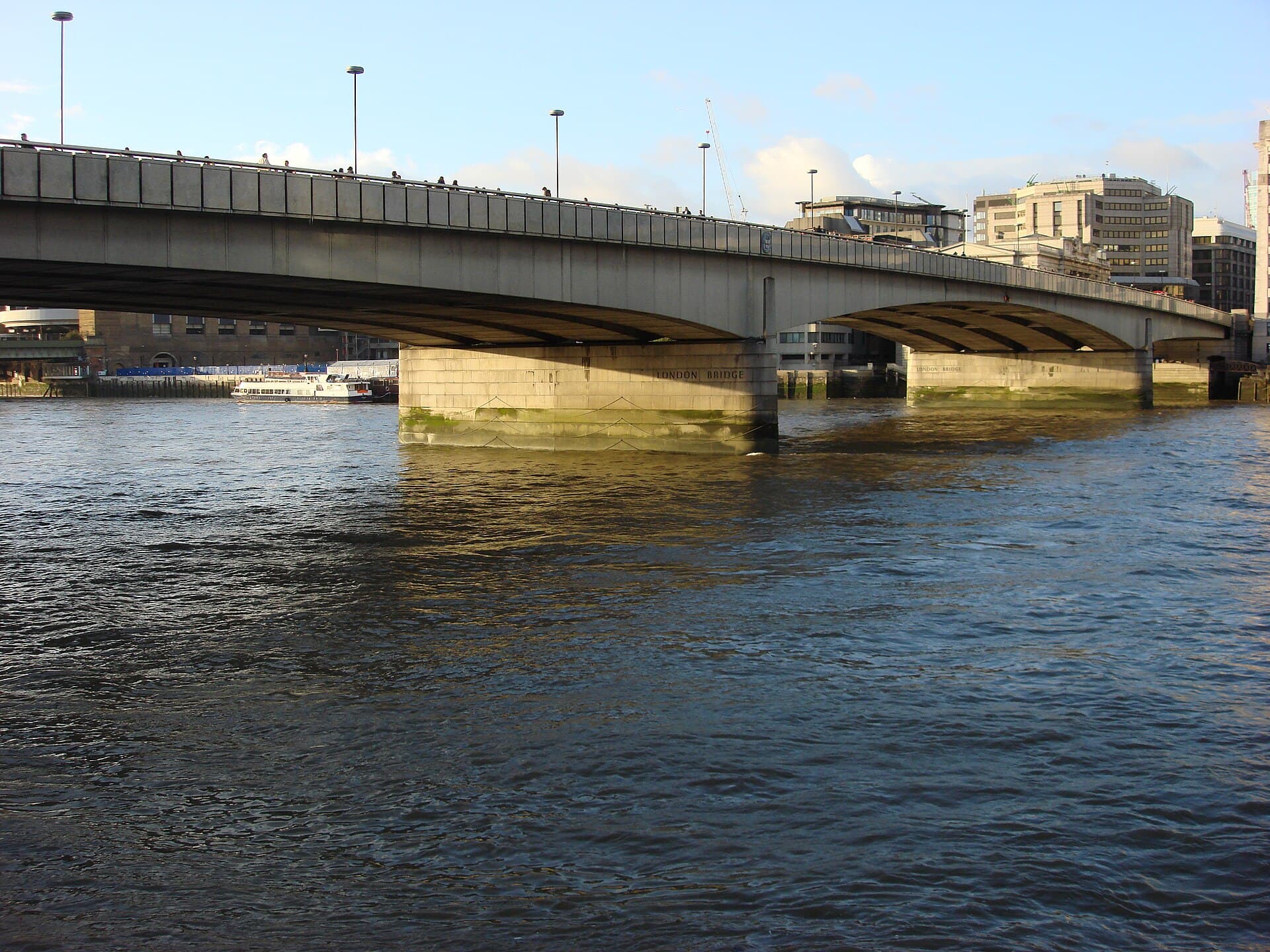 London BridgeNot one stone of the bridge in the nursery rhyme is still in London. Its direct 10 minutes walk4.5
No, they are two separate places: Tower Bridge is the famous blue bridge over the river, free to walk across, while the Tower of London is the stone castle beside it. Seeing the walls from outside costs nothing and gives the better photograph, but the Crown Jewels, the warder tour and the White Tower are all inside, and that is what the ticket buys; it is worth it if you will give it three hours rather than one.
The Tower if you have children or it is your first visit to London: the stories are stronger, the free tours are better and it is in the centre on the Tube. Windsor is more beautiful, less crowded and gives you a day out of town, but it takes about an hour by train each way, and its ticket is actually a little cheaper.