
Four styles in one building
Romanesque, Gothic, Renaissance and Baroque fused — walk around it and watch the style change as you go.
Felix König — CC BY 3.0 · Jakub Hałun — CC BY-SA 4.0 · Jakub Hałun — CC BY-SA 4.0 · Jakub Hałun — CC BY-SA 4.0
Vajdahunyad Castle is not a historic castle but a lesson in architectural history built in stone. It went up in 1896 for the Hungarian millennium exhibition, originally as a temporary structure of wood and cardboard showing visitors a thousand years of Hungarian building: a Romanesque wing, a Gothic one, a Renaissance one and a Baroque one, all fused into a single building. Budapest liked it enough to demand it stay, so it was rebuilt in stone and brick between 1904 and 1908 to make it permanent. Parts of it are exact copies of real buildings from across the old Kingdom of Hungary — most famously the wing modelled on Hunyadi Castle in Transylvania, from which it takes its name. It stands on a small island inside the Városliget park, ringed by a lake that becomes Europe's largest open-air ice rink in winter. The courtyards, paths and bridges are free and always open; the ticket covers only the Museum of Hungarian Agriculture inside. In the courtyard sits the statue of Anonymus, an unnamed medieval chronicler whose hood hides his face — and touching his pen is said to bring inspiration.
Romanesque, Gothic, Renaissance and Baroque fused — walk around it and watch the style change as you go.
An unnamed medieval chronicler whose hood hides his face; touching his pen is the local custom for inspiration.
From the far bank the towers reflect whole on the water — the best photographic angle, and calmest in the morning.
A copy of the church at Ják in western Hungary, with its carved portal — missed by anyone who only circles the lake.
Városliget, Pest 1146
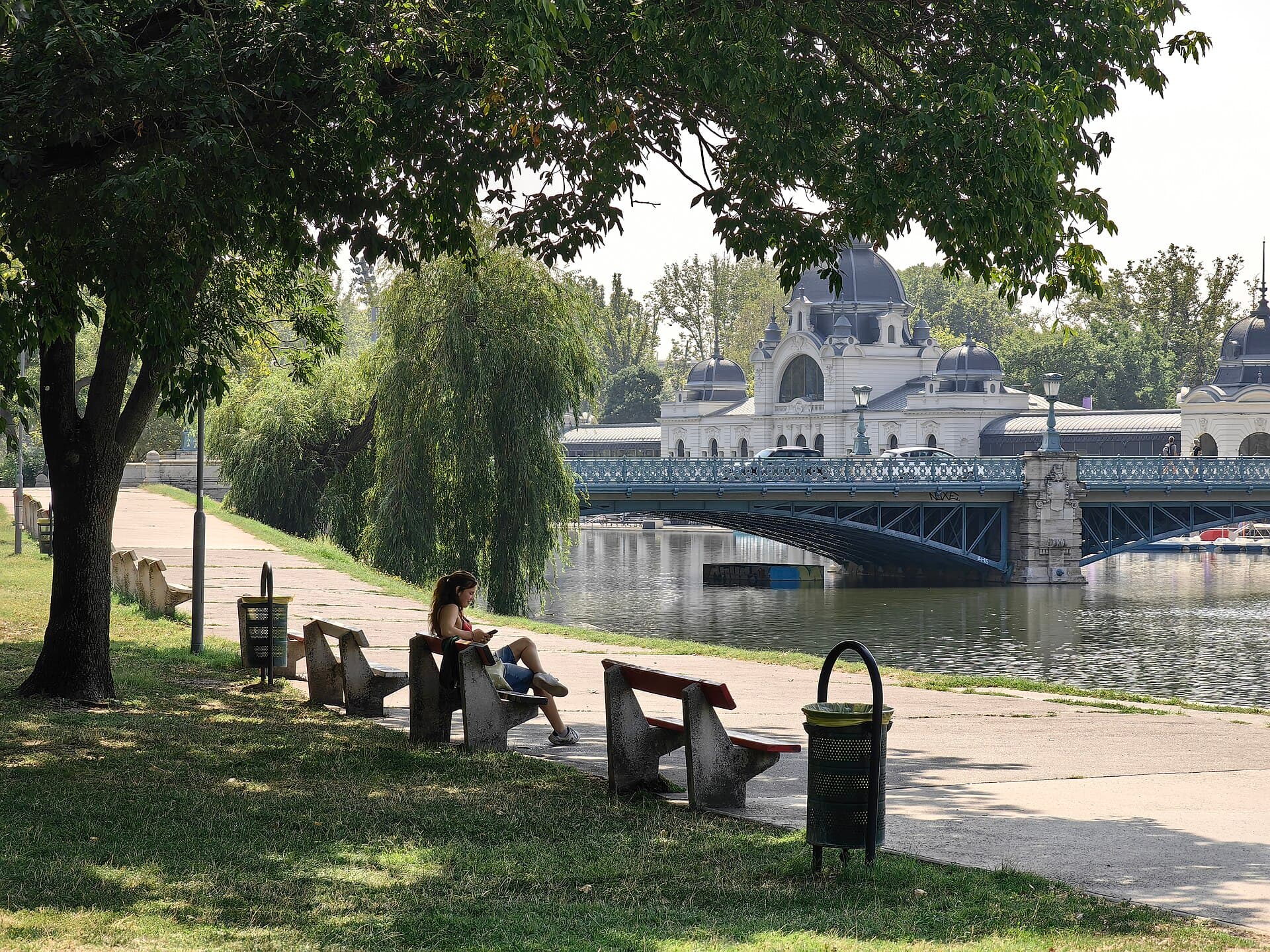 City ParkThe Városliget is Budapest's largest public park and one of the first planned pu3 minutes walk4.8
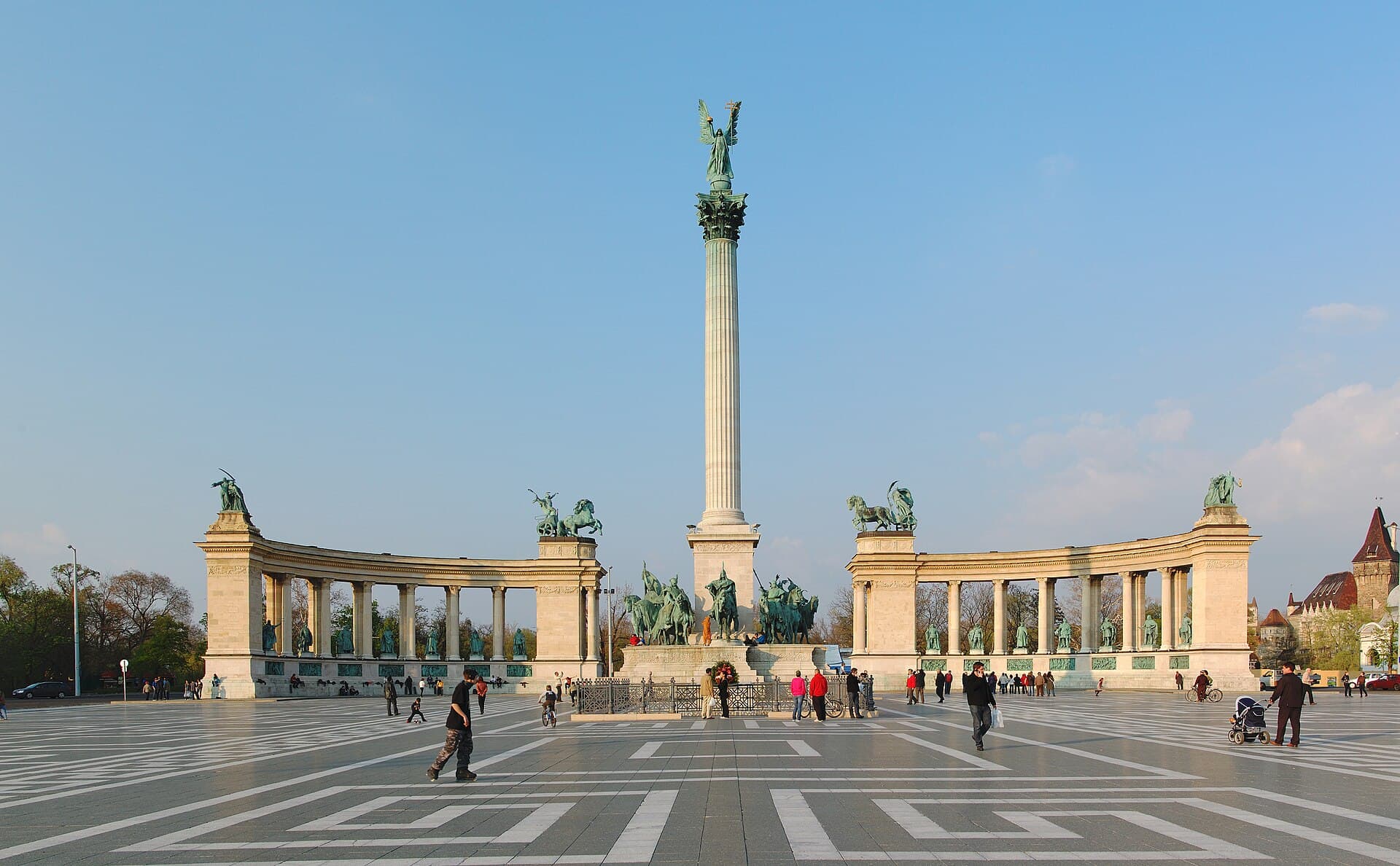 Heroes' SquareHeroes' Square is the largest and most formal square in Budapest, standing where4 minutes walk4.8
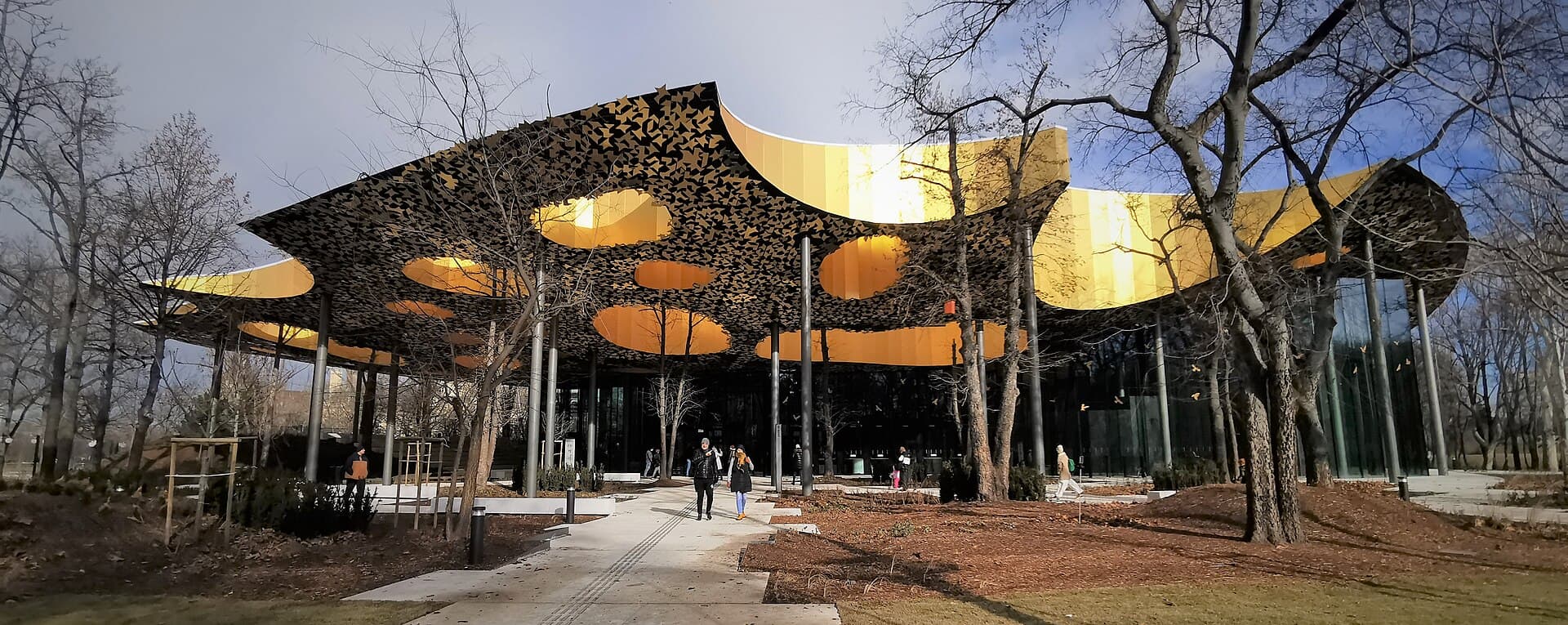 House of Music HungaryThe House of Music Hungary is the boldest contemporary building in Budapest and 4 minutes walk4.9
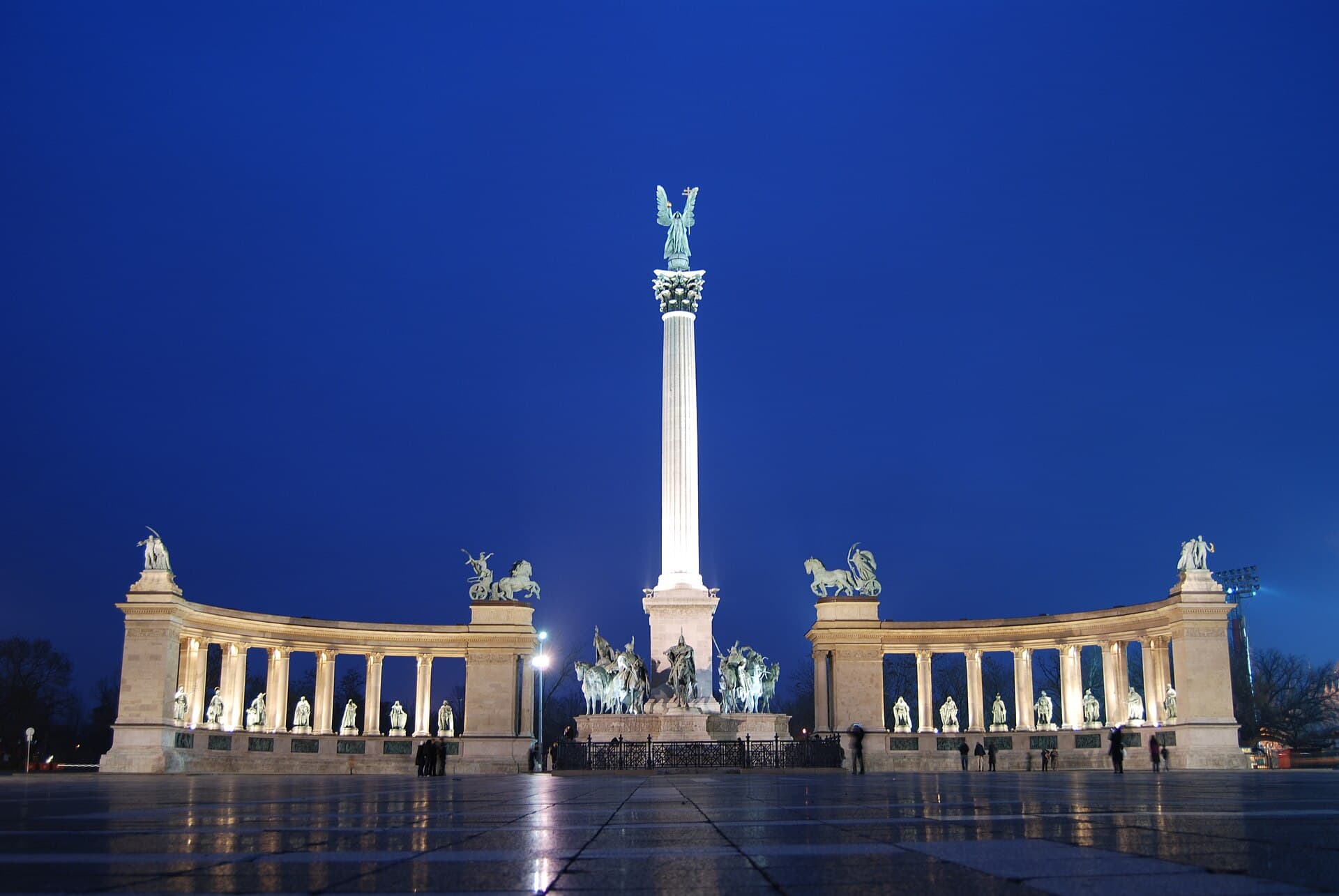 Millennium MonumentThe Millennium Monument is the sculptural group that fills Heroes' Square: a cen4 minutes walk4.6
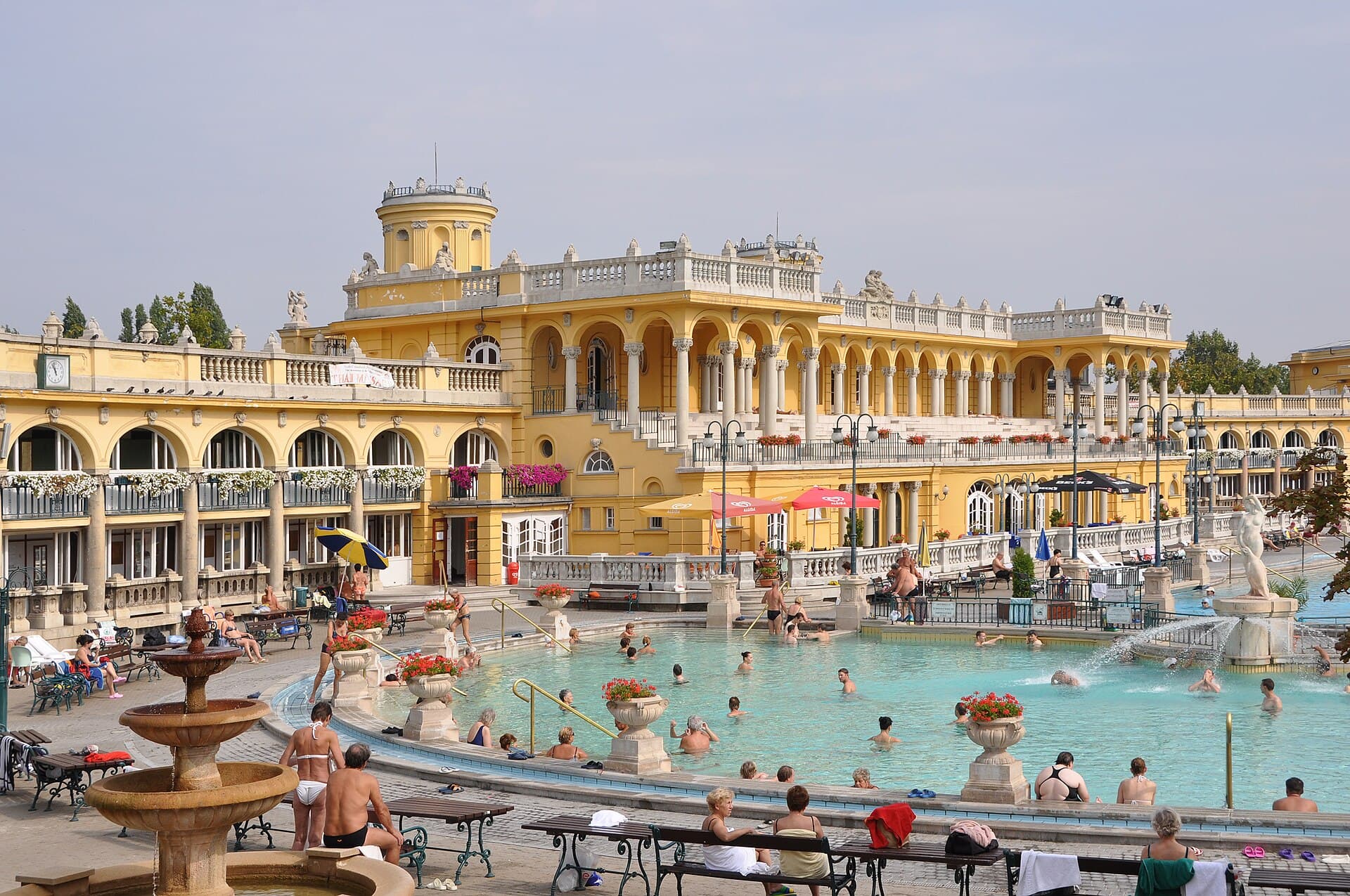 Széchenyi thermal bathThe Széchenyi Baths are the largest thermal bath complex in Europe, and the thin4 minutes walk4.1
A copy, deliberately and openly. It was built in 1896 as an architectural exhibition explaining a thousand years of Hungarian building, its parts faithful reproductions of real structures across the old kingdom. It is not a fake so much as a full-scale museum of architecture.
With children, yes — the displays are visual, with taxidermy, tools and models. On a tight schedule, the courtyards and exterior architecture are the important part and need no ticket.
Winter if the lake is frozen: the skating rink in front of the castle is one of Budapest's loveliest seasonal sights. Spring and autumn for walking the park. Summer is hot and busy but fine in the morning.
Heroes' Square is five minutes away, the Széchenyi Baths seven, and the zoo is close too — the whole Városliget makes one full day.